Can Cats Eat Centipedes? Vet-Verified Facts & Recommendations


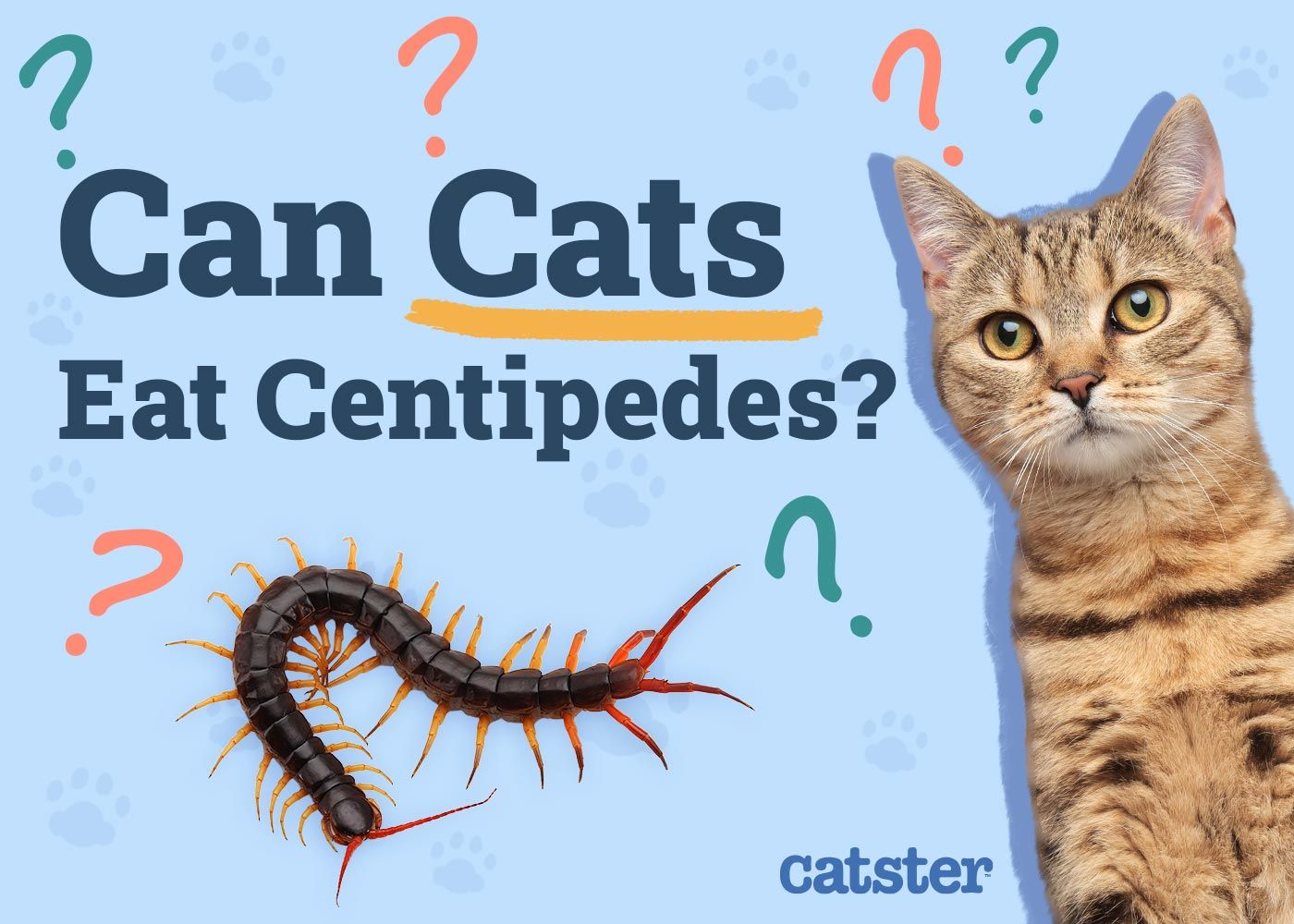
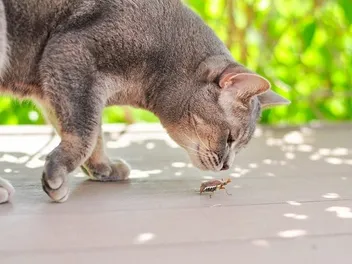
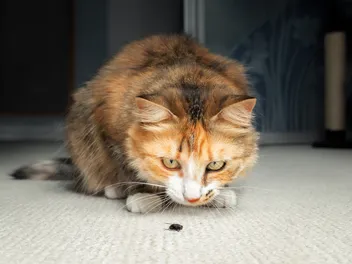
In the mind of a cat, it may be more exciting to chase after insects and other creepy crawlers than it is to play with a feather toy or ball. Toys don’t speak to the natural instincts of felines like living things do. So, it should come as no surprise that your cat may go after things like centipedes. They may even eat one every now and then.
If you’ve watched your cat capture and eat a small centipede on occasion and wonder if it’s okay, you don’t have to worry. Even though centipedes’ bodies contain poisonous fluids that they use to hunt other creepy crawlers, such as ants and roaches, the centipede's poison isn’t potent enough to seriously harm or kill a small mammal like a cat.
That said, a large centipede may be able to bite your cat. If this happens, your cat could get a localized reaction, like red itchy skin at the site of the bite. They could also vomit as a response to the venom. If your cat shows these signs after eating centipedes and they don’t disappear after a few hours, it’s a good idea to consult a veterinarian, just to play it safe.
Centipedes are not a part of the feline diet, which means your cat isn’t going to benefit health-wise from eating these arthropods. Still, even though it may give you the creeps to see your cat gulp down a centipede, they're just doing what comes naturally to them, and it doesn’t gross them out at all!

House Centipedes Are Common in the U.S.
The house centipede, or Scutigera coleoptrata, is the most commonly found centipede species in the United States. This arthropod is yellowish-gray in color and about 1.3 inches long. It’s a fast-moving creature with up to 15 pairs of long legs that can be seen scampering across floors, up walls, and along ceilings.
Unless it’s provoked, a house centipede rarely bites people or pets like cats, as it would rather flee from a threatening situation. You don’t have to worry about your cat playing with or occasionally eating a house centipede, so you can rest easy if your feline does encounter one.

Cat Owners Should Tell These Bugs to Buzz Off
Insects are small, fast-moving creatures with a satisfying crunch when eaten, making them perfect snacks in the mind of a cat! As disgusting as it may be, your cat is going to chase after bugs now and then, whether you like it or not.
Even though it’s natural for cats to chase insects and arthropods like centipedes, your cat should steer clear of certain bugs that can cause harm. Here are a few examples of bugs to keep your cat away from if you can!
- Stinging bees and wasps: Your cat will likely yowl if they get stung by an angry bee or wasp. Such as sting can be quite painful, and worse, some felines are allergic to bee and wasp stings. So, it’s best to keep your cat away from these buzzing insects.
- Fire ants: These little red nasties hurt like the dickens when they bite! Try to keep your cat away from fire ant nests, which are typically found in moist areas. A fire ant sting not only hurts but also typically swells into a bump that can cause further pain and irritation. It’s best to avoid these insects.
- Black widow and brown recluse spiders: These spiders are poisonous to humans and cats. The toxins from black widow and brown recluse spiders are capable of causing fever, weakness, tissue death, and massive wounds. If you suspect that your kitty has been bitten by one of these spiders, contact your veterinarian or the nearest emergency hospital immediately!
Make Sure Your Cat Eats a Healthy Diet
To ensure that your beloved cat can live a long and happy life, feed them a proper diet. As carnivores, cats need nutrients that are only found in animal products. Cats also need moderate amounts of fat, some carbohydrates, and a slew of vitamins, minerals, fatty acids, and amino acids.
Whether you choose dry or wet cat food, be sure it has the approval of the Association of American Feed Control Officials. This way, you’ll know the food is good for your cat and not just a lot of empty calories. Feeding your cat a healthy diet won’t stop them from going after centipedes and other creepy crawlers, of course. However, it will help ensure that your furry friend is getting all the nutrition that they need to live a long and healthy life! Choosing the correct food from the large number of options on the market can be difficult, however experienced veterinarian can give you good advice on the choice process.
Final Thoughts
While you don’t have to worry about your cat eating a centipede now and then, centipedes aren’t particularly healthy for cats to eat because they offer no nutritional value.
Some bugs can also cause serious pain and harm to your cat, like bees, wasps, fire ants, and certain venomous spiders. Never hesitate to contact your vet if you suspect that your cat has eaten something that’s made them sick, whether it’s a bug or not!
See Also:
Expert cat care, straight to your inbox
News, insights, and useful advice, delivered to you.

No spam — unsubscribe anytime.
By signing up, you agree to our Terms & Conditions and Privacy & Cookies Policy.
How useful was this post?
Click a star to rate. You can leave written feedback afterwards. (We read all feedback.)
Christian started writing for a local newspaper as a teenager, and he's been involved in the publishing industry for most of his adult life. Combining his love of writing with a passion for animals, he is currently the Director of Editorial at Pangolia and the Editor-in-Chief at Catster.
Christian lives in the Philippines with his wife, son, and four rescue cats: Trixie, Chloe, Sparky, and Chopper.