Cat Stung by Bee or Wasp? Our Vet Explains What To Do

In this article
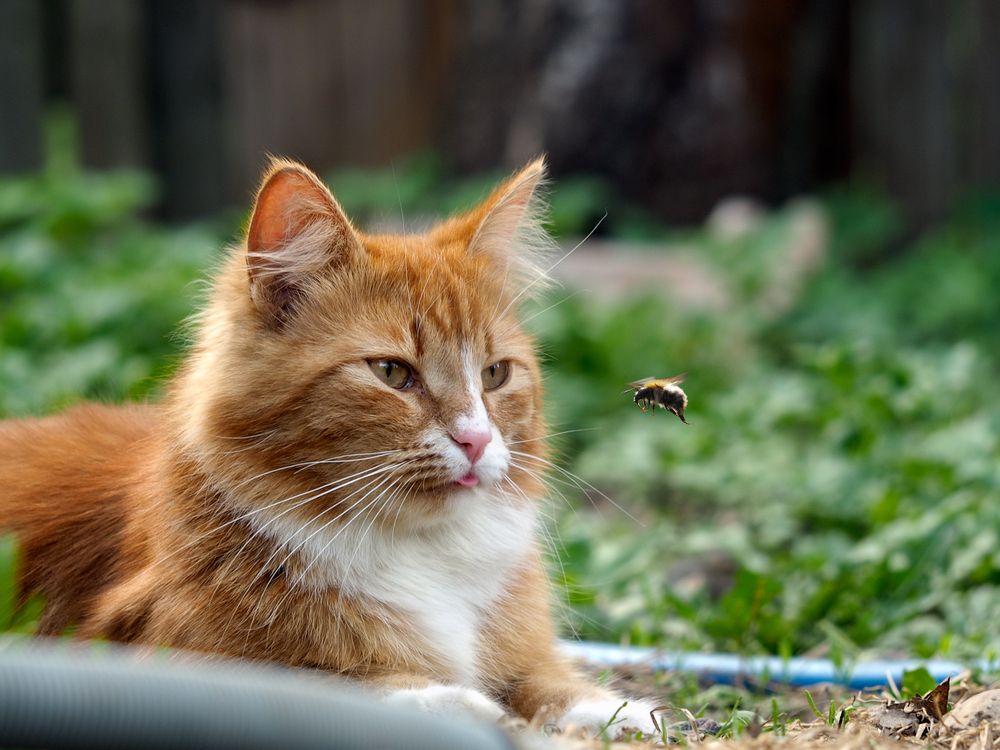
When the sun is shining and the birds are singing, there’s also a good chance that bees and wasps will be stinging. If your cat has managed to find themselves on the wrong end of one of these stinging insects, you’re going to want to know what to do next. The first and most important thing to know is that anaphylactic reactions are very rare in cats, and in most cases, some basic first aid and TLC are all that will be required.
For more information about bee and wasp stings, including:
- Are cats allergic to bee or wasp stings?
- Do you need to take them to the vet?
- What can you do at home to help?
Keep reading as we answer all these questions and more.

Wasp or Bee - What’s The Difference?

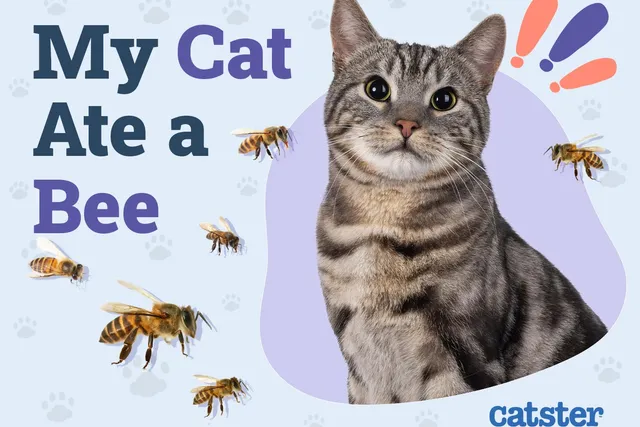
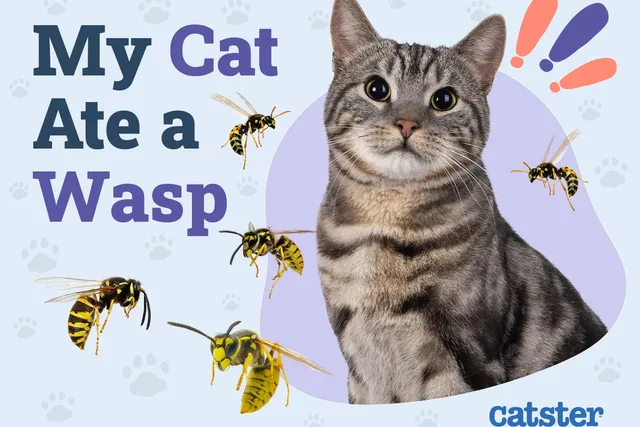
Bees and wasps both belong to the largest insect order, Hymenoptera, which contains over 150,000 species,1 including ants, hornets, and sawflies. While bumblebees are readily identified by their large, fluffy bodies, it can be trickier to differentiate between wasps and most other bee species. As a general rule, bees tend to have more rounded, hairy bodies, while wasps appear smooth with a very narrow waist.
An important difference between the two groups is that bees have a barbed stinger which is left behind, along with the venom sac, when they sting. This results in the death of the bee, and means that each bee can only sting once. Wasps do not have barbed stingers, so they can potentially land multiple stings in one attack.
What Happens When A Cat Is Stung By A Bee Or Wasp?
The most common places for a cat to be stung are the paws and face. This is partly because these are the parts that will be exploring and poking around, and partly because the rest of their body is protected by their fur (with the exception of hairless breeds, of course).
The sting of a bee or wasp will usually result in varying degrees of localized pain and swelling, which may occur immediately or after a few minutes. These signs tend to subside within a few minutes to an hour. Over the next few hours, you may see edema (fluid swelling) at or near the site of the sting, and your cat may become itchy.
Cats that are more sensitive to a sting may develop hives (no pun intended) or generalized pruritus (itchiness).

What To Do If Your Cat Is Stung By A Bee Or Wasp
If your cat has been stung by a bee or wasp, the first thing to do is safely move them away from the insect in question to avoid repeated stings, but be careful not to get yourself stung in the process!
Should I Take My Cat To The Vet?
If your cat has been stung by a bee or wasp but appears to be bright and not overly traumatized, it is usually safe to monitor them at home. However, if they are becoming distressed, or you are at all worried, do not hesitate to contact a vet for advice.
If your cat shows any signs of an anaphylactic reaction, has been stung multiple times, or has been stung inside the mouth, you should take them to the vet immediately.
How Can I Help My Cat At Home?
Some cats will not tolerate being restrained or assisted, and it may be safer to just keep an eye on them rather than impose unwanted first aid. For cats that will accept your help, you can use the following steps if needed:
Do I Need To Remove The Sting?
Ideally, yes, because removing a bee sting will reduce the amount of irritation. Do not use tweezers or any sharp objects, as these will most likely cause more damage. Instead, take a blunt item, like a credit card or butter knife, and scrape it across the skin surface to dislodge the stinger.
However, the chances of you being able to locate and identify a bee sting are slim, and the chances that your cat will allow you to try removing it are even more remote. The tiny sting will either be absorbed or expelled by the body on its own.
Are Cats Allergic to Bees or Wasps?
Some cats can develop a hypersensitivity reaction to the proteins that are injected into the body with a bee or wasp sting. This usually requires repeated exposure, meaning multiple, separate stings. In most cases, this leads to more intense localized pain and swelling. True anaphylactic reactions are rare in cats.

Anaphylaxis
Anaphylaxis is an extreme, life-threatening hypersensitivity reaction that certain individuals can experience when exposed to the venom of a bee or wasp sting. If your cat shows any of the following signs after an insect sting, they must be taken to a vet immediately:
- respiratory difficulty
- acute vomiting and diarrhea
- excessive drooling
- ataxia (incoordination)
- excitement
- pale gums
Without treatment, anaphylactic reactions can progress to shock, seizures, coma, and death.
What To Do If You Find A Bee or Wasp Nest
We may not all be fans of these insects, but they are extremely important to the survival of life as we know it. Without pollinators like bees and wasps, the vast majority of plants on earth could not reproduce, so it is vital that we do everything we can to protect them.
If you find a bee or wasp nest, the ideal action is no action. Make others aware of its location, but if possible, leave them be. If a nest must be moved, do not attempt to do this yourself. Contact a professional pest control company so they can safely remove the nest.
Trivia - Killer Bees

Summing Up
We know that cats can be curious and that this curiosity can land them in all sorts of trouble. Bee and wasp stings are relatively common during spring and summer, but they are not necessarily an emergency situation.
In the majority of cases, cats will cope with the sting without our interference or may require some basic first aid. Cases of multiple stings, stings in the mouth, hypersensitivity, or anaphylaxis should be seen by a vet as an emergency.
Bees and wasps may not be loved by all, but they are an essential part of life on Earth, so it is important that we learn to live safely alongside them, and that includes knowing what to do if we manage to upset them. If in doubt, always reach out to your vet or speak to one online.
Sources
Featured Image Credit: Irina Kozorog, Shutterstock
Expert cat care, straight to your inbox
News, insights, and useful advice, delivered to you.

No spam — unsubscribe anytime.
By signing up, you agree to our Terms & Conditions and Privacy & Cookies Policy.
How useful was this post?
Click a star to rate. You can leave written feedback afterwards. (We read all feedback.)
Dr. Karyn Kanowski BVSc MRCVS (Veterinarian)
Dr. Karyn comes from Queensland, Australia, and has lived in the UK for the past 10 years. In 2010, she graduated from The University of Queensland School of Veterinary Science and also has a Bachelor’s degree in Zoology. She is passionate about using evidence, experience, and owner collaboration to provide the best solutions for pets, and believes in making reliable information about animal health accessible to all. Dr. Karyn shares her home with five cats, four dogs, and one husband. When she is not in the scrubs, she spends her time writing, gardening, and cleaning up pet hair!