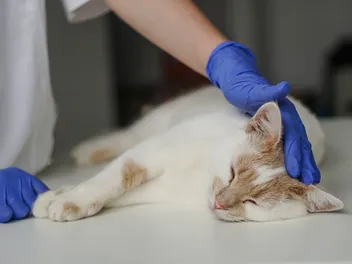
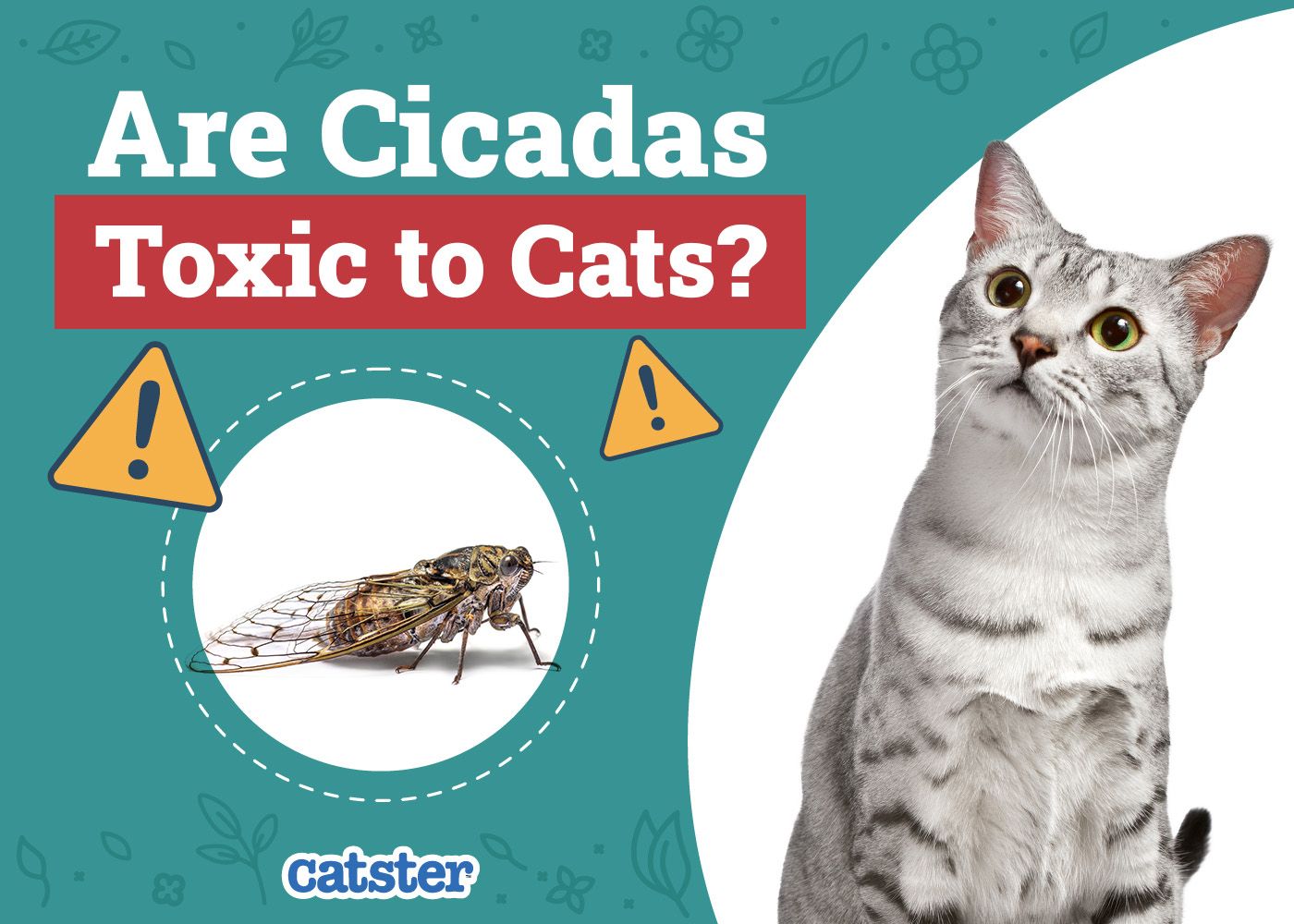
Can Cats Eat Cicadas? Vet-Reviewed Health Concerns


In this article
As any cat owner will attest, cats are expert hunters. Their instinct for preying on small, fast-moving objects is baked into their DNA. This instinct and innate skill have been key to their survival. While small mammals like mice are typically first on a cat’s menu, insects are often just as irresistible, whether walking or flying, and this may include cicadas.
In summer, cicadas hatch in massive numbers, and chances are high that your cat may come across one. If they do, can cicadas be dangerous for your feline?
The answer is no—cicadas do not pose much risk to cats as they are not toxic, and typically, there is no need to worry. That said, cats should not eat too many cicadas, nor should you purposely feed them to your feline.

The Dangers of Cats Eating Cicadas
Thankfully, cicadas are not toxic to cats. However, this doesn’t mean they cannot cause harm to felines under certain circumstances.
If your cat manages to catch one or two cicadas and kills and eats them, they will most likely be fine. Cicadas can become an issue for cats when they eat a large amount. Since these flying creatures are not a normal part of your cat’s diet and cats tend to have a fairly sensitive digestive system, even just ingesting a few could cause gastrointestinal issues for your cat. These bugs are typically very easy for cats to catch, and some overzealous felines will end up eating far more than they should.
Simply switching their food to a new brand can cause stomach issues, so the introduction of these insects may also cause problems. Adding to this potential for stomach upset is the hard exoskeleton of cicadas. These tough outer shells make cicadas even more difficult to digest. This could result in lethargy, vomiting, and even diarrhea.
Cicadas are typically too numerous to make pesticides effective, leading to their uncommon use. Although the threat of your pet eating cicadas treated with pesticides is unlikely, it’s still something to keep in mind.
Lastly, in rare cases, some cats may have an allergic reaction. If you notice any symptoms, such as swelling of the face, limbs, or tongue or itchy lumpy skin, you should take your cat to a vet straight away.
Tips for Keeping Your Cat Safe
While cicadas are not toxic to cats, eating too many can cause gastrointestinal upset, and this can lead to mild dehydration from vomiting and diarrhea in some cases. For this reason, it’s best to avoid letting your cat eat cicadas whenever possible. Of course, this is easier said than done.
Luckily, cicadas are seasonal, and they are only around for a few weeks at a time. However, different species of broods can emerge at the same time, resulting in an explosion of cicades.
In May of 2024, two broods of cicadas, the Great Southern Brood and the Northern Illinois Brood, were predicted to emerge at the same time. This is not that common of an occurrence, but it’s recommended to try and keep your cat indoors as much as possible for the 6 weeks or so when that many cicadas are around.
Cicadas are found mostly in and around mature trees, so keeping your cat away from these will also reduce the chances of them coming into contact with these winged creatures.
Offer your cat plenty of safer options for mental and physical enrichment to reduce the likelihood they will want to prey on cicadas. Playing several times daily with their favorite toys to simulate chase, pounce, and attack is a good way to let out those hunting instincts in a safe way. Offering food in puzzles, slow feeders, or even scatter feeding to keep your cat's mind busy is a great option, too.


Conclusion
It is perfectly normal and understandable for your cat to be fascinated by these loud, flying insects. Luckily, there is no real reason for concern, as cicadas are not toxic to cats. However, due to the risk of gastrointestinal upset, it is best to keep them off your cat’s menu as much as possible.
One or two cicadas are unlikely to cause your cat much tummy trouble, but if your cat has gotten carried away and is showing any signs of distress, a visit to a vet would be a safe bet.
Sources
Featured Image Credit: Mark Brandon, Shutterstock
Expert cat care, straight to your inbox
News, insights, and useful advice, delivered to you.

No spam — unsubscribe anytime.
By signing up, you agree to our Terms & Conditions and Privacy & Cookies Policy.
How useful was this post?
Click a star to rate. You can leave written feedback afterwards. (We read all feedback.)
Nicole is a lover of all animals, especially of the feline variety. She's mom to four, three fur babies and a human baby. She and her husband, John, live on a large forest property down in New Zealand.
Their beautiful Burmese cat Baby (who is now 17 years old) was their first child, though he is now called Baby Cat since their human baby joined the party in 2022. The dogs Rosa and Mac also love cats, but the whole family agrees that King Baby Cat is enough cat for this household.
Nicole is the Director of Content Management at Catster and Pangolia. With a Bachelor's degree in Education and years of online experience, she shares her pet knowledge and the knowledge of other professionals with the world, aiming to improve pets and pet parents' lives.