Breakaway Collars Guide: Vet Reviewed Uses, Safety & Advice


In this article
No cat owner wants to consider the possibility of their kitty getting lost, but it’s always better to be prepared for the worst-case scenario. If your cat escapes your house or yard, you want to make it easy for anyone who finds them to get your pet safely home. Wearing a collar and ID tag is a simple way to do just that.
However, because cats are climbers and explorers, a standard collar can be dangerous if it gets snagged, potentially choking the cat. That’s where breakaway collars come in. In this article, we’ll discuss how these collars work and offer tips to help your cat accept wearing one.

How Does It Work?
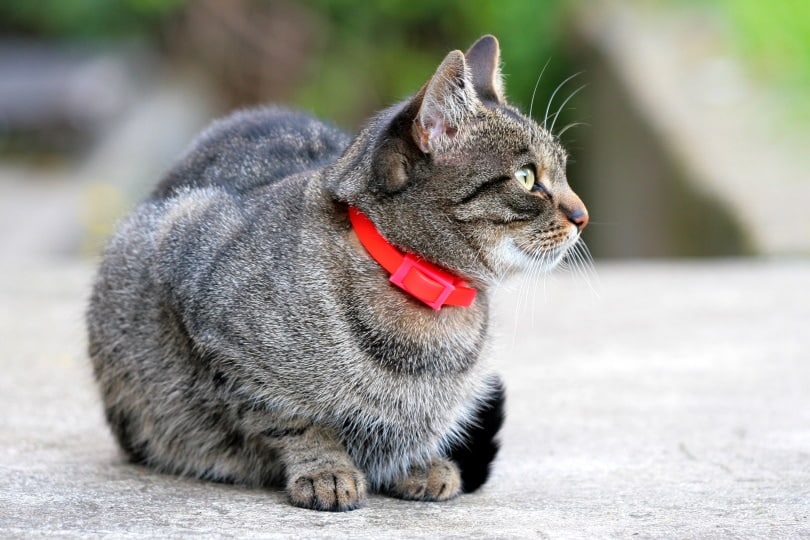
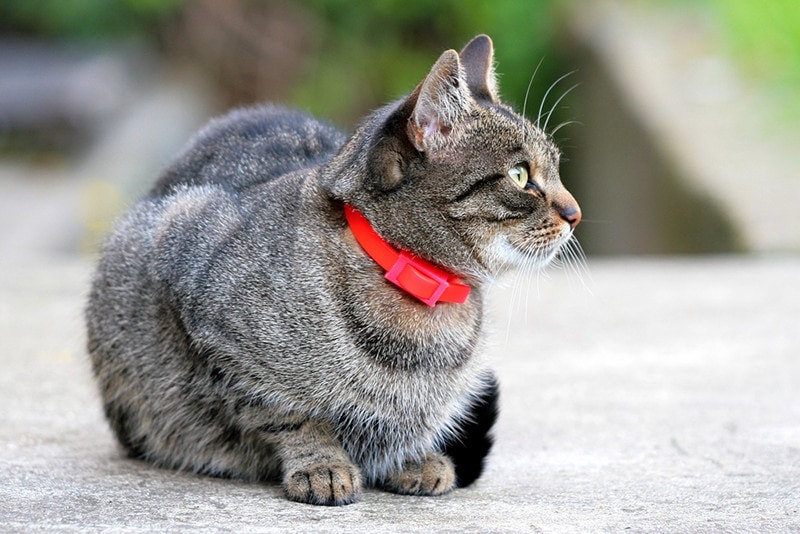
Breakaway collars are also known as quick-release collars. They are made with a buckle designed to come undone with enough force. This provides a safety net for a cat who gets its collar snagged on a tree branch, for example. As the cat pulls on the collar, the quick-release buckle should come apart.
Outside of the breakaway function, these collars work like any other version you’d use on a dog. They provide a place to display an ID tag or contain the information printed on them. Unlike dog collars, however, breakaway ones can’t be used to attach a leash since they will come loose should the cat pull.

What Are the Different Types of Breakaway Collars?
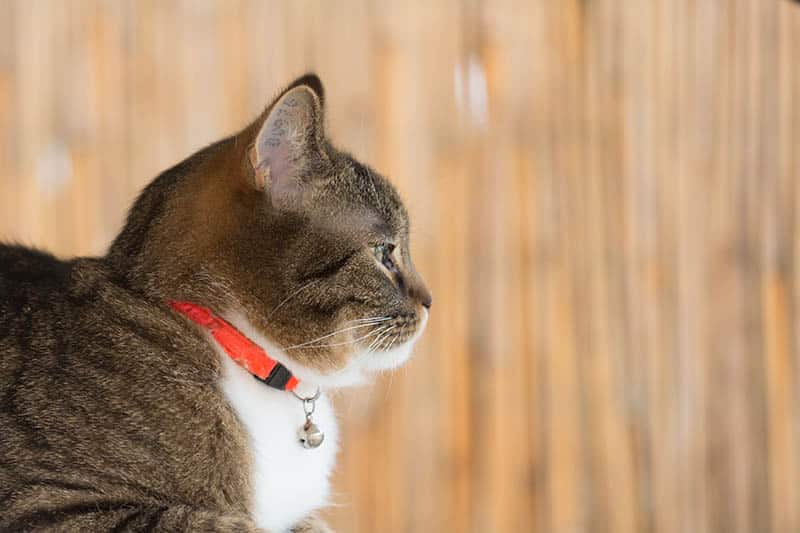
All breakaway collars have a similar function, but you’ll find some variation in the details. For example, some breakaway collars are reflective, making it easier to see your cat as they move around outdoors at night. Most include an attached bell, which makes it harder for your cat to stalk local birds and wildlife.
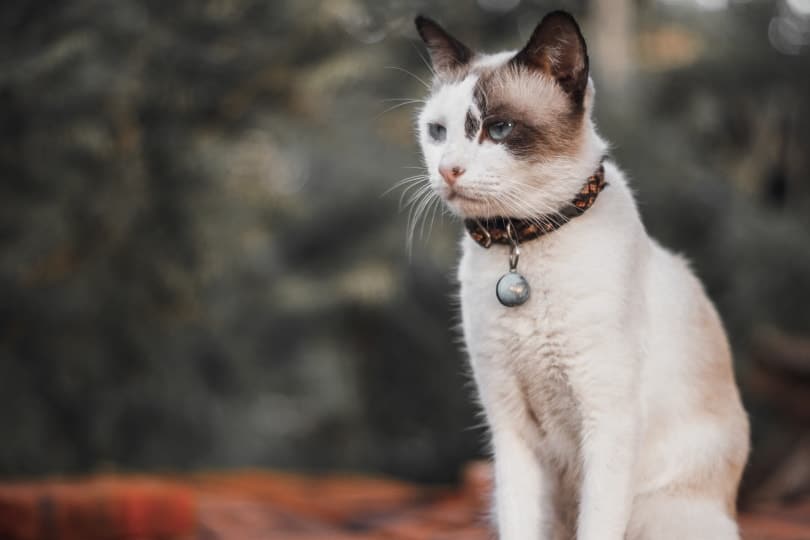
Breakaway collars can be made of nylon, leather, or similar materials. Some include such embellishments as fake jewels, ribbons, or bowties. They may serve a practical purpose, but that doesn’t mean they can’t look stylish too.
Some breakaway collars can be personalized with your cat’s name and phone number. They are generally available in various colors and patterns, including your favorite sports team. Most are adjustable, allowing you to fit them to your cat’s neck comfortably.
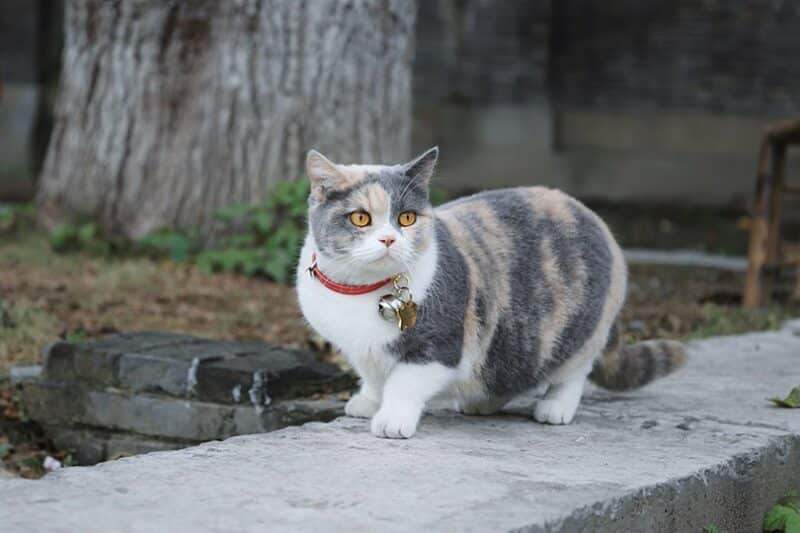
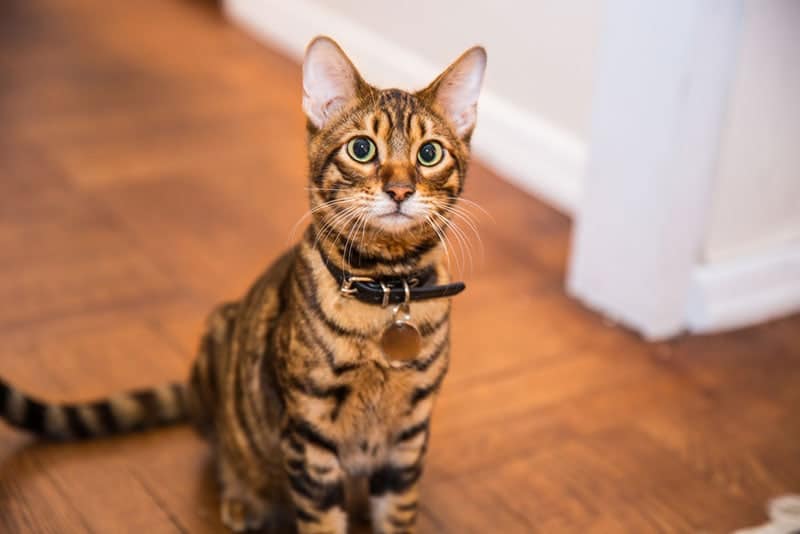
If you’re adding an ID tag to the collar, the most common option is one where the tag attaches to a ring and dangles free. You may also find one where your cat’s information is stamped onto a metal plate and attached to the collar itself. Some cats may tolerate this breakaway collar better since there’s no dangling bit to annoy them.
Breakaway collars can be found nearly anywhere that sells pet accessories. You can also check internet retailers for unique, handmade options to help your cat stand out from the crowd.
When Is It Used?
Use a breakaway cat collar on any feline who spends time outside, even just a few minutes at a time. Your cat may be a familiar sight for your close neighbors, but there’s no telling how far they may wander. You also want to make it easy for a veterinarian or animal control to contact you if your cat is involved in an accident and brought in for care by a Good Samaritan.
Ideally, indoor cats should also wear a breakaway collar. Many cats are masters of escaping, and it only takes one door left open briefly as you carry in groceries for them to make a break for it. Your cat could also become scared by storms or fireworks, leading them to bolt from the house. Indoor cats can also get into trouble inside the house when everyone might be out, so a breakaway collar is ideal to prevent any unforeseen dangers!

Advantages & Disadvantages of Breakaway Cat Collars
Advantages of Breakaway Cat Collars
The primary advantage of breakaway cat collars is their safety. Cats should never wear traditional collars. The potential risks are too high should your cat’s collar get caught on anything. Cat collars, in general, have the advantage of providing a quick, visual way to get your contact information in front of anyone who finds your kitty.

Disadvantages of Breakaway Cat Collars
One disadvantage of breakaway cat collars is that because they are so easy to remove, a cat who’s determined not to wear one will meet little resistance in getting it off. A quick hindleg kick after slipping it under the collar is usually all it takes.
While this can be frustrating, it also defeats the purpose of wearing the collar. Another disadvantage is that because they do come loose if snagged, your cat could quickly lose their identification when outside and on the run. In this instance, having your cat microchipped as a backup is a great option.
Frequently Asked Questions
How Do I Get My Cat to Wear a Collar?
Contrary to popular belief, it is possible to train a cat, and that’s often what you must do to get them to wear a collar. Be prepared with some of your cat’s favorite treats before you get started. Place the collar on the cat and immediately distract them with treats or food.
This helps build a positive association between the collar and food and keeps the cat from instantly kicking it off. Take the collar back off after only a few minutes. Each day, gradually increase the length of time your cat wears the collar, continuing to reward them with food generously. Eventually, your cat should grow accustomed to wearing the collar full-time.
How Tight Should the Collar Be?
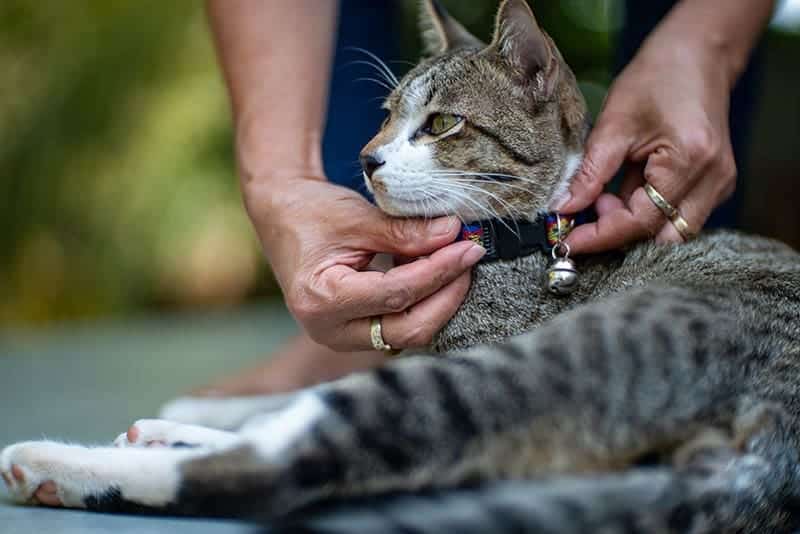
One way to help your cat accept the breakaway collar is to ensure it fits properly. Choose a lightweight, adjustable collar. Once the collar is in place, tighten it until it is snug; you should be able to fit two fingers between it and your cat’s body. A collar that’s too tight will be uncomfortable and potentially dangerous. However, one that’s too loose may slide right off or allow your cat to get their legs caught.
What ID Should My Cat Have in Case the Collar Breaks?
In addition to the collar and ID tags, cats should have a permanent form of identification that can’t break off and get lost. Microchips are the most common version of this. An animal shelter or veterinarian inserts these small chips under your cat’s skin. You then register your contact information with the company, and it goes into a database.
All vets and shelters have microchip scanners that detect the presence of this chip and display your cat’s uniquely assigned number. After a fast call to the company, your cat can be on their way back home. Always make sure to keep your contact information current in the database.
A less common way to permanently identify a cat is by an ear tattoo. Shelters and trap-neuter-release programs typically use these to keep track of stray and feral cats they are managing. If you adopt one of these cats, they may have an identifying tattoo. Like the microchip, you’ll need to make sure the contact information tied to that tattoo number is current.

Conclusion
Breakaway cat collars are a simple yet effective way to provide your kitty with a means of identification while staying safe. Because they’re available in so many colors and styles, you will surely find one that looks amazing on your cat. It may take patience to teach your cat to wear the collar, but it’s worth it.
Just remember that the collars have their limits, and it’s vital to ensure your cat has a permanent means of identification in case the collar does break away as it’s designed to.
See also:
Featured Image Credit: Daniel Rajszczak, Shutterstock

Expert cat care, straight to your inbox
Vet-reviewed advice, behavior tips, and the best of Catster. Free, and you can unsubscribe anytime.
By signing up, you agree to our Terms & Conditions and Privacy & Cookies Policy.
Elizabeth Gray is a lifelong lover of all creatures great and small. She got her first cat at 5 years old and at 14, she started working for her local veterinarian. Elizabeth spent more than 20 years working as a veterinary nurse before stepping away to become a stay-at-home mom to her daughter. Now, she is excited to share her hard-earned knowledge (literally--she has scars) with our readers. Elizabeth lives in Iowa with her family, including her two fur kids, Linnard, a husky mix and Algernon, the worldʻs most patient cat. When not writing, she enjoys reading, watching all sports, and spending time outdoors with her family.
Join the conversation
Ask a question, share your story, or send private feedback.