Why Is My Spayed Female Cat Yowling? 6 Vet-Reviewed Reasons & Solutions


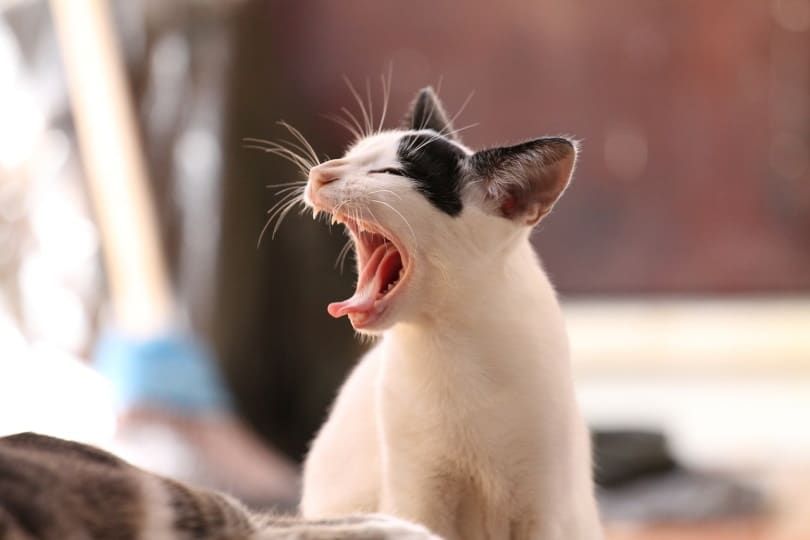
If you’ve recently had your female cat spayed, you might’ve thought it would remedy her yowling. Once several weeks have passed, your cat is no longer in post-operative recovery and is no longer experiencing heat, so she would have no reason to yowl, right? Not necessarily. Yowling, like meowing and purring, is a form of communication for your cat.
So, being spayed won’t automatically mean your female cat will never yowl again. Hopefully, it will end any constant yowling, but your cat may still yowl when an occasion arises that requires it. Below, we'll discuss the six most likely reasons a female cat would still be yowling after spaying.

The 6 Reasons Why Your Spayed Female Cat is Yowling
1. Stress & Anxiety
Stress and anxiety can make your cat yowl like the world is ending, and plenty of things can stress our feline friends out. Stressful situations can include moving to a new home, a new pet (or baby) moving into the house, or even large natural disasters such as tornadoes and storms. Your kitty can also become anxious over factors in their surrounding environments, such as loud noises or dogs insistently barking at them. In this case, yowling can be a way to express that stress and anxiety.
Another instance in which your cat can become anxious is car rides. Not all cats enjoy being put in a pet carrier and traveling in the car, whether long or short distances. For one, they can’t see what’s going on, or they also might be the type of cat who experiences motion sickness. Feeling sick and stressed is a double whammy, so is it any surprise they’d complain?
How To Remedy the Issue
2. Attention Seeking
Your spayed female cat’s yowling may be a matter of her seeking your attention. Your pet might want you to play with you, or she could be hungry. If you haven’t noticed your pet trying to get your attention with meows or pointed looks, she could easily switch to yowling to get what she wants.
Cats can also get lonely, so if you come home to your kitty greeting you with yowls, it could be her way of saying, “I missed you; please don’t leave again.”
How To Remedy the Issue
3. Pain
You’ve likely experienced this one. Your cat does something that ends up with them getting injured or trapped, and you hear a horrifying yowl that scares you to death. Yowling doesn’t automatically mean an injury that’s just happened, like a fall. Your cat could be experiencing pain internally that’s bad enough for them to cry about it instead of going to hide out over it.
How To Remedy the Issue

4. Being Territorial
It may seem like male cats would be more territorial than females, but females can be pretty territorial, too! If you spend all your time with someone or another pet, they can get jealous. The result may be yowling to get your attention, followed by trying to insert themselves between you and whatever (or whoever) is taking up your time.
How To Remedy the Issue
5. Senior Felines
Do you own a senior feline that’s been yowling throughout the night? There’s a good chance your cat is beginning to suffer from cat dementia. As with humans, cats’ cognitive functions deteriorate as they age. If your older cat is entering the early stages of dementia, you’ll find she is also likely dealing with loss of balance, weakening eyesight, irritability, disrupted sleep, and more.
How To Remedy the Issue

6. Ovarian Remnant Syndrome
Has it been months since your cat was spayed, yet she's still showing signs of experiencing heat? If so, this could be due to a condition known as ovarian remnant syndrome. As you can probably tell from the name, this condition occurs when bits of ovarian tissue has been accidentally left behind during spaying. If even the tiniest bit of ovary tissue remains, it will produce estrogen, the hormone responsible for heat cycles. If that is what’s wrong, your cat needs to be treated as soon as possible.
How To Remedy the Issue
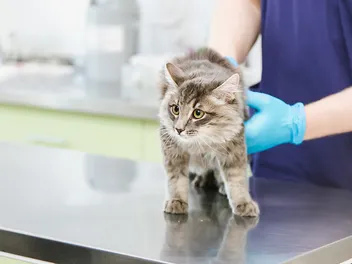
If you're concerned about your cat's health we suggest you speak to a vet.
Conclusion
There are several reasons your spayed female cat is still engaging in yowling. Luckily, many reasons your cat may yowl aren’t too serious. These less serious causes of yowling can most likely be remedied by a few actions, making life much happier for you and your favorite feline. However, there are some situations where yowling excessively will involve a trip to your vet.
Featured Image Credit: Luis wilker Wilkernet, Pixabay
Expert cat care, straight to your inbox
News, insights, and useful advice, delivered to you.

No spam — unsubscribe anytime.
By signing up, you agree to our Terms & Conditions and Privacy & Cookies Policy.
How useful was this post?
Click a star to rate. You can leave written feedback afterwards. (We read all feedback.)
Misty Layne lives out in the woods in small-town Alabama with her two Siamese cats —Serafina and Jasper. She also has an array of stray cats, raccoons, and opossums who like to call her front porch home. When she’s not writing about animals, you’ll find her writing poetry, stories, and film reviews (cats, by far, her favorite writing topic, though!). In her free time, Misty enjoys chilling with her cats, playing piano, watching indie and foreign films, photographing abandoned places, and catching up on her never-ending TBR list.