Are Essential Oils Safe For Cats? Vet-Reviewed Facts

In this article
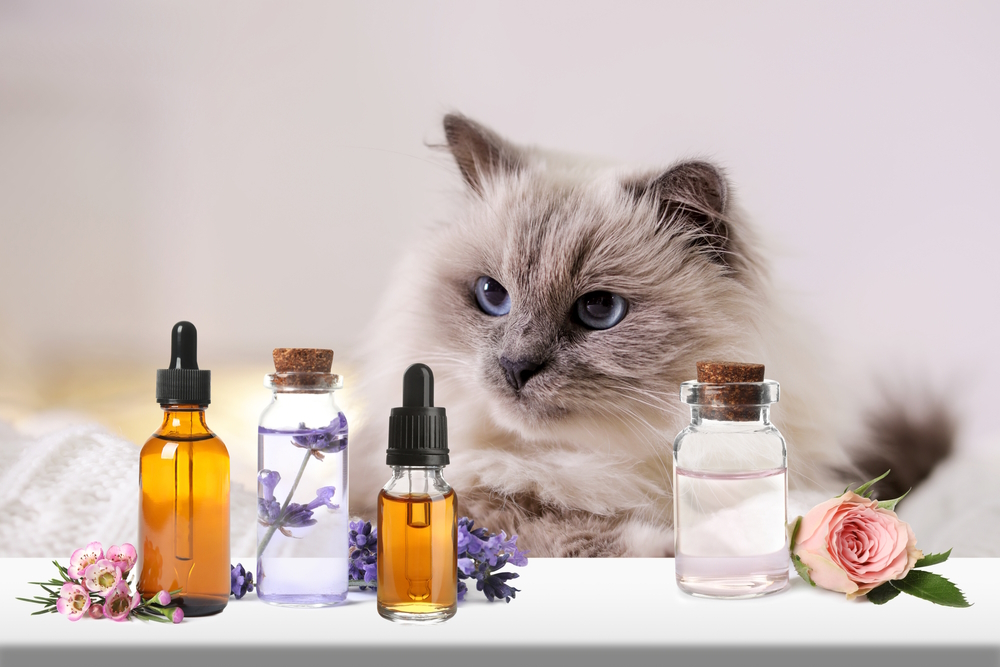
Essential oils have gained popularity as natural treatment options that some studies suggest may have various benefits, including improving sleep, reducing stress, and even decreasing nausea in people. But are essential oils safe options for cats? The science is clear; essential oils are dangerous to cats.
Cats don’t have the liver enzymes required to break down many essential oils efficiently; they’re also sensitive to the phenols found in essential oils. Because cats can’t efficiently metabolize these products, small amounts can lead to toxicity.

Are There Essential Oils That Are Particularly Toxic to Cats?
Yes, several essential oil blends are highly toxic to felines. Clove, sweet birch, citrus, pine, Ylang Ylang, peppermint, cinnamon, wintergreen, pennyroyal, clove, eucalyptus, thyme, lavender, oregano, and tea tree oils are all extremely toxic to cats.
Signs of essential oil poisoning include gastrointestinal distress, such as vomiting and diarrhea, tremors, low body temperature, and liver failure. But don’t wait for signs to develop if you suspect your pet has consumed or been exposed to even a small portion of a toxic essential oil since even a few licks of undiluted oil can seriously affect cats.
You can use dishwashing liquid to remove any oil on your pet’s fur or paws and immediately reach out to your veterinarian for guidance. Have whatever product your cat got into close by when you call so you can provide specific information about what your pet may have been exposed to. Remember that early intervention and treatment often lead to better outcomes regarding essential oil poisoning.

What Are Some Common Products That Contain Essential Oils?
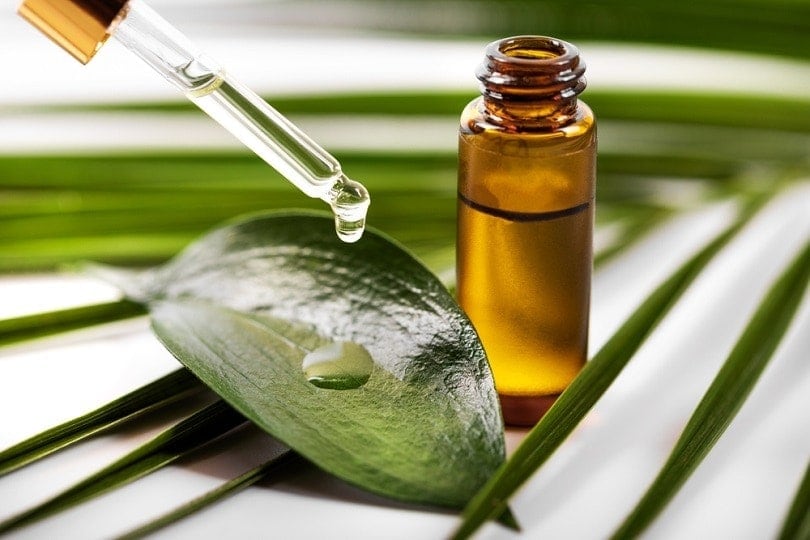
Essential oils are commonly included in massage oils, cosmetics, and cleaning products. They’re also available undiluted for use in aromatherapy. Some products are mixed with carrier oils; others, such as tea tree and lavender oil, are frequently sold as individual products.
Several commercial mixtures feature a combination of botanical oils designed to relieve stress or increase energy, and tea tree oil is often included in shampoos and commercial antifungal creams.
How Do Cats End Up Exposed to Essential Oils?
Cats that walk through essential oil spills can get a mouthful when licking their paws clean, but they can also have severe reactions to diffused essential oils when inhaled or absorbed through the skin.
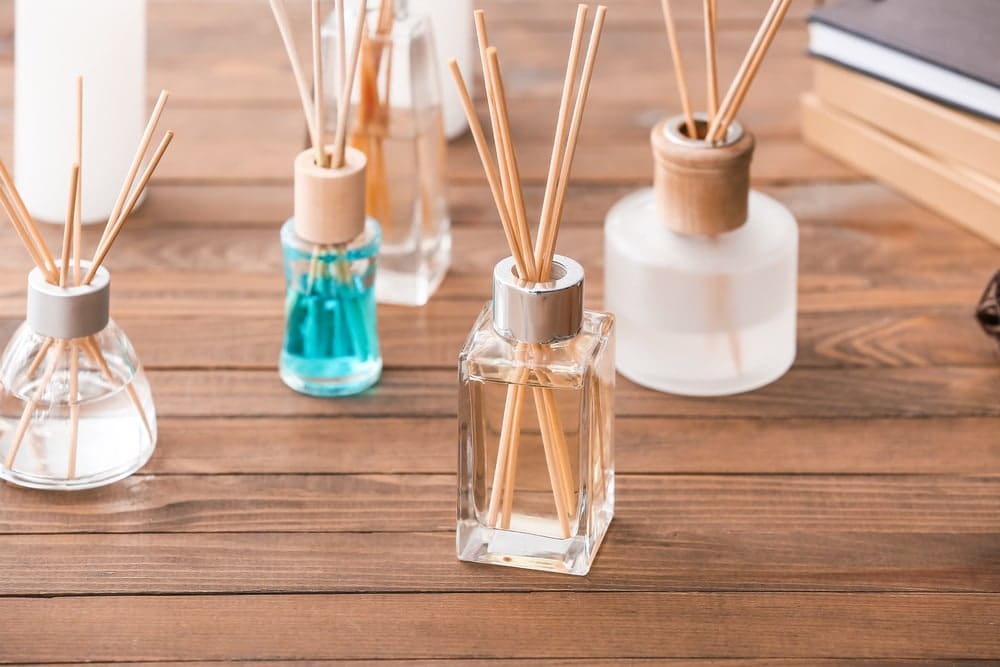
Diffusers are problematic for several reasons. Liquid formulas that feature open tops and reeds can easily be knocked over by cats, leading to ingestion incidents. And many cats are sensitive to smells, so even passive diffusers can irritate some. Cats with respiratory issues may crouch and gag as if they’re trying to cough up a hairball when exposed to an oil diffuser. However, they usually improve when removed from the trigger and given fresh air to breathe.
Active diffusers dispense essential oil droplets that are big enough to make cats ill. Both ultrasonic and nebulizing diffusers fall into this category. These products produce droplets that fall onto cats’ fur, which can be licked off and consumed during grooming. The oil deposited on the hair can also be absorbed through the skin.

What About Natural Flea Remedies?
Tea tree and eucalyptus oils are often mentioned as natural flea-killing options. Not only are both products toxic to cats, but they don’t address the solution since they’re ineffective as pesticides and leave eggs behind. Because they are so dangerous, even the application of diluted oils can have serious ramifications. The only safe, effective way to treat your cat for fleas is to get a prescription from your veterinarian. Then, you can contact a pet-friendly pest control expert to treat your home.
We recommend you consult a veterinarian for the best advice on which would be the best treatment for your cat.
Conclusion
Cats and essential oils are a terrible combination. They may benefit people, but essential oils can cause severe health problems in cats since their bodies can’t efficiently break down essential oils. Even small amounts of essential oils can lead to toxicity in kitties. While all essential oils can make cats sick, undiluted formulas are usually the most problematic since they’re more concentrated.
Sources
https://www.aspca.org/news/essentials-essential-oils-around-pets
https://health.clevelandclinic.org/essential-oils-101-do-they-work-how-do-you-use-them/
https://www.petmd.com/dog/parasites/tea-tree-oil-fleas-it-safe
https://vcahospitals.com/know-your-pet/essential-oil-and-liquid-potpourri-poisoning-in-cats
https://www.petmd.com/cat/can-you-use-essential-oils-cats-fleas-and-ticks
Featured Image Credit by: Madeleine Steinbach, Shutterstock

Expert cat care, straight to your inbox
Vet-reviewed advice, behavior tips, and the best of Catster. Free, and you can unsubscribe anytime.
By signing up, you agree to our Terms & Conditions and Privacy & Cookies Policy.
Lorre Luther is a writer who is firmly convinced that cats are smarter than humans. She left her law career in the United States and moved to the Netherlands to follow her dream of becoming a writer. Lorre currently lives in Rotterdam, she enjoys traveling and greatly appreciates the beauty of nature. Lorre has a spot for animals and admires the intelligence of cats.
Join the conversation
Ask a question, share your story, or send private feedback.