Get

In Your Inbox

Catster is reader-supported. When you buy via links on our site, we may earn an affiliate commission at no cost to you. Learn more.

Tube Feeding for Cats: Success, Safety, & When to Do It (Vet-Verified)

Share

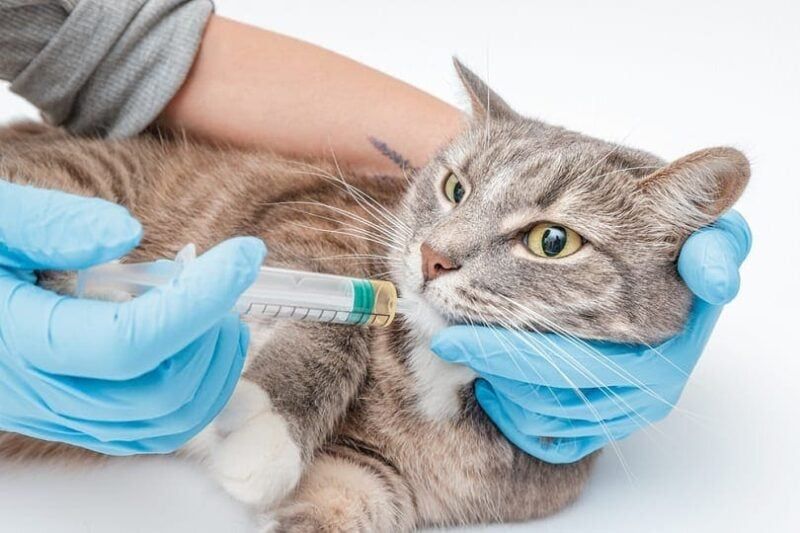
A veterinarian feeds a cat using a tube

There is nothing more frustrating, and worrisome, than a sick cat who won’t eat. Cats may refuse to eat for many reasons. They may be feeling in pain or may have developed an aversion to their usual food. Most often though, inappetence and anorexia will be caused by an illness, either because the cat feels nauseated or can’t smell their food. A cat that doesn’t eat for more than 24 hours should see a vet, and a cat that doesn’t eat for 48 hours is at risk for developing hepatic lipidosis, also known as fatty liver disease, which can be fatal if left untreated.

divider 3 paws

Force-Feeding Rarely Works

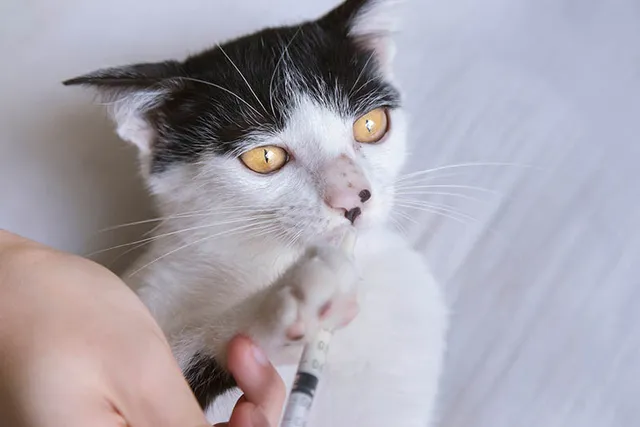
It used to be that force-feeding or syringe feeding was an acceptable method to try to get nutrition into these cats, but, as anyone who has ever tried to force-feed a cat knows, it can be a miserable process for both cat and guardian. The volume of food needed requires multiple feedings of multiple syringes, and it is extremely challenging to meet the nutritional and hydration needs of a cat in this way. In addition, sick cats frequently need multiple medications.

All of this makes syringe feeding a struggle, which leads to stressed cats and stressed humans. This is not only detrimental to the cat’s healing process, it can also damage the bond between cat and human to the point where the cat will run every time she sees her human coming. As a result, many cat guardians give up on cats who won’t eat and elect euthanasia.

“Feeding tubes shorten hospital stays, reduce the stress of administering medications, and ensure that nutrition, one of the most important aspects of healing, happens safely and effectively,” says Dr. Elizabeth Colleran, a feline veterinarian and owner of two cat hospitals. “They can aid in recovery from any illness that involves multiple medications, significant oral pain or any other condition that would cause a cat not to want to eat.”

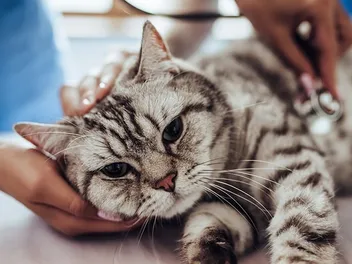
cat and owner and vet
Image by: Stock-Asso, Shutterstock

Don’t Be Afraid of Feeding Tubes

Most guardians will balk at the idea of a feeding tube. “I would never put my cat through that” is a frequent reaction. In human medicine, the idea of a feeding tube has end-of-life connotations. Nothing could be further from the truth in feline medicine.

What Is a Feeding Tube?

There are two main types of feeding tubes, nasogastric tubes and esophagostomy tubes. The first one is placed through one of the nostrils and doesn’t require anesthesia. The second type of tube requires the cat to be anesthetized because the tube is inserted through the side of the neck and into the esophagus. The vet then easily passes the tube down into the stomach. The other end of the tube will come out of the side of the cat’s neck and is held in place with a bandage, or even a stylish KittyKollar. The procedure typically takes less than 20 minutes and removal requires no sedation.

Using a Feeding Tube

Food is given via a syringe that attaches to the end of the feeding tube. A veterinarian will guide you as to what kind of food, how much, and how frequently to feed your cat. Food will need to be run through a good-quality blender. The tube will need to be flushed with water after each feeding, and the area around the end of the tube that sticks out of your cat’s neck needs to be kept clean.

Need veterinary advice but can't get to the clinic? Catster recommends PangoVet, our online veterinary service. Talk to a vet online and get the answers and advice you need for your cat without having to leave your living room — all at an affordable price!

PangoVet_Mention-in-Content for PangoVet2 save money

The real beauty of having a feeding tube in place is that you can also administer medications through the tube, rather than having to struggle to get your cat to take them.

Cats can eat on their own with a feeding tube in place. Once a cat eats enough on her own, removal of the tube can be considered, unless a guardian elects to keep the tube in place to facilitate delivery of medications.

divider 2 cats

A Cat Guardian’s Experience With a Feeding Tube

Dr. Kristopher Chandroo, a veterinarian and owner of The 100x Vet in Ottawa, Canada, shared the experience of one of his clients with a E-tube in his comprehensive article, What to Do When They Won’t Eat at All: Pina and the E-Tube. Pina’s guardians share what worked and what didn’t work for them.

There is no question that feeding tubes can improve the quality of life for sick cats. If you’re faced with a sick cat who won’t eat, discuss feeding tubes with your veterinarian. It may just save your cat’s life.

Additional resources: Dr. Lisa Pierson has a comprehensive article about feeding tubes on her website, catinfo.org.

Has your cat had a feeding tube? What was your experience? Would you consider a feeding tube for your cat?


Featured Image Credit: frantic00, Shutterstock

Want content like this delivered to you?

Sign Up For Our Newsletter

News, insights, expert advice, and everything cat

* By submitting, you agree to our Terms & Conditions and Privacy & Cookies Policy.


How useful was this post?

Click on a star to rate (you can leave written feedback after clicking submit)

Help us improve Catster for pet parents!

Your feedback really matters.

What did you like about this post? Also how can we improve it?

Join the conversation

Leave a Reply

You’re very welcome to leave a comment or question. Please know that all comments must meet our community guidelines, and your email address will NOT be published. Let’s have a positive and constructive conversation.


Talk With A Vet Online

Peace of mind,
anywhere, anytime

Affordable vet advice

Do Cats Cause Schizophrenia? Scientists Find a Link – Here’s What It Means

Being a fierce advocate (and occasional recipient of) mental health support and awareness, the term ‘crazy’ is not one I like to fling...

One in 100 Cats Gets Diabetes – Here’s How to Catch It Early

One in every 100 cats develops diabetes.1 That’s not a rare, unlucky condition reserved for cats with obvious health problems. It’s common enough...

Dramatic Rescue Turns Into Dramatic Reunion

What started as a routine call for the RSPCA became a heroic, five-hour rescue featuring one trapped and traumatized cat, an emotional family...

Ask Dr. Paola – Help! How Do I Know if it’s Ear Mites! (May 4, 2026)

Welcome to our “Ask Dr. Paola” series, where every Monday we bring expert advice straight from Dr. Paola Cuevas (MVZ) to help our...

More related

Catster’s Weekly Photo Contest Winners: Soaking Up the Sun (May 11, 2026)

Every week our team gets the privilege of sorting through our readers photos to choose what cats will win this weeks contest! See...

Why Do Cats Like Rubber Bands? 4 Vet-Approved Reasons

Cats are peculiar beings, and any cat owner knows that cats will entertain themselves with something simple, such as a milk ring, bottle...

How Can I Stop My Cat From Waking Me Up? 20 Tips & FAQ

It can be so frustrating when your cat keeps waking you up early in the morning! Whether it’s incessant meowing or relentless scratching,...

How Much Is a Rabies Shot for a Cat? (2026 Vet-Reviewed Update)

Vaccinations are crucial to protect your cats from disease. Arguably, one of the most important vaccines for cats is rabies. It’s not only...

Keep reading

Young Again Cat Food Review of 2026: Recalls, Pros, & Cons

Review Summary Michael Massie, the founder of Young Again Pet Food, started making pet food to provide quality food for his animal companions. In 1990, with nutritionists and veterinarians’ help, Young Again Cat Food created the first pet food for...

Young Again Cat Food Review

Dealing With an Aggressive Cat? 7 Vet-Verified Reasons Why Cats Become Aggressive

Even the most experienced cat caretakers can find themselves charged up on adrenalin when having to face a cat in the midst of a fit of aggression. But encountering a hissing, growling, screaming, and possibly even scratching and biting cat...

owner petting a hissing angry tabby cat

Why Does My Cat Lie on Top of My Laptop? 3 Vet-Reviewed Reasons

Any of us who share our lives and homes with a cat knows that they’re the real ruler of the roost. Enjoying a glass of water? There’s going to be a paw in it. Growing a gorgeous new houseplant? Those...

A white-coated cat lying on an hp laptop

9 Best Flea Treatments for Kittens (2026) – Reviews & Top Picks

Bringing your fluffy new kitten home is an incredibly exciting time. However, you must ensure that the kitten doesn’t come with any unexpected visitors, like a load of fleas, for example! Choosing an effective and fast-acting flea treatment is essential...

applying flea treatment to cat

The History of Commercial Pet Food: Invention & Timeline

Most cats and dogs today eat commercial pet food, but when was pet food invented, and at what point did it become popular? Dry biscuits for dogs were first sold around 1860 in the UK and were the creation of...

My Cat Is So Skinny I Can Feel Their Bones: Should I Worry? Vet-Reviewed Advice

Many of us are so used to seeing large and overweight cats that it can be surprising to see a cat that is thin. That means it can be difficult for many people to determine if their cat is too...

Skinny cat

Is String of Pearls Toxic to Cats? Vet-Verified Toxicity & Safety

Plants are a popular decoration for adding a little nature to your home. Especially with more people than ever working from home, adding plants to our surroundings has experienced a real boom in popularity. But many plants, like the string...

Catster_Is String of Pearls Toxic to Cats

Where Do Cats Like to Sleep? 5 Typical Places

If you are a cat owner, you know how much cats love to sleep. Most cats sleep up to 16 hours a day, and when choosing a place to sleep, most indoor cats love their particular sleeping spots. According to...

grey cat sleeping in bed beside a person's foot

Love Cats? So Do We! Join the Catster Community

Stay informed with expert pet care insights delivered straight to your inbox! Discover professional guidance on animal behavior, feeding tips, trusted product picks, and much more.


Sign up for the Catster Email Newsletter

Stay informed with expert pet care insights delivered straight to your inbox! Discover professional guidance on animal behavior, feeding tips, trusted product picks, and much more.