Can Cats Eat Raw Chicken? Vet-Reviewed Facts & Recommendations


In this article
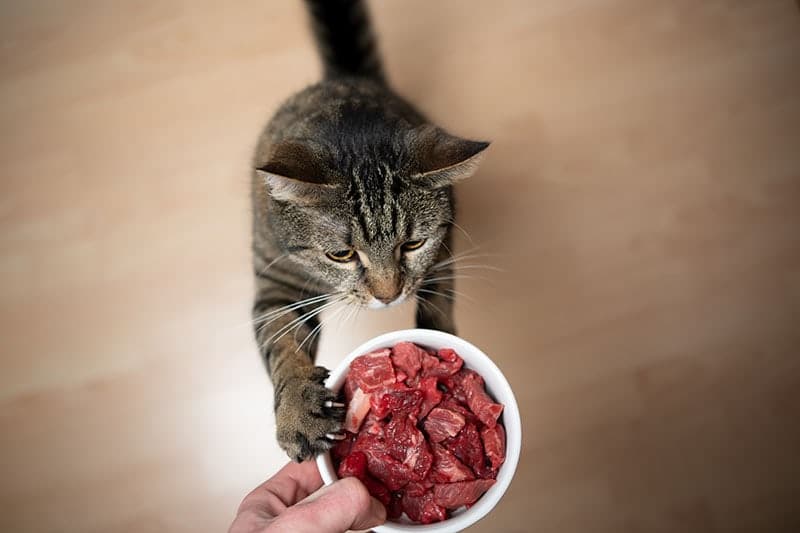
There's quite a bit of controversy today concerning whether or not cats should eat raw meat. In the wild, cats of old would capture their prey and eat them on the spot. What about after thousands of years of domestication?
The question regarding the truth behind cats and raw chicken is not as straightforward as some would like it to be. Many lauded veterinarians will answer yes, while others give a staunch no. However, raw chicken isn’t toxic or poisonous for cats.

The Basis for Differing Opinions
The reason for all of this controversy surrounding feeding your feline raw meat is due to the risk involved. Feeding your cat a raw diet, including giving cats raw chicken, could increase the chance of getting sick from harbored bacteria.
Our bodies cannot eat food in such a way or deal well with Salmonella or E.coli. However, we can’t think of our feline counterparts in the same way. Cats have a digestive system specialized to process meats, allowing them to better process raw food. In addition, the dangers of these bacterial contaminations can be somewhat subverted by sourcing raw ingredients from reputable sources and breeders, or looking for pasteurized raw meats.
Many of those cat owners and veterinarians who support raw diets make another point. There is a risk of feeding your cat anything. That is why there are recalls every year from significant pet companies if a batch is too dangerous to serve your cats.
While there is a risk that cats who eat raw chicken could contract potentially harmful parasites, the question is whether that outweighs the risk of feeding your animals heavily processed foods.
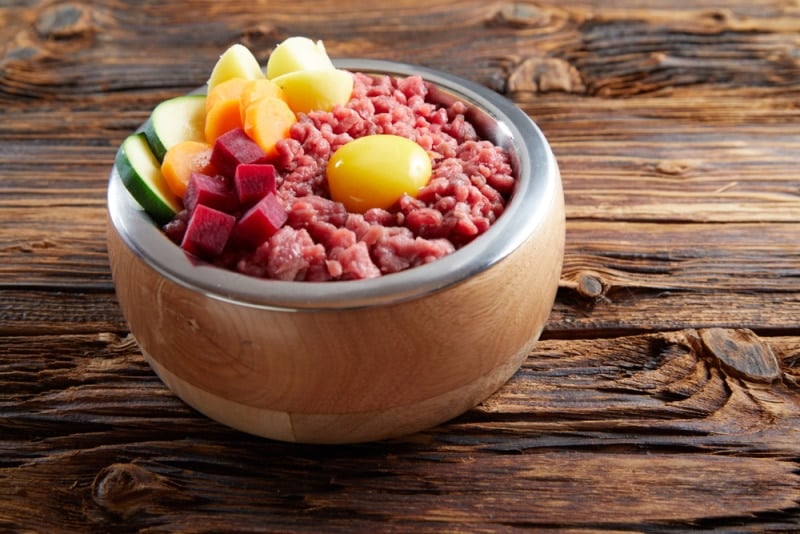
Many cat owners who support raw diets primarily do so because of their control over what their feline eats. There are no preservatives, fillers, or extras in a raw diet. As long as it is balanced, you know that what you are feeding your cat is what they need. Doing so can give you a sense of closeness to your pet, as more effort is incorporated into preparing a fresh or raw diet rather than just buying a commercial kibble.

Raw Chicken Serving and Storage
One of the most important parts of feeding your cat raw meat, such as raw chicken, is to store it and serve it properly. Following these procedures helps ensure that when your cat eats the food, they aren’t also licking from a potential petri dish.
When you buy raw chicken, look into the brand that manufacturers it. It should have gone through a process of high-pressure pasteurization processing (HPP) or flash-freezing. Both of these freezing methods kill off any harmful bacteria that could reside in the raw food.
There is a reason that so many of our common processed cat foods contain chicken. It is a perfect source of a complete protein for cats to eat. In other words, it contains all the essential amino acids cats need in their diet (including taurine). So long as it has been frozen or treated correctly before serving, eating it raw makes many proteins and nutrients more digestible.
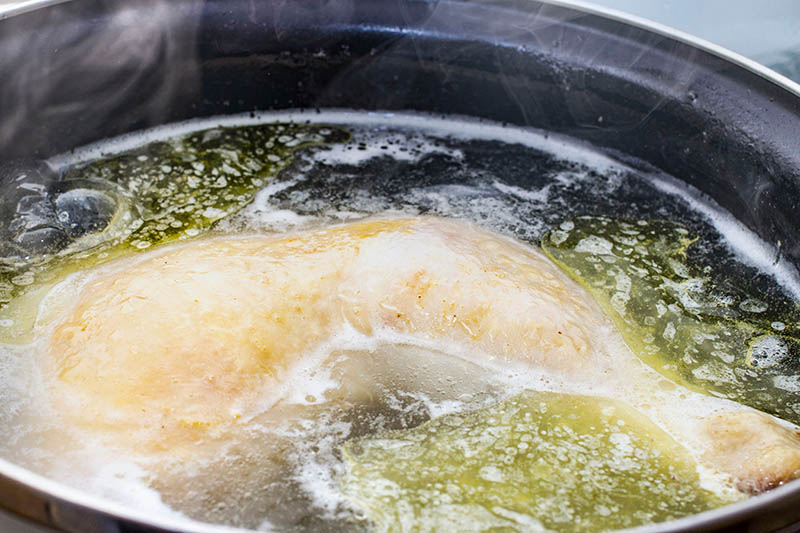
You can also serve cooked chicken if you want to give them something other than processed foods but don’t yet feel comfortable giving them raw meat.
Getting a fresh chicken is also preferable to anything else. If you can find it, get an organic chicken that’s been butchered. Shortly after that, serve it to your cat, but don’t leave it out for longer than a couple of minutes. Typically, cats won’t eat raw chicken if it isn’t fresh, but it is still ultimately down to you to keep them safe.
If you have never tried to feed them raw meat before, start slowly and with very easy-to-chew pieces. Watch them for their reaction and ensure that they will digest it properly before integrating it into a full-sized meal.

Can Cats Eat Chicken Bones?
Even if you decide to take on the risk of feeding your cat raw chicken, there are still some aspects you need to take care of before serving.
Bones are not inherently bad for cats. It is a bone puree that often gives wet food pate its staunch texture. However, if you don’t carefully vet bones, they can present a significant choking hazard for your kitty.
You should not feed your cat chicken bones, as they are a choking hazard. To incorporate bones into a cat’s diet, you should look for ready-to-eat raw diets that incorporate bones. They do this by grinding the bones down into a fine powder, which they mix with meat.
Most importantly, never feed your cat cooked chicken bones.
Cooked chicken bones easily splinter and turn into sharp shards instead of remaining more fibrous and chewable like raw bones.

Can Cats Eat Raw Chicken Liver?
The meaty part of a chicken is not the only choice for a cat indulging in some delicious raw chicken. Chicken liver can present another option to spice dinner up a bit. Again, so long as the chicken has been chosen and prepared carefully, then the chicken liver should be safe to eat. There will always be risks involved, but careful preparation on your part helps to mitigate them.
Chicken liver is very high in vitamin A, contains an assortment of B vitamins, calcium, protein, iron, magnesium, copper, and phosphorus, among other health benefits. However, this cut of meat is quite rich for cats, and feeding them too much of it can cause them to experience an upset stomach or diarrhea. Liver should only be offered as a treat to your cats on occasion (no more than 5% of their total feed intake on days when it’s offered) because overfeeding liver can lead to hypervitaminosis A.
What About Other Chicken Organs?
Chicken liver isn’t the only organ that you can feed your cat. There are also organs, such as the heart.
Again, too much of anything ceases to be good. However, a bit of an organ like the heart in a meal now and then is good for cats.
Typically, the more work that a muscle does, the more taurine it contains. Taurine is a little-known nutrient since humans don’t need much at all in our diet (it is, however, essential for human babies). However, for cats, it is essential regardless of their age. Feeding them hard-working organs like the heart gives them that extra taurine dose they need to keep them healthy.

Transitioning Your Cat or Kitten to Raw Chicken
The best place to start is with a vet. Talk to them about your diet goals for your cat and the best ways to make that happen.
Any animal that has been on one type of set diet for a while will not react well if they abruptly switch to something else. A cat’s digestive system needs time to adjust.
If you have a kitten you want to transition onto a diet with raw chicken, feel free to try it out slowly once they are about a year old. Start by giving them small chunks that contain no bones. Gradually, their morsels can be increased.
Raw chicken can be an excellent addition to a kitten’s diet since they need more of everything, including protein and calories, than adult cats. However, preparing a nutritionally complete diet for kittens is challenging and requires working closely with a veterinarian.
Risks of Raw Chicken and Chicken Bones
The primary risk associated with raw meat, including raw chicken, is that your cat will get a bacterial infection. The main risk associated with a long-term raw meal plan for cats is their nutritional competency; many diets have been found to be nutritionally incomplete. In addition, cats intended to be used as emotional support animals cannot legally be placed on a raw diet in many jurisdictions. Cats in frequent contact with immunocompromised individuals may pose a health risk to them if they’re fed a raw diet.
If cats eat bones, there is also a risk that they may choke, or the bones will splinter inside of your cat’s digestive tract and could cause damage.
If your cat begins to demonstrate signs of digestive unrest, then call a vet with any concerns.
Signs could include:
If they begin to choke or demonstrate signs of pain or coughing or vomiting blood, immediately bring your cat to your veterinarian’s clinic or hospital for a checkup.
Summary
The choice is down to each cat owner about which risks they want to take when feeding their cat. That being said, raw chicken, when sourced properly, is a safe food for your cats to consume.
The best thing to do is to talk with a vet you trust regarding your cat’s diet and how integrating raw meat could help or hinder them before making any final decisions.
Featured Image Credit: Catster.com

Expert cat care, straight to your inbox
Vet-reviewed advice, behavior tips, and the best of Catster. Free, and you can unsubscribe anytime.
By signing up, you agree to our Terms & Conditions and Privacy & Cookies Policy.
Christian started writing for a local newspaper as a teenager, and he's been involved in the publishing industry for most of his adult life. Combining his love of writing with a passion for animals, he is currently the Director of Editorial at Pangolia and the Editor-in-Chief at Catster.
Christian lives in the Philippines with his wife, son, and four rescue cats: Trixie, Chloe, Sparky, and Chopper.
Join the conversation
Ask a question, share your story, or send private feedback.