Can Cats Eat Chicken? Vet Approved Facts & FAQ


In this article
Your cat probably loves chicken. Most cats usually do. It is found in a lot of cat food, both canned and dry, and in cat treats, but perhaps you’re wondering if it’s okay for you to slip your cat some chicken morsels from the roast chicken on your plate?
So can cats eat chicken? Is it safe for them? The short and obvious answer is yes! Chicken is safe for your cat, but you should always check with a vet if you’re considering a change in your cat’s diet, and there are a few warnings to be aware of.

The Healthy Chicken
The chicken is a domestic bird raised on a farm for both its eggs and meat and is found on farms worldwide and is thought to be the most common bird in the world.
Chicken is considered one of the most popular meats out there and can be used in a wide variety of dishes and with a wide variety of methods. It is full of essential nutrients, including protein, selenium, niacin, phosphorus, and vitamins B6 and B12.
Health benefits of chicken (for humans) include:
Well, clearly, chicken has many benefits for people, but does it help our cats?
Why Cats Can Eat Chicken

Cats are obligate carnivores, meaning they are “true” carnivores who require the nutrients that can only be found in animal meat to exist. Chicken is low-calorie and high-protein and is the perfect meat for most cats.
Do the health benefits for humans also apply to our cats? Absolutely!
The same positive effects for us will benefit your cat, such as:

How to Feed Your Cat Chicken:
The following guidelines should be considered when offering your cat chicken:
- Raw bones are best avoided as they are a choking hazard. Bones should absolutely NOT be offered if the chicken is cooked.
- Since cats don't chew their food like a human does, it's best to cut the chicken into relatively small pieces or into a fine pâté-like consistency (depending on your cat's preference).
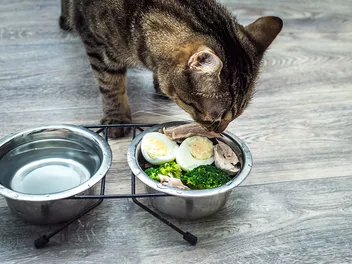
- Chicken can be offered on its own or as part of a meal for your cat.
- Uneaten cooked chicken should be discarded after a period of around 1 hour at most. Uneaten raw chicken should be discarded after a period of around 30 minutes at most.
The Downside for Cats
Chicken is a healthy food for your cat that will give your kitty a number of health benefits, but is there a downside to chicken for your cat?
Definitely, if you are purchasing high-quality cat food or treats made with chicken, you can usually feel at ease about your cat’s health and safety. But if you’re planning on preparing chicken yourself or giving your cat some of the chicken off of your plate, there are some issues you need to be mindful of.
1. Raw Chicken

There are differing opinions on the safety of feeding your cat raw chicken. If properly prepared and if you purchase raw chicken that has been flash-frozen specifically for your cat’s raw food diet, then it is possible to give your cat raw chicken. The process of flash-freezing (which is essentially freezing a chicken quickly at an extremely low temperature) prevents ice crystals from forming. This keeps all of the juices and nutrients intact, and it helps to eliminate bacteria. Alternatively, you should look for raw chicken that's been pasteurized by a HPP (High Pressure Pasteurization) system, which accomplishes similar levels of safety.
Otherwise, raw chicken can prove just as dangerous to a cat as it can to humans thanks to food poisoning from E. coli or Salmonella and bacterial contamination. You should speak to a vet if you’re thinking about adding raw food to your cat’s diet.
2. Chicken Skin
The chicken's skin in itself should be fine in small doses, but if it has come from the chicken that you made for yourself, it should only be offered sparingly and not in excess. It contains the highest fat content than any other part of the chicken. It also has a concentration of seasonings (when cooked with them) that might not be good for your cat. A diet high in fat can induce gastrointestinal upset or, at worst, pancreatitis, which can lead to death if not treated.
3. Seasonings and Ingredients

When prepared for human consumption, the average chicken is full of seasonings and ingredients that can be toxic for your cat. Onions (and pretty much anything in the onion family such as shallots and chives) and garlic are quite bad for your cat as they can lead to gastrointestinal upset and anemia. Chicken is also, at times, prepared with sauces that are high in fat, which, as already discussed, can lead to pancreatitis. For more information, the ASPCA has provided a list of foods that pets should avoid.
4. Chicken Bones
Under absolutely no circumstances should you give your cat chicken bones. Cooked poultry bones can be quite brittle and will crack and splinter and cause damage to your cat’s mouth and internal organs. They can also become a choking hazard.
Injuries that might occur :
In some cases, your cat might need to undergo emergency surgery, so it’s better to keep those bones away from your cat. Raw chicken bones are much softer and less likely to splinter. If he’s particularly wily, be sure to put the bones away quickly before he jumps on your counter and snatches one to chomp on!
Allergies
Chicken is one of the safer foods for cats with food allergies, but cats can be allergic to chicken on rare occasions. If your cat tends to have food sensitivities and hasn’t had chicken before, speak to your vet before introducing them to fresh or raw chicken. Start by giving your cat a tiny morsel of chicken and watch them for a few hours.
Signs of an allergic reaction might include:
If your cat starts to suffer from any of these symptoms, see your vet immediately.
Conclusion
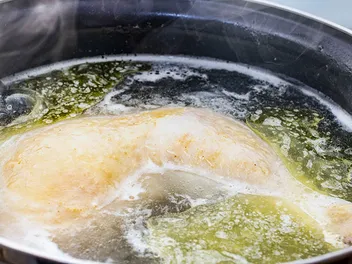
So, yes, cats can eat chicken so you can go ahead and feed your cat some as long as you follow our advice. Be sure to avoid giving your cat the skin and bones of the chicken and that it has been prepared specially for your cat and not for a person. Avoid seasonings, sauces, butter, extra fats, and so on. The best method is to boil some plain chicken and give your cat a few small pieces to eat.
As previously discussed, do speak to your vet if you’re interested in adding fresh or raw chicken regularly to your cat’s diet. If you are 100% confident that the chicken you will be giving your cat is a healthy addition to their diet and your vet has given you the thumbs up, it will prove a delicious and nutritious treat that your cat will be delighted to chow down on.
Might Also Interest You: Can Cats Eat Eggs? Vet-Verified Nutrition Facts
Sources
Expert cat care, straight to your inbox
News, insights, and useful advice, delivered to you.

No spam — unsubscribe anytime.
By signing up, you agree to our Terms & Conditions and Privacy & Cookies Policy.
How useful was this post?
Click a star to rate. You can leave written feedback afterwards. (We read all feedback.)
Christian started writing for a local newspaper as a teenager, and he's been involved in the publishing industry for most of his adult life. Combining his love of writing with a passion for animals, he is currently the Director of Editorial at Pangolia and the Editor-in-Chief at Catster.
Christian lives in the Philippines with his wife, son, and four rescue cats: Trixie, Chloe, Sparky, and Chopper.