Snowshoe Cat Vet-Approved Weight, Size & Growth Chart


In this article
Snowshoe cats are gaining popularity, and more and more people are becoming interested in the breed, particularly in the United States. But how big do Snowshoe cats get? How fast do they grow? What do they need to maintain a healthy weight? These are all important questions to know before getting a Snowshoe cat of your own.
This guide will cover a typical Snowshoe cat’s growth trajectory, the factors that affect their size, and how to measure your cat.

Snowshoe Cat Overview
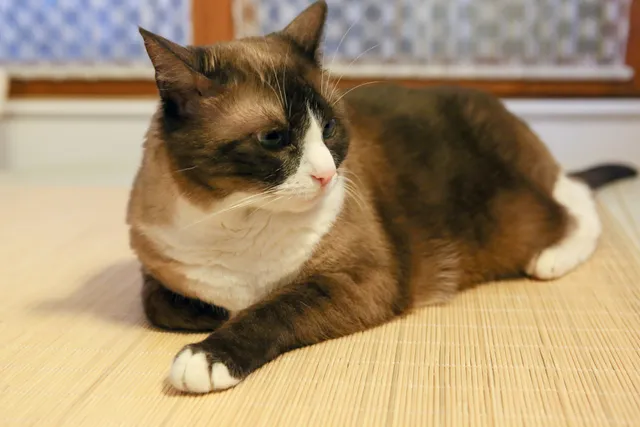
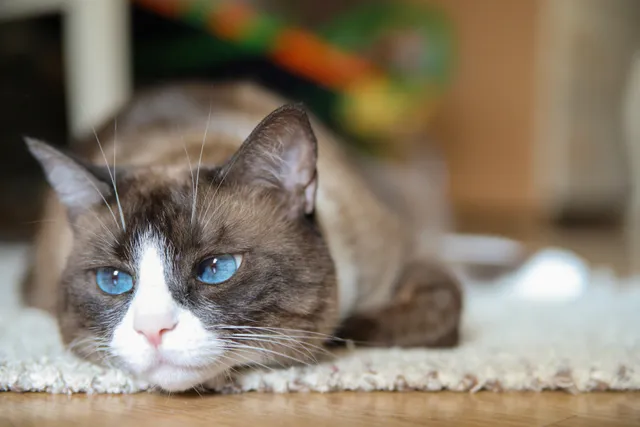
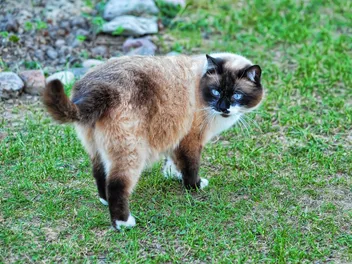
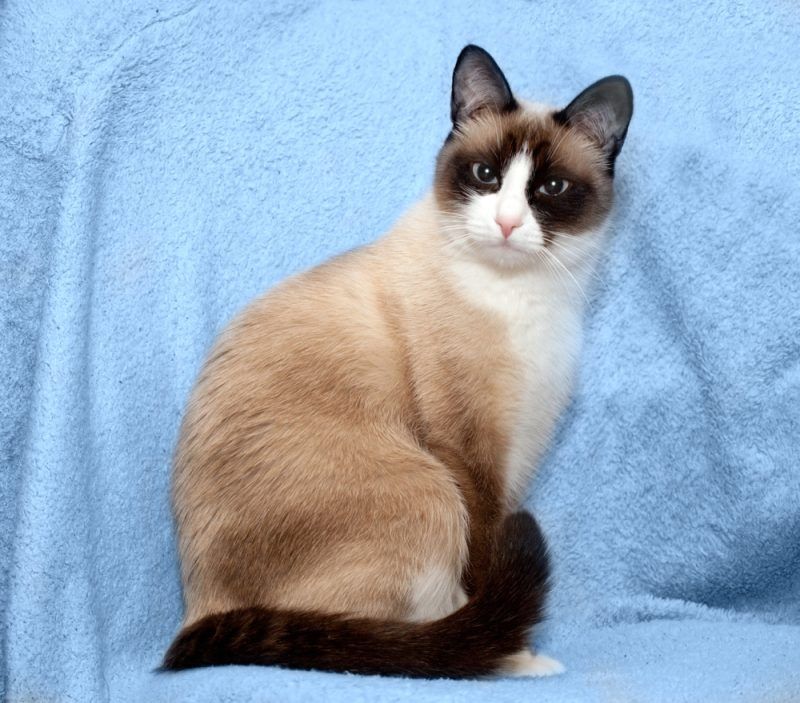
Snowshoe cats are a rare, mixed breed. Snowshoe cats are a combination of a Siamese and likely an American Shorthair (often bi-colored). The breed gets its name from the fact that it has both white feet and white socks. A show-standard Snowshoe cat will be expected to have four symmetrical white feet with white sock markings. However, natural variability exists. For example, the white sock pattern in Snowshoe cats, determined by recessive white spotting genes, shows significant variation. Some cats might have four white feet, others only two, and some may even have mismatched markings. Similarly, the breed's characteristic white inverted “V” on the face is not always present. These cats have distinctive, piercing blue eyes and the friendly personality of a Siamese cat. Their loving personality, stout build, and distinctive look have caused the Snowshoe cat to see a surge in popularity in recent years.
Snowshoe cats are medium in size and build. These cats are not particularly large, but they are stockier than the slender Siamese cat.


Snowshoe Cat Size and Growth Chart
This growth chart tracks the growth of a typical Snowshoe cat. Note that this chart represents the average growth of a Snowshoe cat, and there are cats that could be smaller or larger than this.
Snowshoe Cat Measurements
Typical measurements for an adult Snowshoe cat:
- Weight: 7–12 pounds
- Height: 7–13 inches
Female Snowshoes are usually smaller than males. The lower end of these ranges often represents the size of female Snowshoe, while the upper end usually represents the size of male Snowshoe cats.
Growth-approximation size of Snowshoe cats
| Age | Weight Range | Length Range | Height Range |
| 3 Months | 3–5 pounds | 8–10 inches | 6–8 inches |
| 6 Months | 4–6 pounds | 10–13 inches | 6–8 inches |
| 9 Months | 5–7 pounds | 10–14 inches | 7–10 inches |
| 12 Months | 6–9 pounds | 12–15 inches | 7–11 inches |
| 14 Months | 7–10 pounds | 14–16 inches | 8–12 inches |
| 18 Months | 8–12 pounds | 16–18 inches | 8–13 inches |
| 24 Months | 8–14 pounds | 16–18 inches | 8–13 inches |
When Does a Snowshoe Cat Stop Growing?
A Snowshoe cat can continue to put on weight up until 2 years of age. By 1 year old, these cats typically have reached their full size in terms of length and height. Since Snowshoes can have a fairly thick build, they can gain weight after they stop gaining height and length.
Pet cats of all breeds do have a threat of obesity if they aren’t fed appropriately., Therefore, they can, theoretically, continue to gain weight for years after they reach adulthood. Obesity is a problem that can cause severe health issues as a cat ages, so it is a good idea to be aware of the obesity threat and make plans to try and keep your Snowshoe cat at a healthy weight.
Factors Affecting the Size of Snowshoe Cat
There are three main factors that affect a Snowshoe cat's overall size. Those factors are genetics, the size of the parents, and the diet that the cat receives both while it is growing and after it reaches maturity.

Genetics
Genetics affects the overall size an animal will grow to, and can sometimes seem to be independent of parental size. Since Snowshoe cats draw heavily from recessive genes, their size could be dictated by genes that are multiple generations back, not just their parents.
Some breeders can give you an idea of what kind of genetic history your cat has, but often, the past genetic lines are a mystery. That makes it hard to determine if your cat has the genetics to be large or small. Even if you can’t see the influence of genetics by looking at a genealogy chart, they are affecting your cat’s growth and development behind the scenes.
Diet
Diet can have a significant impact on the overall size of a cat. Kittens that get proper nutrition when they are young are much more likely to reach their genetic potential than cats that are deprived of nutrients when they are growing. The first year of a cat’s life is very important in terms of nutrition and development. If you have a Snowshoe kitten, it is advised to use good quality kitten food that contains the necessary nutrients to promote healthy growth for your new friend.
After your cat reaches maturity, the diet and the amount given will be critical in determining whether your cat maintains a healthy weight or becomes overweight or even obese. Obese cats often have a plethora of health issues, and you should try and maintain a balanced diet in order to maintain an ideal weight. It is recommended to discuss your cat's nutrition with a veterinarian, so you can be sure you are feeding your cat properly.
Sex
As mentioned above, females tend to be smaller than males, but there are other aspects of a cat’s sex that will affect their adult size.
- Females that become pregnant before they finish growing (ie. less than 12 months old) will often be smaller than those that have litters when they are older.
- Males that haven’t been castrated, or are castrated later in life, will tend to be more muscular and stocky, often with the telltale thick neck and “Tomcat cheeks”.
- Cats that have been spayed/neutered are more prone to weight gain, as the hormones that would keep them alert and looking for mates are not there to drive up their metabolism.

Ideal Diet for Maintaining a Healthy Weight
The best way to maintain a healthy weight is to put your cat on a balanced, high-quality diet. You should always try to follow the recommended guidelines for portion size and meal frequency, as recommended by the producer. If you feed your cat a standard diet and stick to the recommended proportions, your cat should remain at and maintain a healthy weight. If you are managing to stick to good proportions and your cat is either gaining weight or losing weight, it is best to discuss this with your vet.
Things to Avoid

If you are trying to maintain a healthy weight for your Snowshoe cat or are struggling to fight feline obesity, there are some things you should avoid.
- Avoid giving your cat treats if they are struggling with their weight.
- Refrain from giving your cat human foods that could be high in fat, sugar, or salt.
- Avoid overfeeding your cat. Don’t give more food than recommended, and do not add extra feeding sessions (no matter how annoying or insistent your cat becomes).
- Avoid leaving food down. Anything not eaten within 20 minutes should be taken up; if a cat is allowed to graze all day, they will take in a lot more calories than they need.
How to Measure Your Snowshoe Cat
If you want to get official measurements for your Snowshoe cat, there are some ways to measure them at home.
What You Will Need
- A scale
- A flexible measuring tape
Weight
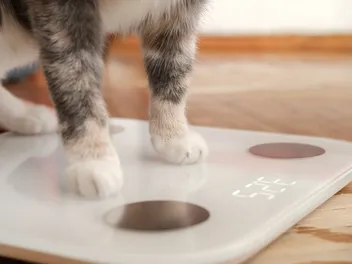
The best way to weigh your cat is to get them to stand still on a scale long enough to obtain an accurate reading. However, getting a cat to stand in one place for any amount of time can be a challenge.
The other way to measure your cat’s weight is to weigh yourself and write the number down. Next, pick up your cat and weigh yourself again. Write that number down. Then, subtract the first number from the second number to get a good idea of your cat’s weight.
When in doubt, you can always take your cat to the vet, and they can weigh them using their scales with the help of trained veterinary assistants.

Length
To measure the length of your cat, you should draw a tape measure from the tip of your cat’s nose to the base of their tail. Length measurements do not include the tail. If you do measure the length with the tail included, make sure that you note that. The true length of a cat is from the tip of the nose to the base of the tail. You can generally get this measurement easily from home.
Height
To get the height of your cat, you should draw a tape from the floor to the top of the shoulder/base of the neck. A cat should be standing when you take their height measurement.
Conclusion
Snowshoe cats are an increasingly popular breed that are known for their friendly demeanor and distinctive appearance. These cats are medium sized pets, and they usually weigh just north of 10 pounds and stand a little over 10 inches tall. Snowshoe cats will be fully grown around a year old, but they can continue to gain weight as they get older.
See also:
Featured Image Credit: EVasilieva, Shutterstock
Expert cat care, straight to your inbox
News, insights, and useful advice, delivered to you.

No spam — unsubscribe anytime.
By signing up, you agree to our Terms & Conditions and Privacy & Cookies Policy.
How useful was this post?
Click a star to rate. You can leave written feedback afterwards. (We read all feedback.)
Grant is a freelance writer with years of experience writing about a diverse range of topics. He currently lives in his home state of Florida with his wife. His days are spent writing, raising a rambunctious son, and caring for eight animals (two horses, two donkeys, two goats, and two dogs). In his free time he enjoys slowly carving out a quaint hobby farm from the Southern scrub.