Male vs Female Siamese: What’s the Difference? (With Pictures, Vet-Reviewed)


In this article
If you are tempted to adopt a gorgeous Siamese cat, we get it. Not only are Siamese cats stunning to look at, but they have several other attributes that make them excellent companions. Though there is no “one-size-fits-all” policy when describing the qualities of different breeds and genders, there are generalizations we can make in some cases.
Siamese cats are known for being extremely people-oriented, sociable (sometimes to the point of clinginess), intelligent, and devoted. This applies to male and female Siamese cats, but there are a few minor differences. If you’re unsure whether a male or female Siamese is best for you, read on. In this post, we will explore the differences and similarities to help you make a decision.

Visual Differences

At a Glance
Male Siamese Overview

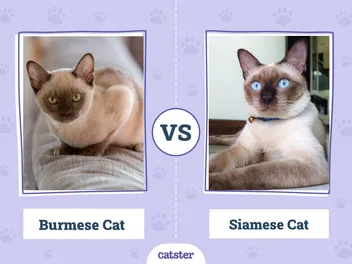
Male Siamese cats are slightly larger than females, usually standing around 11–13 inches, though it can vary. They also tend to weigh a little bit more, around 8–13 pounds. They have a long, slim, and muscular body type, though the traditional Siamese is a little rounder than the modern Siamese.
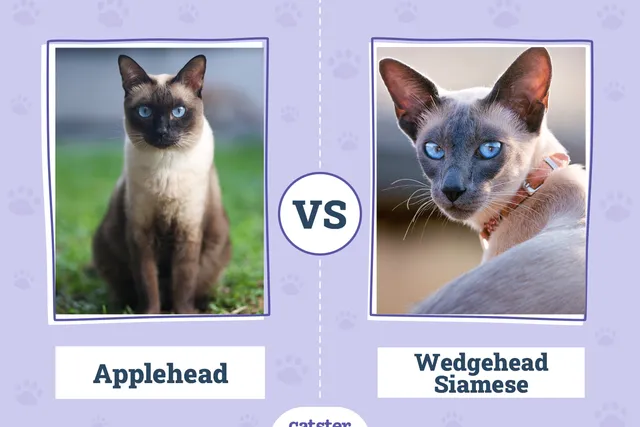
The difference between modern and traditional Siamese cats can also be seen around the head and ears. Modern Siamese cats have a triangular-shaped head, whereas the traditional Siamese has an “apple-shaped” head. The traditional Siamese also has smaller ears.
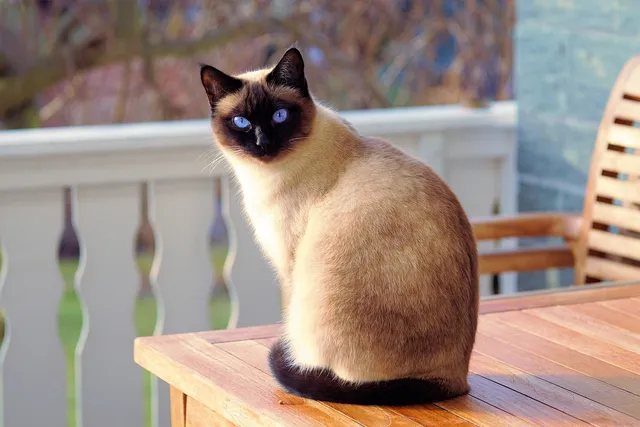
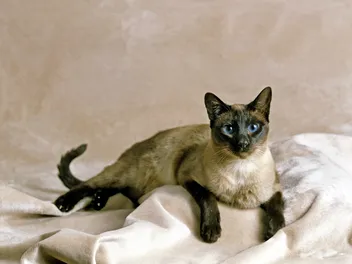
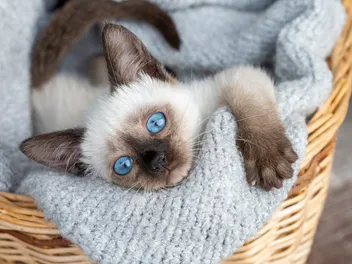
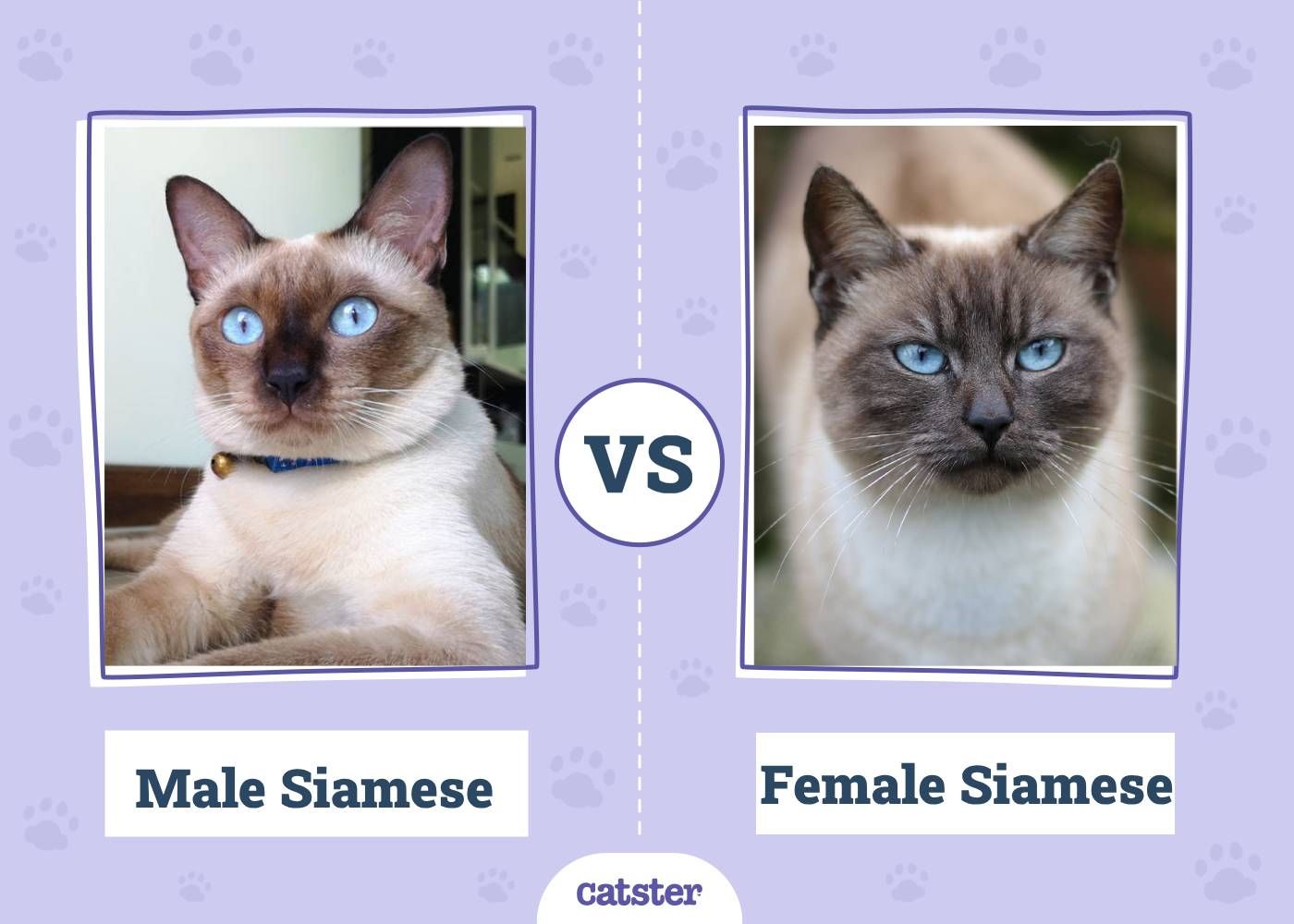
In terms of appearance, the male Siamese doesn’t differ from the female except in height and weight. Males also have the same coloring and point patterns as females do.
Personality / Character
Male Siamese cats are affectionate, outgoing, and cuddly; you’ll always know when a male Siamese is around. They love spending time with people, attach themselves closely to their favorite family members, and can be highly “conversational.” On that point, if excessive meowing gets on your nerves, a Siamese may not be the breed for you, as they revel in telling their people about their day!
Where they differ primarily from females is in their behavior when they are unneutered. Unneutered male cats can be more prone to aggression and destructive and territorial behaviors like spraying urine around the house. This is normal in male cats, but they will settle down once neutered.

Training and Exercise
Male Siamese cats are known for being playful and curious. They are also very smart, and training them to use the litter box shouldn’t be an issue. Many Siamese cats quickly learn to play games like “fetch,” and some even learn to follow basic commands.
Male Siamese cats often enjoy training and exercise, as it helps them get rid of excess energy in a positive way. Training and quality exercise time are necessary for Siamese cats, as they can become destructive when they feel bored or otherwise ignored.
Health
The lifespan of male and female Siamese cats is 15–20 years on average. Both genders can be prone to certain health conditions, including progressive retinal atrophy (PRA), which affects vision, as well as other issues such as asthma or heart disease.
Regarding emotional health, Siamese cats are much more likely to develop separation anxiety. This is because they become very attached to their owners and can become anxious about being left alone.

Suitable for:
Male Siamese cats are friendly, loving, and sociable, and they should fit right into any family with enough time to dedicate to them. They are also an excellent choice for families with older children. Male Siamese cats are often very playful and very likely to enjoy spending time with a young human playmate with loads of energy to match, but this should always be done under adult supervision.
Just remember that Siamese cats are often clingy and not the best at spending long periods alone. If you work a lot, a Siamese may not be the best breed for you. If you’re undeterred, you might consider getting a second cat to ease your Siamese’s loneliness when you’re not around. However, keep in mind that getting along with another cat will depend on their age, socialisation, personality, and introduction process, not to mention the financial side of owning two cats instead of just one.
Regarding other pets, Siamese cats have often been likened to dogs because of their outgoing personalities. There is no reason why a Siamese wouldn’t adapt to living with socialised and calm dogs or other pets in the right circumstances. Because male Siamese cats are often extremely cuddly, don’t be surprised if you find them cuddling with your canine family members!
Female Siamese Overview

Female Siamese cats are often between 10–12 inches high and slightly smaller than their male counterparts. They weigh approximately 5–10 pounds—a tad lighter than males. This minor height difference may give female Siamese cats a daintier, more delicate appearance than males.
Otherwise, in terms of appearance and temperament, there are no stand-out differences between female and male Siamese cats. Females can be just as affectionate and sociable as males when raised in a loving, respectful environment.
The differences are much more apparent in unspayed cats. An unspayed female Siamese’s behavior can be pretty erratic. As well as becoming unusually (even for a Siamese) clingy, they may often rub up on things and become more vocal. Don’t expect much sleep if your female Siamese is in heat!
This contrasts with unneutered males, who tend to become more aggressive and territorial. The good news is that their strange behavior will improve after being neutered or spayed.
Personality / Character
Like males, female Siamese cats make truly wonderful companions for the right people. As the perfect cuddle buddies, they enjoy spending a lot of time with or simply being around their people. Siamese male and female cats often won’t hesitate to hop up on your lap at any time of day or sleep next to you at night.
Some owners and breeders anecdotally report that female Siamese cats are a little less “in-your-face” than males and view them as more independent. Of course, this is just a generalization, but you may be more likely to meet a slightly more reserved, less needy female Siamese than a male. This may be because males are believed to get friendlier after neutering, whereas females mellow out more, although there is no scientific backing for these claims.

Training and Exercise
Like males, female Siamese cats need plenty of exercise to keep them adequately stimulated. Despite having a reputation for being a little quieter than males, they’re still intelligent and can be prone to destructive behavior when pent-up energy builds.
As with males, you’re unlikely to have problems getting your female Siamese through basic house training. They’re also just as good at learning games and tricks due to their mental acuity.
Health
There is no difference between male and female Siamese cats in terms of the health conditions they’re prone to. Like other cat breeds, female Siamese undergo specific changes when pregnant that males, of course, will not.
For example, they may develop swollen nipples that are redder than usual, and their bellies distend at around the 30-day mark. This is normal in pregnant females.

Suitable for:
Like males, female Siamese cats are suitable for any loving home. This includes families with children and other pets when supervised and properly introduced. They’re also perfect for people who live alone, as they are highly companionable. If you’re considering getting a Siamese but don’t want to deal with urine spraying in unneutered males, you may want to think about getting a female instead.
Which Is Right For You?
When it comes to cats and gender, we can only make generalizations. Though male Siamese have a reputation for being more outgoing and females a little more independent, you may find yourself with a clingy female or a shy male. Every cat has a unique character and quirks that make them special.
What is most important are the environmental and social factors that shape our cats’ personalities and temperaments as they grow. Any Siamese, male or female, that is showered with the love and attention they crave and deserve will bring great joy and friendship to your life.
See also: How Much Do Siamese Cats Cost?
Featured Image Credit: Left - Witsawat.S, Shutterstock | Right - MLARANDA, Pixabay
Expert cat care, straight to your inbox
News, insights, and useful advice, delivered to you.

No spam — unsubscribe anytime.
By signing up, you agree to our Terms & Conditions and Privacy & Cookies Policy.
How useful was this post?
Click a star to rate. You can leave written feedback afterwards. (We read all feedback.)
Kit Copson is a freelance writer and lifelong animal lover with a strong interest in animal welfare. She has parented various furry beings over the years and is currently a proud cat mom of two—one very chilled (unless hungry) Siamese and a skittish but adorable Domestic Shorthair—and dog mom of one—an adopted Bichon Poodle cross. When not writing about or spending time with animals, Kit can be found doodling in her sketchpad, reading, or more often than not, drinking tea.