3 Vet-Verified Beautiful Egyptian Mau Colors & Patterns (With Pictures)


In this article
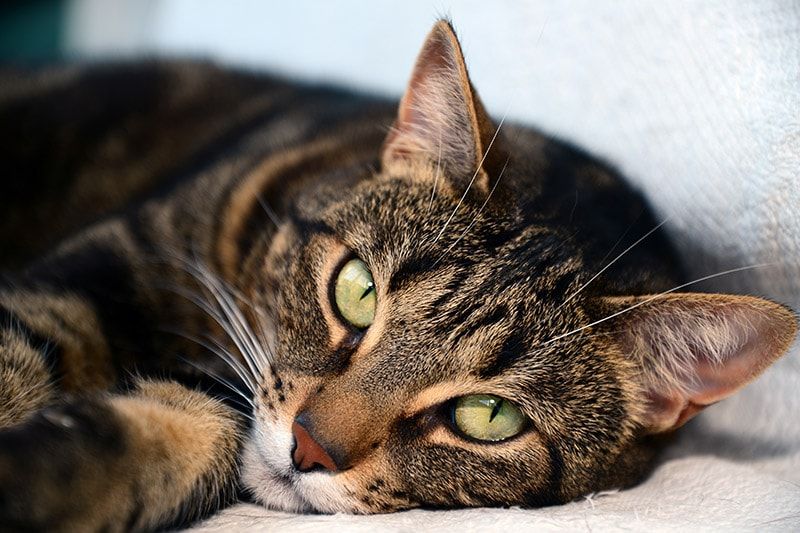
As one of the oldest domestic breeds, the Egyptian Mau is related to the Siamese and the Abyssinian breeds. Egyptian Mau colors and patterns are spectacular. Every coat has a uniquely organic collection of spots, and the colors range from silver to bronze. No two cats are exactly alike.
Only silver, bronze, and smoke colors are recognized in the breed standard, and these are also the most common coats seen in Egyptian Maus. If you want to adopt an Egyptian Mau, here are the gorgeous coat colors available.

The 3 Types of Spotted Pattern
All Egyptian Mau coats have a spotted pattern, with the spots varying in size and shape. They can be round, irregular, or oblong, but they are distinct, much like the spots on a leopard’s coat. They stand out in contrast to the paler background color.
The forehead is marked with an "M" shape and frown lines that form lines between the ears, which run down the back of the neck and disperse into elongated spots down the spine. The spinal lines combine as they approach the hind quarters to create a dorsal stripe, which runs from the base to the tip of the tail.
The markings on the shoulder are a combination of spots and stripes and a spotted pattern on either side of the torso that doesn’t necessarily match. The upper hind legs and haunches comprise a combination of spots and stripes, which transition into bars on the lower part of the leg.
1. Silver

Although some might refer to this shade as gray, the correct title is silver. Silver is the most common coat color on Egyptian Mau cats and gives them a look of royalty. The back, shoulders, head, tail, and outer limbs all have a background color of pale silver, and the stomach fades into a beautiful shade of even lighter silver. The coat may be referred to as being white with dark black to gray patterns if it is very pale.
These shades of silver showcase a brilliant and beautiful contrast, giving the coat dimension. Along with a range of silver hues on their coat, the back of their ears is grayish pink with black tips, and their eyes, nose, and lips are bordered in black. The area around the chin, upper throat, and nostrils is a very light shade of silver that may almost appear white.
2. Bronze
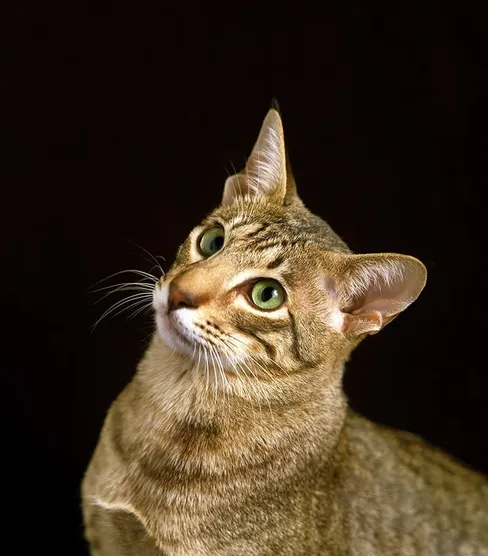
The second most prevalent coat color is bronze, which is often seen as brown to some and gives this gorgeous feline a leopard-like appearance. The base color is a warm bronze, which can be seen on the cat’s head, shoulders, back, outer legs, and tail. The saddle is the darkest part of the coat, while the sides are the lightest, turning tawny-buff, and the underside lightens to a creamy ivory hue. When compared to the paler base color, all markings are dark brown to black with a warm brown undercoat.
The back of the ears is a beige-pink hue with dark brown to black tips. The bridge of their nose is brown and creamy white around the nostrils. The nose, eyes, and lips are outlined in dark brown, and their chin area matches the pale hue around the nostrils.
3. Smoke
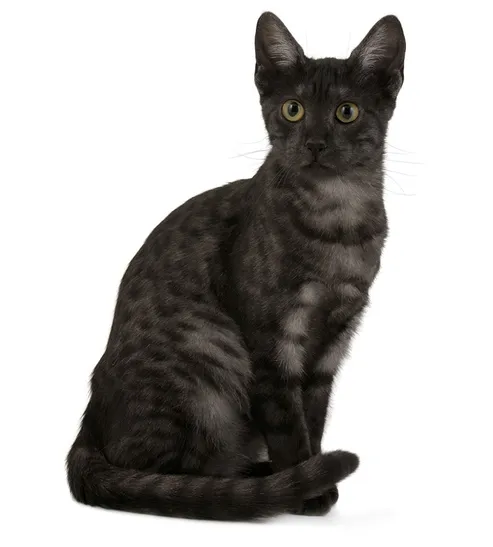
The Egyptian Mau is the only cat breed with a patterned smoke color. The smoke coat is a pale silver base color, with each hair tipped in black across the head, shoulders, legs, tail, and underside. The coat's markings are all jet black, which creates a beautiful contrast against the smoky base color.
The chin and nostril area have the lightest hue of smoky silver, and the nose, eyes, and lips are bordered with jet black.
What Determines the Coat Color of an Egyptian Mau?
The Egyptian Mau coat naturally includes spots that can be elongated or irregular. This breed is the only naturally occurring domestic cat with spots that can appear on their coat and skin, whereas the hair of other domestic cats that includes spots is due to crossbreeding.
The ultimate determinant of Egyptian Mau colors is genetics. Every Egyptian Mau has two genes that affect the coat color: one comes from the mother and the other from the father. If a gene, such as one causing black fur, is present in both parents, the kitten will likewise have black fur. While some genes are recessive, others are dominant and will always be the coat that is produced.
Egyptian Mau Appearance
The Egyptian Mau is known and loved for their wild-looking appearance, which has changed somewhat compared to their ancestors. Their coat is short and silky with spots, and it can display any of the colors mentioned above. The majestic Egyptian Mau has beautiful green eyes and a graceful yet muscular build.
Their hind legs are a little longer than their front legs, which is one of their more notable traits, and a distinctive cheetah-like skin fold under their abdomen allows their hind legs to extend back even further. These characteristics contribute to their amazing speed and ability to take longer strides and leap higher than other breeds. The Egyptian Mau can reach speeds of 30–35 miles per hour!
Final Thoughts
The Egyptian Mau is primarily recognized in three distinctive colors that are show quality: silver, bronze, and smoke. Irregular spots in a darker hue distinguish them and stand out due to the contrast of the paler surrounding color. All Egyptian Maus sport wild-looking spots on their coat since they occur naturally. Whether an Egyptian Mau is silver, bronze, smoke, or black, their majestic coat is a sight to behold.
Featured Image Credit: Dmitrijs Kaminskis, Shutterstock
Expert cat care, straight to your inbox
News, insights, and useful advice, delivered to you.

No spam — unsubscribe anytime.
By signing up, you agree to our Terms & Conditions and Privacy & Cookies Policy.
How useful was this post?
Click a star to rate. You can leave written feedback afterwards. (We read all feedback.)
Christian started writing for a local newspaper as a teenager, and he's been involved in the publishing industry for most of his adult life. Combining his love of writing with a passion for animals, he is currently the Director of Editorial at Pangolia and the Editor-in-Chief at Catster.
Christian lives in the Philippines with his wife, son, and four rescue cats: Trixie, Chloe, Sparky, and Chopper.