11 Devon Rex Colors (Common & Unique Varieties)

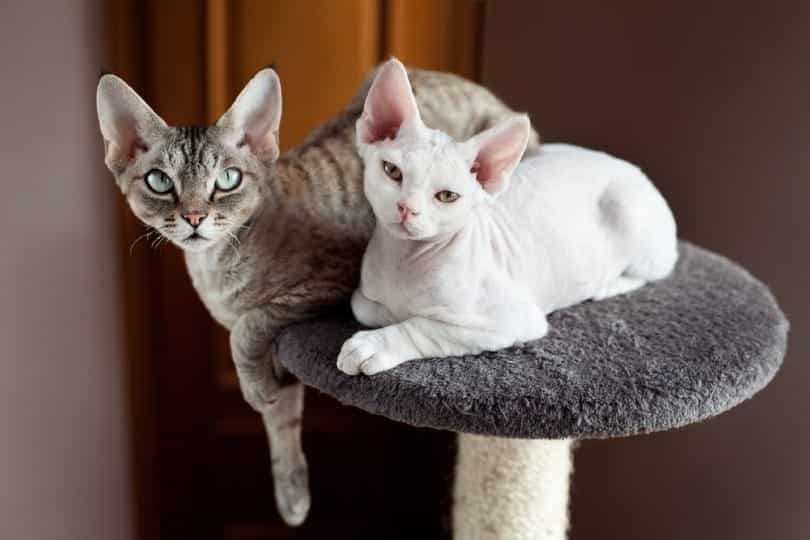
The inquisitive and friendly Devon Rex is a cat with an unlimited supply of love and loyalty to share with the right people. These cats are unique in many ways with their distinctive, fairy-tale-like faces, huge, bat-like ears, and short, curly coats that can come in pretty much any color and pattern. This includes white, black, blue, red, cream, and chocolate, to name a few.
Since so many coat colors are possible when it comes to a Devon Rex, we’ve broken them down into categories based on different coat patterns, like solid, shaded, tabby, etc. Let’s get started.

The 11 Devon Rex Colors and Patterns
1. Solid
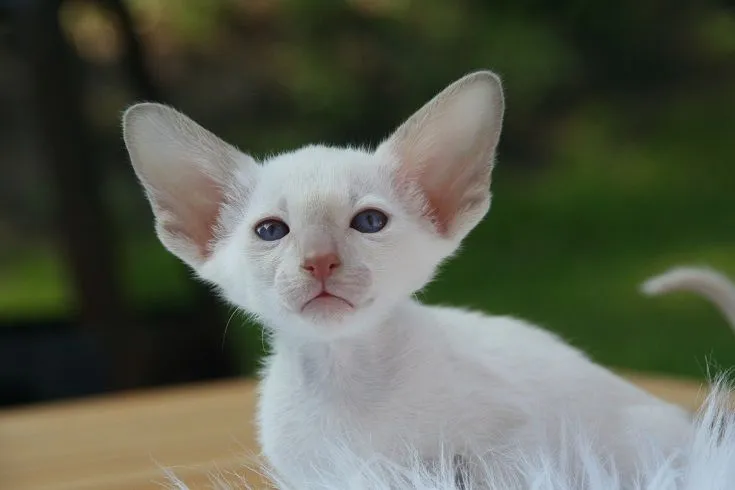
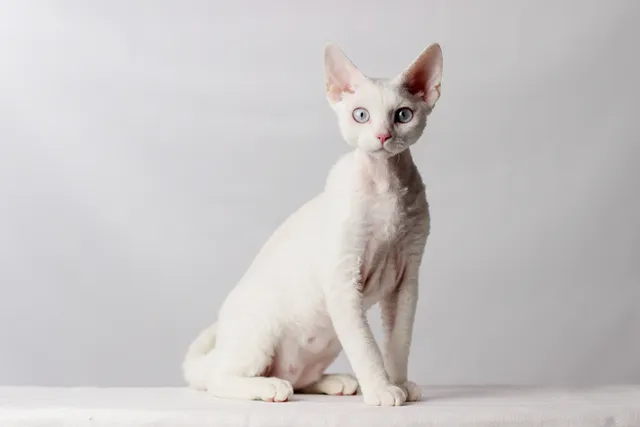
A solid coat is what it sounds like—the cat has just one color on their coat. You can find Devon Rexes with solid coats in the following colors:
- White
- Blue
- Black
- Chocolate
- Cream
- Red
- Lavender (a sort of dusty grey color)
- Cinnamon (a brownish shade)
- Fawn
2. Shaded

Shaded is a type of coat pattern, and cats that have it display shading on the face, tail, and sides of the body ranging from dark (ridge) to white (chin, stomach, chest, and the area under the tail). Shaded cats also have a white undercoat and the leg color should match the face color. Note that Devon Rexes with the tortoiseshell pattern display mottling on the nose and paw pads.
Shaded pattern coats come in these colors:
- Shaded silver
- Blue shaded
- Chocolate shaded
- Lavender shaded
- Cameo shaded (also known as red shaded)
- Cinnamon shaded
- Tortoiseshell shaded
- Blue-cream shaded
- Chocolate tortoiseshell shaded
- Cinnamon tortoiseshell shaded
- Lavender-cream shaded
- Fawn-cream shaded
3. Chinchilla

Cats with a chinchilla coat pattern have white undercoats and tipping on the back, tail, head, and flanks. The tipping can come in various colors, including blue, red, cream, and more. You may also spot tipping on the legs. The stomach, chest, and chin are pure white.
4. Smoke
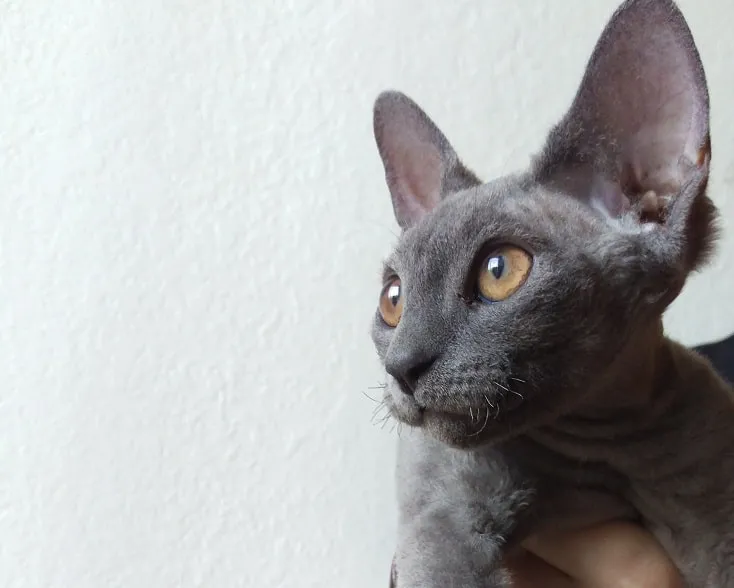
Smoke-patterned cats have a white undercoat that displays deep tipping with another color. When the cat is moving, the undercoat is easily seen, but when the cat is resting, it looks like they have only the marking color (i.e. blue, black, etc.). Like other coat types, smoke can be combined with various colors, which are:
- Black smoke
- Blue smoke
- Red smoke cameo
- Chocolate smoke
- Cinnamon smoke
- Lavender smoke
- Fawn smoke
- Cream smoke
- Tortoiseshell smoke
- Chocolate tortoiseshell smoke
- Fawn-cream smoke
5. Tabby

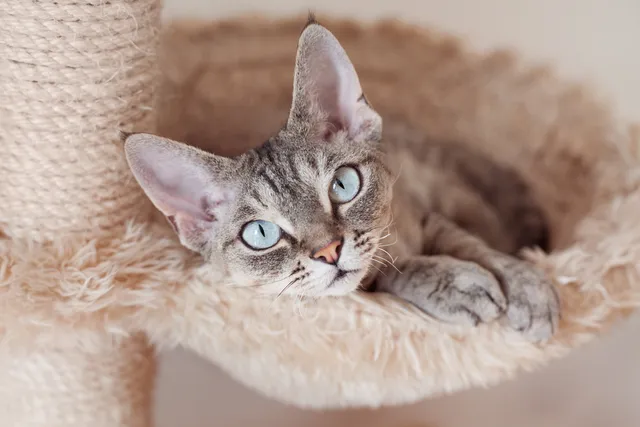
Tabby cats are distinguished by their stripey coat patterns that can also display dots and swirls. On the forehead, this pattern appears as a sort of “M” shape. “Tabby” is actually an umbrella term for several other tabby-combination coat patterns, which are:
- Classic tabby: Swirling on the flanks and sides that gives off a marbled effect.
- Mackerel tabby: Perpendicular striping on the spine that gives off a tiger-like effect.
- Spotted tabby: Spotted markings that can be oblong, round, or rosette-shaped.
- Ticked tabby: Lighter around the roots with darker ticking on the ends.
Colors that can be blended with the tabby pattern in Devon Rexes are:
6. Tortoiseshell

Tortoiseshell Devon Rexes have bi-colored coats that display black mottling or patches in various red shades. The mottled effect changes depending on the coat color. For example, a blue-cream tortoiseshell Devon Rex would display blue mottling or cream patches. Here are the possible tortoiseshell combinations:
- Blue-cream tortoiseshell
- Chocolate (chestnut) tortoiseshell
- Lavender-cream tortoiseshell
- Fawn-cream
7. Calico

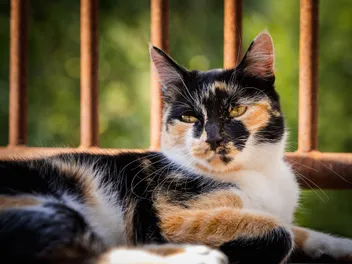
The calico coat pattern is sometimes mistaken for a tortoiseshell pattern, but the difference is that calico cats have three colors, whereas tortoiseshells have two. Calico cats have a white base, mostly underneath, and black and red patching. Like tabbies, calicos come in various types:
- Van calico: Black and red patches only on the head, tail, and legs.
- Dilute calico: Blue and cream patches instead of black and red.
- Dilute van calico: Blue and cream patches only on the head, tail, and legs.
Calico coat combinations include:
8. Bi-Color

Bi-color Devon Rexes have a solid coat color like black, but white is also present. The distribution of white is approximately the same as the distribution of the other color. You can also get bi-color Devon Rexes that have a coat pattern like tabby or tortoiseshell with white. Van bi-color, which describes a coat with color (i.e. black, red, etc.) only on the head, tail, and legs is also possible.
9. Pointed

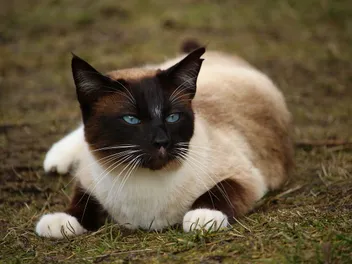
If your Devon Rex has a light body color, like cream, with a darker color (any other color or pattern with the exception of mink) on the ears, mask, tail, feet, and legs, they are likely pointed. Siamese cats, Ragdolls, and Colorpoint Shorthairs also have pointed coats.
10. Mink

A mink Devon Rex is a bit of a mixed bag. They’re pointed as described above; though, in younger cats, the contrast between the points and the rest of the body can range from hardly noticeable to obvious. Older cats’ coats will display less contrast between the points and body.
The body is also colored, giving off a warmer or richer effect than you may see in a standard pointed cat. Mink Devon Rexes can come in any color or pattern except for sepia and pointed.
11. Sepia
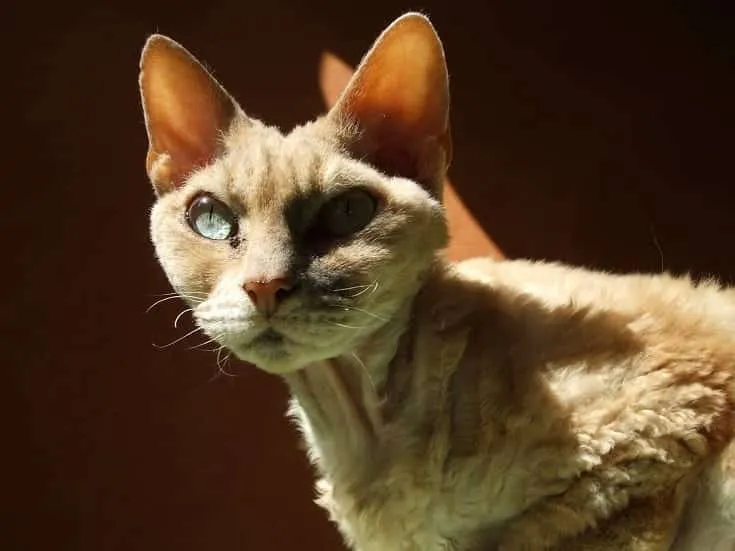
Sepia is a sort of earthy-brown or reddish color. While sepia-patterned kittens are quite light in tone, older cats display a more well-defined coat color with a bit of lighter shading on the underparts. Sepia cats can present with any other coat color or pattern except for mink or pointed.
Conclusion
As we can see, the world of Devon Rex coat color patterns is pretty much limitless! This diversity is part of what makes this breed so special and interesting (among many other wonderful traits), but it can make figuring out exactly what kind of coat your Devon Rex has really tricky.
We hope this guide has helped you identify the kind of Devon Rex you have on your hands. If you're still unsure, ask your vet at the next checkup, as they may be able to shed some light on the situation.
Featured Image Credit: Veera, Shutterstock
Expert cat care, straight to your inbox
News, insights, and useful advice, delivered to you.

No spam — unsubscribe anytime.
By signing up, you agree to our Terms & Conditions and Privacy & Cookies Policy.
How useful was this post?
Click a star to rate. You can leave written feedback afterwards. (We read all feedback.)
Kit Copson is a freelance writer and lifelong animal lover with a strong interest in animal welfare. She has parented various furry beings over the years and is currently a proud cat mom of two—one very chilled (unless hungry) Siamese and a skittish but adorable Domestic Shorthair—and dog mom of one—an adopted Bichon Poodle cross. When not writing about or spending time with animals, Kit can be found doodling in her sketchpad, reading, or more often than not, drinking tea.