Blue Scottish Fold: Info, Pictures, History & Facts
In this article
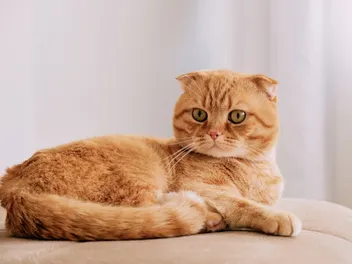
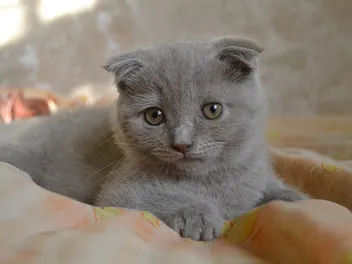
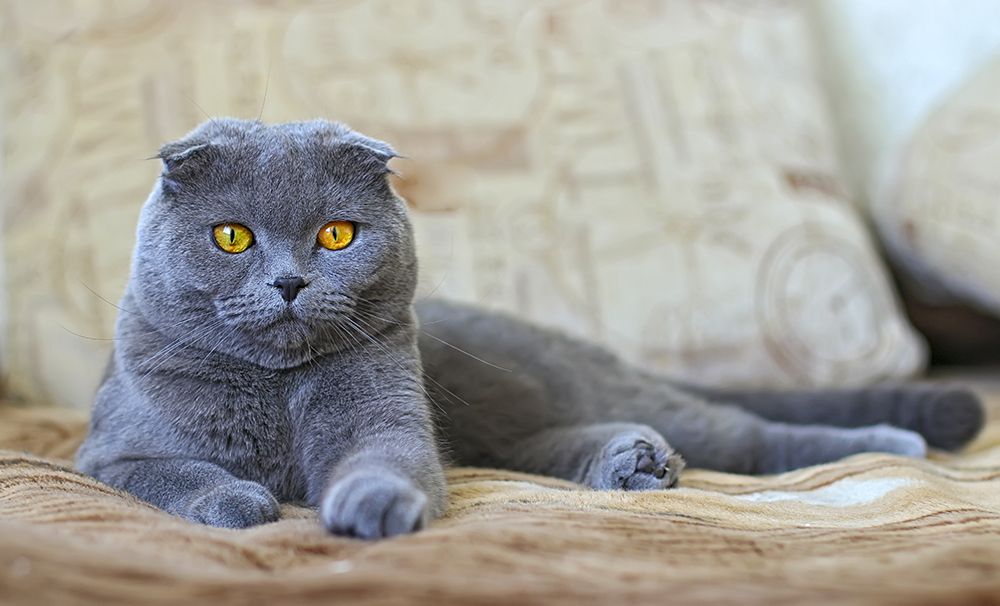
With their unmistakable look and charmingly sweet temperaments, it’s difficult not to fall in love with the Scottish Fold. The breed appears in numerous colors but is perhaps most attractive in a blue coat, a gorgeous contrast to the large golden eyes that make them stand out even more.
An easygoing nature makes this Scotland original a splendid addition to any home or family arrangement. Discover whether you’ve found the perfect pet as we discuss the blue Scottish Fold’s personality, background, and care.
Breed Overview
Height:
Weight:
Lifespan:
Colors:
Suitable for:
Temperament:
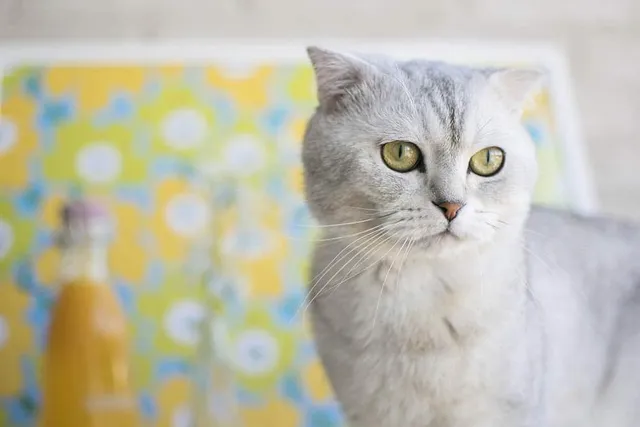
Blue Scottish Folds distinguish themselves with their bluish-gray hair, with lighter shades being the preferred variety of this coat color. Blue is an attractive hue, and it is a rare tone for the Scottish Fold, as it is a recessive diluted variation of black. Coat color aside, the blue Scottish Fold retains the adorable, rounded features and affectionate, endearing personality that define the breed.
Blue Scottish Fold Characteristics

The Earliest Records of Blue Scottish Folds in History
Scottish Folds first appeared in Scotland in 1961. Sporting a spontaneous mutation causing her ears to fold in the middle, a farm cat named Susie captured the attention of breeders who would develop the breed into the modern-day Scottish Fold. Today’s Scottish Folds all supposedly share some relation to Susie.
The exact point at which the blue variety appeared isn’t clear. Susie was a white cat and only bore two folded-ear kittens. One of those cats, a white female named Snooks, would go on to have additional litters. Crosses with farm cats and British Shorthairs refined the cat’s signature look and allowed diverse color and pattern possibilities.

How Blue Scottish Folds Gained Popularity
Scottish Folds quickly garnered interest in Britain and the United States once they found their way to the country in 1970. The UK’s Governing Council of the Cat Fancy first registered the breed in 1966, while the Cat Fanciers’ Association in America welcomed them to the club in 1974.
In the early 1970s, controversy emerged around the breed’s susceptibility to skeletal issues related to the folded ears. Britain and much of Europe subsequently changed direction and rescinded registrations for the breed as an animal welfare measure.
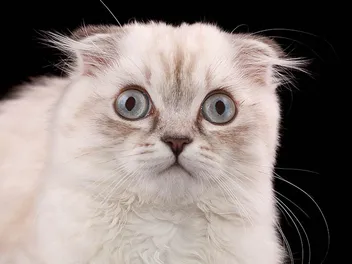
The breed’s popularity in North America, however, continued to expand. Breeders justified their practices with the low prevalence of significant disorders, mixing in American and British Shorthairs to reduce the likelihood of severe issues. Additional selective breeding exaggerated the folded ears. Today, blue Scottish Folds may have double- or triple-folded ears that lay tighter to the head, which is the desired look in show cats.
Formal Recognition of Blue Scottish Fold
Though the Scottish Fold lost recognition with the GCCF and the European Cat Fanciers’ Association in 1971, all major American and Canadian registries accept the breed. Scottish Folds gained registration status with the CFA in 1974 and championship status four years later.
As long-haired varieties gained popularity in the 1980s, clubs eventually began recognizing them in the late ‘80s and early ‘90s.
Top 3 Unique Facts About Blue Scottish Folds
1. The Folded Ear Gene Causes Bone and Cartilage Issues
The controversy around breeding Scottish Folds stems from their unique susceptibility to osteochondrodysplasia. The genetic disorder affects the entire body, causing shortened and malformed bones. The tail and lower leg bones commonly thicken, stiffen, and become arthritic, resulting in discomfort and limited movement. Unfortunately, there is no cure, though pain and anti-inflammatory medications can help manage signs.
Researchers discovered the connection to osteochondrodysplasia in the early 1970s, causing many registries to halt new registrations. The defect is an incomplete dominant variant in the TRPV4 gene, meaning only one copy of the mutation is needed for signs of osteochondrodysplasia to appear. Recognizing the risks, countries including Austria, Belgium, and the Netherlands banned Scottish Fold breeding in recent years.
2. Scottish Folds Don’t Always Have Folded Ears
To reduce the likelihood of health issues, Scottish Fold breeders cross them with other short-haired cats. In doing so, only one mutated gene passes to the offspring. With that also comes the chance that some kittens won’t receive the gene. In these cases, cats have upright ears with rounded tips.
Cats with these features are CFA-accepted, and they are named “Scottish Shorthair” or “Scottish Straight” to distinguish them from their lop-eared siblings.

3. Scottish Folds Are One of America’s Most Popular Breeds
Though the coat is rare, Scottish Folds have become easier to find in recent decades due to the breed’s growing celebrity. It all started in the late 2000s with Maru, a Scottish Straight from Japan who became a YouTube superstar, accruing hundreds of millions of views for videos of his at-home antics.
In recent years, the Scottish Fold has stayed in the public view as an adored pet of global celebrities, including Taylor Swift and Ed Sheeran.

Does the Blue Scottish Fold Make a Good Pet?

The blue Scottish Fold is an exceptional pet for nearly any family arrangement, whether you have kids, pets, or neither. They are outgoing, playful, and loving, and though they aren’t loud, they may keep a conversation with a collection of light vocalizations. They’re curious and intelligent and can be relatively easy to train but also mischievous as they learn their way around the home. The easygoing Scottish Fold only needs daily enrichment to stay content and docile. Grooming is straightforward with short-haired blue Scottish Folds. Long-haired varieties need more frequent brushing to reduce mats and tangles. Being careful with the tail and limbs is crucial, as they tend to develop stiffness and discomfort. Finding a reputable breeder can have the most substantial impact on your ownership experience. Due to the breed’s various health problems, breeders must perform comprehensive testing for common issues like PKD, osteochondrodysplasia, and hypertrophic cardiomyopathy.
Conclusion
The Scottish Fold is ideal for first-time cat owners and longtime pet parents alike, and they provide many years of laidback and loving companionship for a devoted family. Vetting reputable breeders is the most challenging and crucial part of ownership due to the potential health issues in the breed. You can find responsibly bred cats with thorough research and conversations with fanciers. Though any well-raised Scottish Fold can be a joy to own, the blue coat is a beautiful finishing touch for this delightful feline companion. See Also:
Featured Image Credit: Inna photographer, Shutterstock
Expert cat care, straight to your inbox
News, insights, and useful advice, delivered to you.

No spam — unsubscribe anytime.
By signing up, you agree to our Terms & Conditions and Privacy & Cookies Policy.
How useful was this post?
Click a star to rate. You can leave written feedback afterwards. (We read all feedback.)

Nicole is a lover of all animals, especially of the feline variety. She's mom to four, three fur babies and a human baby. She and her husband, John, live on a large forest property down in New Zealand.
Their beautiful Burmese cat Baby (who is now 17 years old) was their first child, though he is now called Baby Cat since their human baby joined the party in 2022. The dogs Rosa and Mac also love cats, but the whole family agrees that King Baby Cat is enough cat for this household.
Nicole is the Director of Content Management at Catster and Pangolia. With a Bachelor's degree in Education and years of online experience, she shares her pet knowledge and the knowledge of other professionals with the world, aiming to improve pets and pet parents' lives.