Get

In Your Inbox

Catster is reader-supported. When you buy via links on our site, we may earn an affiliate commission at no cost to you. Learn more.

Why is My Cat Pacing? 8 Vet-Verified Reasons & How You Can Help

Share

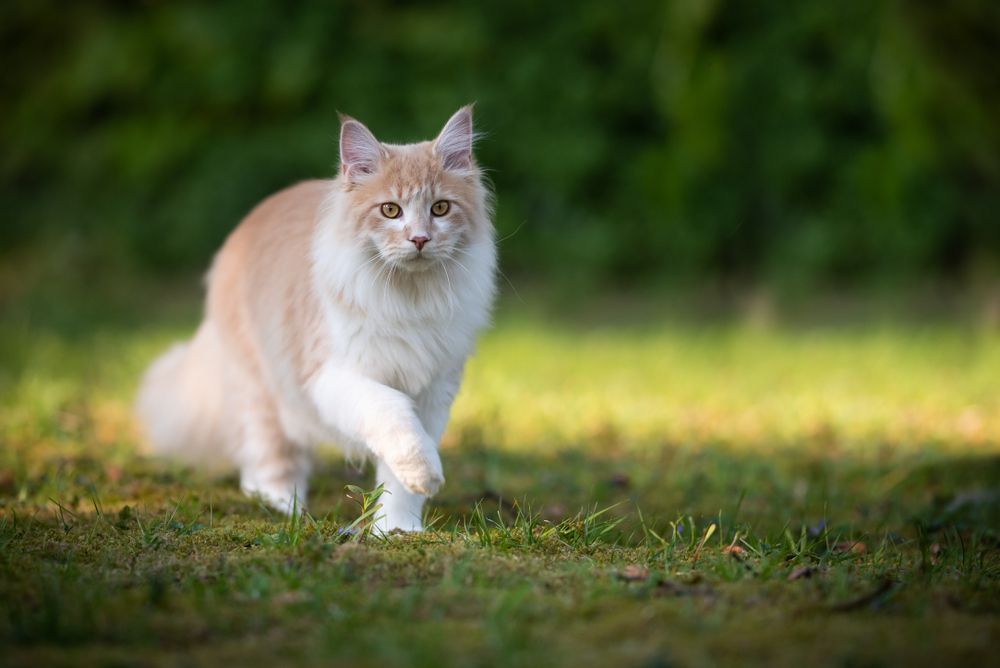
beige fawn maine coon cat on the move walking through the garden

It can be worrying if you suddenly start to notice that your cat is pacing. If this turns into a regular occurrence rather than a one-off, it can be a sign that everything isn’t quite right with your beloved cat. The first thing to do is to try and figure out why your cat may be pacing. We’ve listed common reasons for cat pacing and what to do about each one.

divider single cat paw oct 2024

The 8 Reasons Why Your Cat Is Pacing

1. Stress or Anxiety

Cats are sensitive creatures, and there are many reasons that they can become stressed. If there have been changes to your routine, like moving to a new house, a new baby, or even another cat moving into the neighborhood, these can all cause your cat to feel stressed.

How You Can Help

Speak to your veterinarian, who may recommend anti-anxiety medication if your cat seems extremely affected. You can also use a pheromone plug-in to help your cat feel more secure and to reduce stress.


2. Hormones

If your cat hasn’t been spayed or neutered, pacing can be a sign that they’re ready to find a mate. If you’ve shut your female cat away for the duration of her heat cycle, she may start pacing in frustration that she can’t go outside. The same goes for unneutered male tomcats!

How You Can Help

If you don’t plan on using your cat as part of a breeding program, speak to your vet about getting them spayed or neutered. This will prevent unwanted pregnancies, as well as ease the hormones that cause your cat to pace in the first place.

Close up of cat walking along outdoor swimming pool
Image Credit: Halfpoint, Shutterstock

3. Your Female Cat Is Pregnant

Female cats often pace as they’re close to giving birth. See if your female cat is pacing but also eyeing up cozy spots in the house. If your female cat is not spayed and allowed outside to roam freely,  it’s highly likely that she could be pregnant. Or maybe you already know that she’s expecting kittens!

How You Can Help

Schedule a veterinary consultation to confirm if your female cat is expecting kittens.


4. Poison

Sometimes a cat pacing and circling can be a sign that they have eaten something poisonous. If you also notice any convulsions, weakness, and lethargy, then check your house carefully to see if you can find anything your cat may have eaten. Certain houseplants and garden plants are toxic to cats.

How You Can Help

Speak to your veterinarian immediately if you suspect your cat ate something toxic.

If you need to speak with a vet but can't get to one, head over to PangoVet. It's an online service where you can talk to a vet online and get the advice you need for your pet — all at an affordable price!

PangoVet_Mention-in-Content for PangoVet2 save money


5. Hypothyroidism

An overactive thyroid can lead to an increase in your cat’s metabolism. Your cat may be pacing, restless, and eating more than usual.

How You Can Help

Schedule an appointment so your veterinarian can run blood tests.


6. Pain

If your cat is in pain, they won’t feel relaxed enough to rest. Pacing can be a sign of pain in cats.

How You Can Help

Check to see if your cat has any obvious wounds, but to be on the safe side, make an appointment with your vet, as they may want to check for internal injuries as well.

Meowing cat that looks like it's laughing
Image Credit: Sherrianne Talon, Shutterstock

7. Boredom

If you used to let your cat outside at night but have started keeping them inside, they might simply be bored. Indoor cats can also get bored at night time. Cats are more active at dawn and dusk, so if your cat is pacing at those times, it might simply be that they’re ready for playtime.

How You Can Help

Make sure your cat has toys to play with or a food puzzle, or do sleep training to shift your cat’s schedule slightly.


8. Feline Dementia

If your older cat has started pacing, it may be a sign that they’re developing dementia. In this case, the pacing is often combined with your cat sitting and staring off into space, increased meowing, spending less time grooming, and seeking you out in an agitated manner.

How You Can Help

If you think your elderly cat’s pacing is a sign of dementia, speak to your veterinarian to find out what you can do to keep your cat comfortable. Drug therapies are available to consider.

divider single cat paw oct 2024

Wrapping It Up

There’s no one-size-fits-all remedy for pacing in cats, but it’s important to figure out why your cat is pacing, and then you can figure out how to help them.

Cat pacing can be a sign of a serious medical condition or a reaction to being poisoned, so we’d always recommend seeking veterinary assistance. You may be able to solve your cat’s pacing simply by having them spayed or providing more enrichment for those early morning hours when they’re just bored!

See also:


Featured Image Credit: Nils Jacobi, Shutterstock

Want content like this delivered to you?

Sign Up For Our Newsletter

News, insights, expert advice, and everything cat

* By submitting, you agree to our Terms & Conditions and Privacy & Cookies Policy.


How useful was this post?

Click on a star to rate (you can leave written feedback after clicking submit)

Help us improve Catster for pet parents!

Your feedback really matters.

What did you like about this post? Also how can we improve it?

Join the conversation

Leave a Reply

You’re very welcome to leave a comment or question. Please know that all comments must meet our community guidelines, and your email address will NOT be published. Let’s have a positive and constructive conversation.


Talk With A Vet Online

Peace of mind,
anywhere, anytime

Affordable vet advice

Why Healthy Cats Still Vomit Sometimes (And How to Respond)

A cat that just vomited needs a specific kind of care, and the feeding decisions you make in the next few hours actually...

Scientists May Have Found the Missing Piece in Feline Kidney Disease

One of the most upsetting parts of caring for an elderly cat is the knowledge that there is a very high chance that...

Ask Dr. Paola – Help! I Am Worried My Cat Isn’t Getting Enough Water! (April 6, 2026)

Welcome to our “Ask Dr. Paola” series, where every Monday we bring expert advice straight from Dr. Paola Cuevas (MVZ) to help our...

The 10 Common Causes of Sudden Death in Cats (And Which Ones Are Preventable)

Most cat owners don’t think much about heart disease, internal hemorrhage, or viral infections until they’re staring at an empty bed. Sudden death...

More related

My Cat’s Spay Incision Is Slightly Open, Should I Worry? Our Vet Explains

As a responsible cat parent, you know that spaying your cat is the right thing to do for her health and happiness, as...

How to Clean Dirty Cat Fur: Vet-Approved Guide

Owning a cat comes with infinite joy and moments of bonding—most of the time. Indeed, our fur babies sometimes find themselves in situations...

Radial Nerve Paralysis in Cats: Our Vet Explains Signs, Causes & Treatments

There are all sorts of reasons for a cat to start limping. An injury to the muscle or bone is what most commonly...

How to Handle the Post-Kitten Blues: 4 Vet-Verified Cat Care Tips

Kittens are adorable little creatures. If you’re like most people, the process of taking care of a kitten (or an entire litter of...

Keep reading

7 Most Common Allergies in Cats: Vet-Verified Triggers, Signs & Treatments

If your cat is suffering from allergies, it’s usually one of these four types: environmental, food, seasonal, or flea. However, more specifically, there are thousands of potential allergens all around. Your cat could be allergic to the plants in your...

Cat with fleas

Can Cats Eat Slim Jims? Vet-Approved Nutritional Science & Alternatives

Because your cat is a carnivore, you might be wondering if your furry friend can eat Slim Jims. Although Slim Jims are likely not toxic to cats, they aren’t good treats because they are filled with preservatives and ingredients that...

Catster_Can Cats Eat Slim Jims_v1_Dec 4 2024

Persian Cat Health Problems: 6 Vet-Reviewed Issues 

The beautiful Persian cat is known to be quiet and docile. They are easily recognized by their flat face, full cheeks, short muzzle, and big round eyes. This long-haired breed is quite popular, with a history dating back thousands of...

Catster_Health Problems of Persian Cats

Uveitis in Cats: Vet-Reviewed Causes, Signs & Treatment

Uveitis is an eye disease resulting from inflammation in the uvea of the eye. It is a serious condition that must be addressed promptly because it can commonly result in blindness. It can sometimes be challenging to treat, so it’s...

Cat Uveitis

Does Lysol Kill Fleas on Cats? Vet-Verified Facts & Safety Guide

Fleas endanger our pets and homes beyond the bites and unpleasant stigma attached to infestations. They are also hosts to other parasites, such as tapeworms, which can hatch inside your cat’s intestine if ingested. In some cats, flea bites can...

Lysol cleaning product

Kit & Kaboodle Cat Food Review of 2026: Recalls, Pros & Cons

Review Summary Kit & Kaboodle is one of the most inexpensive cat foods. However, the quality is relatively low, with low-quality filler ingredients taking up most of each formula. It is cheap for a reason. Kit & Kaboodle is a...

Kit & Kaboodle Cat Food Review

How Long Can My Cat Stay in Their Crate? Vet Reviewed Safety Guide

Cat fanatics know too well that their beloved felines can become real monsters at night and wreak havoc in the house. This makes the idea of putting them in a crate quite tempting. However, you should be aware that keeping...

cat in cat carrier

8 Best Cat Brushes in the UK in 2026: Reviews & Top Picks

A cat brush can be used to keep your cat’s hair in good shape. It can also remove mats of hair that are especially common in longhaired breeds, and certain types of cat brushes and cat combs can even be...

cat brushing a home

Love Cats? So Do We! Join the Catster Community

Stay informed with expert pet care insights delivered straight to your inbox! Discover professional guidance on animal behavior, feeding tips, trusted product picks, and much more.


Sign up for the Catster Email Newsletter

Stay informed with expert pet care insights delivered straight to your inbox! Discover professional guidance on animal behavior, feeding tips, trusted product picks, and much more.