Why Does My Cat Meow When I Pick Her Up? 4 Common Reasons (Vet-Verified)


In this article
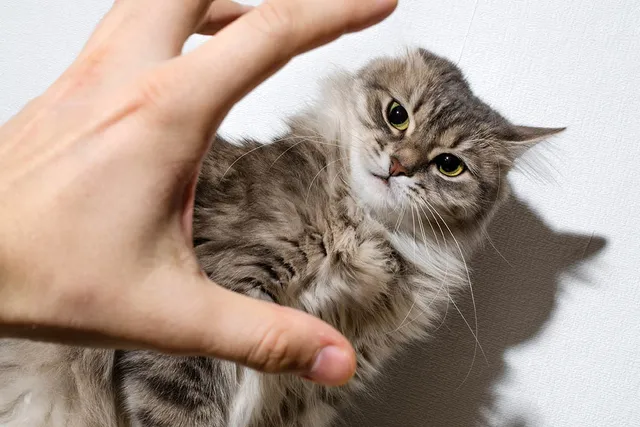
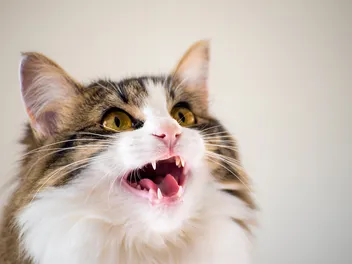
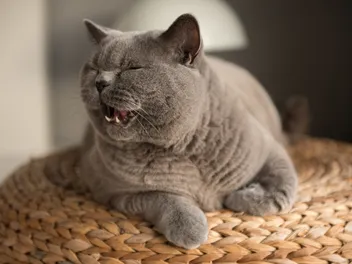
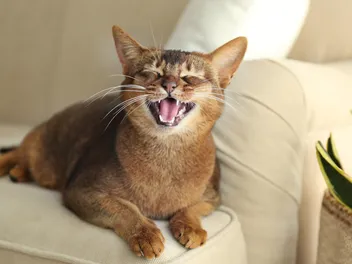
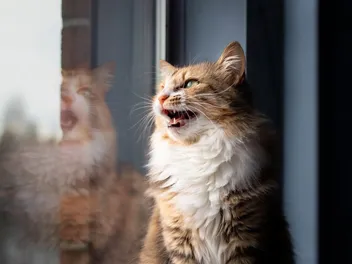
Cats may meow for all sorts of reasons when you pick them up. In most cases, though, it is a sign of protest. Cats typically do not meow when they want to be picked up, but they may meow when they don’t want to be!
Cats may also meow due to anxiety or discomfort. However, picking the cat up may have caused pain or discomfort, leading to the meow.
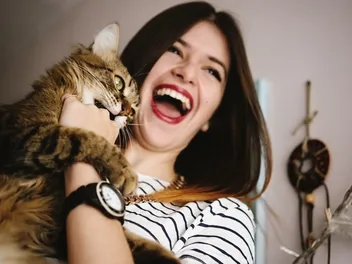
Furthermore, some cats may not like to be held. They may also meow when picked up and then struggle to get put back down. Often, this is a temperament difference, but it may also be that the cat was not properly desensitized or the human is using poor technique to pick them up.

The 4 Reasons Why Cats Meow When You Hold Them
A cat that excessively meows when you’re holding her may not want to be held. However, there may be several underlying reasons for this.
1. Discomfort
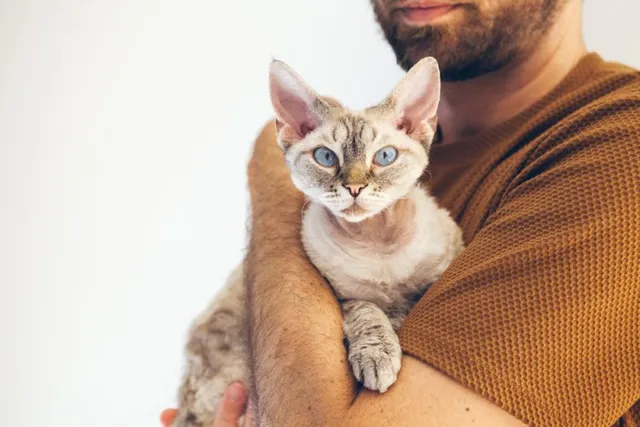
Your cat may not find the way you’re holding them very comfortable. For instance, most cats dislike being held on their backs. They appreciate feeling secure, so support them properly by holding them with one hand under their chest and the other under their bottom. If your cat previously liked being held and now doesn’t, it may be a sign of an underlying health problem that needs to be addressed.
2. Anxiety
Cats can feel anxious when off the ground or in unfamiliar situations. They may meow to express their unease. In these cases, it may be a sign that the cat wasn’t adequately socialized when young, or it may just be their temperament. Many are considered skittish because cats do not like to be touched and dislike being held, for instance.
3. Overstimulated
Cats can only take so many cuddles and holding. If you’ve been petting and holding them for a while, they may begin to feel overstimulated and try to get free. Meowing is often a sign that your cat has had enough and wants down.
4. Communication
Some cats are just noisy—some breeds are known for meowing a lot. In these cases, it may just be that your cat is talking to you while being held. Cats often learn to meow to their owners from a very young age and continue doing it throughout life.
It’s important to note any changes in your cat’s behavior. Often, cats are very good at hiding their illnesses and discomfort. However, they may start acting differently due to underlying conditions. If your cat suddenly starts meowing when held or is more vocal, it could be a sign that you must speak with a vet.

The 3 Reasons Why Cats Meow When You Touch Their Back
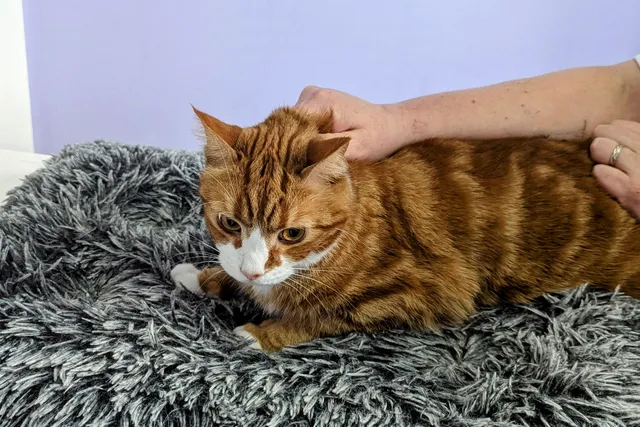
Many cats meow when you touch their back, which may also prompt them to meow when you pick them up. If your cat meows when you pick them up and when you touch their back, there is likely an underlying reason. Usually, meowing in these two situations is linked.
Here are some reasons cats may meow when their backs are touched. Many of these may also cause them to meow when picked up:
1. Sensitivity
Hyperesthesia Syndrome involves a part of your cat’s back being very sensitive. Often, it is the area right in front of their tail. This condition usually occurs when the owner pets the cat in this area, causing them to react suddenly and dramatically. Sometimes, their skin may ripple, and they may suddenly become aggressive. Luckily, this condition is often harmless unless the cat begins self-mutilating the area. (Sometimes, an underlying cause may be more severe, like a tail injury.)
2. Overstimulation
Cats can get overstimulated anytime they are petted or touched too much. This may make them avoid being touched, and it may make them meow whenever you pet them. Simply put, they have had enough for today, and they are letting you know by meowing.
3. Vocal
Some cats are just vocal. They may meow whenever you pay them attention at all. Siamese cats and related breeds are mainly known for being very vocal, so it shouldn’t be surprising whenever they meow considerably.
Luckily, a cat meowing when you touch their back is rarely a serious problem. However, it can indicate a medical problem if the meowing is new. If this is the underlying reason, your cat will likely show other signs of discomfort, such as meowing when you pick them up or spending excess time hiding.
We recommend speaking to a vet if your cat shows a sudden behavior change.

Why Do Cats Meow When You’re Holding Them?
There are tons of reasons your cat may meow while being held. Usually, these are the same reasons your cat may meow when you pick them up. For instance, your cat may just not like being held. Even if your cat doesn’t meow when you pick them up, they may get overstimulated while cuddling and suddenly snap. If you put them down and then pick them back up, you may notice that they’ll meow and complain (even if they usually let you pick them up without a problem).
Sometimes, a vocal cat may meow in response to being held. They may chatter the whole time you hold them. Again, some breeds are just more vocal than others. However, this will be a reliable trait. In other words, your cat will practically always do this. If your cat never used to vocalize when picked up but has suddenly started doing this, it’s probably due to another cause.
Cats may also meow if holding hurts them; this is especially true if the holding technique is poor. If they have any medical issues, these different positions may hurt them. Therefore, if your cat is injured, they may go from liking to be held to disliking it immensely.
Conclusion
Cats can vocalize when picked up for a variety of reasons, although it is usually a form of protest, especially if the handling technique is poor. Cats that suddenly stop liking to be held or picked up may have something causing them pain. In this case, it’s important to seek out veterinary care.
Of course, some cats also meow when picked up simply because they don’t like it. In this case, your cat will probably always complain about it. Sudden changes in behavior may signal medical problems, but a cat that has always complained about being picked up probably doesn’t like being picked up.
Sources
Featured Image Credit: VH-studio, Shutterstock
Expert cat care, straight to your inbox
News, insights, and useful advice, delivered to you.

No spam — unsubscribe anytime.
By signing up, you agree to our Terms & Conditions and Privacy & Cookies Policy.
How useful was this post?
Click a star to rate. You can leave written feedback afterwards. (We read all feedback.)
Kristin is passionate about helping pet parents create a fulfilling life with their pets by informing them on the latest scientific research and helping them choose the best products for their pets. She currently resides in Tennessee with four dogs, three cats, two fish, and a lizard, though she has dreams of owning chickens one-day!