Get

In Your Inbox

Catster is reader-supported. When you buy via links on our site, we may earn an affiliate commission at no cost to you. Learn more.

Why Does My Cat Bite Me When I Pet Him? 3 Vet-Approved Reasons & Solutions


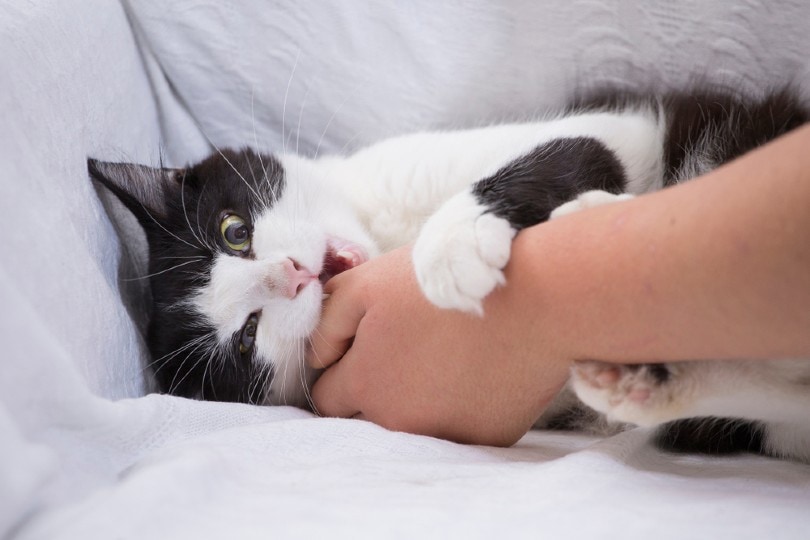
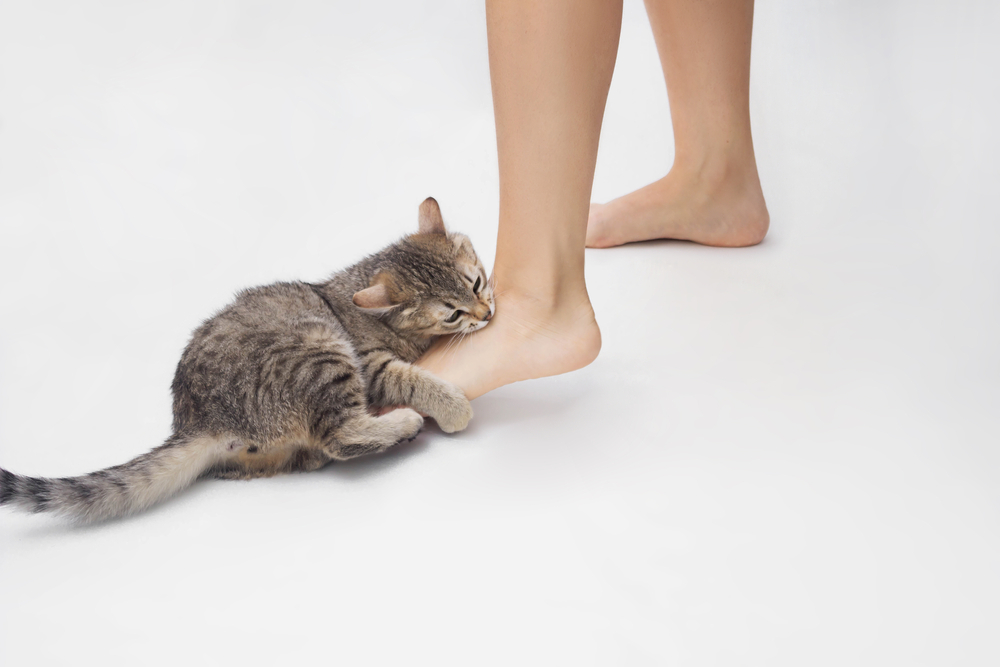
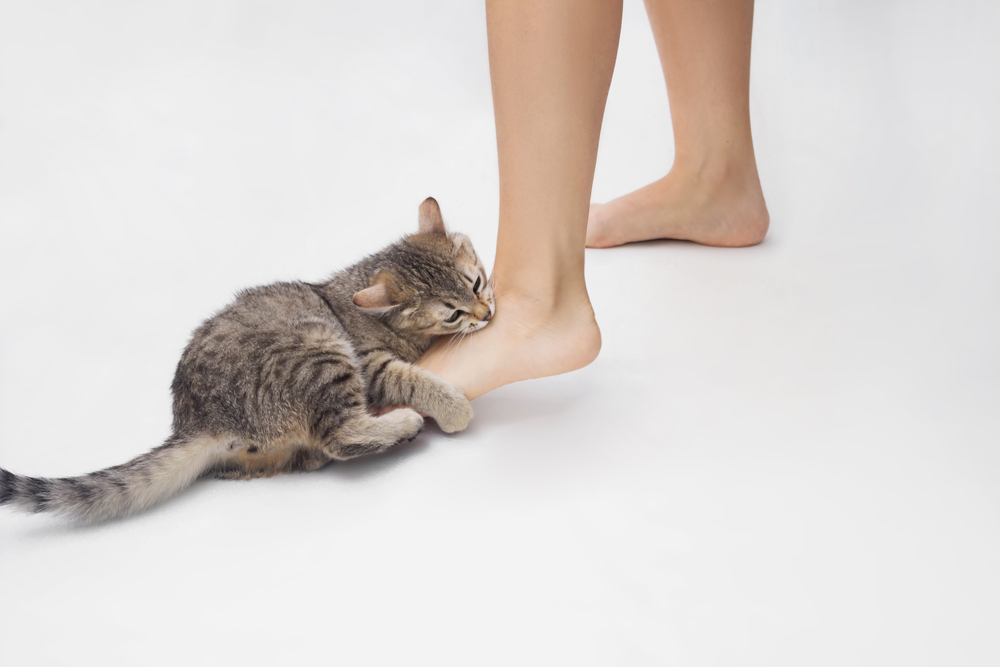
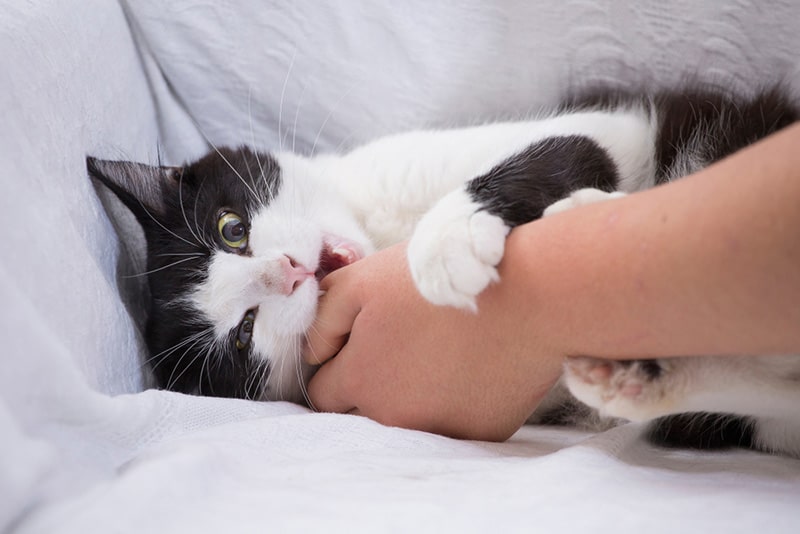
cat bites the woman's hand

Cats are not always the most predictable creatures. Sometimes, they adore your petting and practically beg for your attention. Other times, they get irritated and bite you during the petting process. Why is that? More importantly, what can you do to stop the biting?

In this article, we will look at the top three reasons your cat bites you when you pet him and some solutions to help resolve the issue.divider 3 paws

The 3 Reasons Your Cat Bites You When You Pet Him (With Solutions)

Here are the top 3 reasons your cat bites you when you pet him:

1. You Touched a Sensitive Spot

Just like humans, cats have certain parts that they don’t usually like to be touched. Cats do not prefer being petted in vulnerable areas, such as the stomach, back, or tail. Even if the spots aren’t necessarily sensitive, cats generally don’t like being pet there. In older or injured cats, some body parts can become sore from scratches, growths, etc.

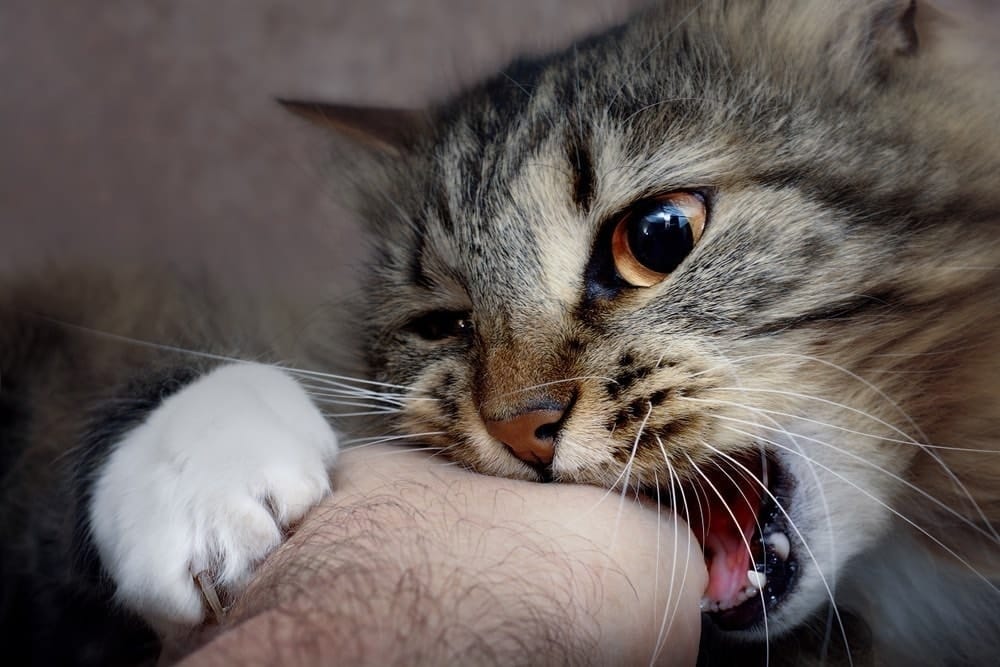
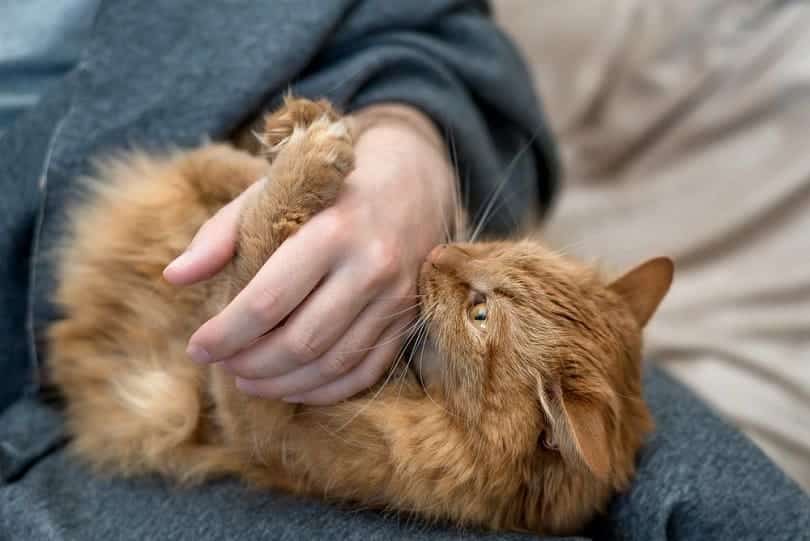
a red domestic cat bites its owner's hand
Image Credit: Irzhanova Asel, Shutterstock
Solution:

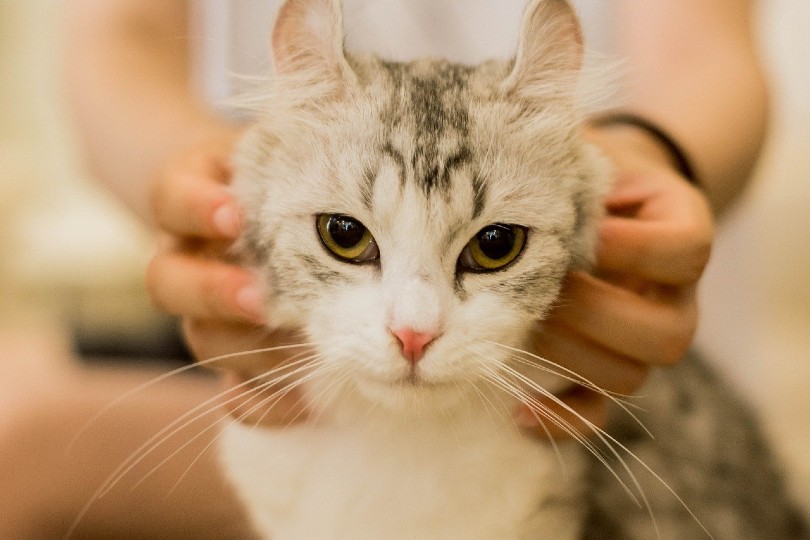
The top way to stop a cat from biting you for this reason is to avoid the sensitive spots entirely. Focus on petting your cat in areas that they like. Cats typically love being petted at the base of their ears, around their cheeks, and under their chin.

If your cat has a sensitive spot, you should take him to the vet. If you feel any growths or sores, get them checked out and treated accordingly. During the process, make sure to be gentle and kind to your cat. He doesn’t like being handled when he is injured.


2. He Is Stressed or Irritated

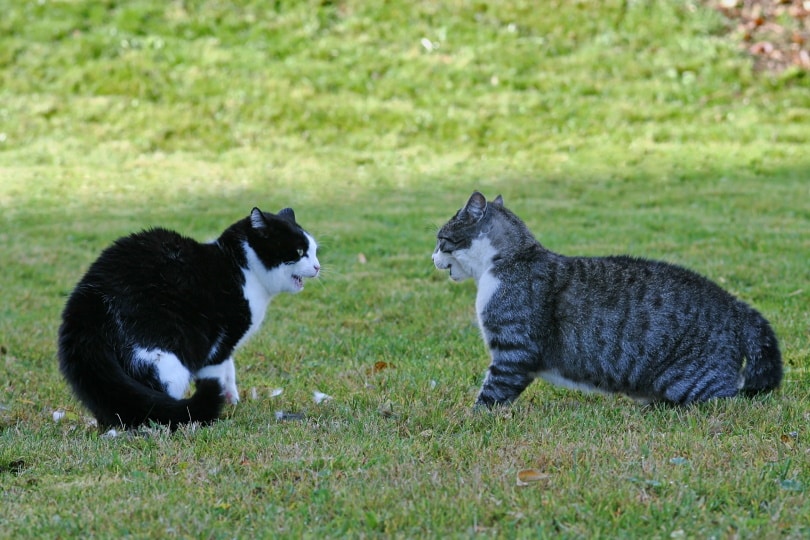
If your cat is incredibly stressed or irritated by being pet, he might bite you as a sign of aggression. This is likely to happen whenever the cat is afraid of humans or is not used to being touched. Given that cats are so much smaller than humans, it makes sense that they would be scared of us.

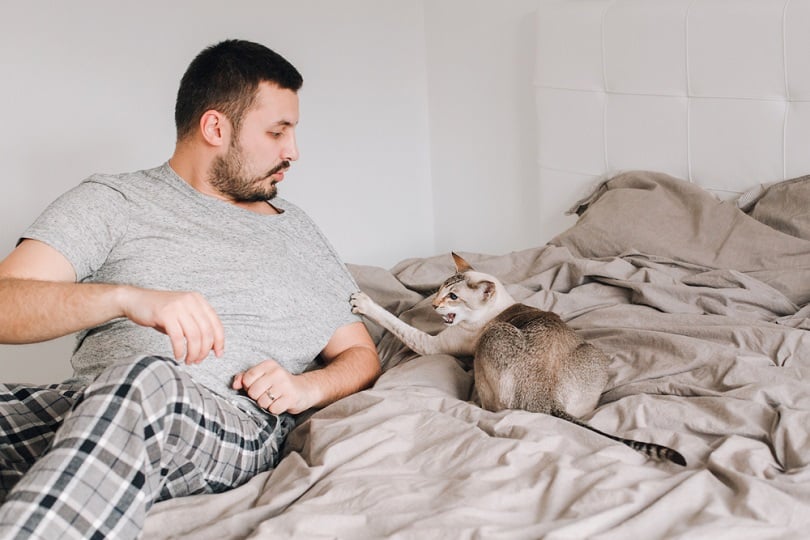
petting a cat
Image Credit: Pixabay
Solution:

If your cat is biting you because you think he is scared or stressed, the first thing you need to work on is getting him more comfortable around you. Always be kind and encourage your cat to trust you. Like in any relationship, trust takes time to build. Taking care of them, providing healthy food and water, interactive playtime with toys, and the occasional healthy treat are ways to strengthen your relationship with your cat and build trust.

The cat will learn you are a positive factor in their life, but it takes time, so be gentle and patient. If your cat begins to trust you more, you can start acclimating him to being petted. It is recommended that you pet them for short periods. Begin with petting once a day and stay under four strokes, focusing the petting area around the ears and under the chin. Never pet your cat with scratching motions.

You can offer a treat right after you pet him. You should be aware of the signs and notice when your cat starts to get stressed or irritated. Sometimes, your cat may enjoy it, but at other times, he may hate being petted. Look for signs of irritation so that you can stop petting him whenever he feels uncomfortable.

Like you, your cat might not always be in the mood, which is ok! Sometimes, they only like a little bit, and you should not push the limits. It is better to give space and no attention (including no looking at or talking to a moody cat) than too much.

Here are some common signs of irritability in cats:
  • Flattened ears
  • Growling
  • Hissing
  • Rolling on his back
  • Sitting in a hunched position
  • Slanted or squinted eyes
  • Twitching tail
  • Whiskers that are held back

3. It’s a Love Bite

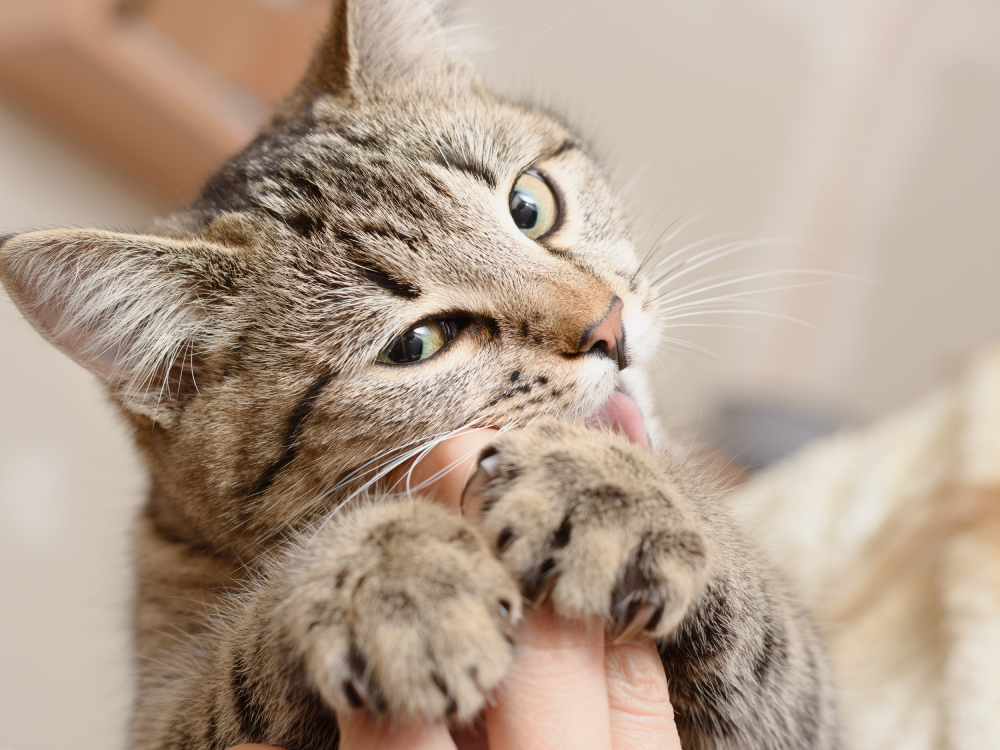
When you hear the phrase “love bite,” you probably think that it is an affectionate response. That is not the case. A love bite is your cat’s way of telling you that they don’t want to be petted anymore. You can think of a love bite as a warning sign before he gets angry. He wouldn’t give you this sign if he didn’t love you!

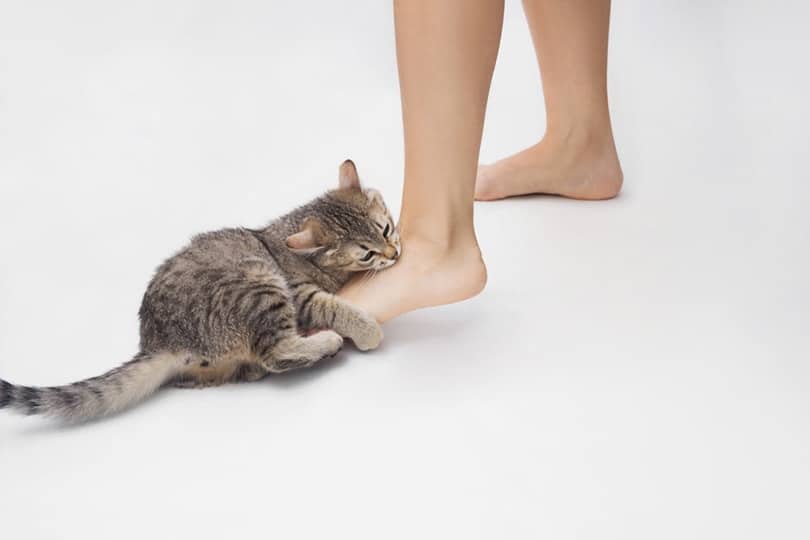
Love bites typically are not aggressive. Sometimes, love bites are unintentional because they are part of your cat’s grooming habits. So, they rarely break the skin. If you don’t stop petting the cat after their love bite, they will likely aggressively bite you to force you to stop.

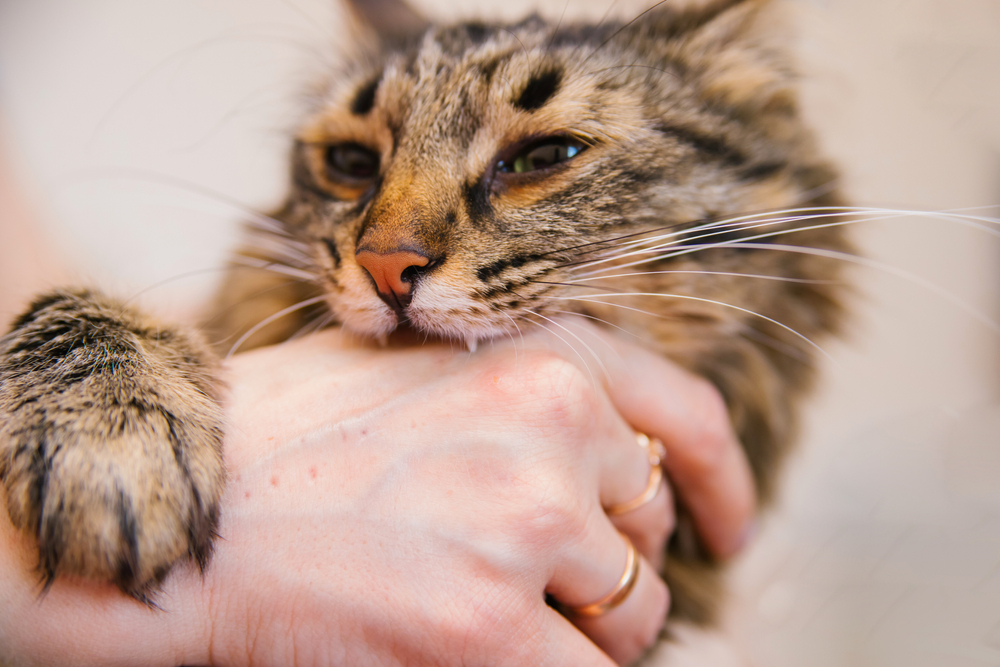
a tabby cat biting owner's hand
Image Credit: Alie04, Shutterstock
Solution:

Unfortunately, there is not much you can do to discourage love bites since it is a natural response. You can look for signs of discomfort to know when your cat is beginning to get irritated. For example, if you notice that the cat is twitching his tail or ears, stop petting him.

If you’re concerned about your cat’s behavior we suggest you speak to a vet.

If you need to speak with a vet but can't get to one, head over to PangoVet. It's an online service where you can talk to a vet online and get the advice you need for your pet — all at an affordable price!

PangoVet_Mention-in-Content for PangoVet2 save money

divider 1 paws

Don’t Physically Punish Your Cat

Since we are talking about cats that bite, it is essential to note that you should not physically punish your cat after they bite you. Physically punishing your cat includes hitting, kicking, slapping, or throwing the cat about.

You shouldn’t physically punish your cat because it can hurt him. Even a slight push or shove can injure his delicate bones. In addition to hurting your pet, physical punishment will likely make the biting issue worse. As you become physical with him, he will likely become fearful of you, causing him to retaliate more aggressively.

divider 2 cats

Conclusion

If your cat bites you while you are petting him, it is likely because he doesn’t want to be petted anymore. Even if he adores your attention, cats don’t want to be constantly petted. This is easy to understand since we, as humans, also don’t want to be touched all the time.

To prevent your cat from biting you, look for signs that he is irritated. These signs will tell you that your cat doesn’t want to be pet anymore, allowing you to stop before the situation escalates. If your cat does get to the point where he bites you, never use physical force to teach him a lesson.

Related Reads:


Featured Image Credit: Luis Echeverri Urrea, Shutterstock

Want content like this delivered to you?

Sign Up For Our Newsletter

News, insights, expert advice, and everything cat

* By submitting, you agree to our Terms & Conditions and Privacy & Cookies Policy.


How useful was this post?

Click on a star to rate (you can leave written feedback after clicking submit)

Help us improve Catster for pet parents!

Your feedback really matters.

What did you like about this post? Also how can we improve it?

Join the conversation

2 Responses

    1. Hi Chole, sorry to hear about your cat's aggression. Head shaking can be a sign of ear infection but also other medical issues. Check out: https://www.catster.com/cat-behavior/why-does-cat-keep-shaking-head/
      Pain-induced aggression is a possibility, so we recommend you book a one-on-one consultation with one of our veterinarians at www.pangovet.com to help you find out the cause and make a management plan for your cat. Bitting is a self-reinforced behavior that can quickly turn into a bad and hard-to-eliminate habit. Kind regards.

Leave a Reply

You’re very welcome to leave a comment or question. Please know that all comments must meet our community guidelines, and your email address will NOT be published. Let’s have a positive and constructive conversation.


Talk With A Vet Online

Peace of mind,
anywhere, anytime

Affordable vet advice

6 Amazing DIY Cat Couch Plans You Can Create at Home

There’s nothing better than curling up with your best friend on the couch after a long day. But we all need our own...

Can Cats Eat French Fries? Vet-Verified Nutritional Facts & Health Concerns

Does your cat love sneaking the occasional French fry from your plate when you’ve finished a meal? Perhaps you’ve seen a street cat...

Black Munchkin Cat: Info, Pictures, Facts & History

The first time you see a black Munchkin cat, you may wonder if your eyes are playing tricks on you. They look like...

How Contagious Is Feline Infectious Peritonitis (FIP)? Our Vet Explains

Dreaded by veterinarians and cat parents alike, feline infectious peritonitis (FIP) is a serious disease. There are some promising new treatments on the...

More related

Is It True That All Cats Have Tails? Vet-Reviewed Facts

A tail is a vital part of a cat’s physique and helps them balance, capture prey, and communicate with humans and other felines....

Why Do Kittens Get Worms? How & Treatment Options

Oh no, you’ve recently acquired an adorable kitten, but they have worms! Now, what do you do? Worms are an unfortunate and relatively...

How to Clicker Train a Cat: 4 Vet-Approved Steps

Most people will say that cats are untrainable, but the reality is that they can be trained if you take the right approach....

Are Cats Manipulative? Olga’s Manipulation Skills

Hi, I’m Christopher! Read my introduction to learn more about me and my silly Russian Blue cat, Olga. Cats find creative ways to...

Keep reading

Why Does My Cat Lick My Armpits: 5 Vet-Reviewed Possible Reasons

Cats are wonderful, but most people who’ve ever loved one of these perfect creatures had at least one moment when they wondered: what on earth is my cat up to and what could have possibly possessed the animal to do...

cat licking its nose

Cat Dingleberries: Vet Reviewed Causes & Prevention Tips

Dingleberries (singular dingleberry) is a slang term for dried feces stuck onto a cat’s fur around the anal area and back end. While it’s not a pleasant topic, and many cat parents may wish to leave that area alone, it’s...

cat licking its butt

Cat Whimpering & Whining: Why, What to Do & When to Worry (Vet-Approved)

Cats vary in how talkative they are. Some always seem to have something to say, while others aren’t nearly as vocal. You may be used to your kitty’s repertoire of sounds and even understand what your pet is trying to...

abyssinian-cat-meowing-at-the-sofa

Is Borax Safe for Cats? Vet-Approved Safety and Usage Advice

Borax is a multipurpose cleaner that can be used for stopping an infestation of ants or cleaning mold. It’s even become popular as an ingredient for homemade slime recipes! You might also see it being suggested as a “natural” alternative...

Catster_Is Borax Safe for Cats

Why Is My Cat Afraid of the Ceiling Fan? – 4 Possible Vet-Reviewed Reasons

Cats, like many other pets (and us), possess unique personalities. Some can be extremely brave and adventurous, while others can be more timid and get scared easily. A cat’s personality can be influenced by several factors, including their genetics, early...

ceiling fan

Your Cat Is Begging at Christmas Dinner – Here’s What’s Safe to Share

Your family is gathering around the Christmas table, passing dishes and laughing, when you feel it: those unblinking eyes burning into the side of your face. You glance down. There’s your cat, sitting perfectly still, radiating an intensity that suggests...

Bengal cat head peeks out from behind a table with Christmas cookies on a plate

How Does Cat Allergy Testing Work? Vet-Reviewed Test Types, Signs & FAQ

Whether your cat is displaying signs of allergies or you just want to get ahead of things, you might wonder how exactly allergy testing works. After all, it can sometimes be lengthy and very much trial and error. Here, we...

cat blood test

Can You Use Baby Shampoo on a Cat? Feline Shampoo Guide

Many cats don’t particularly enjoy being bathed, but sometimes it is necessary. Most cats never need shampooing, but if your cat has a skin condition that needs treating or has rolled in something that you need to clean off, you...

grey cat bath shampoo bubbles

Love Cats? So Do We! Join the Catster Community

Stay informed with expert pet care insights delivered straight to your inbox! Discover professional guidance on animal behavior, feeding tips, trusted product picks, and much more.


Sign up for the Catster Email Newsletter

Stay informed with expert pet care insights delivered straight to your inbox! Discover professional guidance on animal behavior, feeding tips, trusted product picks, and much more.