Why Do Cats Scratch Their Ears? 7 Vet-Verified Reasons, Signs & Treatment



In this article
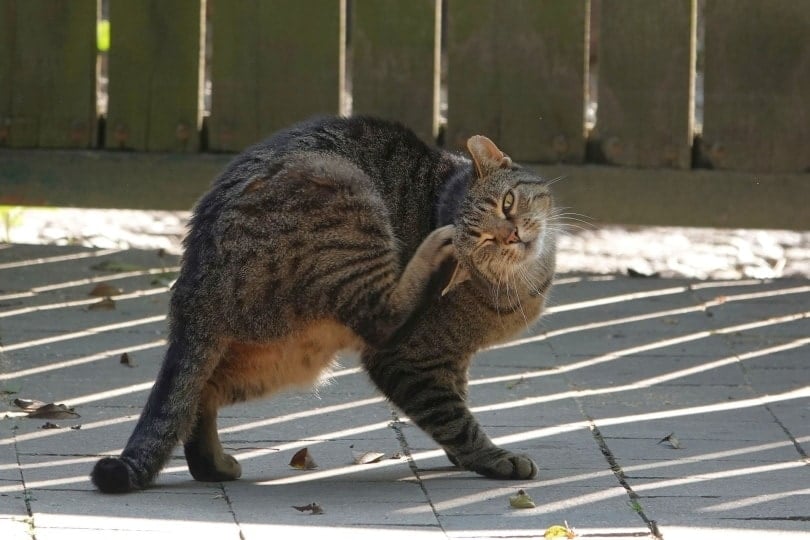
While all cats can have an occasional itch that causes them to scratch their ears, sometimes they seem to be scratching far more than usual. Is this something to worry about?
If your cat does seem to be scratching their ears excessively, it might have a few different causes. Unfortunately, these will need a veterinarian’s attention so the issue can be diagnosed and treated to relieve your cat’s discomfort.
In this article, we cover some possible reasons that your cat’s ears are itchy and the best ways to deal with it.

The 7 Possible Reasons Why Cats Scratch Their Ears
1. Ear Mites/Parasites
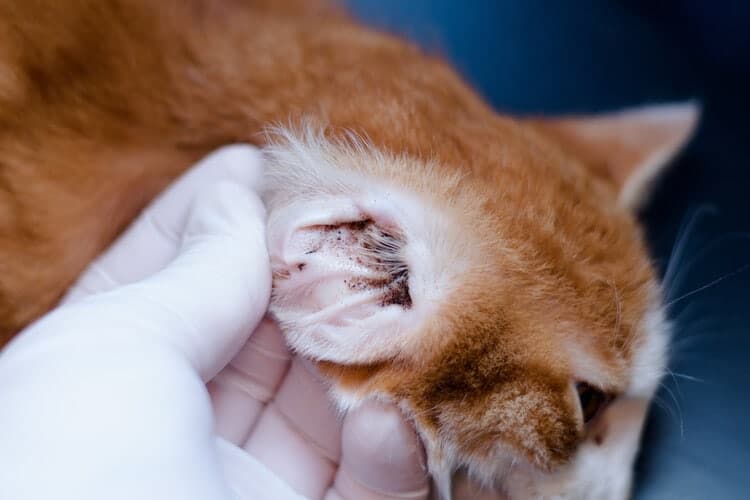
One of the most common reasons that a cat starts over-scratching their ears is ear mites. These tiny parasites live in or near a cat’s ears and are easily transmitted to other cats.
Signs that a cat has ear mites are:
- Scratching the ears, head, and neck
- Crumbly red-brown or black discharge in the ears
- Excessive head shaking
Ear mites are usually treated by cleaning the ears and using eardrops designed to eliminate ear mites.
Other types of mites can also cause skin irritation that may affect around the head and ears, including sarcoptic mange, demodicosis, and trombiculosis (chiggers).
2. Ear Infection

Ear infections most commonly affect the external (outer) ear canal but can also affect the middle and inner ear. Bacteria and yeast can overgrow in one or both ears, but there is usually an underlying problem that causes these infections.
Common signs of an ear infection include:
- Scratching the ears
- Head shaking
- Head tilting
- Discharge
- Bad odor
- Red, swollen, and possible sores
- Pain
If left untreated, ear infections can spread from the outer ear to the middle and inner ear and cause serious problems such as a loss of balance and hearing loss. The treatment depends on the cause, but often ear cleaning and medicated ear drops are prescribed. This should all be done under a vet’s guidance.
The ear flaps can also be affected by ringworm, a fungal infection, which can also cause itchiness and scratching.
3. Foreign Bodies
Outdoor cats in particular can get things like grass awns or other objects in their ears. An affected cat will typically do a great deal of head shaking and pawing at their ears.
If you see something obvious in your cat’s ear, you can try to gently pull it out with tweezers or your fingers. But if it isn’t coming out easily or your cat is showing signs of discomfort, stop immediately, and get in touch with a vet. They will be able to remove the object safely and check for damage.
4. Wounds

Ear wounds are more likely to occur with outdoor cats or if you have multiple cats.
When cats fight, they tend to aim for the head, which results in bites and scratches on the ears. These wounds can become infected, so treating them early is essential.
If a wound is obviously minor and superficial, you may be able to clean it and monitor it at home. Bite wounds, and more severe or infected wounds should be assessed and treated by a vet.
5. Allergies

Like us, cats can suffer from allergies to things in the environment (such as pollen), food, and insect bites. One of the most common signs of allergies in cats is itchy skin leading to increased scratching, often the head and ears are affected.
You’ll need to work with a veterinarian to determine what is causing the reaction. Treatment will depend on what your cat is allergic to, for example, your cat will need to go on a specific diet if it’s a food allergy.
6. Polyps

Nasopharyngeal polyps are benign growths that usually develop in a cat’s middle ear and can extend either down the eustachian tube or into the external ear canal. These polyps are typically seen in younger cats, but they can develop at any age.
How an individual cat is affected will depend on the location of the polyp and its size, but signs can include snoring, sneezing, ear scratching, head shaking and balance issues. The vet will need to anesthetize your cat to examine and surgically remove the polyp.
7. Dirty Ears

Sometimes, your cat’s ears are just dirty. An accumulation of waxy discharge can create itchy ears, which can eventually lead to infection.
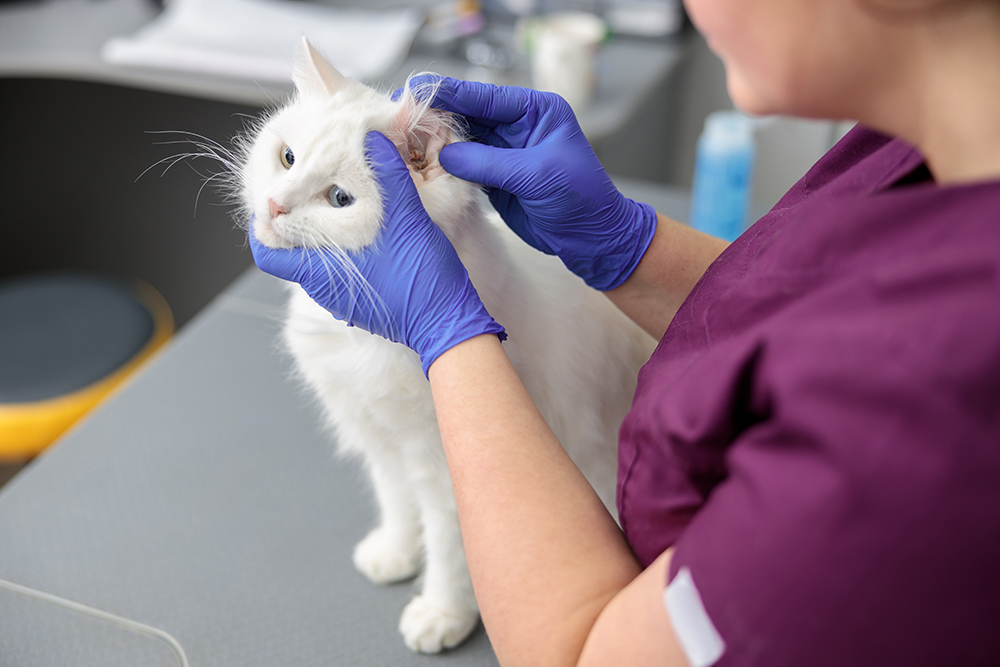
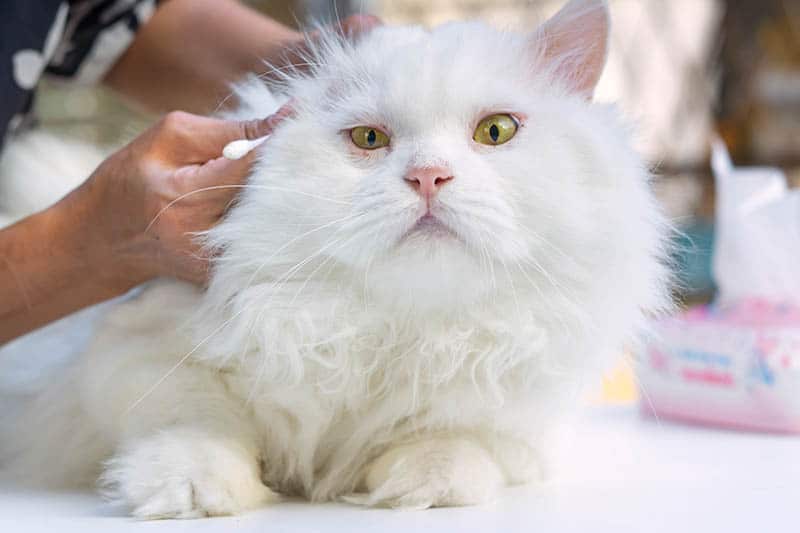
Check your pet’s ears regularly to ensure that they aren’t dirty, and seek advice from a vet. If infections and other conditions have been ruled out, a vet may advise cleaning your cat’s ears. A cat’s ears are sensitive, always follow the vet’s advice on which ear cleaner to use and the technique and frequency of cleaning.
What Are the Common Signs of Ear Problems?
- Excessive pawing and scratching at the ears and head
- Tilting the head to the side
- Sensitive ears when touched
- Disoriented and losing balance
- Frequent head shaking
- Bad odor from the ear
- Redness of the outer and/or ear canal
- Swollen ear
- Excessive ear wax
- Bleeding in the ear
- Yellow, black, or brown ear discharge
- Behavioral changes (irritable, withdrawn, etc.)
- Partial or complete hearing loss
Treatment for Itchy Ears
How a cat’s itchy ears are treated depends entirely on what’s causing it. A veterinarian clinic will be the best place to take your cat if they are scratching excessively.
- While at the clinic, ask for tips on the best ways to clean your cat’s ears, particularly if they have flare-ups.
- A vet will likely recommend ear drops or spot-on treatment if your cat has ear mites.
- If your cat has an ear infection, treatment will involve an antifungal, antibiotic, or anti-parasitic depending on the cause. How intensive the treatment is depends on how advanced the infection is.
- Itchy ears caused by allergies will clear up once the allergy is addressed. Treatment will involve tackling the itch and avoiding allergic triggers as much as possible. Food allergies will likely have a prescription diet as part of the treatment, but this depends on what your cat is allergic to.
Conclusion
When is your cat scratching their ears too much? If you spend a great deal of time around your cat, you’ll be able to tell when it’s too frequent. One way that can help you determine if your cat is scratching more than usual is by checking for any injuries to the ears. When cats scratch too much, they will experience hair loss and can wound themselves.
All cats scratch their ears, but sometimes, it might seem excessive. Don’t hesitate to speak to a vet if you’re at all concerned about your cat's health and well-being.
See also:
Sources
https://www.petmd.com/cat/general-health/how-to-clean-your-cats-ears
https://www.petmd.com/blogs/thedailyvet/dr-coates/2015/july/nasopharyngeal-polyps-cats-32890
https://www.petmd.com/cat/conditions/systemic/allergies-cats
https://www.petmd.com/cat/emergency/accidents-injuries/e_ct_ear_injuries
https://www.petmd.com/cat/conditions/ears/cat-ear-infections
https://www.petmd.com/cat/conditions/infectious-parasitic/c_ct_ear_mites
Featured Image Credit: Lubo Ivanko, Shutterstock

Expert cat care, straight to your inbox
Vet-reviewed advice, behavior tips, and the best of Catster. Free, and you can unsubscribe anytime.
By signing up, you agree to our Terms & Conditions and Privacy & Cookies Policy.
Kathryn was a librarian in a previous lifetime and is currently a pet writer. When she was a child, she hoped to work in ZOOs or with wildlife in some way, thanks to her all-consuming love for animals. Sadly, she's not strong in the sciences, so she fills her days with researching and writing about all kinds of animals and spends time playing with her adorable but very naughty tabby cat, Bella. Kathryn is hoping to add to her family in the near future – maybe another cat and a dog.
Join the conversation
Ask a question, share your story, or send private feedback.