Get

In Your Inbox

Catster is reader-supported. When you buy via links on our site, we may earn an affiliate commission at no cost to you. Learn more.

Cat Trilling: Meaning & Feline Sounds Facts (Vet-Verified)

Share

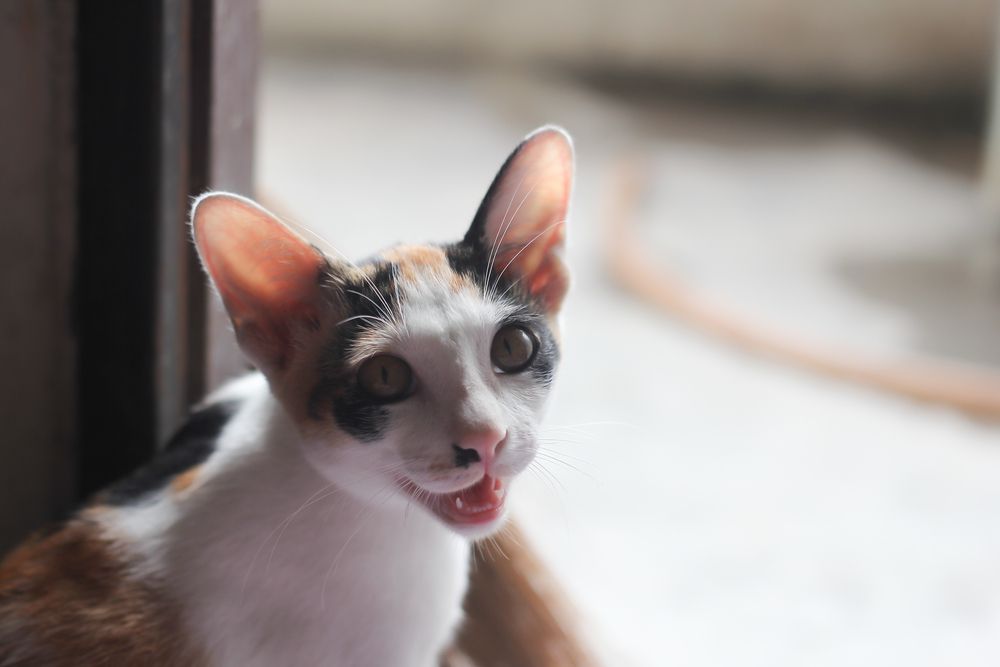
cat-meowing-or-trilling-by-the-door

Have you ever been greeted by the cute sound of your cat trilling? It’s slightly different from meowing, and most cats do it in response to something positive, like being offered their favorite treat.

Trills and meows aren’t the only types of vocalizations that cats use to communicate, though. In fact, among carnivorous animals, our feline companions have the most extensive vocal repertoire.1 This is due to their social organization, nocturnal activity, and long periods of contact between the mother cat and her kittens.

Read on as we explore the most common reasons that cats trill and what that adorable sound means.

divider cat paws 2 oct 2024

What Does the Cat Trilling Noise Sound Like?

In a 2020 study, the researchers described the cat trilling noise as “garnishment, produced with a soft voice like the purr.”2 In other words, a trill falls somewhere between a purr and a meow. It is often done in a series of short, high-pitched noises that can vary in intensity and duration.

Why Do Cats Trill?

According to researchers, cat vocalizations serve as “valuable tools in exploring motor, perceptual, motivational, and social development.”3 Cats use different types of vocalizations to express their feelings and emotions during interactions with humans or between a mother cat and her kittens. They can also express fear and aggression in hostile situations through specific vocalizations and body posture.

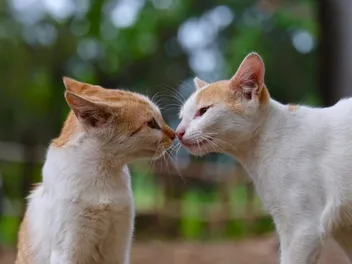
One cat trilling meaning is a response to a positive stimulus—such as food or petting—or to greet their human companions. It’s their way of saying hello and showing that they recognize and like you. They use trilling not only with people but also when greeting another known cat. This friendly sound is a sign of a strong bond and recognition.

Furthermore, mother cats use trills to communicate with their kittens. It serves as a way to get their attention, guide them, or simply check on their well-being. Even when they grow up, cats don’t lose the habit of trilling.

Interestingly, in a 2012 pilot study on cat vocalizations, the trill turned out to be the most common sound after the meow.4 This shows how vital it is for how our feline companions communicate with us and each other.

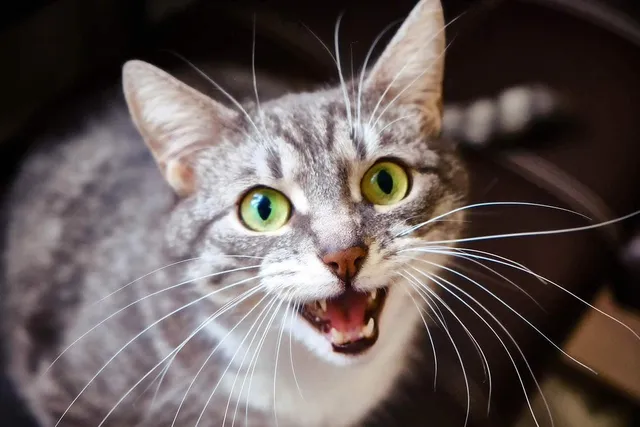
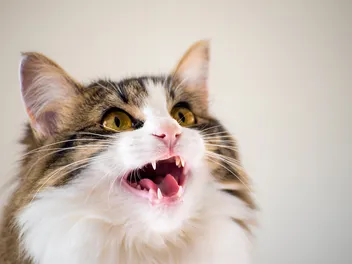
close up cat meowing
Image Credit: Oscar Wiedemeijer, Shutterstock

divider cat paws oct 2024

What Are the Different Types of Cat Vocalizations?

Cat vocalizations are generally divided into three main categories: murmur sounds, vowel sounds, and forced intensity sounds.

  • Murmur vocalizations correspond to the sounds produced with the mouth closed. Examples of these sounds are purring, trilling, and groaning.
  • Vowel sounds are formed with an open mouth that closes gradually, such as meowing during friendly interactions or making a loud squeak.
  • Forced-intensity sounds are produced with an open mouth, used to show aggression, and include growling, hissing, and spitting. Chattering is also a type of forced intensity sound, but it is not used to show aggression, but rather when cats see prey.

The above mentioned study with 74 cats found that in pleasant situations, like being offered a favorite snack, cats made specific sounds like trilling, squeaking, purring, and chattering. This shows that cat trilling is associated with positive emotions.

cat meowing
Image Credit: Stanimir G.Stoev, Shutterstock

Are Cat Trilling and Chirping the Same?

Trills and chirps are specific types of vocalizations produced by cats; they are similar sounds but are not used in the same exact contexts.

On the one hand, trills are a recognition, like a greeting call. They can be a bit difficult to distinguish from chirps, which are also short, high-pitched calls similar to bird chirps. On the other hand, chirps are a bit shorter, faster, and more staccato than trills.

Cats chirp primarily as a “contact call”—that is, to locate their peers or when they want something. Cats often chirp when they observe prey or something that catches their interest, such as birds outside a window.

Both chirps and trills can be used by a mother cat to tell her kittens to follow her.

divider cat faces oct 2024

Why Do Some Cats Trill More Than Others?

The frequency of trills can vary between each cat, as can meows and other vocalizations. Some cat breeds are more vocal than others, and some simply have a more “talkative” temperament. So, if your kitty has never greeted you with an adorable cat trilling sound, don’t worry—that doesn’t mean there’s anything wrong with them!

Can Cat Trilling Be a Sign of Distress?

Cat trilling is usually associated with positive emotions. However, if it’s sudden, excessive, or accompanied by other signs of distress, you may want to take your cat to the vet to rule out any potential health issues.

divider cat paws oct 2024

Tips for Understanding Your Cat’s Language

Cat trilling is just one way for your kitty to express their emotions.

Here are a few tips for becoming an expert at deciphering your cat's unique language:
  • Pay attention to your cat’s body language. When your cat makes sounds, watch how they behave. If they are purring, relaxed, and showing signs of contentment like sitting or lying down with their eyes half-closed and their tail still, they are probably happy. Furthermore, if your kitty has forward ears, raised tail, forward whiskers, and somewhat dilated pupils, they are telling you that they want to play.
  • If your cat has dilated pupils, backward-facing ears, and a wagging or wagging tail, these are clear signs that they want to be left alone for a while. So, pay attention to their sounds and body language to better understand what your cat is trying to tell you.
  • Consider the situation in which the vocalization occurs. Cats may meow differently when they want food and attention or are in distress. Understanding the context helps you interpret what your cat is trying to tell you.
  • Cats use different pitches and volumes to express their emotions. A loud and insistent meow might indicate urgency or frustration, while a soft, gentle tweet could signify that your cat wants something.
  • Monitor your cat and check for signs of physical discomfort. Sudden changes in vocalization patterns or the introduction of new, distressing sounds may indicate that something is wrong with your cat. If you notice any unusual or concerning vocalizations, it’s best to consult with your vet to rule out any potential health issues.

divider cat paws 2 oct 2024

Final Thoughts

A cat’s trill is like a friendly “hello” to their fellow cats and human friends. It’s their way of expressing happiness and affection, whether they’re excited to see you or interacting with other known cats. A mother cat can also use this short and high-pitched noise to guide her kittens and check on them. So, when your cat trills, know that it’s just their way of saying that they’re happy to be with you—or maybe they want you to follow them so you can fill their bowl with more food!

See Also: 


Featured Image Credit: Chan Deshpong, Shutterstock

Want content like this delivered to you?

Sign Up For Our Newsletter

News, insights, expert advice, and everything cat

* By submitting, you agree to our Terms & Conditions and Privacy & Cookies Policy.


How useful was this post?

Click on a star to rate (you can leave written feedback after clicking submit)

Help us improve Catster for pet parents!

Your feedback really matters.

What did you like about this post? Also how can we improve it?

Join the conversation

Leave a Reply

You’re very welcome to leave a comment or question. Please know that all comments must meet our community guidelines, and your email address will NOT be published. Let’s have a positive and constructive conversation.


Talk With A Vet Online

Peace of mind,
anywhere, anytime

Affordable vet advice

Ask Dr. Paola – Help! My Momma Cat Is Very Thin! (May 18, 2026)

Welcome to our “Ask Dr. Paola” series, where every Monday we bring expert advice straight from Dr. Paola Cuevas (MVZ) to help our...

The Cat Biting Mistakes Most Owners Make (And What Works Instead)

Cat bites sent more than 400,000 people to emergency rooms in the US each year.1 Not scratches. Bites. And the reason they’re so...

Do Cats Cause Schizophrenia? Scientists Find a Link – Here’s What It Means

Being a fierce advocate (and occasional recipient of) mental health support and awareness, the term ‘crazy’ is not one I like to fling...

One in 100 Cats Gets Diabetes – Here’s How to Catch It Early

One in every 100 cats develops diabetes.1 That’s not a rare, unlucky condition reserved for cats with obvious health problems. It’s common enough...

More related

From Eyesore to a Glowing Centerpiece: Meet the Modern Cat Tree – The Jellyfish Cat Tree!

Cat parents know the struggle: traditional cat tree towers often end up shoved into corners, wobbling after a year, with fabrics that collect...

Can Cats Get Bird Flu? Our Vet Explains Signs & Prevention Tips

Your cat’s habit of preying on birds may concern you when you worry about their exposure to bird flu and if they could...

15 Best Cat Breeds for Families With Kids (With Info & Pictures)

Despite having a reputation for being distant and aloof, cats are wonderful companion animals and can be excellent pets for families with young...

10 Best Cat Trees for Older Cats in 2026 – Reviews & Top Picks

Having an aging cat can be difficult for you and for them. As your cat has aged, it has likely begun to slow...

Keep reading

7 Safe Exercises for Cats With Arthritis: Vet-Approved Advice

Cats with arthritis need special care to overcome the pain and stay active. If your feline friend has been diagnosed with arthritis, they will become slower and won’t enjoy their playing time as much as before. While the condition primarily...

cat folding his paw while sleeping

Can I Use Human Eye Drops on Cats? Vet-Verified Facts and Precautions

While cats can develop eye problems just like humans do, their eye conditions should never be treated the same way that we would treat our own. This is especially true when it comes to treatments like human eye drops, as...

Woman with eye drops holding a cat

Can Cats Eat Feta Cheese? Vet-Approved Risks & Alternatives

It’s a common scenario: you’re enjoying a delicious snack or meal, and your feline friend gazes up at you with those pleading eyes (or reaches up with a desperate paw!). If your treat of choice is feta cheese, you might...

Can Cats Eat Feta Cheese

How to Prepare Your Cat for a New Baby: 7 Vet-Approved Tips

Cats are not fond of change, which makes it important to help prepare your cat for it. Bringing home a new baby is exciting, but all the sudden changes could be stressful for cats. There will be all sorts of...

pregnant woman sitting with cat

10 Best Ringworm Shampoos for Cats in 2026: Reviews & Top Picks

Ringworm is an annoying fungal infection that our cats may develop from time to time, and even worse, it can spread to us. Getting rid of ringworm is vital to stopping its spread, and that’s where ringworm shampoos come in....

cat bathing in the bathroom

9 Best Vitamins for Cats in 2026 – Reviews & Top Picks

Sometimes cats need extra vitamins, just like people do. However, muddling through the vast array of different supplements and health claims online can be a chore. How can you tell that you are getting a safe and effective product? That...

pet owner feeding blue maine coon cat with treats outdoors in garden

9 Human Foods That Cats Can Safely Eat: Vet-Reviewed Dishes

It’s hard to resist the pleading eyes your cat gives you as you chow down on a succulent chicken breast or a juicy hamburger. So, you might wonder if you can safely offer your kitty a taste of the meal...

cat eating from metal feeding bowl

Why Do Cats Poop on Grass? 3 Vet-Reviewed Reasons & How to Stop It

Usually, cats are fastidious about burying their poop in loose earth, sand, or their litter tray. As pet owners, knowing about our four-legged friend’s habits is important. Catching our kitty pooping on the lawn—instead of burying it—can be worrying. Finding...

cat pooping on the grass

Love Cats? So Do We! Join the Catster Community

Stay informed with expert pet care insights delivered straight to your inbox! Discover professional guidance on animal behavior, feeding tips, trusted product picks, and much more.


Sign up for the Catster Email Newsletter

Stay informed with expert pet care insights delivered straight to your inbox! Discover professional guidance on animal behavior, feeding tips, trusted product picks, and much more.