Why Do Cats Wag Their Tails? 7 Vet-Verified Reasons for the Behavior


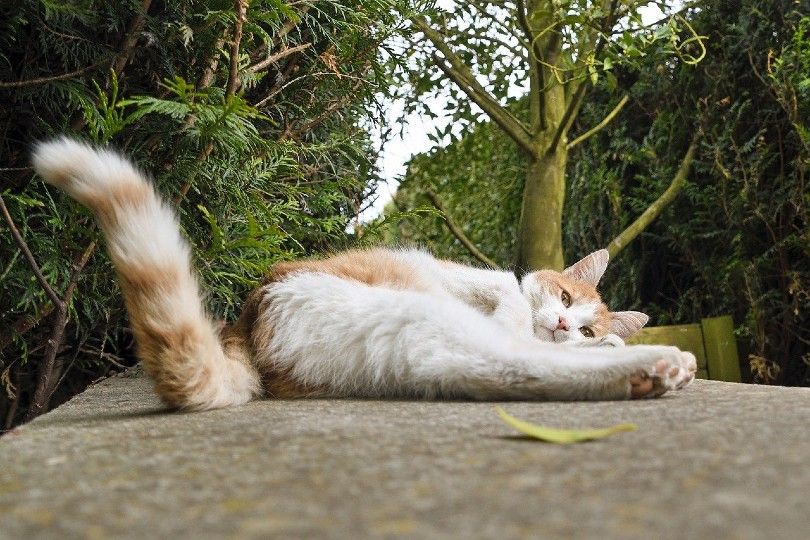
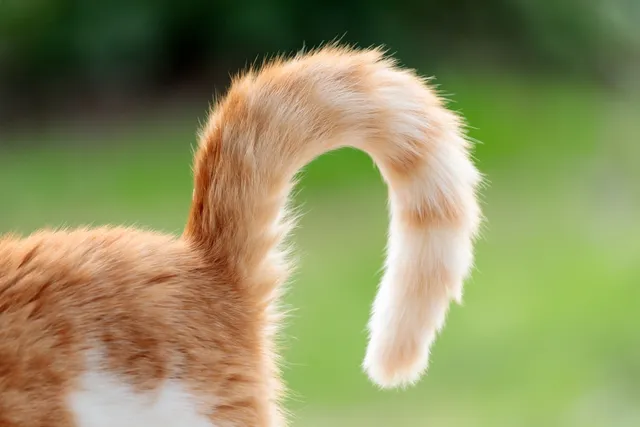
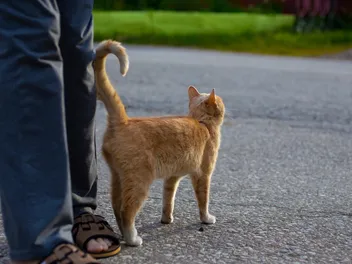
Unlike dogs, who will wag their tails at the mention of their name, cats have a variety of reasons for tail wagging, although in cats, it’s less of a “wag” and more of a gentle “swoosh” most of the time. There is a common misperception that cats only wag their tails when they’re angry, and while this is one of the common reasons, there is actually more to it than that.
Cats are often considered notoriously aloof and individual animals, although cat lovers know very well they can have very different personalities, and it can sometimes be a challenge to decipher exactly what they are feeling at times. Cats convey much about what they’re feeling through the movement of their tail, and combined with body language and vocalizations, the movements of your cat’s tail are crucial for you getting a deeper understanding of your feline.
In this article, we’ll take a look at the seven most common reasons for your cat’s wagging tail and what to do when faced with it!

The 7 Possible Reasons Why Cats Wag Their Tails
1. Annoyance
When your cat is thrashing their tail rapidly or randomly, this is a sure sign that they are annoyed or irritated. If you see your cat exhibiting this behavior, even while you are petting them, it’s best to give them their space and leave them alone. If you continue petting them at this time, be prepared for a possible scratch or bite!

2. Greeting
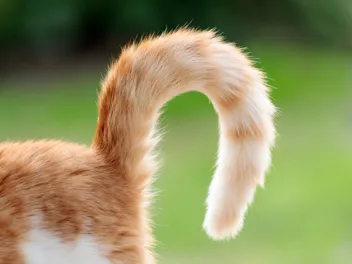
An upright, gently swaying tail is your cat’s way of saying hello! Their upright tail will often quiver as well, and is a signal that they are happy to see you and would like a petting, please! You’ll often see the same greeting between two cats, followed by gentle rubbing and vocalization. This is usually a sure sign of an excited, happy feline, although an upright tail with raised hackles and dilated pupils can also signal fear. It’s always important to interpret your cat’s tail wagging with the rest of their body language and the situation they are in.
3. Fear
If your cat's tail is swaying sporadically, with occasional twitching, combined with other body language signs such as a stiff posture, dilated pupils, raised hackles, and flat ears, they may be afraid and in defense mode. Their tail may also be fluffed up and standing upright and erect. According to experts, cats stick their tails up like this to appear larger when they are threatened, combined with swooshing and swaying due to arousal and a flight-or-fight state of mind. Similarly, cats may do this when irritated, overstimulated, or even when focusing during hunting, before the anticipated pounce.
It’s important to discern fear versus anger. Your cat is afraid and not angry, although they may act defensively when in this mode. It’s highly likely that something has spooked or startled them, and you should try to move slowly and gently around them while they’re in this mode.

4. Aggression
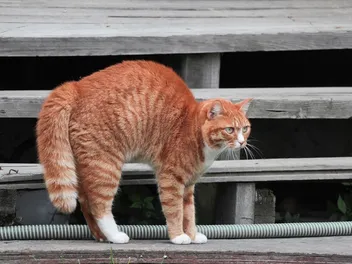
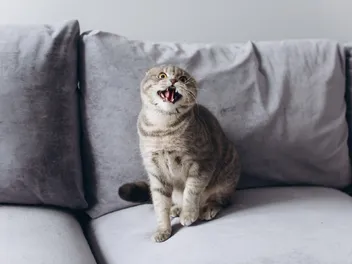
An angry or aggressive cat that sees no way out of a particular situation, expecting a conflict, may also have an upright tail, erect at the base, while a very frightened cat usually has the tail curled down beneath their legs, with fur standing on end along both the tail and spine. They will often arch their back and growl or yowl at the same time, and there is really no mistaking what they are feeling! If you see a cat reacting like this, back away as quickly and gently as you can!
5. Contentment
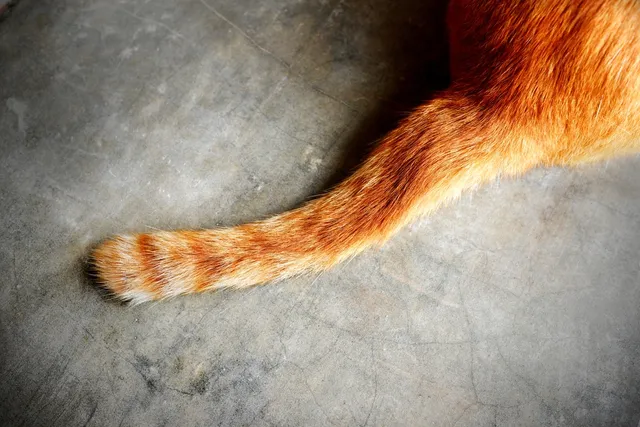
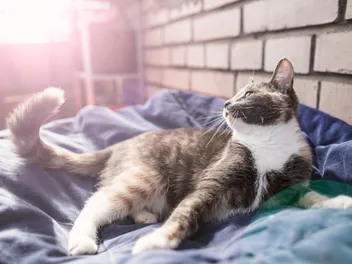
When your cat’s tail is gently waving and swaying side to side, almost like they’re sweeping the floor, they are comfortable and content, if combined with a relaxed body language. Cats will even do this while sleeping, indicating that they feel safe and secure. They will also do this while being petted and may even gently wrap their tail around your arm or leg.

6. Hunting
When your cat is in hunting mode, their tail will twitch and make quick, intermittent, small swishes from side to side. They can often be seen doing this while stalking and are about to pounce. An easy way to observe this behavior is when you are playing with your cat with a lure or string, and although it is playful, it’s the same motion that they’d make while hunting down prey.
7. Pain
While this is rare, your cat’s tail may also sway or twitch while they are lying down if they are in pain. If your cat’s tail is swishing or twitching in cases where they would usually be relaxed, there may be underlying pain or illness that is causing them distress. That said, this should be interpreted alongside body language and is usually accompanied by other signs, like lack of energy, limping, or not eating, depending on the underlying issue, and if this is the case, a visit to a vet is recommended.

Final Thoughts
While the movements of your cat’s tail are great indicators of their feelings and mood, these are part of only one aspect of the different forms of body language that they use for communication. Deciphering tail wags is a great way to assess your cat’s mood, but it should be used in context and assessed along with vocalization and body language. In order to really understand what your cat is feeling, you need to look at the entire picture, but understanding tail wagging is a great place to start!
Featured Image Credit: Christel SAGNIEZ, Pixabay
Expert cat care, straight to your inbox
News, insights, and useful advice, delivered to you.

No spam — unsubscribe anytime.
By signing up, you agree to our Terms & Conditions and Privacy & Cookies Policy.
How useful was this post?
Click a star to rate. You can leave written feedback afterwards. (We read all feedback.)
Christian started writing for a local newspaper as a teenager, and he's been involved in the publishing industry for most of his adult life. Combining his love of writing with a passion for animals, he is currently the Director of Editorial at Pangolia and the Editor-in-Chief at Catster.
Christian lives in the Philippines with his wife, son, and four rescue cats: Trixie, Chloe, Sparky, and Chopper.