Get

In Your Inbox

Catster is reader-supported. When you buy via links on our site, we may earn an affiliate commission at no cost to you. Learn more.

Do Cats Like To Play Hide And Seek? 9 Vet-Verified Tips On Playing With Your Cat


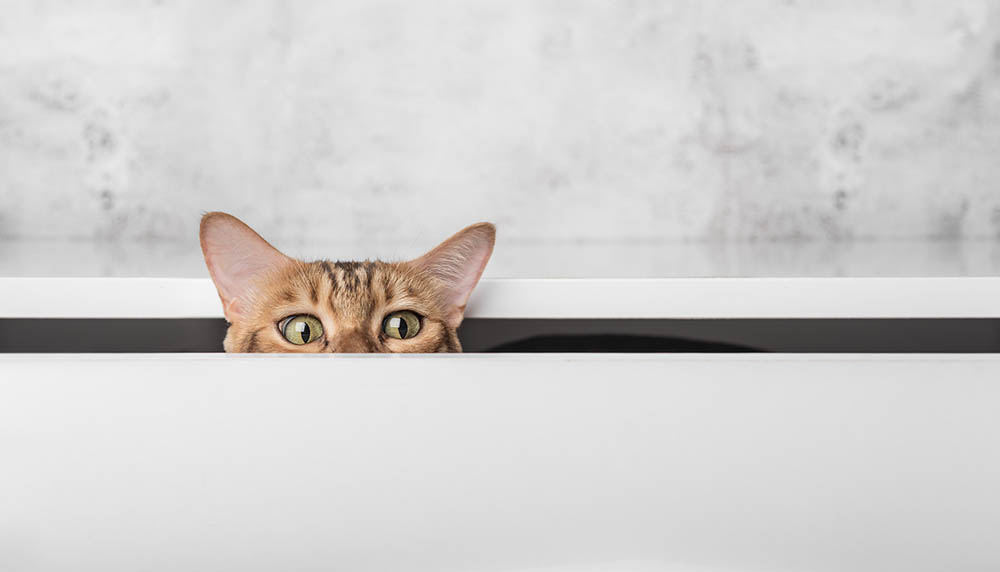
bengal cat hiding in a drawer

Cats are playful animals, especially kittens, and enjoy playing different games that mimic hunting behavior. In fact, many owners notice that their cats frequently run off and hide behind things, which can make you wonder if they like playing hide and seek.

They often enjoy playing it because it helps them use their hunting instincts. If you would like tips on encouraging your cat to play hide and seek, keep reading while we provide several pointers and answer some common questions to help get you started.

divider 3 paws

Before You Begin

Observe your cat to see if they show interest in interactive play and seem curious about exploring, as not all cats enjoy games like hide and seek. Also, consider any health issues that might limit their ability to play. Ensure the play area is free from hazards. Remove sharp objects, breakables, or anything that might harm your cat during the game, and keep plenty of their favorite toys handy.

divider 1 paws

The 9 Tips on How to Play Hide and Seek With Your Cat

1. Understand Their Instincts

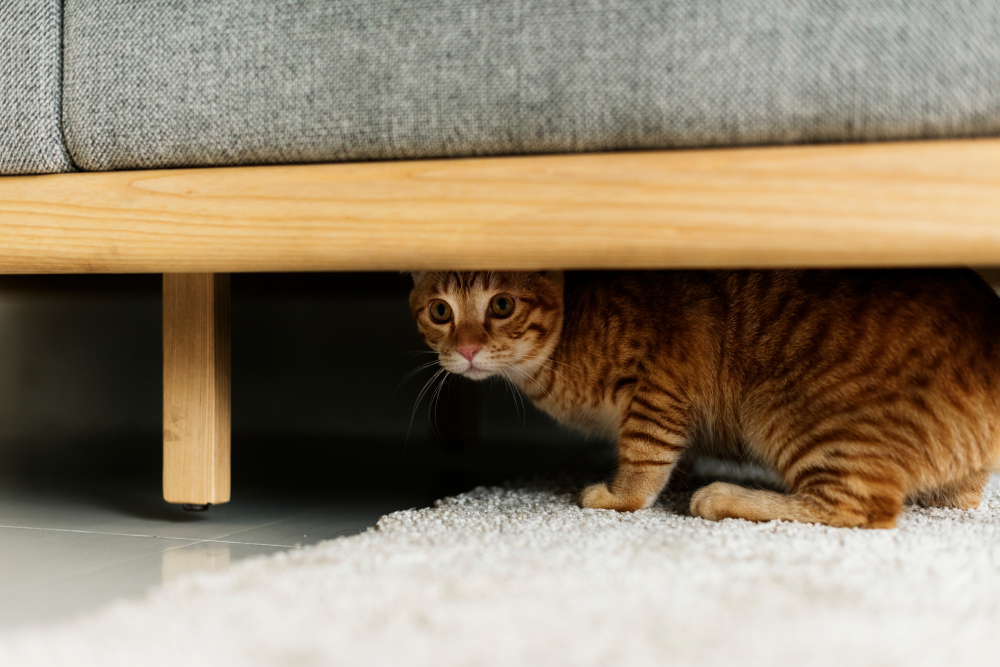
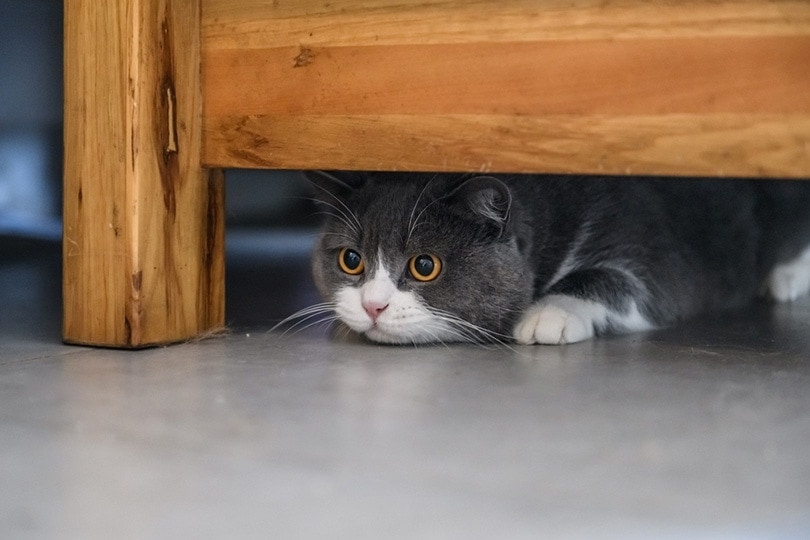
Cats are natural predators, and hide-and-seek can mimic the thrill of the hunt for them. Hiding behind furniture, doors, or other objects can intrigue your cat and entice them to find you. Pay attention to your cat’s reactions to discover what they enjoy the most!

cat hiding in a box
Image Credit by: Counselling, Pixabay

2. Use Toys to Entice Them

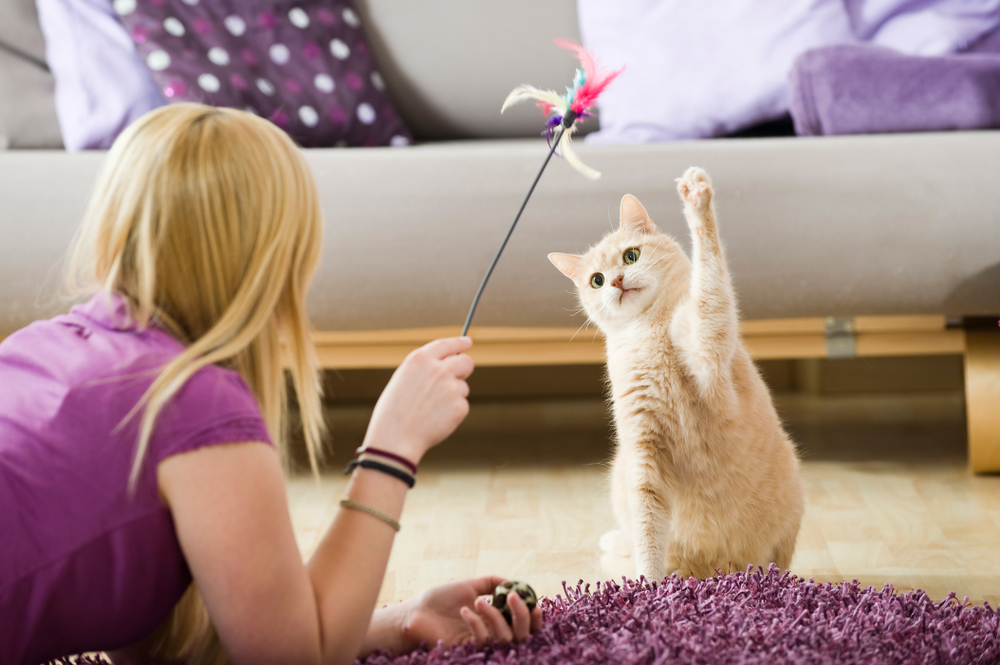
You can make the game more appealing by using a cat toy, like a feather wand, and it can help signal to your pet that the game is on. Peek the toy out from your hiding spot to catch your cat’s attention, then hide it again to encourage them to seek it out.


3. Start Simple

Begin with easy hiding spots where your cat can easily find you. As they get the hang of the game, you can try more complex hiding spots to make it more challenging.

A cat hiding under a couch
Image by: Rawpixel.com, Shutterstock

4. Observe Their Mood

Some cats may not be interested in playing hide and seek or only at certain times. Pay attention to your cat’s body language and willingness to play and try to get them into a consistent routine, which will encourage them to play.


5. Use Positive Reinforcement

Once your cat finds you or the toy, reward them with a treat or affection. This positive reinforcement makes the game enjoyable and rewarding for them, ensuring they return for more.

blue-maine-coon-having-treats
Image by: Nils Jacobiv, Shutterstock

6. Keep Sessions Short

Cats usually prefer short play sessions. Keep the game sessions brief but fun. Approximately 5–10 minutes per session works great.


7. Be Patient

Not all cats will understand or appreciate hide and seek immediately. Be patient and give your cat time to warm up to the game before switching to another game.

Calico cat standing up begging for treat asking for food scratching leg looking up
Image by: Andriy Blokhin, Shutterstock

8. Be Accessible

Make sure your hiding spots are easily accessible to your cat. Avoid places too high or too cramped for them to reach comfortably. You also want to avoid hiding in areas of the home they don’t like visiting, as they will likely leave you there.


9. End the Game Positively

Conclude the game on a positive note, with a treat or affection, ensuring your cat associates the game with a pleasant experience.

purebred snowshoe cat lies on a bed cover with a fur blanket
Image Credit by: Yuliya Alekseeva, Shutterstock

divider 3 paws

Other Tips And Tricks For Playing With Your Cat

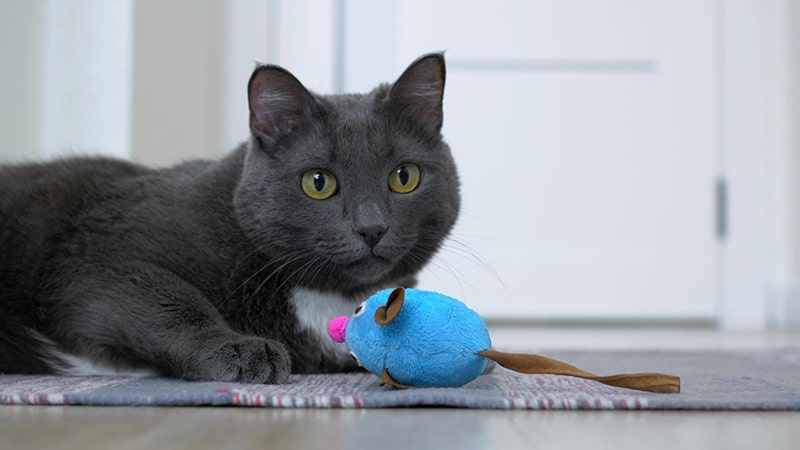
  • Experiment with various toys, like feathers, interactive mice, and crinkle balls, to find what your pet likes best.
  • When using toys like wands or feathers, mimic the movements of prey, which can include quick starts and stops, hiding behind objects, and erratic movements to stimulate your cat’s natural hunting instincts.
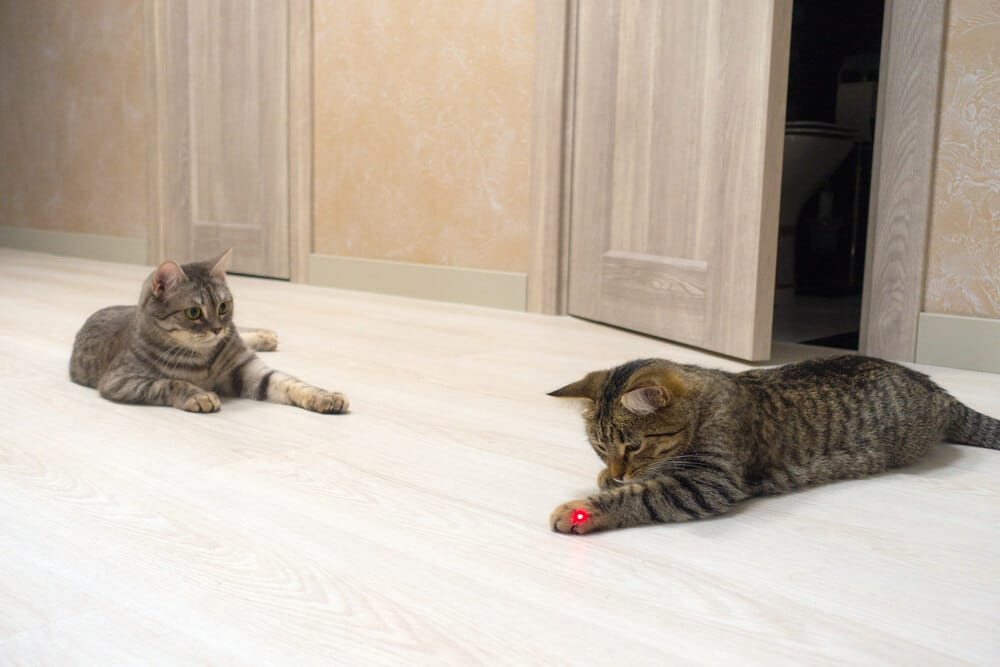
  • While laser pointers can be exciting, they can also be frustrating for cats as they never get to catch the light. If you opt for playing with a laser pointer, conclude the play sessions by pointing to a tangible toy that your cat can catch.
  • Hide small portions of food or treats around the house for your cat to find to provide exercise and mental stimulation.
  • Use cat trees, shelves, or furniture to create an environment where your cat can jump, climb, and explore vertical spaces.
  • If possible, allow your cat to explore outdoors safely through supervised time in a secure yard, a cation, or using a harness and leash.

What To Avoid When Playing With Your Cat

  • Avoid using your hands and feet as toys since it can encourage biting and scratching. It can also lead to problems where the cat may not distinguish between playtime and other times.
  • Pay attention to your cat’s body language. Signs like twitching tails, or flattened ears can indicate overstimulation, which might lead to aggressive play or stress.
  • Small objects like rubber bands, yarn, or string can be hazardous if swallowed and cause choking or gastrointestinal blockages.
  • Cats sleep a lot and need their rest. Avoid initiating play when they are sleeping or seem to be in a deep relaxation mode.
  • Avoid loud noises and sudden movements that can startle and stress your cat.
  • If your cat hisses, growls, or swipes during play, it’s time to stop. These are clear signals that your cat is not enjoying the interaction.
  • Don’t Neglect Cleaning Up: After playtime, store toys safely away, especially those with strings or small parts that could be hazardous if left unattended.

divider 2 cats

Summary

Interestingly, many cats enjoy playing hide and seek and will play it with you without much struggle. They can also learn the game relatively quickly, which can be a lot of fun for you and your pet. Following the steps outlined here should get you going. Remember to start simple so it’s easy for your cat to figure out what you are up to, be consistent and patient, and only try to get more complex once your cat is having an easy time finding you.


Featured Image Credit: Svetlana Rey, Shutterstock

Want content like this delivered to you?

Sign Up For Our Newsletter

News, insights, expert advice, and everything cat

* By submitting, you agree to our Terms & Conditions and Privacy & Cookies Policy.

How useful was this post?

Click on a star to rate (you can leave written feedback after clicking submit)

Help us improve Catster for pet parents!

Your feedback really matters.

What did you like about this post? Also how can we improve it?

Join the conversation

Leave a Reply

You’re very welcome to leave a comment or question. Please know that all comments must meet our community guidelines, and your email address will NOT be published. Let’s have a positive and constructive conversation.

Talk With A Vet Online

Peace of mind,
anywhere, anytime

Affordable vet advice

Are Cats Monogamous? Vet-Verified Mating Practices

It might be a sweet idea to get two cats that you’re sure are going to fall in love and live happily ever...

Fostering a Pregnant Cat: 9 Things to Know (Vet Approved)

Fostering any cat is a rewarding experience for you and for the cat. Taking on a pregnant cat does require more of a...

How Do Gravity Cat Feeders Work? Vet-Verified Pros, Cons & Price Guide

Pet care has gotten more involved and complicated as time goes on and we learn more about how to optimally care for our...

Do Cats Hate Having Their Whiskers Touched? Feline Anatomy Explained

Whiskers aren’t just there to make your cat look cute. They act as an important sensory feature to pull signals from the environment...

More related

How to Safely Surrender a Cat: 4 Responsible Steps & FAQ

Surrendering your cat can be a difficult and emotional experience. It’s important to consider all the potential implications of surrendering your pet before...

When Will My Kitten Start to Purr? The Origin Story

The sound of a cat purring is one of the most relaxing and soothing noises you’ll ever hear. If you’re about to bring...

“Kedi” Is a Gorgeously Vexing View of Istanbul’s Street Cats

The film, Kedi introduces us to a big family with many pets. The family, in this case, is the human population of Istanbul,...

Why Do Cats Like Boxes So Much? 6 Vet-Reviewed Reasons Behind the Behavior

How many times have you cut a delivery box open only to turn around and find your cat has already made themself at...

Keep reading

How to Syringe Feed a Kitten: 5 Vet-Approved Steps & Safety Guide

In some cases, syringe feeding a kitten may be necessary, and while this form of feeding isn’t the best, it is the only way to nourish some kittens. Syringe feeding is best done under the direction of a veterinarian, as...

Kitten wrapped in a towel drinks medicine from a syringe

What’s a Lick Mat & Does It Help Cats? Pros, Cons & FAQ

A lick mat is a flat silicone or rubber mat with ridges and bobbles designed to slow your cat’s eating and provide mental stimulation during mealtimes, as pets have to work to free their food. They’re incredibly easy to use;...

8 Best Kitten Foods for Sensitive Stomachs in 2025 – Reviews & Top Picks

Some cats have sensitive stomachs. Whether due to genetics or their gut microbiome, some kittens can’t handle the same foods that other cats can. The stomach upset that follows can be frustrating for you, but it can be quite painful...

American cat kittens eating

How Long Does It Take a Domestic Cat to Go Feral? Vet-Reviewed Facts

If you’ve ever had a pet cat that’s gotten lost or stolen, you may wonder what became of them. Did they find a community of other cats and become feral? Are they living happily with another family somewhere? While we...

feral cat with ear tip clipped

Do Feral Cats Like Catnip? Vet-Approved Facts & FAQs

If you’ve ever watched a cat go crazy over catnip, you may be surprised to learn that some cats are completely indifferent to it. However, feral cats, house cats, and even large wild cats, such as lions, leopards, jaguars, and...

cat smelling catnip

Why Do Cats Have Tails? Vet-Reviewed Science & Facts

Cats move their tails in different positions when showing affection or communicating with humans or other cats. As a cat parent, you may have seen your feline rubbing their tail against your legs when asking for food. Some cats even...

tail of a cat on vintage background

Why Is My Cat Attacking The Mailman? Possible Reasons & Prevention Tips

There are several reasons that your cat may decide to attack the mailman. In many cases, cats attack them for the same reasons that dogs do: out of territorial instincts or playful curiosity. In this article, we go over all...

Mailman delivering mail

Can My Cat Understand Human Meows? Vet-Reviewed Communication Explanation

Cats vocalize for a variety of reasons, including to communicate their needs and desires to other cats and humans. The sounds they make include meowing, purring, yowling, and hissing. Each of these vocalizations has a different meaning and purpose. For...

playing with her cat