Get

In Your Inbox

Catster is reader-supported. When you buy via links on our site, we may earn an affiliate commission at no cost to you. Learn more.

Do Cats Pee to Mark Territory? Vet-Reviewed Cat Behavior Explanation

Share

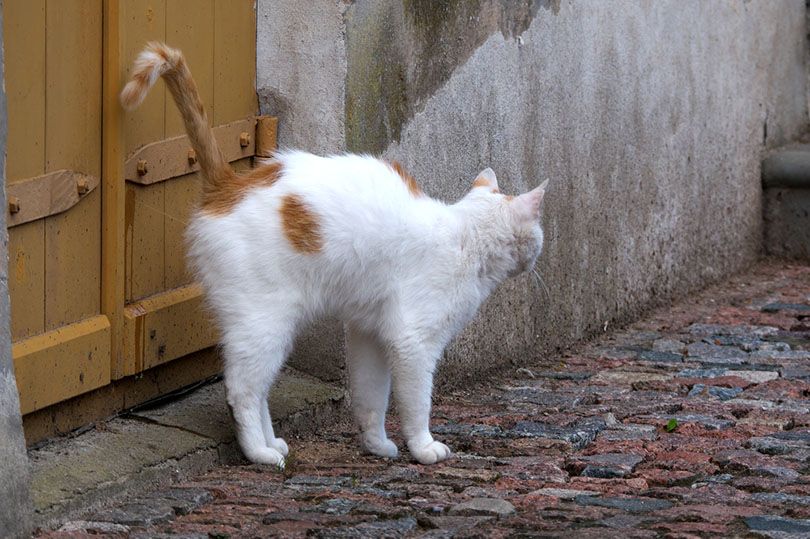
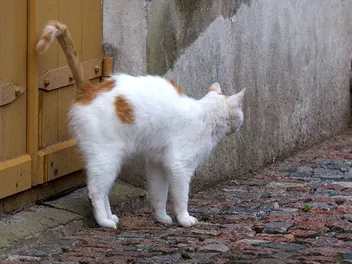
a white cat spraying the wooden gate

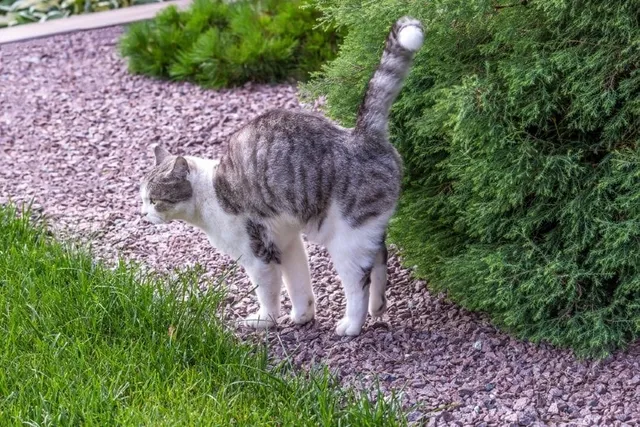
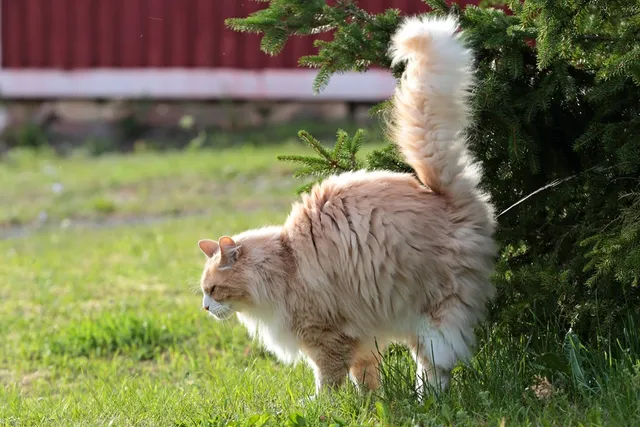
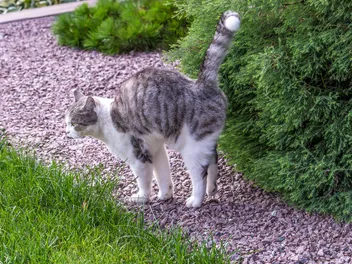
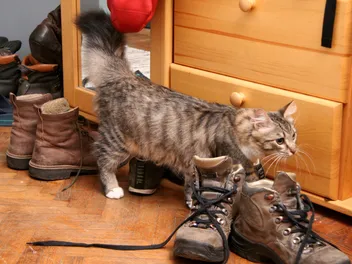
If you’ve ever seen your cat back up to a wall, the couch, or anywhere that is a vertical surface and spray urine, it’s called urine marking or spraying. Cats indeed spray to mark their territory, especially if they are intact (not spayed or castrated, also referred to as neutered or sterilized).

Cat spray has a pungent odor, which is usually more intense than urine. Scent-marking is common in animals, with the scent cues remaining in the environment for a relatively long time, even in the absence of the animal, making it very valuable compared to visual or auditory cues.

divider cat faces oct 2024

How Bad Does Cat Spray Smell?

Well, it’s not great. You can identify cat spray by an overwhelming ammonia odor mixed with other pungent odors. Unlike the urine smell from the litter box, the spray has other pheromones in it, particularly if a still-intact cat (a sexually mature male or female) sprays. These pheromones are intended to pass messages to other members of their species. They can relay messages ranging from “stay out” to signaling reproductive status.

Some pet owners think it has a sulfur odor, but the smell may vary, depending on the cat. You’ll smell ammonia more than anything else, but the spray may also have a musky scent. When marking, cats deposit less urine than when urinating, as the intention of spraying isn’t to void their bladder.

Black cat peeing at garden
Image By: anlomaja, Shutterstock

divider cat paws oct 2024

Why Do Cats Spray?

There are various reasons that a cat sprays, and while female and male cats can spray, it’s mostly unneutered male cats that do it. We’ll talk about why cats spray below.

1. Conflict

A cat will spray if there is any conflict in the household. For example, if you have multiple cats in your home, they may spray to establish boundaries and even to settle feline arguments. If one of your cats shows dominance over the others with the food or litter box, they may start spraying certain areas.

Buying another litter box or two so the competition ends may solve the problem. However, it isn’t guaranteed to curb the issue. The number of litter boxes in your house should be equal to the number of cats you have, plus one. For example, if you have two cats, the minimum number of litter boxes you should have is three.


2. Territorial Marking/Mating

If your cat hasn’t been neutered or spayed, they may be spraying around your property to attract a mate. Neutered or spayed cats can still spray, but it’s rare. Cats mark their territory by spraying to show competitors that your home is part of their range, and they also spray to attract the opposite sex. They usually spray on vertical surfaces.

a white cat spraying the wooden gate
Image By: Igor Shoshin, Shutterstock

3. Additional Causes

There are a few other reasons that your cat could be spraying, including moving the cat to another house or putting them in a stressful situation. Stress can cause a cat that didn’t spray before to begin spraying everything in the house. If your cat is stressed, try to find the cause to resolve the issue.

For instance, if you just moved, ensure your cat has a quiet room to enjoy their bed, cat tree, and toys. Spend more time playing with your cat and try to keep the same feeding schedule as you did at your old home. After a few days or weeks, your cat should become more comfortable with the environment and hopefully stop spraying.

The pungent aroma from cat spray can overwhelm your senses and harm your loving relationship with your cat, but there are a few ways to curb the spraying.

  • Have your cat neutered or spayed
  • Provide enough food bowls and litter boxes (one for each cat, plus one) for all your cats
  • Spend more time with your cat and comfort them in their new home
  • Build a catio or similar if you keep your cat indoors all the time.
  • Clean up cat spray with an enzymatic cleaner to prevent accidents in the same spot
  • Take your cat to the vet if they display other troubling signs

divider cat paw scratch oct 2024

Conclusion

Cat spray is an extremely pungent smell that is hard to miss. While it may look like your cat is urinating on the wall, they’re actually releasing a powerful urine with pheromones that work to communicate with other cats. If your cat is spraying and you can’t get them to stop or find a reason for the behavior, it’s best to make an appointment with your vet to determine the problem. Your cat may be stressed or sick, or maybe you just need to have them fixed to remedy the situation.


Featured Image Credit: Igor Shoshin, Shutterstock

Want content like this delivered to you?

Sign Up For Our Newsletter

News, insights, expert advice, and everything cat

* By submitting, you agree to our Terms & Conditions and Privacy & Cookies Policy.


How useful was this post?

Click on a star to rate (you can leave written feedback after clicking submit)

Help us improve Catster for pet parents!

Your feedback really matters.

What did you like about this post? Also how can we improve it?

Join the conversation

Leave a Reply

You’re very welcome to leave a comment or question. Please know that all comments must meet our community guidelines, and your email address will NOT be published. Let’s have a positive and constructive conversation.


Catster's Digital Magazine is Back!

Vet-approved health & behavior advice

Real cat stories & community features

The Original Space Invaders – Why Zero Respect for Personal Boundaries Is a Good Thing

Cats have a reputation for being independent, and in many ways they are. But anyone who has tried to work at a laptop...

How Cats Are Helping to Cure Cancer

When most people think about medical breakthroughs, they picture scientists in laboratories and clinical trials involving human patients. Few would imagine that the...

Ask Dr. Paola – My Cat Loves Eating Grass, But It Makes Her Vomit! (June 29, 2026)

Welcome to our “Ask Dr. Paola” series, where every Monday we bring expert advice straight from Dr. Paola Cuevas (MVZ) to help our...

Learning to Speak Cat with Anthony Smith

Many cat lovers know me through Learn to Speak Cat and Cattitude – Doggonit, cartoons that explore the often mysterious, occasionally mischievous, and...

More related

Costs of Treating Cat Injuries & Diseases (2026 Price Guide)

If you’re considering bringing a fluffy friend into your life, it’s essential to be clued up on the potential cost of treatment if...

10 Best Slow Feed Cat Bowls in 2026: Reviews & Top Picks

Cats are quirky creatures, especially when it comes to eating. Some are super picky and seem to barely eat anything at mealtime. Others...

How Long Should You Brush Your Cat? Vet-Reviewed Facts

When it comes to hygiene, cats are meticulous groomers, and they spend hours each day licking and cleaning themselves. The process of grooming...

7 DIY Cat Toys for Kids They Can Make Today (With Pictures)

If you have kitties at home, you know how they are always tearing up their toys. If you have kiddos at home who...

Keep reading

9 Best Tartar Control Products for Cats in 2026 – Reviews & Top Picks

Every cat owner knows that their feline companion can spend hours upon hours grooming themselves, but one area they can’t clean is their teeth. Dental hygiene is paramount to the health of your cat, and the smell of your cat’s...

tabby maine coon teeth brushing

Why Your First Cat Shouldn’t Be One of These Breeds

You’ve scrolled through enough cat photos to know which breed you want. Maybe it’s that sleek Bombay that looks like a miniature panther, or the exotic-looking Savannah with its wild leopard spots. You’re ready to bring one home, set up...

Close up of cat paws

British Shorthair Cat Health Problems: 7 Vet-Reviewed Health Issues

Getting a new cat is always an exciting time! Part of the fun of adopting a pet is figuring out which breed will be the best fit for you and your family—that means doing some research. You’ll need to learn...

Catster_Health Problems of British Shorthair

How to Care for an 8- to 12-Week-Old Kitten (Vet-Verified)

Eight to ten weeks old is usually when many breeders and shelters let you take your kitten home, and while they’re certainly adorable at this age, they also have some additional care requirements. It can be a lot to keep...

Are Roses Toxic to Cats? Vet-Verified Facts, Risks & Safety Tips

With Valentine’s Day coming up soon, you may be worried about using rose petals or buying the romantic flower for a loved one around your cat. Luckily, roses are not toxic to cats, meaning that you should not worry about...

Catster_Are Roses Toxic to Cats

Cat Pancreas: Feline Anatomy Explained (Vet-Reviewed)

The inner workings of the feline body are similar to our own in many ways, but as you can imagine, there are also some significant differences. One of the similarities the human and feline bodies share is that they both...

vet checking up tabby cat

How to Train a Cat to Stay Off Counters: 5 Vet-Approved Tips & Tricks

Cats are naturally attracted to high places, but that’s not a good thing when it’s your kitchen counter. Aside from being a nuisance, cats on countertops can be dangerous for them and not hygienic for you. They can walk on...

cat walks on the kitchen table

Why Do Cats Groom Each Other? Vet-Reviewed Licking Behaviors & Reasons

We’ve all seen videos of cats grooming each other, and there are many reasons for this. Often, they may be similar to the reasons why they cuddle with their humans. However, cat-cat relationships are much different than cat-human relationships. After...

Two cats grooming each other.

Love Cats? So Do We! Join the Catster Community

Stay informed with expert pet care insights delivered straight to your inbox! Discover professional guidance on animal behavior, feeding tips, trusted product picks, and much more.


Sign up for the Catster Email Newsletter

Stay informed with expert pet care insights delivered straight to your inbox! Discover professional guidance on animal behavior, feeding tips, trusted product picks, and much more.