Oriental Bicolor Breed Info: Pictures, Facts & Traits
In this article
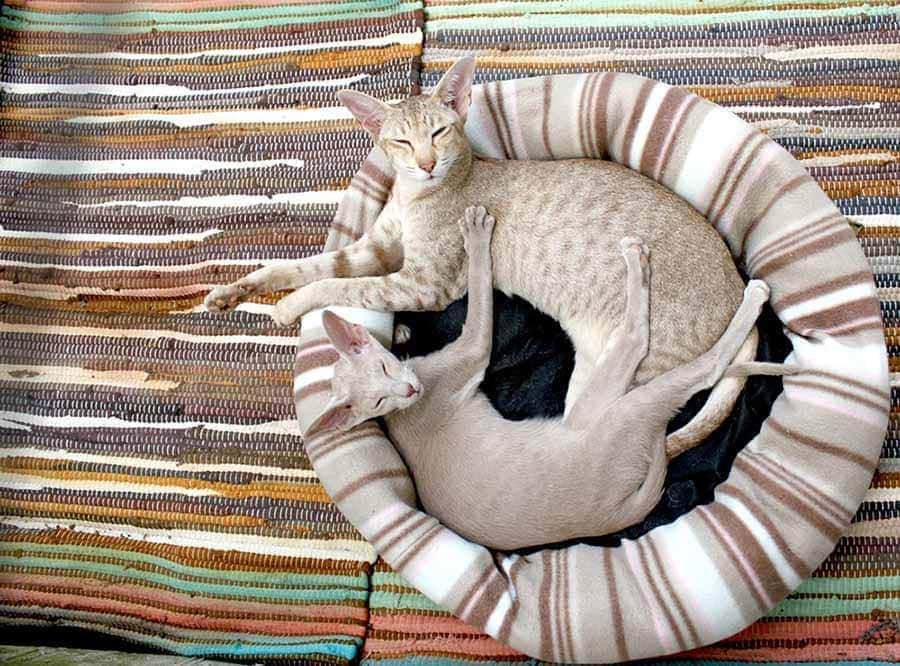
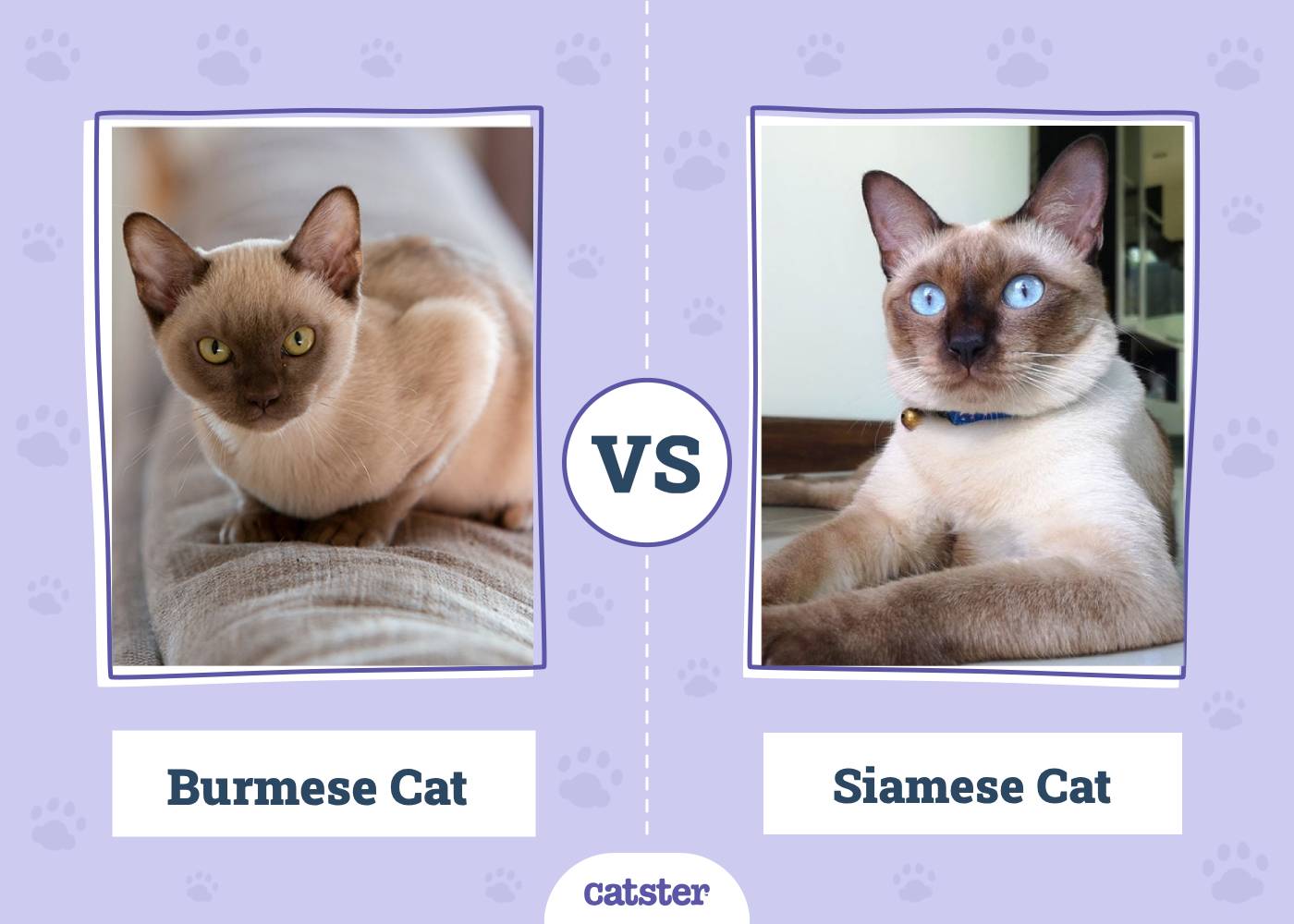
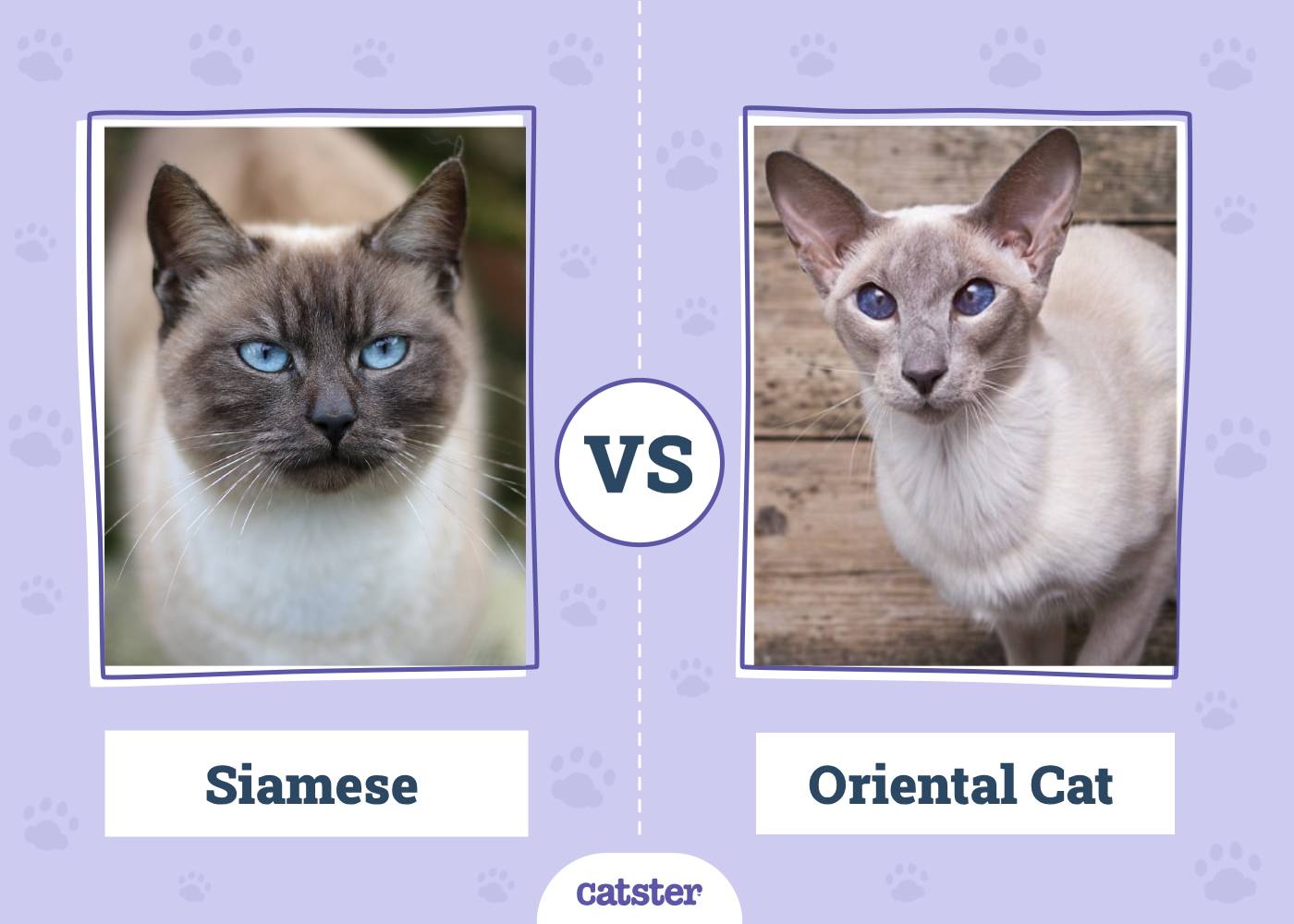
Long, slender, and muscular, the Oriental Bicolor is a natural athlete. This cat is a descendant of the Siamese cat, coming from crosses between Siamese and breeds such as Abyssinians, British Shorthairs, and Russian Blues.
Breed Overview
Height:
Weight:
Lifespan:
Colors:
Suitable for:
Temperament:
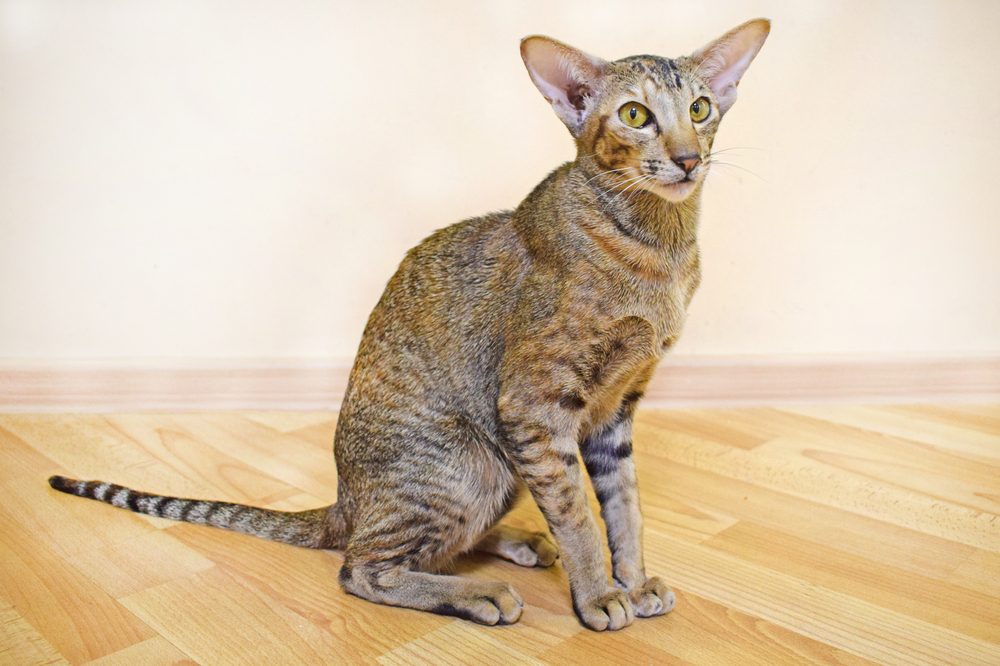
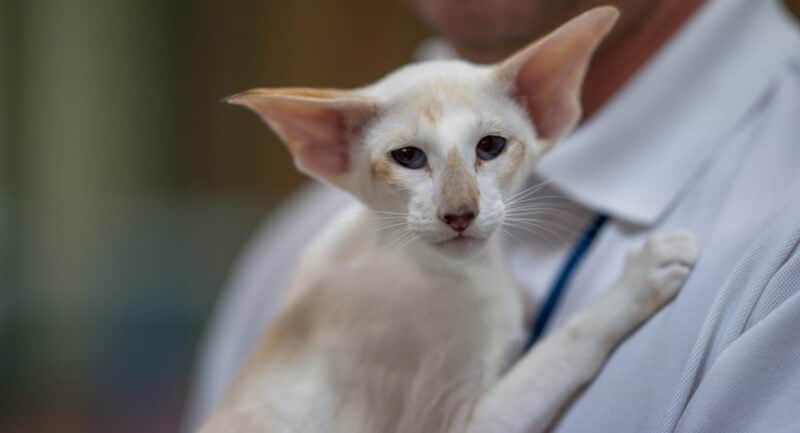
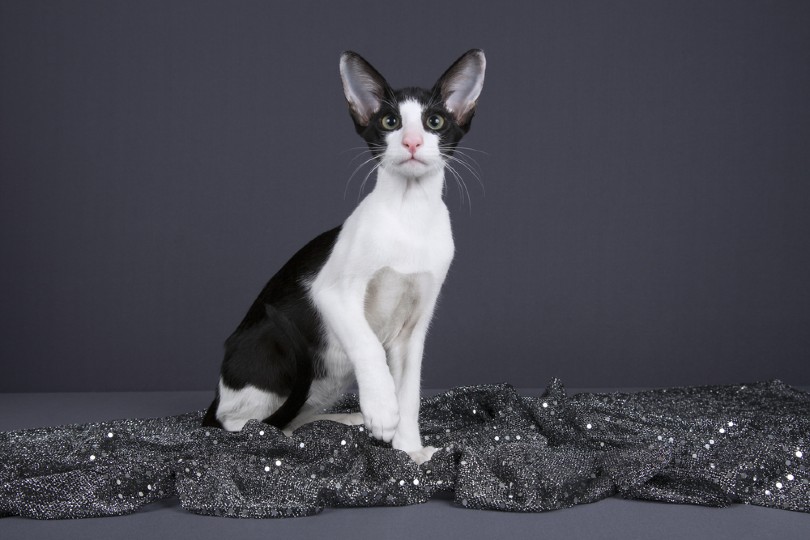
The breed comes in more than 300 color and pattern combinations. But the defining feature of this cat is its white streak. All Oriental Bicolor cats have white fur covering at least one-third of their bodies. For an Oriental to be a true Bicolor, however, their face and paws should also be white.
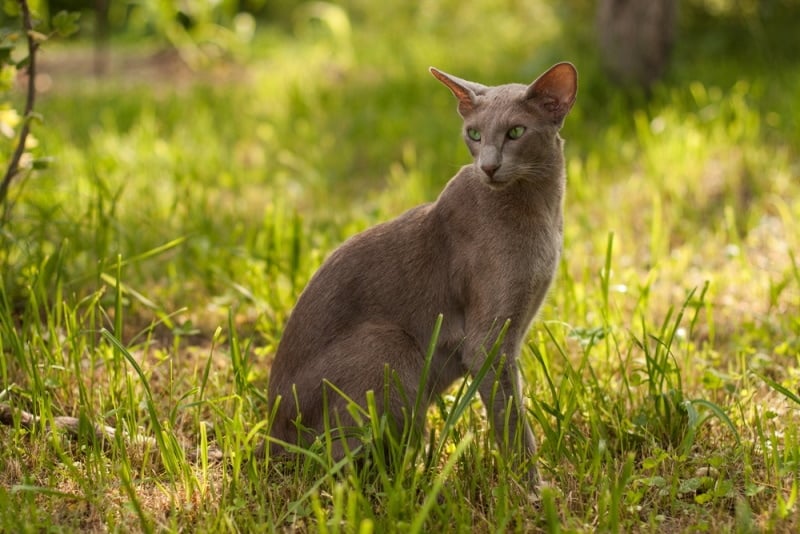
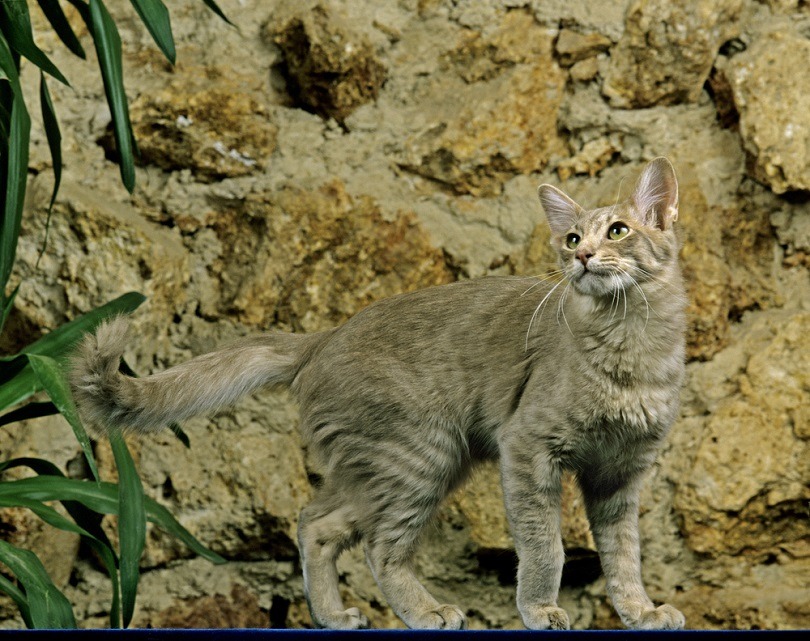
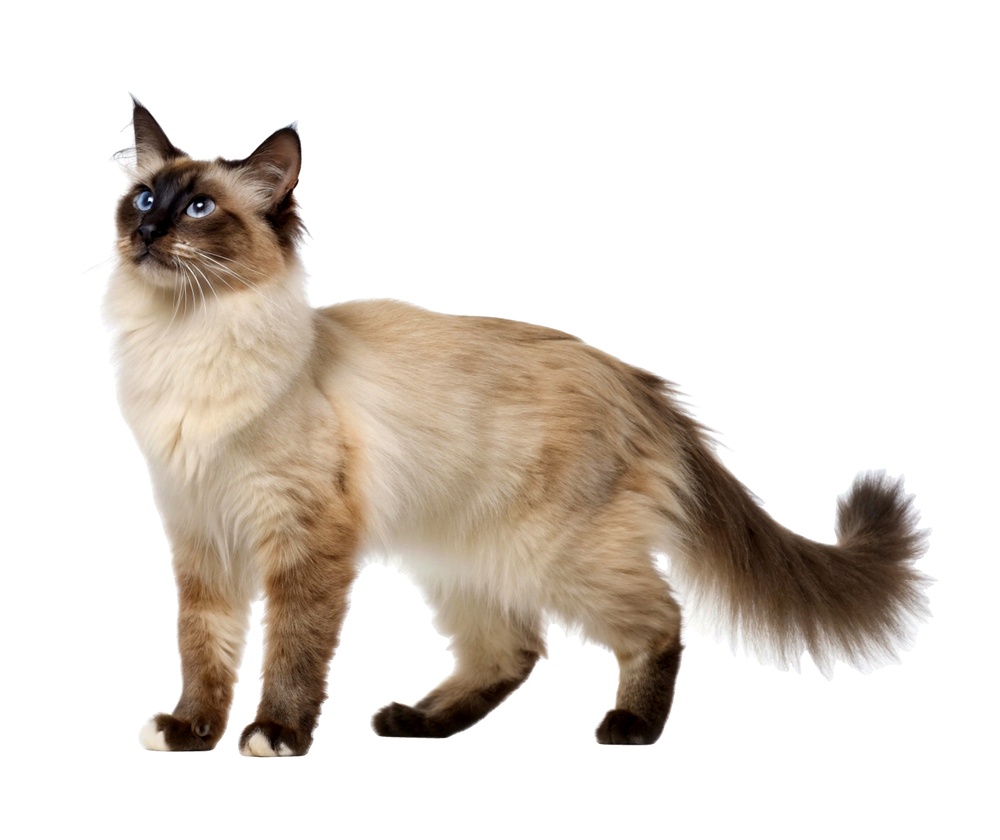
The Oriental Bicolor retains much of its Siamese heritage. It has the Siamese's body, a wedge-shaped head, as well as large, triangular ears.
It also has the Siamese’s personality. Therefore, if you adopt an Oriental, expect an extremely chatty, affectionate, and intelligent cat. It even has the Siamese’s distinct voice that sounds more like actual talking than standard cat-talk.
As a result, much like the Siamese, the Oriental Bicolor is a people-oriented cat that does not do well alone. This means that this cat is not a good fit for people who spend long hours away from home.
With this cat, you will get a life-long companion that will be all about your business. This article will let you in on everything you need to know about the Oriental Bicolor.
Oriental Bicolor Characteristics

Oriental Bicolor Kittens

To find a good breeder, start by asking for recommendations from trustworthy veterinarians around you or friends who have healthy cats. Follow up on those recommendations by doing an online background check.
This will involve checking their websites and social media pages to see how they go about their business. You want to work with someone who has numerous positive reviews from both people you know, as well as online users.
Alternatively, you can look around rescues and shelters for an older Oriental to adopt. The benefit of adopting an adult cat is you will not have to deal with the hassle of raising a rambunctious kitten. Additionally, you will be providing a poor cat with a good home

Temperament and Intelligence of the Oriental Bicolor Cat 🧠
As mentioned, the Oriental comes with the personality of a Siamese cat. Therefore, expect an extremely vocal and attention-seeking cat. Do not take this lightly, as Oriental Bicolors are remarkably opinionated and will keep talking to you all day long with their loud, raspy voices. They will also expect you to be listening.
Highly affectionate, this cat is extremely people-oriented, following you around as you go about your business. Some will go as far as to follow you inside the bathroom, causing a ruckus outside if you lock them out. You will find that they act more like dogs than actual cats, cuddling and sleeping with you.
Additionally, unlike most cat breeds, the Oriental is very warm towards strangers, sometimes jumping onto the laps of someone they barely know. Nonetheless, they sometimes get fixated on one person, thus not giving anybody else the time of day.
It goes without saying, therefore, that the Oriental Bicolor is not good for someone who prefers cats for their nonchalant attitude. If you like your peace and quiet, this cat is not for you. Ignoring an Oriental or leaving it for extended periods alone can result in the cat getting stressed out, leading to behavioral issues. Prolonged stress can also manifest itself as a health issue.
Oriental cats are considered to be among the most intelligent cat breeds. This cat will open doors, drawers, or anything else with a handle in search of entertainment. Therefore, you should invest in lots of toys to keep them stimulated mentally.
Are These Cats Good for Families? 👪
These cats are excellent for families, especially those with kids. This is because they crave attention, and who can better give attention than the young ones? However, you must teach your child how to handle the cat with care and respect to avoid injuring or provoking it.
Does This Breed Get Along with Other Pets? 🐶🐱
The Oriental Bicolor is one of the most sociable breeds out there. In fact, you are advised to get them a pet companion so they cannot be lonely. However, that does not mean that you should pair them with rodents, as that would only be inviting trouble. Another cat or dog would do just fine.


Things to Know When Owning an Oriental Bicolor
Ready to adopt the Oriental Bicolor? Here is everything else you need to know about this feline.
Food & Diet Requirements 🐡
As always, ensure that you only feed your Oriental Bicolor high-quality cat food. This might be more expensive, but it contains the necessary nutrients for its active lifestyle.
Feline obesity among house cats is an epidemic today. This comes from not observing proper dietary practices, including giving the cat too many treats or overfeeding them.
Oriental cats, especially, are prone to overfeeding thanks to their demanding nature. Therefore, enlist the help of a vet to determine the ideal portions for your cat and stick to them.
Exercise 🐈
These overactive cats need ample space to run around and expend their energy. This means that they are not a good fit for smaller apartments. Consider installing a cat tower for them to climb. This is not only a good way of exercising their muscles, but also making them comfortable since they love sitting in high places. You can also play games such as fetch with this cat.
Training 🧶
Thanks to their high intelligence, Oriental Bicolors are easy to train. They will naturally want to make you happy and will enjoy training sessions. There is no limit to what you can teach them to do if you capitalize on their strengths. The good thing about training is that it also allows you to exercise the cat, which is great for their health.

Grooming ✂️
The Oriental Bicolor comes with a short, fine coat. This means that it is an easy cat to care for. Consider combing this cat’s coat with a stainless steel comb and then polishing it with a soft cloth at least once weekly.
During their weekly grooming session, they care for their dental hygiene by brushing their teeth. While you’re at it, wipe the corners of their eyes with a soft, damp cloth to eliminate any discharge. Do the same for the ears.
Health and Conditions 🏥
Thanks to being a mixed breed, the Oriental Bicolor is not susceptible to many health conditions. However, it can inherit conditions that afflict their parents, such as:
- Bladder stones
- Liver amyloidosis
- Dilated cardiomyopathy
Fortunately, kittens from reputable breeders are less susceptible to these conditions. As mentioned, good breeders go out of their way to make sure that the cats they breed come from strong heritages.
Male vs. Female
The sex of your cat is a matter of preference. Left as they are, however, you can have some problems. When they both attain sexual maturity, they usually develop behavioral problems. Males will exhibit territorial behavior, such as urine spraying and aggression. Females, on the other hand, will display signs of being in heat, such as restlessness and increased vocalization.
Therefore, if you do not plan to breed your own litter, consider having your cat spayed or neutered.
3 Little-Known Facts About the Oriental Bicolor
1. Oriental Bicolor cats are extremely athletic, even by feline standards.
Oriental Bicolors have a lean, muscular build and high energy levels, making them natural feline athletes. They love to climb, jump, and run around the house, making vertical spaces and interactive playtime essential for keeping them physically and mentally stimulated, to avoid boredom.
2. They love rummaging through drawers.
Their curiosity and intelligence mean Oriental Bicolors can easily figure out how to open cabinets, drawers, and even doors. This curiosity is part of their unique temperament and might be quite funny to witness, but it also means you need to cat-proof areas that contain foods, valuables, or small objects. Puzzle toys or interactive play can help positively channel your Oriental Bicolor’s energy so they avoid rummaging through your things.
3. They are said to be dog-like due to their high craving for human interaction.
Oriental Bicolors tend to form strong bonds with their humans, since they can be a bit clingy, but in a good way. They’ll normally follow you around your house, seeking constant attention, and even greet you at the door. Offering them different energy outlets is important to avoid destructive behavior.
Conclusion
The Oriental Bicolor is an affectionate, loyal, intelligent, and extremely vocal cat. Its most notable trait, however, is its attention-seeking nature. This breed, therefore, is a good fit for families and singles with time and affection to share with a feline companion.
See Also:
Featured Image: Jenni Ferreira, Shutterstock

Expert cat care, straight to your inbox
Vet-reviewed advice, behavior tips, and the best of Catster. Free, and you can unsubscribe anytime.
By signing up, you agree to our Terms & Conditions and Privacy & Cookies Policy.

Christian started writing for a local newspaper as a teenager, and he's been involved in the publishing industry for most of his adult life. Combining his love of writing with a passion for animals, he is currently the Director of Editorial at Pangolia and the Editor-in-Chief at Catster.
Christian lives in the Philippines with his wife, son, and four rescue cats: Trixie, Chloe, Sparky, and Chopper.
Join the conversation
Ask a question, share your story, or send private feedback.