Get

In Your Inbox

Catster is reader-supported. When you buy via links on our site, we may earn an affiliate commission at no cost to you. Learn more.

Black American Shorthair: Info, Pictures, Facts & History

Share

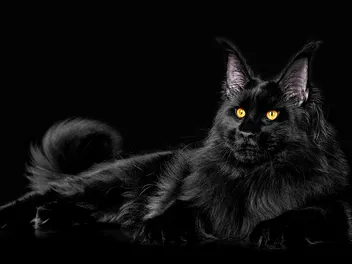
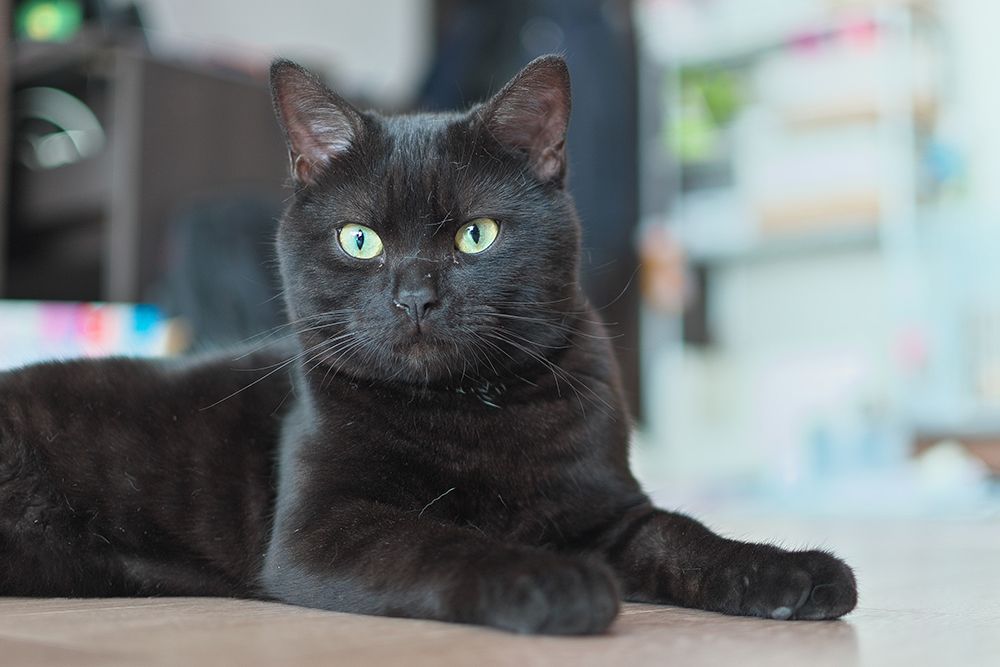
Black Smoke American Shorthair cat

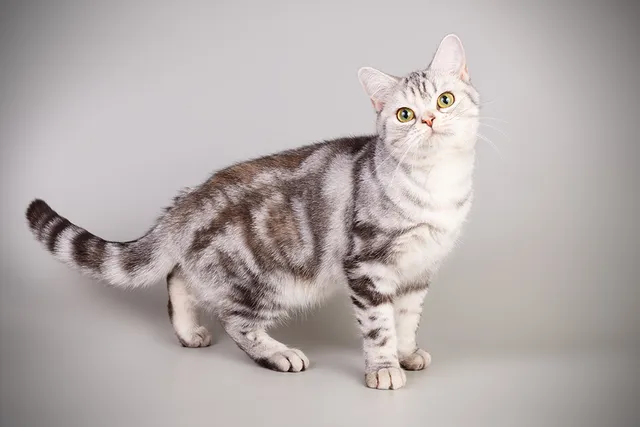
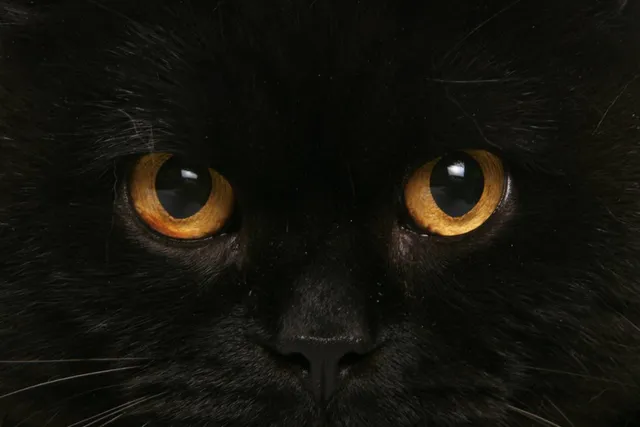
American Shorthair cats are pedigree versions of North American working cats. Some of the special kitties have stunning black fur, making them Black American Shorthair cats. American Shorthair cats of all shades and colors are typically relaxed, loving companions. Most love spending time with people but are generally happy to hang out and keep themselves busy. They’re sweet and loving with just the right amount of independence.

Breed Overview

Height:

12–14 inches

Weight:

8–12 pounds

Lifespan:

15–20 years

Colors:

Brown, black, cream, silver, blue

Suitable for:

Families and individuals living in apartments, suburban homes, and rural areas

Temperament:

Incredibly sweet, mellow, and intelligent— gets along well with children and other pets

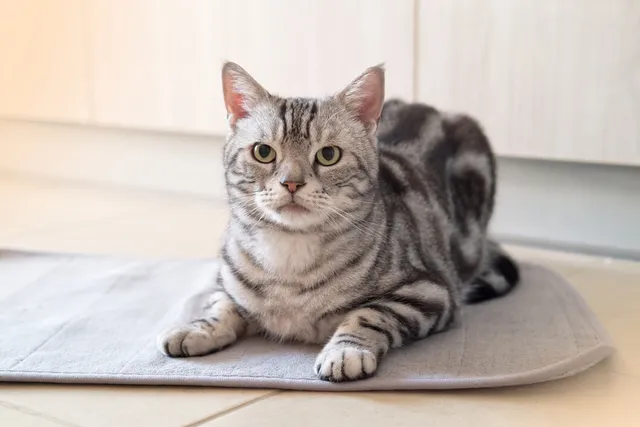
American Shorthair cats come in almost every possible coat color, including blue, white, red, brown, and black. It’s also possible to find them with stripes and other patterns. Most have thick fur that provides protection from heat and cold, but they don’t require intensive grooming. And because of their heritage as farm and street cats, most have quite a bit of genetic variation, so they’re often healthy. The loving black American Shorthair cats are the perfect feline companions.

Black American Shorthair Cat Characteristics

Energy
+
A high-energy cat needs a lot of physical and mental stimulation to keep healthy and happy, while a low-energy cat needs minimal physical activity, but still needs mental stimulation. When choosing a cat, It’s important to ensure their energy levels match your lifestyle.
Trainability
+
Cats that are easy-to-train are more willing and skilled at quickly learning prompts and actions with minimal training. Harder-to-train cats are usually more stubborn or aloof and require a bit more patience and practice.
Health
+
Certain cat breeds are more prone to various genetic health problems, and some more than others. This doesn’t mean that every cat in those breeds will have these issues, but they do have an increased risk, so it’s important to understand and prepare for any additional needs they may require.
Lifespan
+
Due to their size or potential genetic health issues of a specific breed, some cats have shorter lifespans than others. Proper nutrition, exercise, mental stimulation, and hygiene also play an important role in your cat’s lifespan and quality of life.
Sociability
+
Some cat breeds are more social than others, both towards humans and other cats and animals. Cats that are more social have a tendency to rub up on strangers for scratches or jump on laps for cuddles, while cats that are less social shy away, hide, are more cautious, and even potentially aggressive. No matter the breed or gender, it’s important to socialize your cat and expose them to many different situations.

divider cats oct 2024

The Earliest Records of Black American Shorthair Cats in History

Black American Shorthair cats are likely descendants of European ships’ cats brought on board sailing vessels to prevent rodents from destroying provisions and gnawing through ropes. Cats were even on the Mayflower when it landed in Plymouth in 1620. The ancestors of cats who set sail from the British Isles may have arrived with the 1st century CE Roman invasions. The Roman cats who accompanied the legions as they spread throughout Europe were most likely brought to Rome through trade and contact with Egypt and Mesopotamia. Evidence suggests cats were relatively common throughout the Roman world by the 4th century CE.

Black American Shorthair cat
Image By: bluebeard013, Shutterstock

How Black American Shorthair Cats Gained Popularity

The cats that arrived on the shores of North America soon came to be valued as all-around working and farm cats. Because of their loving, mellow personalities, they quickly became companions that were welcome to enjoy the comforts of family life. But the American Shorthair’s development is linked to the rising interest in showing pedigree cats in the later part of the 19th century.

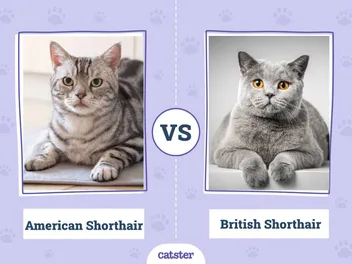
Harrison Weir, generally acknowledged as a critical force in the development of modern cat shows, advocated for the recognition of British working cats as a distinct breed, which led to the development of the British Shorthair cat breed. American Shorthair cats were subject to the same process. They’re essentially pedigree versions of North American working cats. Over time, breeders have selected physical traits and personality characteristics to make the American Shorthair cats popular today.

Formal Recognition of Black American Shorthair Cats

American Shorthair cats existed for centuries before being recognized as a breed. The Cat Fanciers’ Association (CFA) acknowledged the breed in 1906. The CFA was founded that same year, making American Shorthair cats one of the first breeds recognized by the organization.

They perform well in competitions, and several have taken home the CFA’s Best Cat of the Year honors. They were known as Domestic Shorthair cats until 1966. The International Cat Association (TICA) recognized the breed in 1979, but its popularity began increasing during the 1960s. While they often resemble domestic shorthair cats, American Shorthair cats have distinctive round heads and prominent cheeks.

black cat reclining on concrete
Image Credit: Emma Louisa, Shutterstock

divider 1 paws

Top 3 Unique Facts About Black American Shorthair Cats

1. They Have Loose Skin

Black American Shorthair cats typically have paunches and relatively loose skin — both protect them from bites and other injuries when hunting and prowling.


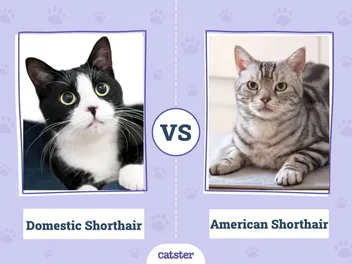
2. They’re Not Domestic Shorthair Cats

Domestic shorthair cats are incredibly popular pets, also known as mixed-breed cats, mutt cats, and moggies. American Shorthair cats are selectively bred for temperament and to have the strong, slightly stocky bodies they’re famous for.


3. They’re Prone to Obesity

Because these cats are a bit on the stocky side and don’t have much zippy energy, they can gain weight relatively quickly. It’s essential to keep these kitties moving and maintain healthy weights to prevent the development of chronic diseases such as osteoarthritis and high blood pressure.

black cat lying on coastal rock
Image Credit: Galina Photo, Shutterstock

divider 2 cats

Do Black American Shorthair Cats Make Good Pets?

Black American Shorthair cats generally make fantastic pets. They enjoy being around people but are perfectly happy entertaining themselves as long as their favorite companions are close by. They typically make wonderful apartment cats since they’re not energetic and aren’t prone to excessive vocalization.

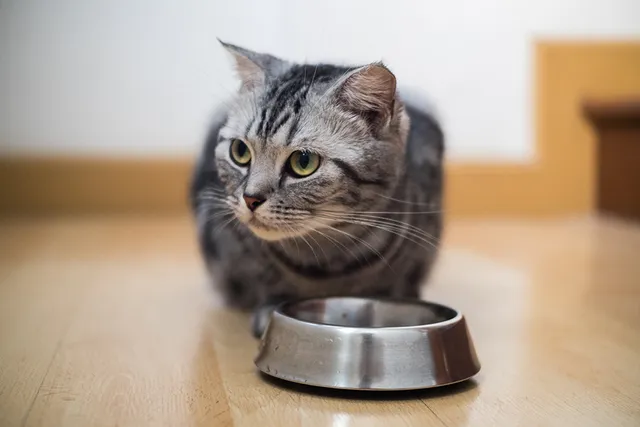
American Shorthair cats generally live for 15 to 20 years. Most do fine with high-quality cat food that meets American Association of Feed Control Officials (AAFCO) nutritional guidelines. And, of course, they need access to water, regular dental care, and nail clipping. Their dense short coats only require occasional brushing, and they can generally take care of their bathing needs on their own. Black American Shorthair cats, like all cats, require regular physical activity—a few 10 to 15-minute daily sessions should do the trick.

Young man in white t shirt holding a black Scottish fold cat
Image Credit: Vershinin89, Shutterstock

divider 3 paws

Conclusion

Black American Shorthair cats have a working cat heritage. Their ancestors kept ships and homes rodent-free for millennia. American Shorthair cats are the pedigree versions of the working cats of North America. They’re typically healthy and easy to care for. Their low activity levels and generally laid-back personalities make them excellent choices for apartment dwellers. While American Shorthair cats love spending time with people, most don’t require constant attention as they’re usually happy to do their own thing as long as their loved ones are around.


Featured Image Credit: marumaru, Shutterstock

Want content like this delivered to you?

Sign Up For Our Newsletter

News, insights, expert advice, and everything cat

* By submitting, you agree to our Terms & Conditions and Privacy & Cookies Policy.


How useful was this post?

Click on a star to rate (you can leave written feedback after clicking submit)

Help us improve Catster for pet parents!

Your feedback really matters.

What did you like about this post? Also how can we improve it?

Join the conversation

2 Responses

  1. Our black shorthair kitty, has a beautiful shiny coat. He was feral, a true street cat. Contrary to the information herein, he is extremely fast with a lean, strong build. He likes to jump up onto pieces of furniture that reach almost to the ceiling. Sometimes it’s a bit unnerving!

    1. Hi Darby Kachmar your cat sounds gorgeous. We can tell you love and admire his strength and agility. Just wanted to point out the American Shorthair is a purebred, and since your kitty was a feral is probably a Domestic Shorthair, which are mutts. You can learn more about them here: https://www.catster.com/cat-breeds/domestic-shorthair-vs-american-shorthair-cat/
      We thank you for reading us and for your comments.

Leave a Reply

You’re very welcome to leave a comment or question. Please know that all comments must meet our community guidelines, and your email address will NOT be published. Let’s have a positive and constructive conversation.


Talk With A Vet Online

Peace of mind,
anywhere, anytime

Affordable vet advice

The Cat Biting Mistakes Most Owners Make (And What Works Instead)

Cat bites sent more than 400,000 people to emergency rooms in the US each year.1 Not scratches. Bites. And the reason they’re so...

Do Cats Cause Schizophrenia? Scientists Find a Link – Here’s What It Means

Being a fierce advocate (and occasional recipient of) mental health support and awareness, the term ‘crazy’ is not one I like to fling...

One in 100 Cats Gets Diabetes – Here’s How to Catch It Early

One in every 100 cats develops diabetes.1 That’s not a rare, unlucky condition reserved for cats with obvious health problems. It’s common enough...

Dramatic Rescue Turns Into Dramatic Reunion

What started as a routine call for the RSPCA became a heroic, five-hour rescue featuring one trapped and traumatized cat, an emotional family...

More related

Do Cats Remember Their Mom Or Recognise Her Kittens? Vet-Verified Facts & Info

The answer to this question is a bit complicated. Cats do not have the same relationships between mothers and kittens as human parents...

Can Cats Eat Melatonin? Vet Recommendations & Facts

If you regularly have insomnia, chances are you’re familiar with the supplement melatonin. Melatonin is widely used for insomnia because it’s effective (and...

Why Is My Cat Licking Everything all of a Sudden? 5 Vet-Reviewed Reasons

Cats have amazing tongues; they’re full of special powers that we can’t even begin to understand. Kitties use their tongues to do everything...

Can You Use Dog Flea Collars on Cats? (Vet Answer)

Fleas are annoying, problematic little parasites that can cause itchiness, discomfort, and even the spread of diseases in their hosts. In today’s day...

Keep reading

I Just Adopted a Cat and They Won’t Stop Meowing: Vet-Reviewed Causes & Advice

You want a new family member that will always comfort you in your ups and downs, but adopting a cat can be an overwhelming experience. Sometimes, your new cat will meow all night long, leaving you frustrated about what to...

Ginger tabby young cat sitting on a wooden floor looks up, asks for food, meows

How to Get Rid Of Fleas On Cats: 7 Vet-Approved Methods

Fleas on cats can be a nuisance. Not only do they make your kitty itch, but they can also jump onto you and your other pets and transmit diseases. Fleas are a common problem for cats and can be difficult...

vet holding magnifying glass searching cat fleas

Can Cats Drink Sparkling Water? Nutritional Facts & Risks

If you own a cat, you always want to look after their health. After all, they are a member of the family! It should be no surprise that a hydrated pet is a healthy pet, so clean drinking water must...

Can Cats Drink Sparkling Water

Cat Reproduction & Mating: Vet-Approved Facts & Explanation

Cat breeders and veterinarians aren’t the only ones who need to know about the feline reproductive system and mating behaviors. While the average cat owner doesn’t have to be an expert, having general knowledge can help you track their health...

two domestic cats sleep together on the sofa

How to Care for Hairless Cats: Vet-Approved Tips & Guide

Hairless cats are a real eye catcher for most people. Even people who aren’t too cat crazy might be mesmerized by the odd look and interesting breed characteristics. If you live in a home with an allergy sufferer, hairless cats...

hairless cat feline

Are Air Purifiers Safe for Cats? Vet-Approved Facts & Safety Tips

Air purifiers may sound too good to be true: a machine that can clean the air in your home? But a high-quality unit can remove air pollutants, making your home’s air healthier for you and whomever you share your home...

Catster_Are Air Purifiers Safe for Cats

Why Do Cats Like Nail Files? 4 Vet-Verified Theories & Possible Reasons

It isn’t odd for cats to rub against nail files or lick them and there are several reasons why this may occur. The most likely reason is that they enjoy consuming the left-over nail dust on the file. Although there...

Groomer using nail file on cat claws

Why Do Cats Howl? Vet-Approved Reasons & What to Do

Cats can surprise us with their unexpected and unusual sounds during the day, but how often do you take the time to hear what they have to say? Even though they don’t speak our language, cats use various vocalizations to...

angry cat meowing outdoor

Love Cats? So Do We! Join the Catster Community

Stay informed with expert pet care insights delivered straight to your inbox! Discover professional guidance on animal behavior, feeding tips, trusted product picks, and much more.


Sign up for the Catster Email Newsletter

Stay informed with expert pet care insights delivered straight to your inbox! Discover professional guidance on animal behavior, feeding tips, trusted product picks, and much more.