How Much Exercise Does My Cat Need? Vet-Approved Advice & Methods

In this article
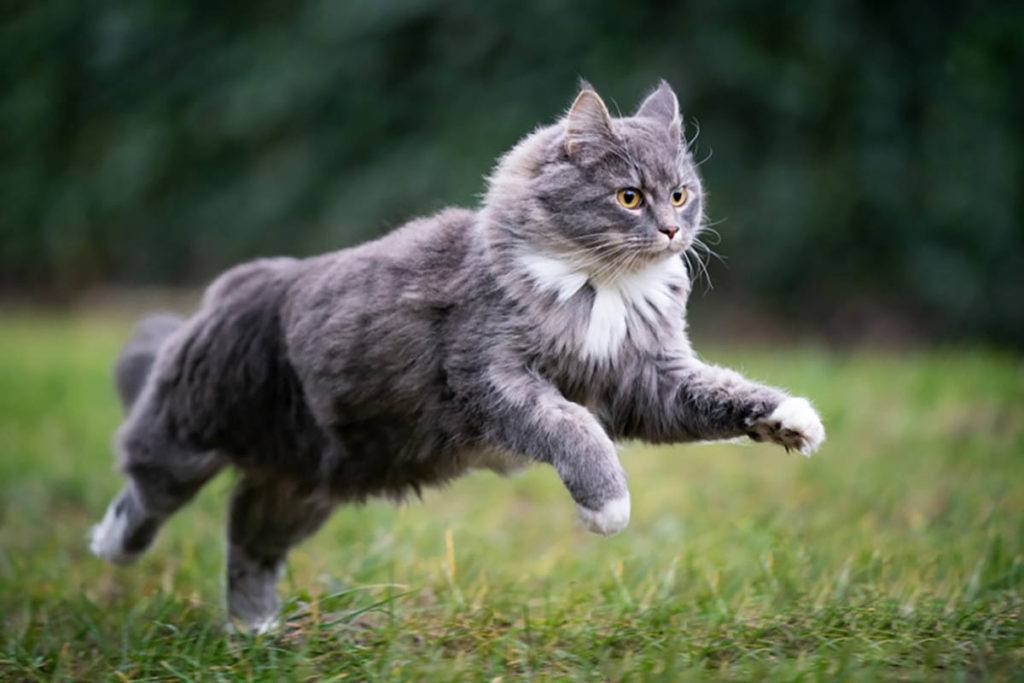
Cats are generally curious and playful pets that require a certain amount of daily exercise. The amount of exercise will vary depending on your cat's age, breed, and health condition. In general, cats require at least 30 minutes of exercise per day. Younger cats may need more exercise and playtime, while senior cats may not need as much physical exercise. Knowing how much exercise your cat needs will positively affect their overall health and well-being.

Why Cats Need to Exercise
One of the most obvious reasons for exercise is to stay in shape. Cats that exercise regularly are less likely to become overweight and are at a lower risk of becoming obese. Physical exercise is also beneficial for a cat's emotional and mental well-being. For example, providing plenty of play sessions reduces the likelihood of boredom for your cat.
A constant state of boredom can quickly escalate to cats developing destructive behaviors. When cats don't have a healthy outlet to exercise and expend energy, they can feel stressed and frustrated. Many will get into mischief that can end with destroyed furniture. Other cats may start to display aggression or develop depression.

How Much Exercise Does a Cat Need?
Cats usually need about 30 minutes of exercise per day. It's most likely that your cat will not engage in 30 minutes of exercise in one sitting. In most cases, cats will stay interested for about 10 to 15 minutes at a time. With that being said, it's often helpful to schedule play sessions for about 10 minutes at different parts of the day.
Most adult cats will be content with two to three play sessions per day. Kittens usually have a lot more energy, so they may need more sessions and more frequent intervals. Senior cats don't need as much exercise, and it's important to be especially mindful of how much exercise an older cat gets. You don't want to overdo it for them because it can lead to muscle pain and further health complications.
Your cat's breed will also play a role in the amount of exercise it needs, as some breeds are much more active than others. Some of the most active cat breeds include Abyssinians, Bengals, and Savannahs. These active and athletic breeds can require double the amount of exercise than the average cat.
If you’re unsure of which exercises or activities to provide to your cat, please contact a vet for the best course of action.
The 4 Ways to Provide Exercise for Your Cat
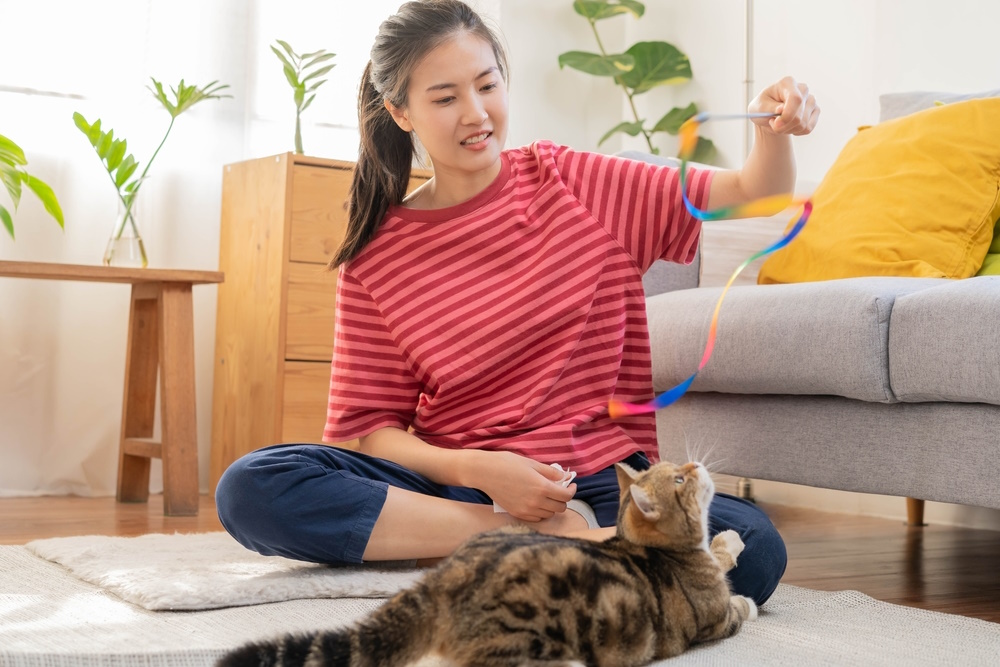
Exercising your cat doesn't always mean just playing with them. You can get really creative in incorporating exercise into your cat's daily routine without your participation. Having a healthy mix of different exercises can help your cat stay engaged and prevent them from getting bored quickly.
1. Toys
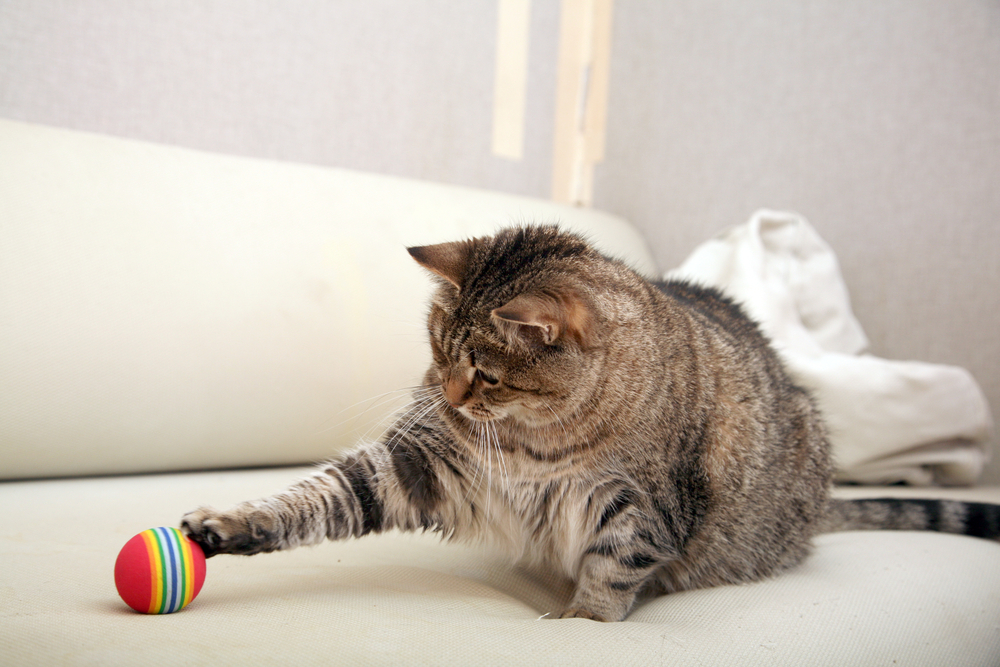
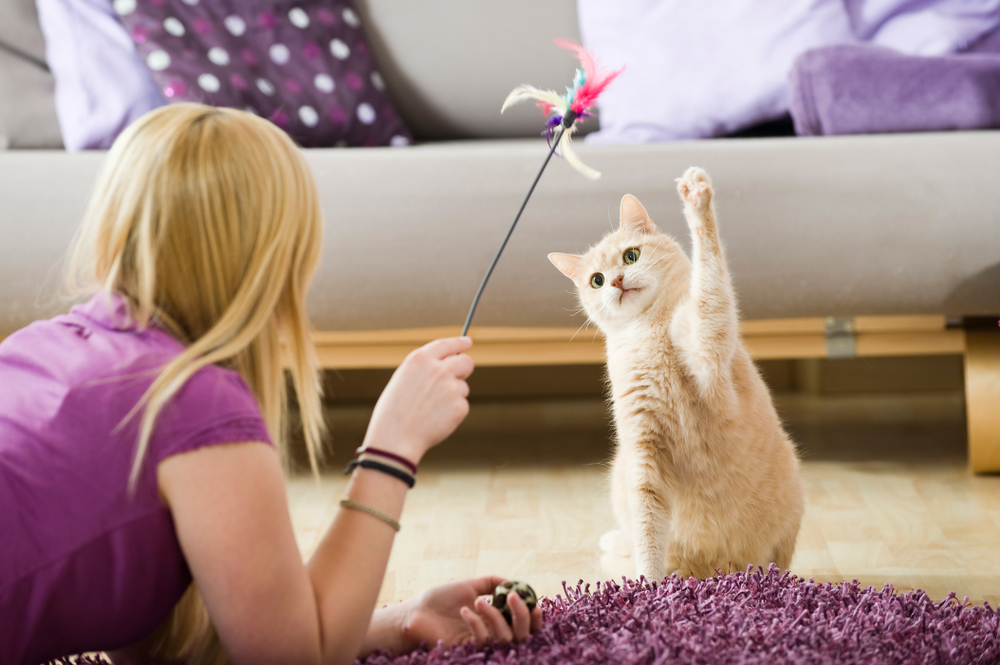
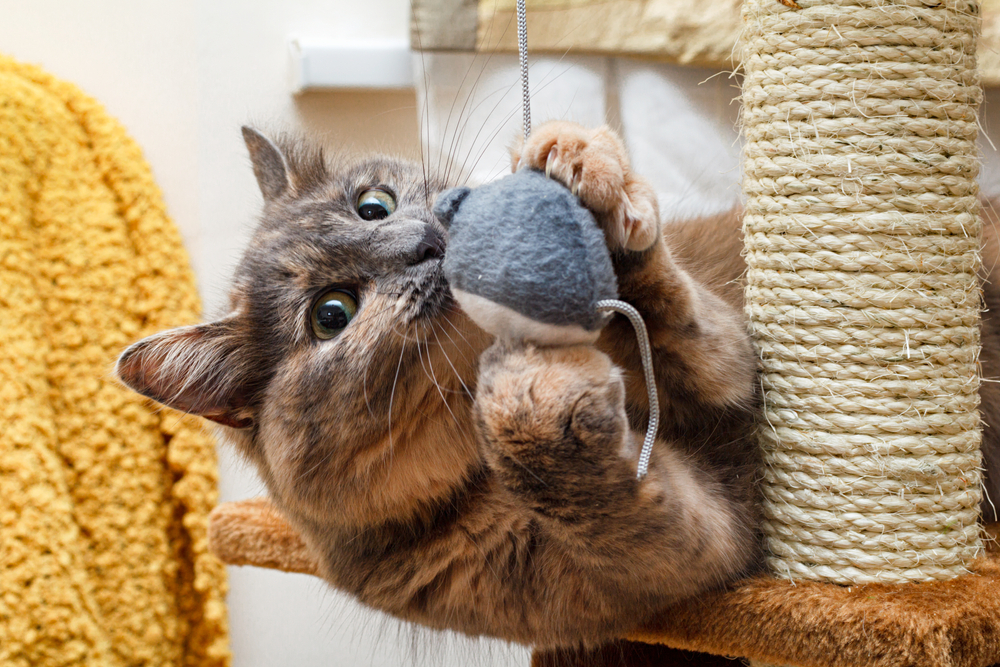
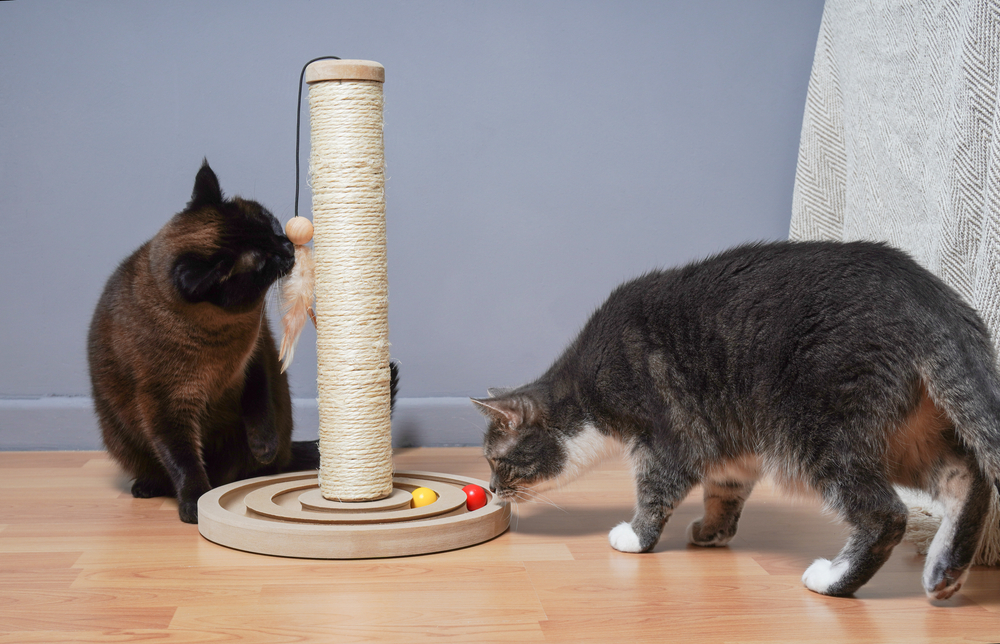
One of the best ways to engage your cat in exercise and play is to provide fun toys. Cats will have their own preferences on the types of toys that they enjoy. Some will like playing with small stuffed toys, while others will enjoy chasing a laser pointer or wind-up toy. Get to know your cat's personal preferences for toys to encourage them to play and have fun while they exercise.
It's also helpful to only lay out a couple of toys at a time. If you lay out your entire stash of toys, your cat is more likely to become bored more quickly. However, if you have a rotation of various sets of toys, your cat will most likely enjoy playing with their toys for longer since each set will feel like new toys.

2. Environment
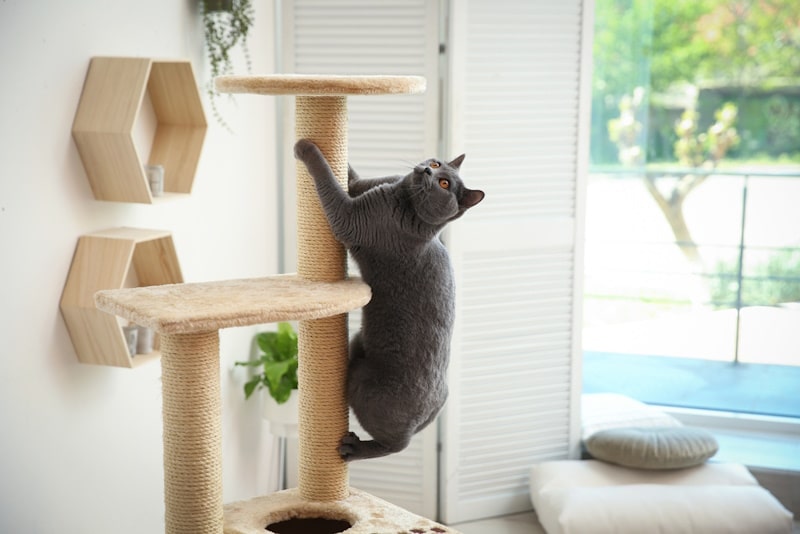
Sometimes, having toys out isn't enough to keep cats entertained and get enough exercise. Owners of cat breeds that are more energetic and athletic often have to make some adjustments to the home to accommodate their cat's exercise needs. Installing cat trees and creating shelves for cats to jump and leap onto is a great way to let cats exercise. Creating more vertical spaces and hiding spaces can also prevent cats from climbing and clawing on your furniture and curtains.
3. Mealtimes
Another way to encourage your cat to exercise is to remove your stationary food bowl and start having your cat "hunt" for their food. You can do this by using treat-dispensing toys or hiding kibbles around different parts of the house. This is a great way for your cat to get some exercise without your participation.
4. Leash Training
Some active cats are capable of learning to walk on a leash. It may take some time to train a cat to get used to wearing a harness. However, once they learn and you're able to hook them onto a leash, you can enjoy a lot of time outside. This provides both physical exercise and mental stimulation for your cat as they're introduced to new surroundings. Just make sure to take your time with training and exposing your cat to new things. Going at a slow, manageable pace will reduce the likelihood of your cat feeling anxious and losing confidence.

Conclusion
Exercise benefits both a cat's physical and mental health. It helps cats stay in shape and reduces boredom throughout the day. Finding the right amount of exercise and coming up with creative exercise outlets will help your cat immensely. Your cat will appreciate all the ways you provide for their needs, and this will only increase the bond you share. So, make sure to take some time to develop an exercise routine for your cat and start reaping all the benefits of a healthy exercise balance.
Featured Image Credit: Nils Jacobi, Shutterstock

Expert cat care, straight to your inbox
Vet-reviewed advice, behavior tips, and the best of Catster. Free, and you can unsubscribe anytime.
By signing up, you agree to our Terms & Conditions and Privacy & Cookies Policy.
Jessica is a freelance writer who spends most of her day researching and writing while her fluffy Cavapoo, Nora, naps beside her. She loves and appreciates pets and animals because there’s so much to learn from them, and they do so much for people. As a dog owner, she understands the special connection that pet owners form with their pets. She loves sharing helpful information that people can use to better understand their pets. When she’s not writing, you can find her walking dogs, tending to her plant babies, or drinking her nth cup of coffee.
Join the conversation
Ask a question, share your story, or send private feedback.