Do Cats Remember Their Mom Or Recognise Her Kittens? Vet-Verified Facts & Info

In this article
The answer to this question is a bit complicated. Cats do not have the same relationships between mothers and kittens as human parents do with babies. Cats are solitary animals. Their relationships don’t function the same as those of people, so their mother-child relationship is entirely different.
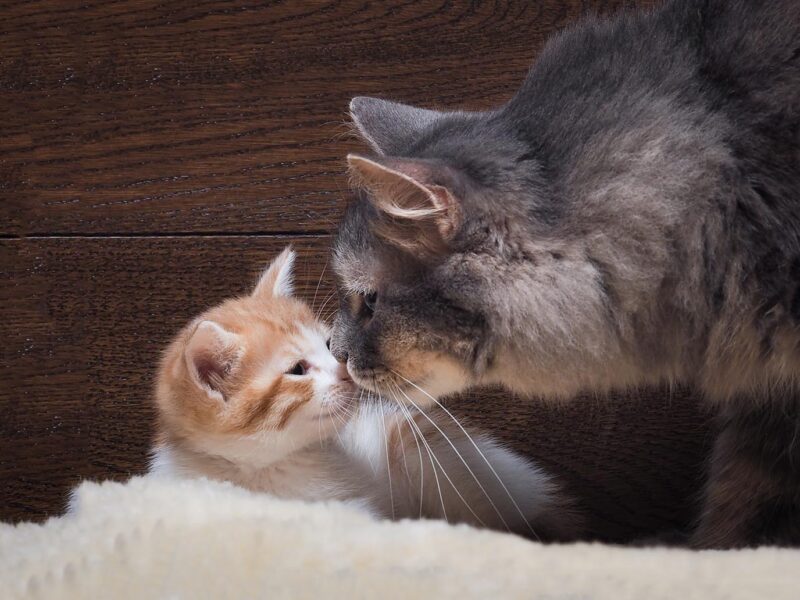
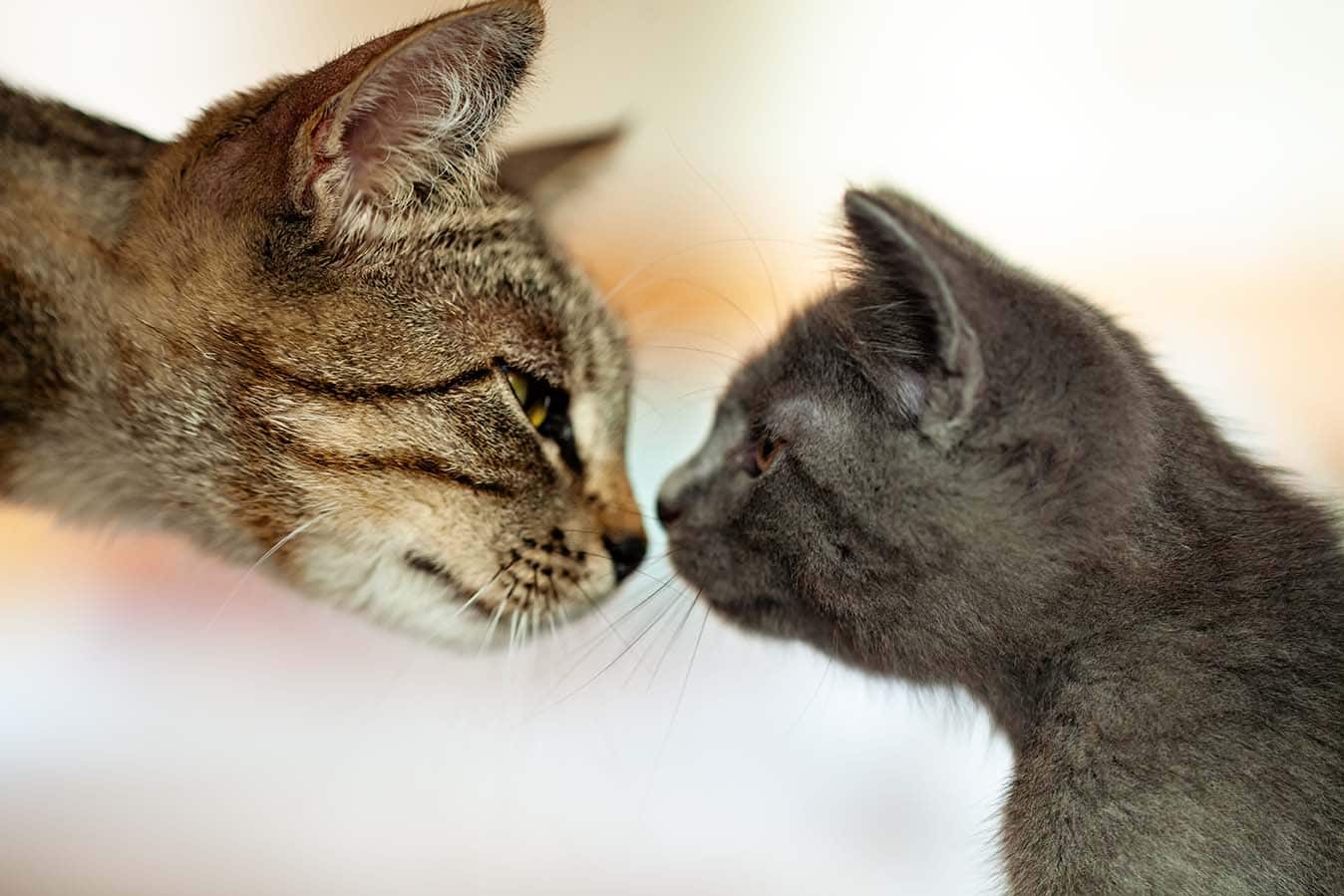
Therefore, cats don’t remember their mothers in the same way that humans do. Cats use smell to identify each other, and mothers and kittens may continue to recognize each other if they are never separated. However, that doesn’t mean that cats will act affectionately. Once the kitten is about 10 to 12 weeks old, the mother will treat them like any other cat.
If the cats are separated, they will likely not recognize each other when they are reunited. After all, their smell will have changed, which will cause the cat’s “identity” to change. Even if the cats aren’t separated, their scents will begin to change when the kittens are around 12 weeks old.
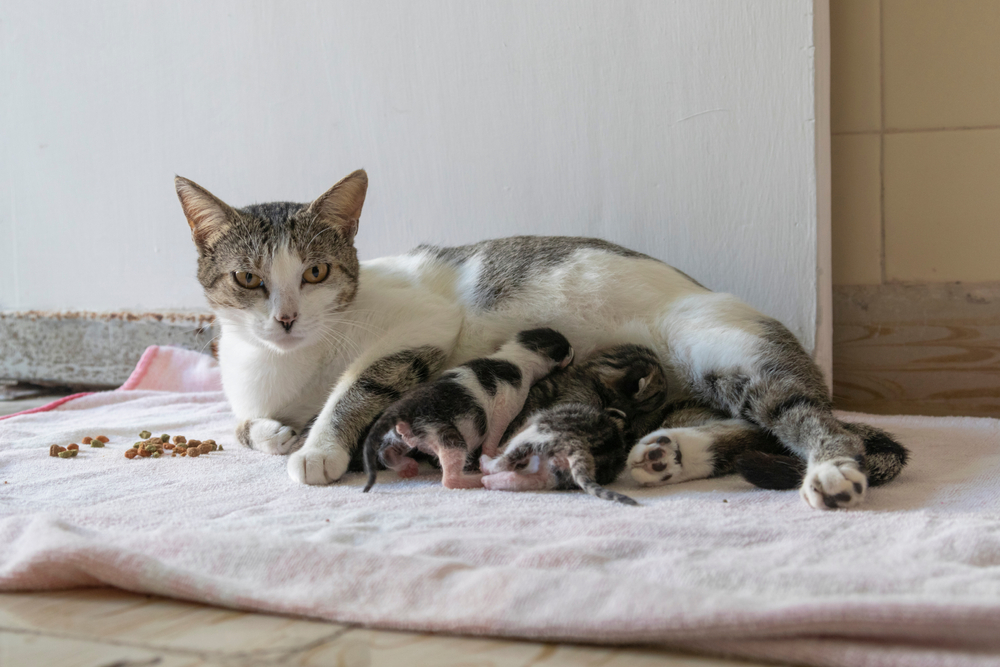
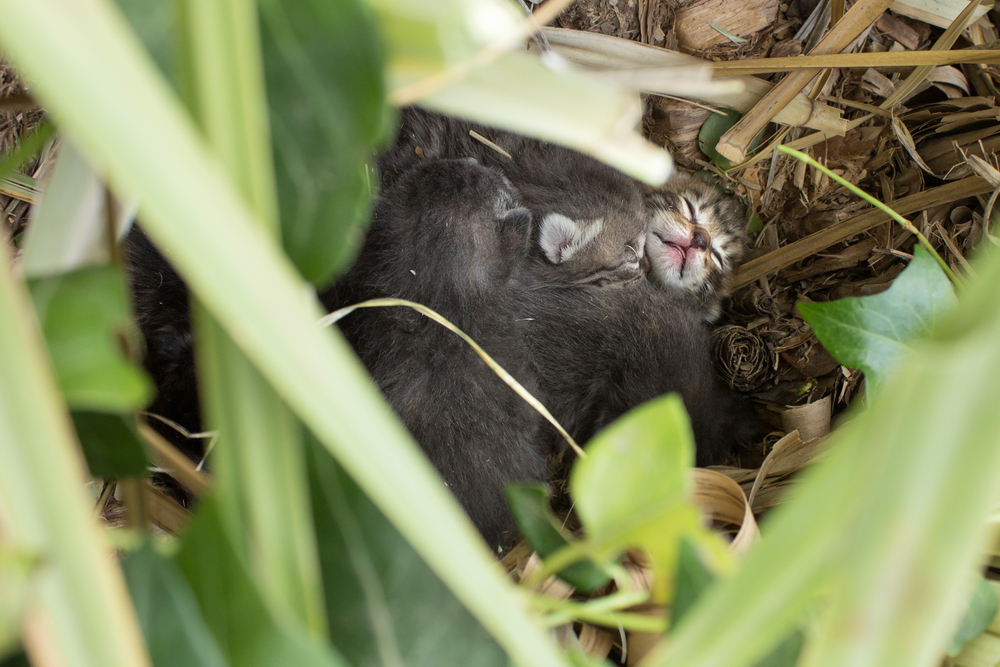
Before then, the kittens spend their time in their nest and are breastfed and groomed by their mom, which causes them to develop a unique and familiar scent. After they stop spending so much time in their nest, they are weaned and no longer need to be groomed or stimulated by their mom. The scent slowly fades, and as kittens mature, their hormonal shifts change their scents. Eventually, it will change enough to prevent the cats from identifying each other as littermates.
However, in the wild, some feral kittens will stick around with their mothers into their juvenile and adult stages. This seems more likely for female kittens than male kittens, who roam a bit more. If the females continue to groom each other, their scents will stay similar, and they will remain friendly.
However, it largely depends on the temperament of the cats. Some felines will never get along with others, including their mother. Other cats may be easygoing and get along with just about everyone.

Do Mother Cats Know Who Their Kittens Are?
Various studies have been performed on whether cats have an innate sense of who their kittens are. Most cats accept any kitten that suckles on them. You can take kittens with different mothers and give them to the same mother cat, and she will typically accept them. Therefore, cats likely don’t have a strong innate sense of which kittens are “theirs.” They may take care of whichever kittens are in their nesting box and will ensure they become familiar through grooming and nursing.
However, cats typically use smell to recognize other cats that they know. Kittens that spend time in a mother’s nesting box will usually be cared for by that mother, as they “smell” like her kittens. This is true even if the kittens aren’t biologically hers.
Therefore, the mother cat doesn’t know which kittens she gave birth to. However, there is a sense of which kittens are “hers” based on which ones are in her nesting box and smell like it. If any kittens disappear, she will likely notice and look for them.
However, that isn’t always true. Sometimes, cats don’t realize that they have fewer kittens. When the kittens grow, the mother may recognize that they are her kittens if they are kept around and not separated. However, she won’t develop the same mother-child relationship that humans do. Cats typically don’t form “family” or blood bonds, but they are absolutely capable of developing affinity bonds regardless of the family trees.

How Long Does It Take for a Mother Cat to Forget Her Kittens?
It depends on the situation. If the kittens grow up and are weaned, the mother will stop having the same relationship with them when they are around 12 weeks old. That doesn’t necessarily mean that she has forgotten them, only that she knows she doesn’t need to take care of them anymore.
She may even act slightly hostile to them in some situations, like when they lay in her favorite spot. She can retain a close relationship with some cats if she continues to groom them. Other times, she'll act like she doesn’t know the kittens at all.
Of course, we don’t know if the cat remembers her kittens since we can’t ask her. She will stop having the same parenting relationship with them, however. Instead, she’ll often start treating them like regular cats, not kittens she gave birth to. This is mainly because cats don’t develop the same family relationships as humans.
However, if the kittens have been removed from the mother for whatever reason before they are weaned, it is a different story. The mother may try to look for her kittens and call to them. This can happen if the kittens die and their bodies are not left for the mother to mourn over or if the kittens are rehomed before they are properly weaned.
Either way, the mother may remember her kittens for a few days and continue to search for them. Eventually, she will give up. This will usually take longer if the kittens are removed before the weaning stage. If they are about 10 to 12 weeks old, some mother cats may only look for them for a few days before giving up.
Do Cats Remember Their Siblings?
We can’t ask a cat if they remember their siblings, so there is no way to know if they genuinely remember them. However, cats don't usually treat their siblings any differently from normal cats. It is especially true if they were separated and then reunited. Depending on their personality, the cats may bond or act hostile or indifferent after being reunited.
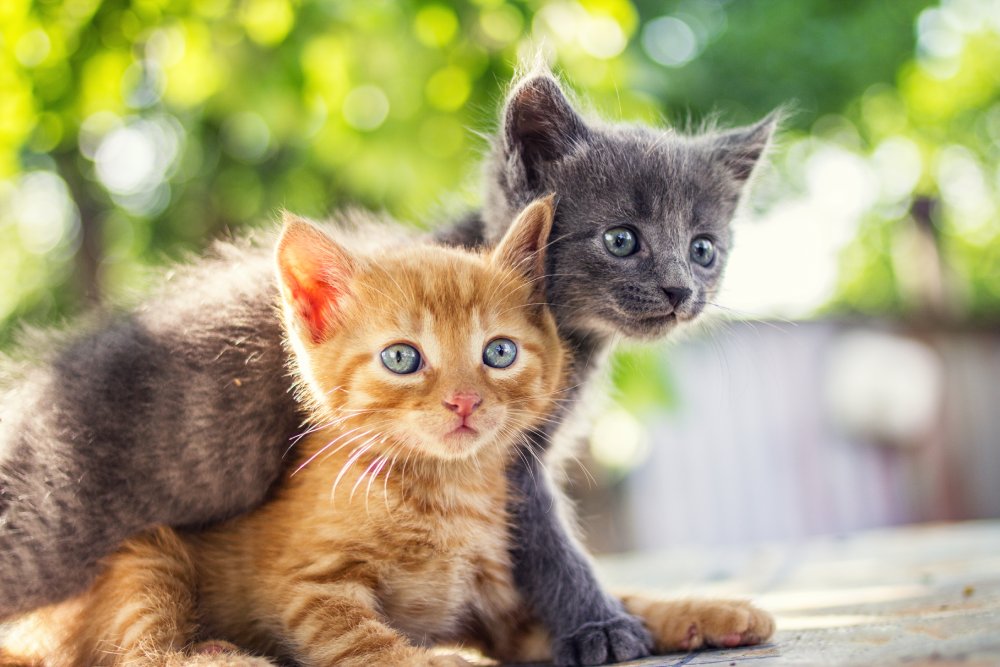
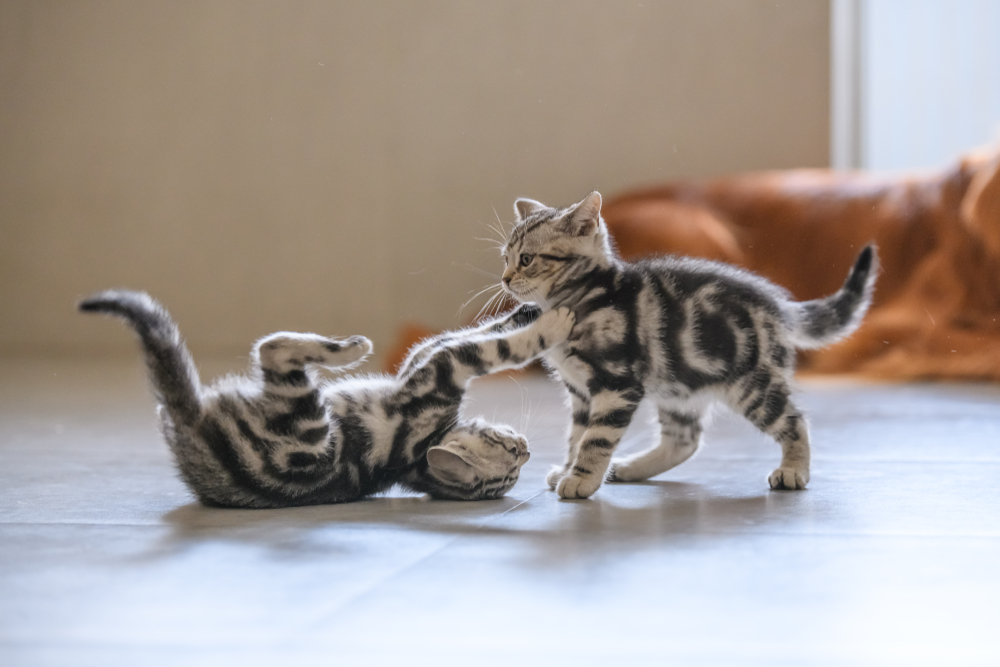
The one exception is if the kittens are kept together. Some kittens continue to groom each other and cuddle after weaning. They may continue to be friendly to each other due to their affinity and shared, familiar scent. However, there are no guarantees. Even siblings kept together may simply grow apart, and some may even become competitive or incompatible.

Do Cats Get Sad When Their Kittens Are Taken Away?
There is no way to know how a mother cat feels after removing her kittens. Most mothers don’t mind if the kittens have completed weaning. In fact, after 12 weeks, some mother cats become hostile toward their kittens and somewhat annoyed with them.
Some continue to groom a few kittens and cuddle, typically with other females. However, that isn’t always the case and seems to depend on the mother cat’s personality. If the mother typically gets along with other cats, she is less likely to be aggressive toward her kittens.
Either way, the mother is less likely to think of the kittens as “her” kittens after they have weaned at around 12 weeks. The mother cat probably won’t notice or care much if the kittens are removed after that point. Having the mother yowl and look for her kittens usually doesn’t happen after they have been weaned.
If the kittens are taken away before they are weaned, it largely depends on the mother and the age of the kittens. Some first-time moms may not act distressed even if the kittens are taken away early. She doesn’t exactly know how everything is supposed to work yet. However, other cats will act distressed for days if the kittens are taken away.
If the kittens are only 2-3 weeks old, the cat will act distressed for a long time after their removal. She might look for them for weeks. If the kittens are removed closer to 12 weeks but before they are completely weaned, the mother cat will likely only be distressed for a few days.
It can be challenging to guess how long the mother cat will remain distressed. It depends on the cat’s personality, hormones at play, and other factors that we don’t completely understand. Some cats may not act distressed at all with one litter and then be highly distressed with another.

What Do Mothers Do With Dead Kittens?
It is always a sad situation when a kitten dies. Often, it is not the mother's fault. Some kittens aren’t born strong enough to survive. It can be challenging to know what to do when a kitten dies. Do you let the mother see the body? Do you take it away so it doesn’t upset her?
Most mothers will attempt to revive the kitten in a natural setting by licking it. Sometimes, this does work. But if something is seriously wrong with the kitten, it won’t. This behavior is most common right after the kitten is born. If the kitten is a few days old, the mother may know that licking won’t help.
Once the kitten is dead, what the mother does can vary. Some cats eat their kitten, especially if it has just been born. It gives the mother cat nutrients, though you probably won’t want her to do it for obvious reasons. Sometimes, the cat removes the kitten’s body from the box and leaves it elsewhere. Other times, she'll carry it around and act distressed, like she’s trying to find a place to put it. Some will simply ignore or abandon the kitten’s body by leaving it in the nest, but no longer interacting with it.
If the mother cat starts exhibiting any of these behaviors, it is likely okay to remove the kitten. She knows it is dead and probably won’t miss it if it is removed. This will also allow her to focus on her living kittens.

Final Thoughts
Cats don’t develop the same family relationships that we do. Even if a mother remembers that another cat was her kitten, she will likely treat them just like any other cat after 12 weeks. The mother can become aggressive or continue to groom a few select kittens. It largely depends on the personality of the cats. While adult cats don't typically create "family" bonds based on blood relations, they can develop strong affinities with each other, independently of their lineage.
Featured Image Credit: Liliya Kulianionak, Shutterstock

Expert cat care, straight to your inbox
Vet-reviewed advice, behavior tips, and the best of Catster. Free, and you can unsubscribe anytime.
By signing up, you agree to our Terms & Conditions and Privacy & Cookies Policy.
Christian started writing for a local newspaper as a teenager, and he's been involved in the publishing industry for most of his adult life. Combining his love of writing with a passion for animals, he is currently the Director of Editorial at Pangolia and the Editor-in-Chief at Catster.
Christian lives in the Philippines with his wife, son, and four rescue cats: Trixie, Chloe, Sparky, and Chopper.
Join the conversation
Ask a question, share your story, or send private feedback.