What Does a Mother Cat Do With a Dead Kitten: Vet-Reviewed Info

In this article
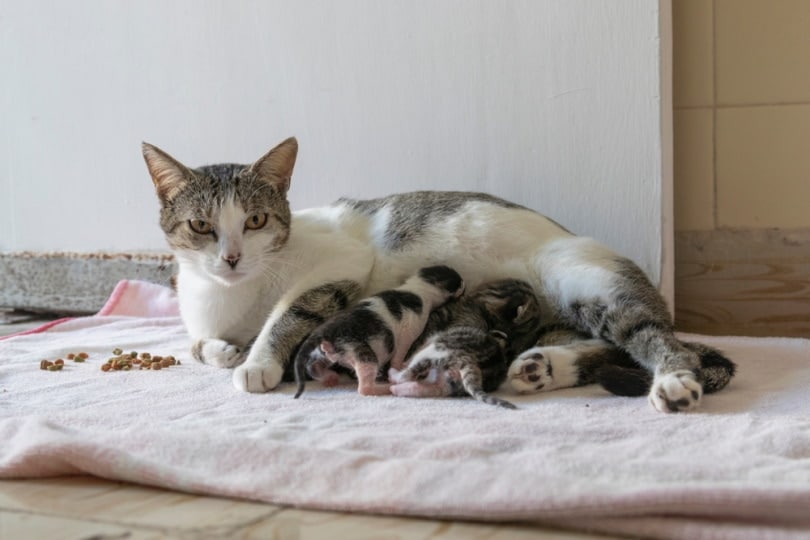
Even though cats have been domesticated for many years, they are still animals with many instincts. Becoming a parent brings out instincts for any animal, including a mother cat. The instincts of mother cats don’t only apply to taking care of their live kittens.
When a kitten passes away, the way the mother cat reacts depends largely on the circumstances leading up to the kitten’s demise. Indeed, their behavior toward that kitten might surprise you.

Mother Cats Start by Licking the Kitten
Right after a mother cat gives birth to new kittens, she licks them clean. It is an instinctual behavior for her to do right after giving birth. It might seem rather harsh at first because it is typically a rigorous cleaning. However, she does this to stimulate the kitten to breathe because it won’t feel natural for them at first.
It is also necessary for her to clean away the fetal membranes and liquid that might be blocking the kittens’ lungs from taking in the air they need. This procedure is necessary, so don’t take the kittens away from their mother, even if it looks painful.
It might be a sad sight to see, but even when a kitten is stillborn, the mother cat will continue to groom them. She will cuddle and lick the kitten to try to get them to respond and start breathing. The process might go on for quite a while before she starts to focus more on the live kittens again.

If The Kitten is Born Dead or Dies Shortly After Being Born
After a mother cat ultimately gives up on the kitten ever breathing, she is prone to do a couple of things that might seem dramatic. One is that she might eat the dead kitten. This is very common with kittens that are born dead (stillborn) or those that die shortly after they’re born. There are several reasons that a mother cat might do so.
Hygiene
Kittens are born completely dependent on their mothers for everything, including warmth, nutrition, and ensuring their den remains clean. The mother cat would instinctively eat a dead kitten to ensure that a rotting carcass doesn’t lead to the proliferation of nasties, which could, in turn, make the rest of her litter unwell.
Protection
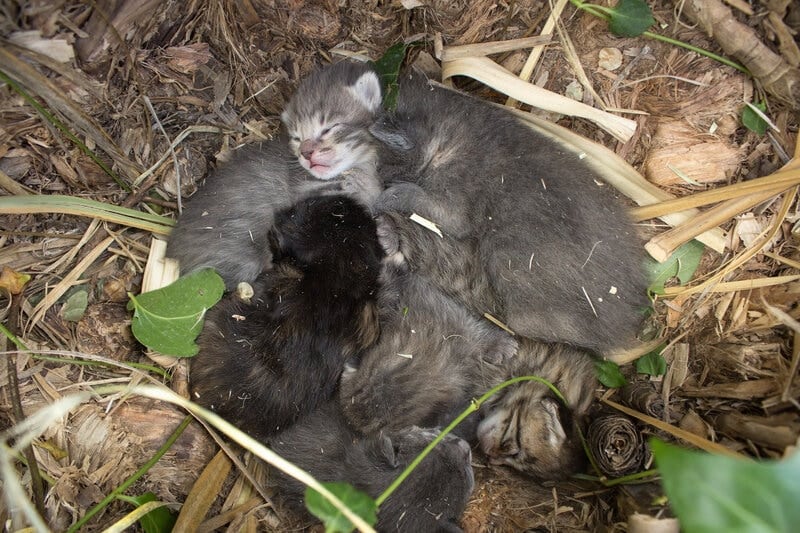
Another reason a mother cat may eat a perished kitten is also related to the survival of the rest of the kittens. By eating the newborn, a mother cat will make sure that the smell of a rotting carcass doesn’t attract any predators to her den, which would otherwise put her kittens at risk.
Nourishment
Finally, a mother cat may eat a dead kitten to gain some nourishment from it (which, in turn, can help her produce more milk for her remaining kittens). A theory also postulates that sometimes, a mother cat might resort to eating a kitten not just for nourishment but also to recoup her losses in some way.

If The Kitten Isn’t Thriving
Many animals instinctively know if one or more of their young aren’t thriving and when they want to reject them. This would often happen with kittens that are a few weeks old but still dependent on their mothers.
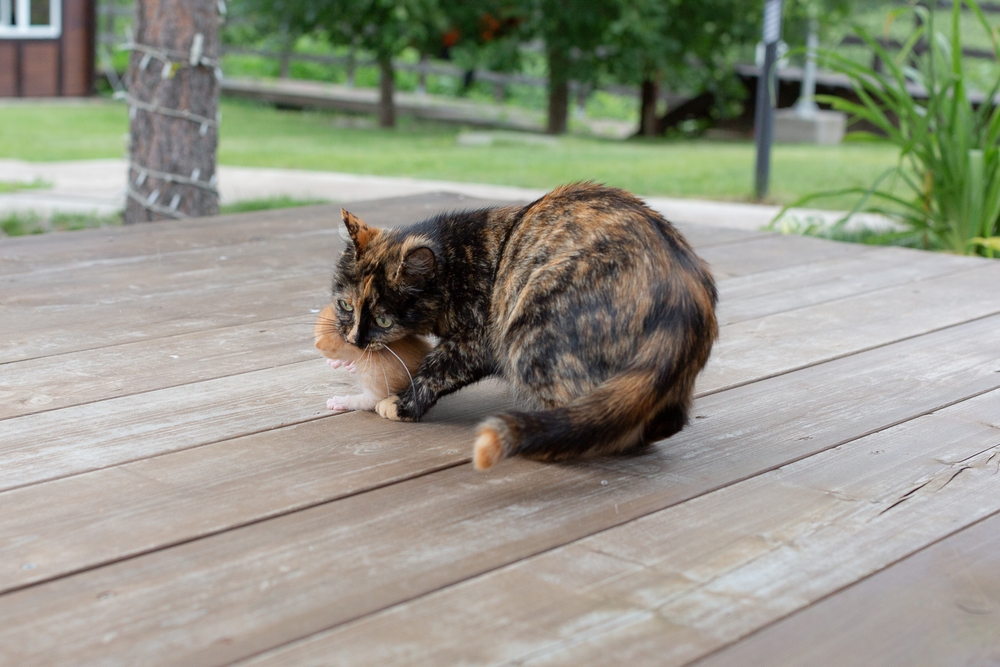
In this scenario, the most probable reaction from the mother cat would be to move the kitten away from the den and other kittens and leave them elsewhere to perish eventually. She seems to abandon the kitten and repeatedly rejects the kitten, even if the kitten is brought back to her. Though this sounds harsh and cruel to us, it’s important to remember that a cat doesn’t operate on the same principles of morality as we do.
Kittens rejected by their mothers may possibly be rescued and hand-raised. However, anecdotal claims from people who have spent extensive time caring for orphaned kittens state that such kittens rarely seem to make it; they seem to believe that a mother cat knows when a kitten passes a stage where they can’t be salvaged before they choose to abandon them.

If The Mother Returns to Dead Kittens
If the mother cat returns to her den to find that one or more of her kittens have suddenly died due to events that happened in her absence (for example, a predator ambushed her kittens), she’s most likely going to compulsively groom her dead kitten in an effort to revive them. She may also pace, meow in what is described as “grief” by those who’ve heard it, and appear extremely distressed.
Pet cats confronted with this situation have also been known to bring their deceased kittens to their owners and seemingly grieve their loss.
Final Thoughts
Cats are not only mysterious creatures, but they are also instinctual. A mother cat will do everything that she can to keep her baby kittens safe. If they are born dead or die soon after birth, you may see her respond in accordance with the circumstances preceding the kitten’s demise.
Though some of the actions of a mother cat in such a scenario seem cruel or bizarre to us, it’s important to keep in mind that she instinctively does everything she can to keep her live kittens safe and sound. As such, we shouldn’t judge her in the way we would judge another person, and instead, we should acknowledge that she's only doing what comes naturally to her.
Related Reads:
Featured Image Credit: schubbel, Shutterstock

Expert cat care, straight to your inbox
Vet-reviewed advice, behavior tips, and the best of Catster. Free, and you can unsubscribe anytime.
By signing up, you agree to our Terms & Conditions and Privacy & Cookies Policy.
Christian started writing for a local newspaper as a teenager, and he's been involved in the publishing industry for most of his adult life. Combining his love of writing with a passion for animals, he is currently the Director of Editorial at Pangolia and the Editor-in-Chief at Catster.
Christian lives in the Philippines with his wife, son, and four rescue cats: Trixie, Chloe, Sparky, and Chopper.
Join the conversation
Ask a question, share your story, or send private feedback.