Guar Gum in Cat Food: Our Vet Explains the Uses, Safety & Verdict

In this article
If you’ve ever stopped to read the ingredients list on your cat’s food – which you absolutely should – you may have spotted something called ‘guar gum.’ Your first thought is likely to have been what on earth is guar gum? shortly followed by is guar gum safe for my cat?
The very short story is that guar gum is a thickening agent, and yes, it is safe for your cat. But, as you might have guessed, there’s a little more to the story than that. Keep reading to learn a little more about what guar gum is, how it’s used, and why it’s a safe but not ideal ingredient for our cats.

What Is Guar Gum?
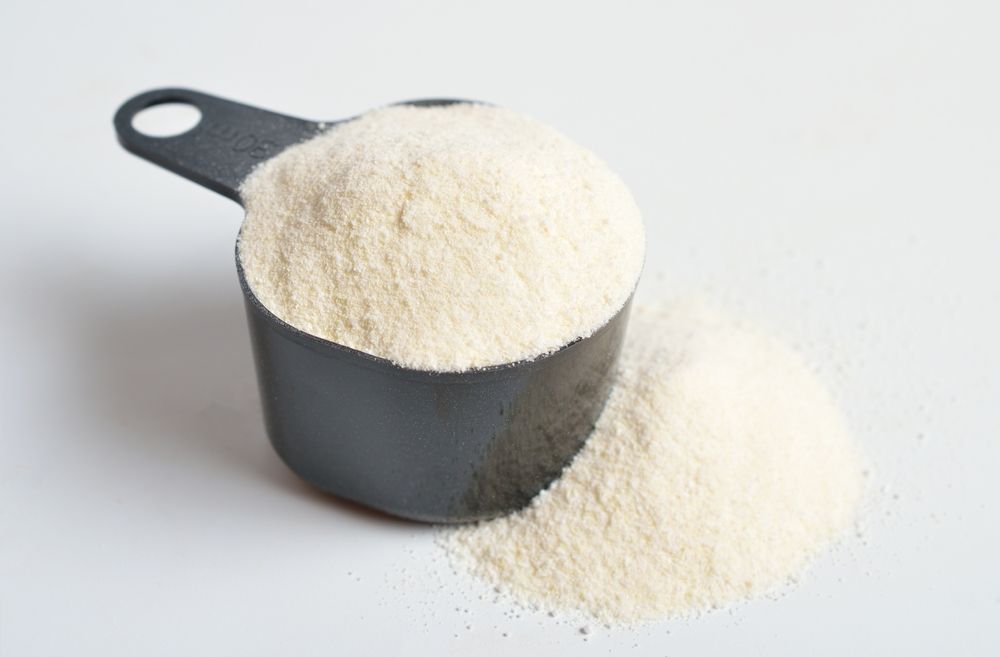
Guar gum is a polysaccharide (a carbohydrate made from multiple bonded sugar particles) extracted from the seeds of the guar, or cluster bean, plant (Cyamopsis tetragonoloba). It is commonly used as an emulsifier (something to help bind ingredients together), stabilizer, and thickener in food products.
Although you’re unlikely to see guar gum on the front of a pack, or even high up in an ingredients list, you might be surprised at how often it is included in many products we use (and eat) every day. Here are just a few of the myriad ways in which guar gum is used:
- thickening agent in food
- prevents ice crystal formation when making ice cream
- vegan/vegetarian alternative to gelatin
- cosmetics, moisturizers, soaps
- binding agent in clumping cat litter
In addition to these domestic applications, there have been promising results in studies using drug-infused guar gum to target certain cancers, particularly colon cancer.
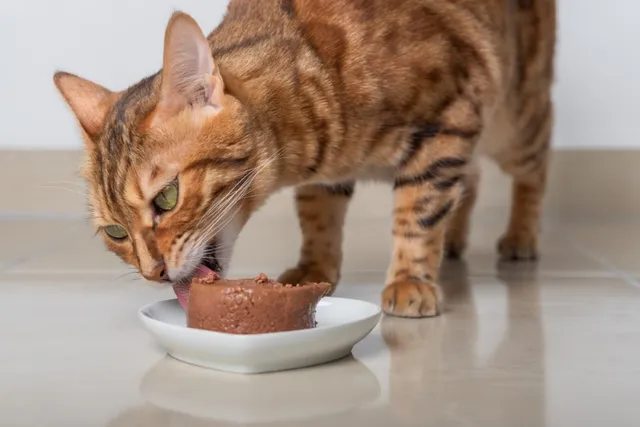
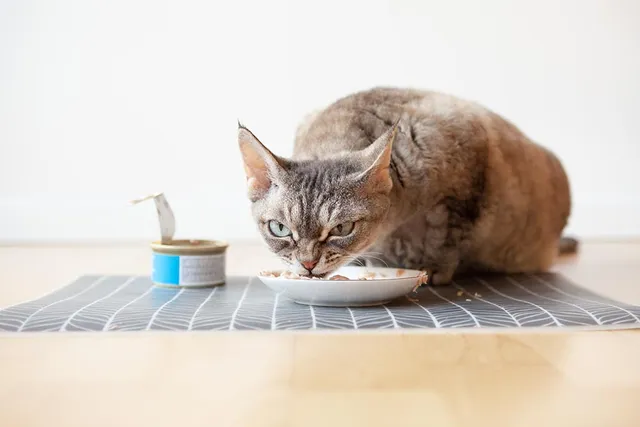
And of course, it is often included in wet cat food as a thickening or gelling agent and source of fiber.
Is Guar Gum Safe For Cats?
Guar gum is perfectly safe for cats. Although it is a sugar-based ingredient, which is unnecessary in a cat’s diet, the amount in cat food is not enough to pose any significant risk or calorie increase. It is not toxic, and in most cases will be a benign, though largely unnecessary, ingredient. Most processed cat foods contain one form of thickening agent or another, such as guar gum, cassia gum, carrageenan, or xanthan gum.

Is Guar Gum Bad For Cats?
Some humans, particularly those with celiac disease, show similar gastrointestinal reactions (bloating, diarrhea, cramping) when consuming foods that contain guar gum, despite its lack of gluten. Similarly, some cats, particularly those with a history of inflammatory bowel disease, are quite sensitive to the thickening agent.
Another problematic feature of guar gum for cats is that research has shown that it can block the absorption of protein from the large intestine. Therefore, the net result of a food containing guar gum is that your cat may be getting less protein from their food than what is indicated on the pack, as well as ingesting unnecessary sugar and fiber.
Why Is Guar Gum Used in Cat Food?
When we look at the nutritional requirement of cats, we can see that they need a diet that contains approximately:
| Energy: | 400 kcal |
| Protein: | 25-40 g |
| Fat: | 5-10 g |
| Carbohydrates: | 0 g |
This is per 100 g of dry matter. You will notice that cats do not actually need to consume carbohydrates, although fiber is usually included in the diet of domestic cats to compensate for their less active lifestyles; guar gum is one such ingredient. However, the main reason guar gum is used in cat food is to mask how much of a food is composed of water.
Imagine opening a can or sachet of cat food to find something that more closely resembles soup than casserole, milkshake than meatloaf. Without the addition of a thickener like guar gum, that is what many wet foods would look like.
This isn’t necessarily unhealthy, but one could argue that it is a little bit dishonest. Let’s look at some comparisons:
| Premium Fresh Food | Premium Wet Food | Budget Wet Food | |
| Example | Smalls | Hill’s Science Diet | Sheba Gravy Indulgence |
| Protein | 13% | 8.5% | 5.5% |
| Fat | min. 8.5% | min. 4.5% | min. 2.5% |
| Fiber | max. 1.5% | max. 2% | max. 1.5% |
| Moisture | max. 73% | max. 78% | max. 87% |
| Thickening agent | None | Guar Gum Carrageenan | Guar Gum Xanthum Gum |
- NOTE: The values included here are on an ‘as fed’ basis for these foods. The dry matter values will be 4-5 times these figures.
You can probably imagine what a food comprised of 87% moisture would look like without the addition of a thickening agent. Essentially, thickening agents like guar gum are included to mask the shortcomings of these foods, making them appear more nutrient-dense.

Should I Avoid Guar Gum?
If your cat has digestive issues such as inflammatory bowel disease or intestinal lymphoma, their ideal diet should consist of high-quality, highly digestible ingredients, with minimal unnecessary additives. You should always discuss your cat’s specific dietary needs with your vet, as they may vary from case to case.
When it comes to feeding your cat, the aim should always be to feed them the best food you can afford that is right for your cat. The reality is that we can’t all afford top-quality, human-grade, fresh cat food, particularly if you have more than one cat. What we should all be doing, however, is taking a closer look at the ingredients on the back of the pack so we know what it is we are buying. Expensive doesn’t always equal excellent, and you might be surprised to find that some of the best cat foods often come with a modest price tag, so it pays to spend some time reading the fine print.
Most wet cat foods will contain some form of thickening agent, and guar gum is not harmful or toxic for your cat. Just remember that you should judge the quality of your cat’s food by what’s written in the small print rather than how it looks in their bowl.

Final Thoughts
Guar gum is a natural product, extracted from the seeds of the guar plant. It has a multitude of applications, including exciting potential in treating cancer.
Guar gum is a common and safe inclusion in many wet cat foods. It is not a necessary component, nor will it contribute any value to your cat’s diet. It is used as a gelling agent to help bind the ingredients together and mask how much water is in the food. Although some cats, particularly those with IBD, may be quite sensitive to guar gum (and other thickeners, such as xanthan gum), it is not harmful or toxic for your cat. However, it can reduce the absorption of essential nutrients, particularly protein.
Always read the ingredients list on your cat’s food to know what you are paying for and what your cat is going to get out of it.
Sources
Featured Image Credit: spline_x, Shutterstock
Expert cat care, straight to your inbox
News, insights, and useful advice, delivered to you.

No spam — unsubscribe anytime.
By signing up, you agree to our Terms & Conditions and Privacy & Cookies Policy.
How useful was this post?
Click a star to rate. You can leave written feedback afterwards. (We read all feedback.)
Dr. Karyn Kanowski BVSc MRCVS (Veterinarian)
Dr. Karyn comes from Queensland, Australia, and has lived in the UK for the past 10 years. In 2010, she graduated from The University of Queensland School of Veterinary Science and also has a Bachelor’s degree in Zoology. She is passionate about using evidence, experience, and owner collaboration to provide the best solutions for pets, and believes in making reliable information about animal health accessible to all. Dr. Karyn shares her home with five cats, four dogs, and one husband. When she is not in the scrubs, she spends her time writing, gardening, and cleaning up pet hair!