Get

In Your Inbox

Catster is reader-supported. When you buy via links on our site, we may earn an affiliate commission at no cost to you. Learn more.

Bobcat Fever: Our Vet Discusses Signs, Causes & Treatment

Share

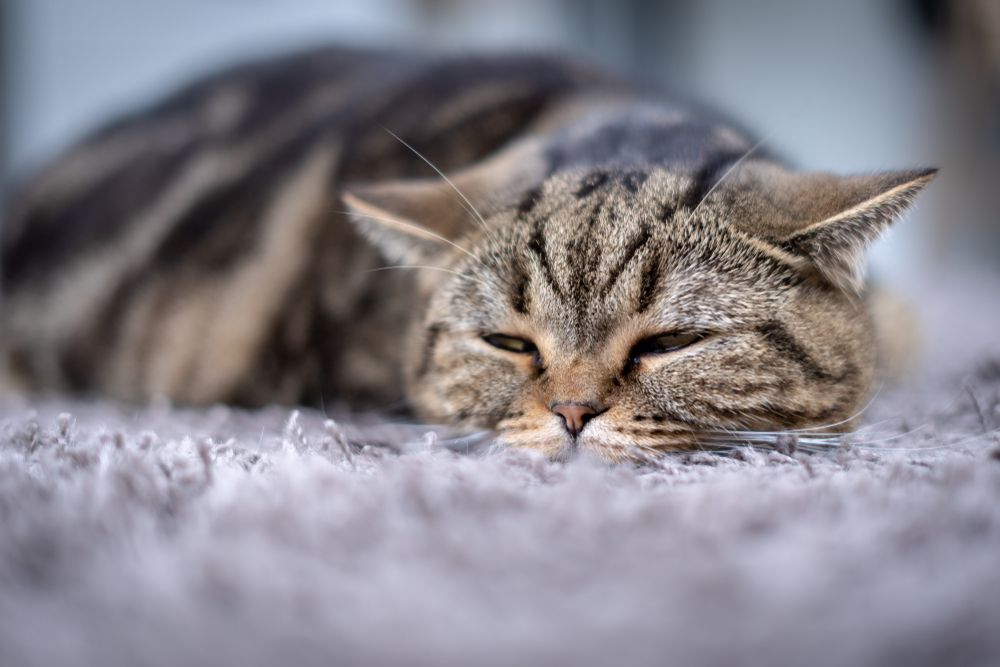
sick cat lying on blanket

Bobcat Fever is a serious and life-threatening disease that causes anemia in feline species. While the name suggests that the wild bobcat is primarily affected, this is not the case. Bobcats appear to have good immunity and tend to become “carriers” of the parasite, without displaying any signs of disease. Domestic cats, however, are not so fortunate.

Bobcat Fever is predominantly found in North America’s south-central and southeastern areas. The range of diseases is believed to be spreading due to climate change and local weather changes. This article will explain how Bobcat Fever is transmitted, what causes it, and what can be done to treat cats suffering from this problematic disease.

divider 2 cats

What is Bobcat Fever?

There is a technical name for Bobcat Fever: Cytauxzoonosis. This is because Bobcat Fever is caused by a blood parasite called Cytauxzoon felis. The parasite is found in ticks (most commonly the Lone Star tick and American dog tick). When a tick carrying the C. felis parasite feeds on a cat, the parasite can be transmitted into the cat’s blood.

Once in the cat’s blood, the parasite undergoes several stages of division and replication. The parasite invades white blood cells (macrophages) and causes them to burst. They then infect red blood cells which are destroyed causing the cats to become anemic. Parasite clumps are also capable of occluding (blocking) blood vessels and disrupting oxygen distribution to tissues.

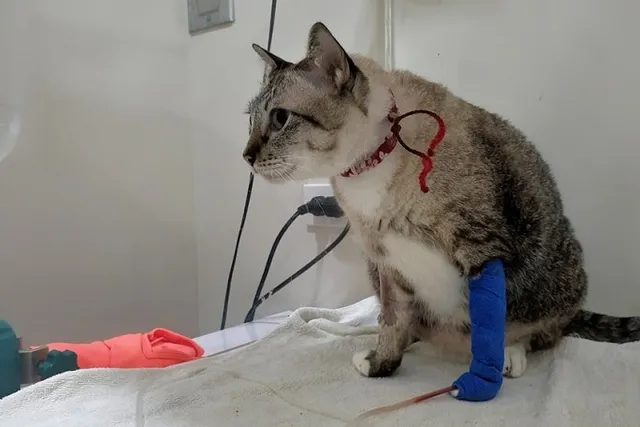
Sick cat in animal hospital
Image Credit: Kachalkina Veronika, Shutterstock

What Are the Signs of Bobcat Fever?

Signs of Bobcat Fever develop approximately 10 days from the time of the tick bite. The early signs can be vague or “non-specific”:

  • Lethargy
  • Loss of appetite
  • Labored breathing
  • Pale gums, or yellow discoloration of the gums
  • Vomiting
  • Fever
  • Increased heart rate

Later in the course of the disease, cats become extremely unwell. The lymph nodes, spleen, and liver may become enlarged. Cats will often become hypothermic (low body temperature), and then lapse into coma. Death occurs shortly after this around day 21 post infection.

If your pet is showing these signs, we suggest you speak to a vet.

If you need to speak with a vet but can't get to one, head over to PangoVet. It's an online service where you can talk to a vet online and get the advice you need for your pet — all at an affordable price!

PangoVet_Mention-in-Content for PangoVet2 save money

What Are the Causes of Bobcat Fever?

Bobcat Fever is caused by the blood parasite Cytauxzoon felis. It is carried in an infected tick’s saliva and injected into the cat’s bloodstream when the tick feeds. The tick replicates in blood cells (and other tissues in the body), destroying red blood cells and anemia.

The disease is not caused by ingesting ticks. It is not caused by encountering bobcats or other infected cats.

Sick cat under blanket
Image Credit: Oporty786, Shutterstock

How Do I Care for a Cat with Bobcat Fever?

At home, there is no way of knowing if your cat has contracted Bobcat Fever, as this requires some diagnostic tests to be run. For this reason, if your cat has any of the early signs of being unwell, it is best to get them checked by a veterinarian.

Previously, the fatality rate was believed to be very close to 100%. This meant that no cat suffering from Bobcat Fever was believed to survive. More recently, there has been some treatment success, though still minimal. Cats require hospitalization and aggressive treatment with intravenous fluids, specific injectable medications for the C. felis parasite, blood transfusions, and nutritional support (which may require the placement of a feeding tube). Cats that survive may spend upwards of one week in hospital and a further two weeks for full recovery.

In cats that are severely unwell, or where hospitalization and aggressive treatment are not possible, euthanasia may be the kindest option.

divider 3 paws

Frequently Asked Questions (FAQ)

1. How Is Bobcat Fever Diagnosed?

Bobcat Fever is diagnosed using a combination of blood tests. The C. felis parasite can often be seen in red blood cells when analyzing a blood film under the microscope. PCR (DNA) tests may be required to confirm the diagnosis. If the cause of anemia remains unclear after blood tests, imaging studies may be used to rule out other causes of anemia.


2. What Is the Prognosis for Cats with Bobcat Fever?

tired or sick cat
Image Credit: Kginger, Shutterstock

With prompt and aggressive treatment, it is believed that up to 60% of cats may survive. Without treatment, the mortality rate is close to 100%. It is not fully understood why some cats survive and others do not.


3. How Can Bobcat Fever Be Prevented?

The only way to ensure your cat is not at risk of Bobcat Fever is to keep them indoors, where they are not exposed to ticks. Tick prevention products in the form of spot-on treatments and collars can be used, but none are 100% effective. Speak to your veterinary team about the best tick prevention tactics in your area.

divider 2 cats

Conclusion

Bobcat Fever is a potentially fatal parasitic disease that causes anemia in domestic cats. The disease gets its name because bobcats are the reservoir host, meaning they are the natural animal in which the C. felis parasite resides. But while bobcats do not become unwell as a result of their infection, household cats do.

Treatment protocols exist but must be undertaken early. If you live in an area where cats are at risk of Bobcat Fever, it is best to keep them indoors. If this is not possible, ensure you are applying a tick preventative. If you have any concerns about your cat’s health, do not hesitate to contact your veterinarian.


Featured Image Credit: one photo, Shutterstock

Want content like this delivered to you?

Sign Up For Our Newsletter

News, insights, expert advice, and everything cat

* By submitting, you agree to our Terms & Conditions and Privacy & Cookies Policy.


How useful was this post?

Click on a star to rate (you can leave written feedback after clicking submit)

Help us improve Catster for pet parents!

Your feedback really matters.

What did you like about this post? Also how can we improve it?

Join the conversation

2 Responses

  1. My cat had bob cat fever from tick bite. She survived after taking medicines for 3 to 3 1/2 months. I'v kept her inside for the last six months. She loves being outside and has wrecked my house trying to get out. Sits in windows looking out, tring to get out. She has been on meds all this time. Is it possible she would die if bit again? I just hate to see something so miserable.

    1. Hello Mildred. It is incredibly rare for a cat to survive "Bobcat Fever" (Cytauxzoonosis), so the fact that your girl pulled through is a true miracle. While her intense desire to be outside is heartbreaking to watch, your fear is grounded in reality: while most survivors develop a strong immunity and are unlikely to get sick from the same strain again, there are documented cases where cats have been reinfected by different, more aggressive strains years later. Furthermore, survivors often remain lifelong carriers of the parasite in their blood; if she goes back outside, a tick could bite her, become infected, and then spread the disease to other cats in your neighborhood. Increasing her enrichment opportunities indoors will help her adjust. Check out some great ideas: https://www.catster.com/cat-health-care/environmental-enrichment-for-cats/
      https://www.catster.com/lifestyle/ways-to-help-cats-and-make-a-difference/
      https://www.catster.com/cat-health-care/ways-to-provide-mental-stimulation-for-cats/

Leave a Reply

You’re very welcome to leave a comment or question. Please know that all comments must meet our community guidelines, and your email address will NOT be published. Let’s have a positive and constructive conversation.


Talk With A Vet Online

Peace of mind,
anywhere, anytime

Affordable vet advice

Ask Dr. Paola – Help! My Male Cat Gets Into Fights! (March 9, 2026)

Welcome to our “Ask Dr. Paola” series, where every Monday we bring expert advice straight from Dr. Paola Cuevas (MVZ) to help our...

Why Your Cat’s Poop Smells Like a Biohazard

Nobody enjoys litter box duty, but sometimes it gets unbearable. The smell hits you from across the room. You’re scooping faster, lighting candles,...

RIP Your Furniture? Not With This Guide to Cat Scratch Damage Control

Your couch looks like it survived a minor apocalypse. The curtains have mysterious vertical shreds. That new rug you splurged on is already...

Celebrating 15 Years as the Most Popular Resident of No. 10 Downing Street

For almost 300 years, a rather unassuming Georgian building of black bricks with a shiny black door has been the official residence and...

More related

Do All Siamese Cats Have Blue Eyes? Vet-Verified Coat & Eye Facts

Renowned for their beauty, Siamese cats are among the most attractive cats you can bring home, and they’re incredibly affectionate! These regal, vocal...

Rad Cat Raw Food Diet – Are They Still in Business? Facts, Recalls & FAQ

An increasing number of pet parents are turning to raw food as a diet for their fuzzy companions. However, dealing with raw food,...

Is Palmolive Dish Soap Safe for Cats? Vet-Approved Risks & Alternatives

Palmolive is a common dish soap that can be found in many household kitchens. Several dish soap brands, such as Palmolive and Dawn,...

Acupuncture for Zazzles: Dr Karyn & Holistic Treatments for Cats

Hi, I’m Dr. Karyn! Read my introduction to learn more about me and meet my five hilarious cats: Clutch, Cyril, Alex, Zelda, and...

Keep reading

How to Care for a Cat After Surgery: 12 Vet-Approved Tips

The last thing that we want is for our cats to experience any kind of pain or discomfort, but surgery can be a necessary part of caring for them. Whether you’re having your cat spayed or neutered or something else...

cat in vet clinic recovering from spaying procedure

Can Cats Fall in Love with Each Other or Humans? Vet-Reviewed Feline Feelings

In all honesty, we don’t know how cats feel. We can’t ask them if they’re in love, and no scientific test can measure what a cat is feeling. Also, the definition of love is hard to agree upon! We do...

cat looking man's chin

How to Make an Indoor Cat an Outdoor Cat Safely (10 Vet-Reviewed Tips)

One of the most common questions cat parents have is whether cats should be kept indoors or allowed to roam freely outdoors. Many veterinarians and organizations are in agreement that cats should not be allowed to roam freely due to...

Walking with cat on a leash kuril bobtail

What Cleaning Products Are Safe for Cats? 10 Vet Approved Items to Keep at Home

Cleaning when you have cats can be a worrying business. Common cleaning agents like ammonia, chlorine (bleach), phenols, rubbing alcohol, formaldehyde, benzalkonium chloride, and essential oils can all be harmful to cats if they come into contact with them. If...

cleaning-a-dirty-mattress

How Much Is Too Much To Spend On A Sick Pet? Vet-Reviewed Facts & FAQ

Taking your pet to the vet for even routine care, such as vaccinations, can be pricey. But what about when your pet is ill and needs long-term or emergency care? Those costs could become astronomical, which begs the question of...

cat in the clinic with veterinarian and owner

Why Do Cats Meow & Yowl? 10 Vet-Approved Reasons Behind the Behavior

Your cat’s meow can have many different motives, and there is usually no reason for concern. Cats will meow when they’re hungry, full, happy, sad, and everything in between, and this sound is used to convey their emotions and intentions...

cat sitting on wooden floor

Why Does My Cat Eat Tape? 6 Vet-Reviewed Reasons & What to Do

‘Tis the night before Christmas and all through the house—there’s a disturbing crunching noise coming from underneath the tree, where you find your feline crunching on the tape from the wrapped presents! You’re probably puzzled because you feed your cat...

scotch tape

Why Is My Cat Hiding Suddenly: 12 Vet-Reviewed Reasons

Hiding is a behavior that pet owners may not see as often in dogs as in cats. However, it’s a safe bet that something is behind it that may either mean something benign or a more serious issue worth further...

A cat hiding under a couch

Love Cats? So Do We! Join the Catster Community

Stay informed with expert pet care insights delivered straight to your inbox! Discover professional guidance on animal behavior, feeding tips, trusted product picks, and much more.


Sign up for the Catster Email Newsletter

Stay informed with expert pet care insights delivered straight to your inbox! Discover professional guidance on animal behavior, feeding tips, trusted product picks, and much more.