Ask Dr. Paola - Cat Not Eating, URI & Poop on Floor (May 5, 2025)

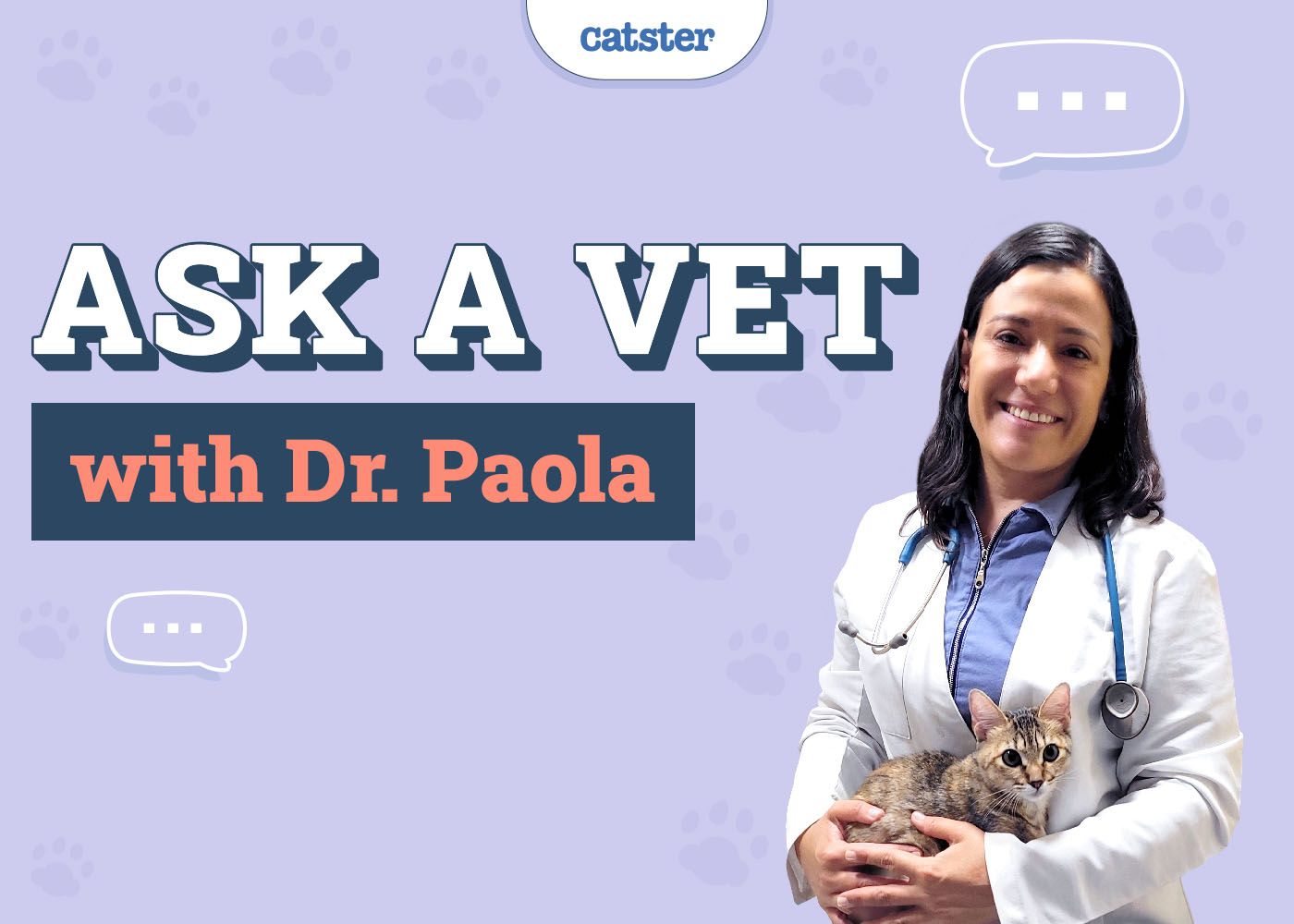
Welcome to our "Ask Dr. Paola" series, where every Monday we bring expert advice straight from Dr. Paola Cuevas (MVZ) to help our readers better understand their cat's health and well-being.
Whether you're a new pet parent or a seasoned cat lover, Dr. Paola is here to provide answers to your most pressing questions. From nutrition tips and preventive care to troubleshooting common behavioral issues, Dr. Paola is ready to offer insights that will keep your kitty happy, healthy, and feline fine. Stay tuned for expert guidance on a range of topics that matter most to you and your cat, so you can make informed decisions and provide the best possible care for your furry companion.
Have a question? Send it in here!

Help! My Cat Won't Eat His Wet Food!
“Dear Dr. Paola,
My 5-year-old Ragdoll Winston will not eat wet food, he will eat the gravy but not the meat. I have tried everything, even making my own gravy for him. Does he really need wet food? He eats a prescription dry cat food with no problem. He does like cat treats. "- Carol
Hi Carol,
You may find a bit of relief in hearing that you are not alone! It’s actually quite common for cats, especially those with a strong preference for certain textures, to favor certain things in their food, like in Winston’s case, the gravy in wet food, and leave the rest behind. Ragdolls love routine, and they can be quite particular about changes, which may result in them being picky with food textures. Winston’s behavior may also suggest he might be what's informally referred to as a "licker": a cat that enjoys the moisture and flavor of the sauce but isn’t keen on chunks or pâtés. This can be frustrating when you're doing your best to provide variety and hydration through wet food.
While wet food isn’t absolutely essential if Winston is thriving on a balanced, veterinary-prescribed dry diet, incorporating moisture is still very important for urinary tract health. A little creativity with moisture consumption could go a long way to support his long-term health. Cats naturally have a low thirst drive, and their ancestors evolved to get most of their hydration from prey. Since he enjoys gravy and treats, you might consider adding lukewarm water or a cat-safe broth (homemade and onion-free) to his dry food or offering water-rich treats like lickable purées that are complete and balanced or at least formulated with healthy, species-appropriate ingredients in mind. If he's eating a prescription food, though, there are certain restrictions and requirements, so it’s crucial not to introduce new treats or toppers without consulting your veterinarian to make sure the ingredients are allowed and compatible with his case. You should also consider incorporating multiple water stations and moving sources, such as a water fountain, to entice Winston to drink more water if he is only allowed his prescription dry food. I hope this helps!
- Dr. Paola

Help! My Cat Has a URI!
"I have a little kitten called Smokey. He just showed up on my front porch one day. He has an upper respiratory infection. I've been putting him in a carrier with a nebulizer and saline solution. It seems to be helping. Does he have to have antibiotics as well? Now I need to find the little guy a home. I already have 5 cats, so I can't keep him. Love Catster. Lots of great info. Thank you" - Cher
Hi Cher, thank you so much for stepping up to care for little Smokey. It sounds like you're doing a beautiful job already, and I'm sure he feels that warmth. Upper respiratory infections (URIs) are unfortunately quite common in kittens, especially those who have had a rough start outdoors. Your use of a nebulizer with saline is a gentle and effective way to help loosen secretions and support his breathing, which is wonderful supportive care.
Whether or not antibiotics are needed depends on the cause and severity of the infection. Many URIs in cats are viral, particularly due to feline herpesvirus or calicivirus. In these cases, antibiotics wouldn’t address the root cause but might be prescribed to manage or prevent secondary bacterial infections, especially if there's green or yellow discharge, fever, or if the kitten seems lethargic and isn't eating. Smokey’s signs suggest he requires a physical exam and potentially diagnostic tests to determine the best course of action, so the recommendation is to have him checked by a veterinarian. This way, they can decide if antibiotics or additional treatments like antivirals or eye medications are necessary. If you're unsure whether he needs an urgent visit, a teletriage veterinary service can be a helpful first step to assess the urgency based on what you’re observing at home, but keep in mind that medical treatments, especially antibiotics can only be prescribed by a veterinarian after checking Smokey and establishing a doctor-patient relationship.
As for rehoming him, thank you for your compassion in thinking of his future. Since he's already receiving care, he's on a great path to recovery and will likely be a loving addition to the right home. Reaching out to local rescue groups, posting on community boards, or asking your trusted vet if they know of any potential adopters can be helpful next steps. If you can share that he’s already been started on care, that can be reassuring for potential adopters. He’s lucky to have crossed your path by showing up on your porch, Cher. I admire your compassion!
- Dr. Paola

Help! My Cat is Pooping on the Floor!
“Dear Dr. Paola,
Lindsey is 18 years old. She has always used the litter box for peeing and pooping, until the last year. She pees in her litter box but poos on the floor. Any solutions for this problem? Thank you. PS. She is diabetic. One unit twice a day." – Inez
Hi Inez,
At 18, Lindsey is considered a longevous pet cat, and your love and care have clearly made a difference. Changes in litter box habits, especially in senior cats with underlying conditions like diabetes, often signal that something is making the experience uncomfortable or confusing for them. The fact that Lindsey is still using the box to pee but is pooping outside of it gives us a few clues.
When a cat uses the litter box for one purpose but not the other, it often suggests a behavioral or sensory aversion rather than a physical limitation. Some cats begin to associate the act of defecating in a particular spot with discomfort, such as straining due to constipation, or they may develop a preference for a certain surface or location. In senior cats, cognitive changes can also play a role, especially when chronic illnesses like diabetes are present. These changes might affect memory, spatial awareness, or routine behaviors. It's a bit like how elderly humans might suddenly misplace familiar objects or lose track of regular routines.
For Lindsey, ruling out gastrointestinal discomfort or irregular stool quality would be the next step. If her stool is hard, or irregular, or if she seems restless before pooping, that could point to a source of discomfort worth exploring further with her veterinarian. Once her health is checked, an online vet consultation with one of our veterinarians at PangoVet could be a good support to discuss her behavior in more depth and determine the best way to reinforce her routines and gently guide her back to consistent habits, or provide her with any additional support needed for her aging mind.
Best Wishes!
Dr. Paola
This article is a part of our weekly Ask Dr. Paola series
Expert cat care, straight to your inbox
News, insights, and useful advice, delivered to you.

No spam — unsubscribe anytime.
By signing up, you agree to our Terms & Conditions and Privacy & Cookies Policy.
How useful was this post?
Click a star to rate. You can leave written feedback afterwards. (We read all feedback.)
Dr. Paola Cuevas MVZ (Veterinarian)
Dr. Paola Cuevas is the Senior In-House Veterinarian at Pangolia, the parent company of Catster. She has over 18 years of experience as a veterinarian and animal behaviorist. Paola's focus is on preventive medicine and animal welfare. Paola has a large range of skills in from diagnostic imaging to nutrition and clinical pathology. Paola enjoys sharing her extensive knowledge of animal training with our Catster readers and is always happy to answer reader questions as our in-house veterinarian.