Get

In Your Inbox

Catster is reader-supported. When you buy via links on our site, we may earn an affiliate commission at no cost to you. Learn more.

Cat Coat Genetics: Vet-Approved Facts & FAQ

Share

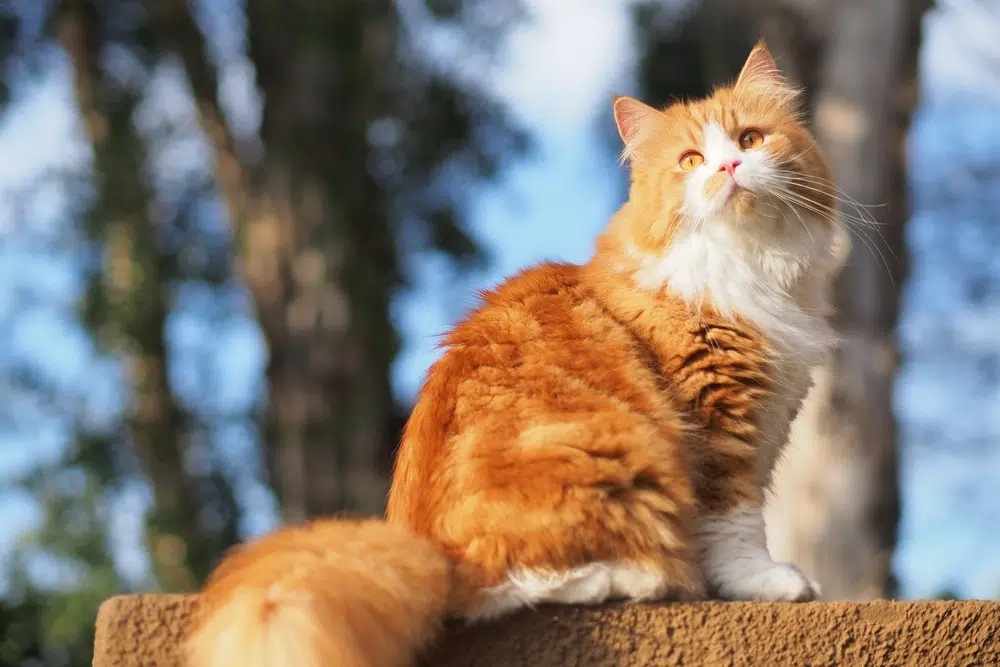
Orange-Long-Haired-Bi-Color-Doll-Face-Persian-Cat

Have you ever wondered how your cat ended up with the coat color that they did? Maybe you know that your cat had a black parent and a white parent but ended up with a brown tabby. How does this happen? What genetic factors determine the color and type of coat your cat has? What determines what types of markings (or lack thereof) your cat has?

The short and sweet answer to any question surrounding why your cat’s coat is the way that it is due to several genes that your cat inherits. However, it’s much more complex than that because even scientists have some uncertainty about how specific genes act to impact a cat’s coat color, markings, and length. Let’s talk about the science behind cat coat genetics.

divider cat paws oct 2024

What Determines a Cat’s Coat Color?

You are free to use this image but we do require you to link back to Catster.com for credit

Coat color is a sex-linked trait, so the sex of the kitten almost always plays a role in how coat color is determined by the genes.

The genes that code for the  color orange are located on the X chromosome. Since male cats only have one X chromosome, it means that orange male kittens get their coat color genes from their mother. In this instance, the queen’s (female cat) coat color will directly impact an orange male kitten’s coat colors. This is also why orange male cats are often seen as more prominently orange when compared to their female counterparts. In cats, this is the only coat color found exclusively on the X chromosome.

The other colors found on cat coats can be inherited by both parents. The genes that code for these colors are found on all of a kitten’s chromosomes which are inherited by both parents equally.

Please note that while there are a myriad of colors that cats can inherit, purebred cats often have stringent color requirements for show-purposes. If you wish to have a cat entered for such a showcase, you’re strongly advised to work closely with a knowledgeable breeder to check your cat’s ancestry records.

Black tabby Maine Coon with harness
Image Credit: DenisNata, Shutterstock

Can Certain Coat Colors Only Be Male or Female?

For a long time, many people believed that certain coat colors could only be present specifically in male or female cats. The most common coat color associated exclusively with male cats is an orange or orange tabby, while the most common colors associated exclusively with female cats are tortoiseshell, calico, and blue cream. We now know that these colors can be expressed in both males and females, but they do more commonly occur in specific sexes. Calico or tortoiseshell males are often sterile.

divider cat paws oct 2024

What Determines a Cat’s Coat Markings?

Orange Cat Genetics Infographic
You are free to use this image but we do require you to link back to Catster.com for credit

The genes for markings or patterns are inherited from both parents, but some patterns are dominant genes that will usually (but not always) be expressed in each generation. These include tabby, tortoiseshell, and color pointed coats.

If one or both parents have tipped hairs (fully colored only at the tip and have a white base), they can create both pointed and non-pointed offspring. This is because the gene for having tipped hairs is autosomal dominant.

What Determines a Cat’s Coat Length?

You are free to use this image but we do require you to link back to Catster.com for credit

A combination of the parents’ genes pertaining to coat length will determine what coat length the kittens have. If both parents are longhair cats, the kittens cannot be shorthair. Shorthair coats come from a dominant gene, while longhair coats come from a recessive gene. Two shorthair parents can create longhair offspring, but it’s statistically highly unlikely (25% chance at best).

divider cat paws oct 2024

In Conclusion

The genetics behind cat coats can be extremely complex, and this is not an all-inclusive, deep dive into the genetics. However, this is an overview of how genetics can impact what kind of coat your cat has. There are multiple factors that do impact the coat your cat has, and some of them haven’t been fully understood by science yet. What we do know, though, is that if your cat has a brown tabby coat, then one of their parents might not be the white or black cat you thought they were.


Featured Image Credit: Light Hound Pictures, Shutterstock

Want content like this delivered to you?

Sign Up For Our Newsletter

News, insights, expert advice, and everything cat

* By submitting, you agree to our Terms & Conditions and Privacy & Cookies Policy.


How useful was this post?

Click on a star to rate (you can leave written feedback after clicking submit)

Help us improve Catster for pet parents!

Your feedback really matters.

What did you like about this post? Also how can we improve it?

Join the conversation

Leave a Reply

You’re very welcome to leave a comment or question. Please know that all comments must meet our community guidelines, and your email address will NOT be published. Let’s have a positive and constructive conversation.


Catster's Digital Magazine is Back!

Vet-approved health & behavior advice

Real cat stories & community features

Weird Cat Behaviors That Actually Make Perfect Sense

We have been sharing our lives with cats for thousands of years, yet we still find ourselves genuinely stumped by what they get...

The Dream of Talking to Cats Just Got Closer to Becoming a Reality

If you’ve ever wished your cat could simply tell you what they wanted, you’re not alone. From the meow that wakes you before...

Kizzy: The Feline Princess With a Purpose

We were first introduced to Miss Kizzy after she won a licky-treat challenge hosted by Professor Fluffovich, our resident feline research specialist. While...

Chatting With Sally About Mission Meow & Helping Cat Rescue Organizations Collaborate | Chatty Cattys, Episode 24

In this episode of Catster’s podcast, Chatty Cattys, Nicole and Dr. Karyn sit down with Sally Williams, the founder of Mission Meow, for...

More related

The Secret to Getting Your Cat to Love Your New Kitten

Bringing home a new kitten is supposed to be exciting until your resident cat gives you the look. The hissing, hiding, or cold...

Can Cats Tolerate a Weekend Alone? Olga Cannot!

Hi, I’m Christopher! Read my introduction to learn more about me and my silly Russian Blue cat, Olga. I don’t travel often, but...

Cat Pawprints Have Been Found in 600 Year Old Book: Here’s the Photo

When medievalist Emir O. Filipovic was studying ancient texts at the state archives in Dubrovnik, Croatia, he found something amazing: Cat pawprints gracing...

Why Does My Cat Sleep Between My Legs? 5 Reasons for This Behavior

We’re never going to understand our cats and their quirky behavior! If your cat loves to snuggle up for a nap between your...

Keep reading

Are Tulips Toxic to Cats? Vet-Reviewed Safety Information

Tulips are beautiful flowers, so there is no question why they are so popular. They are common inside and outside. Many cut flower bouquets include tulips, for instance. However, tulips are toxic to cats and many other pets. Because flowers...

Catster_Are Tulips Toxic to Cats

Can Cats Eat Tacos? Vet-Verified Facts & FAQ

We all know about taco Tuesdays because who doesn’t love tacos right?! It is tempting to want to share your meal with your feline friend when those big eyes are staring back at you. You may be wondering if your...

Can Cats Eat Tacos

8 Best Kitten Foods for Sensitive Stomachs in 2026 – Reviews & Top Picks

Some cats have sensitive stomachs. Whether due to genetics or their gut microbiome, some kittens can’t handle the same foods that other cats can. The stomach upset that follows can be frustrating for you, but it can be quite painful...

American cat kittens eating

Can Cats Kill Weasels? Our Vet Explains

The domestic cat is the most popular pet animal in the world today. Domesticated thousands of years ago, cats have followed humans all over the world throughout history. As a result, they’re considered invasive in many parts of the world,...

Siberian Weasel

What Do Feral Cats Eat in The Wild? Vet Reviewed Facts & FAQ

Feral cats aren’t domesticated, prefer living outdoors, and often avoid human contact. They are normally considered mesopredators in their ecosystems and are most active after dusk. In addition, since they reproduce rapidly and are skilled hunters, conservationists find them devastating...

cat hunting a rat

How to Get a Cat Used to a Collar: 5 Easy Vet Reviewed Tips

Cats like routine and familiarity, and trying new things is not their favorite activity. Trying new things may be necessary when it comes to your cat’s safety, such as wearing a collar. You must take your time with the process...

cat with red calming collar

Cat Lice vs Fleas: Vet-Reviewed Key Differences

Sooner or later, every pet owner will find tiny bugs crawling on their pet’s skin. But are they fleas or cat lice? It can be hard to tell the difference between the two small pests. Therefore, this article will teach...

Lice VS Fleas

Why Is My Cat Stalking Me? Vet-Approved Behavior Explanation

Cats stalk their prey, stalk their toys, and sometimes even stalk their food. However, what concerns many cat owners is when their cats decide to stalk them. You’re probably familiar with the behavior of a cat stalking and pouncing. They...

woman sitting beside her cat

Love Cats? So Do We! Join the Catster Community

Stay informed with expert pet care insights delivered straight to your inbox! Discover professional guidance on animal behavior, feeding tips, trusted product picks, and much more.


Sign up for the Catster Email Newsletter

Stay informed with expert pet care insights delivered straight to your inbox! Discover professional guidance on animal behavior, feeding tips, trusted product picks, and much more.