The Evolution & Domestication of Cats: A Quick Look (Vet-Reviewed)


In this article
If you’ve ever wondered exactly how cats came to be domesticated, we’re here to answer that question! The evidence suggests that wild cats actively chose to hang around with humans, and we’ve been inseparable ever since.

The Domestic Cat’s Ancestors
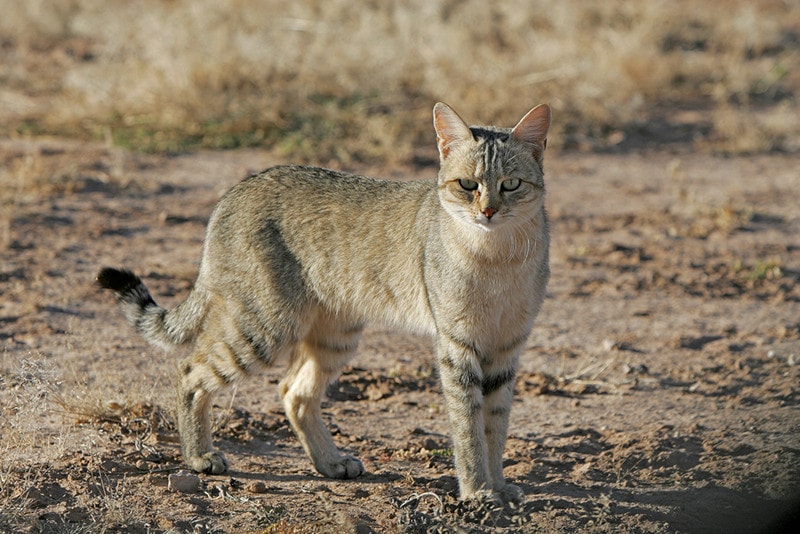
Research has found that all breeds of domestic cats are descended from a wildcat called Felis sylvestris 1. This species was found across Europe, Southern Asia, and Africa. Descendants of these cats can still be found in the wild today in three main subspecies: European wildcats, Asiatic wildcats, and African wildcats.

Where & When Cats Were First Domesticated
It’s thought that wildcats were first domesticated in the Near East. The first evidence that we have of cats being near to human settlements was found in Southern Cyprus, at a Neolithic site called Shillourokambos. Here, the skeleton of an African wildcat was found close to a human grave. This grave was dated at roughly 7500–7200 B.C.
As there are no wildcats native to Cyprus, it’s assumed that this and other cats were brought to the island from the mainland.
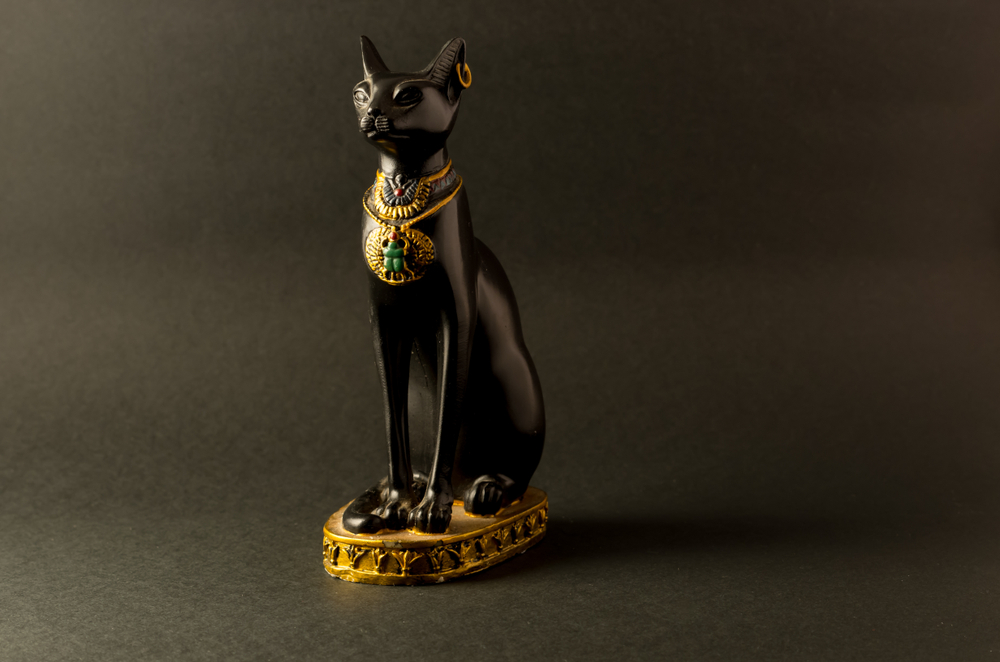
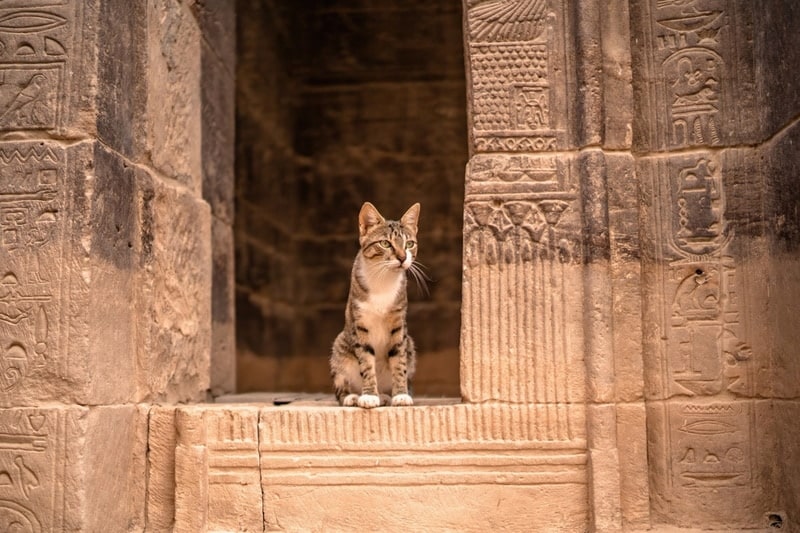
There is also a great deal of evidence of feline domestication in Egypt. This was originally where cats were thought to have been domesticated, until the earlier evidence was found. Cat skulls were found in Egyptian burial grounds, and the cat in general, also known as Mau by the ancient Egyptians, was depicted in the Egyptian god Bastet.
How Cats Were First Domesticated
So, how did our furry little friends evolve from wildcats used to fending for themselves to the snuggly creatures that sit on our couches and demand to be fed?
Wildcats were attracted to human settlements, probably due to the number of vermin and birds who would feed on the crops that humans would grow. As an easy source of food, wildcats would have spent time catching these prey on the edge of settlements. Farmers realized that the wildcats were doing them a favor by hunting these animals, and the process of domestication began.
Cats are thought to have self-domesticated themselves for traits that were deemed favorable at the time of their domestication. They offered pest control while also being small enough to not be a threat to human children and not damaging the crops as they were hunting, something a large predator wouldn’t be able to do.
As wildcats became less afraid of humans, traders began to bring cats on sea voyages as they transported grain and other perishable goods. In this way, the cat spread throughout Europe and the rest of the world.
During domestication, the anatomy and behavior of cats didn’t change much at all. In addition to their ability to hunt, it’s thought that some of the natural traits of wildcats helped them quickly adapt to domestication, including:
Feline Traits Deemed Desirable for Domestication:
The Development of Domestic Cat Breeds
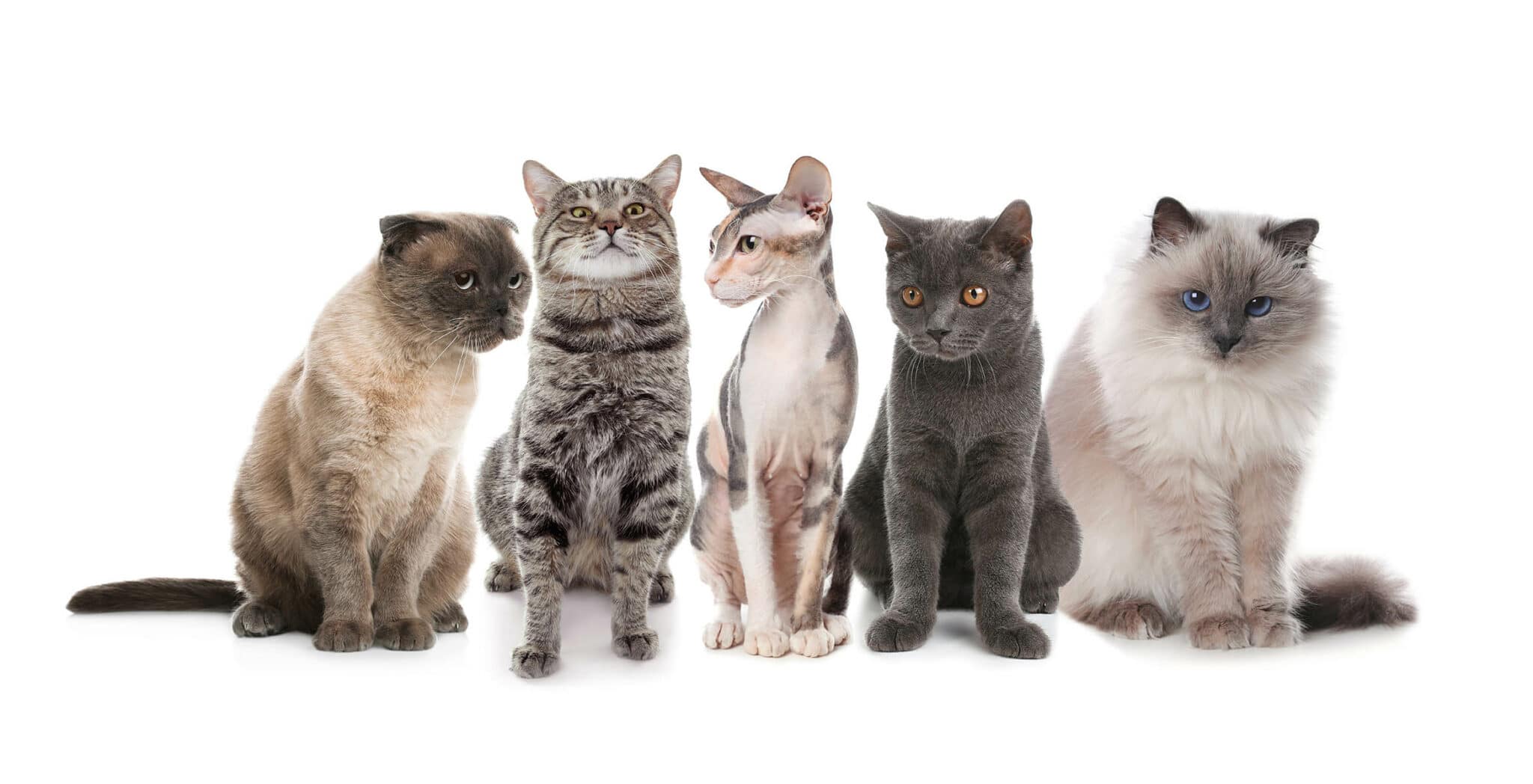
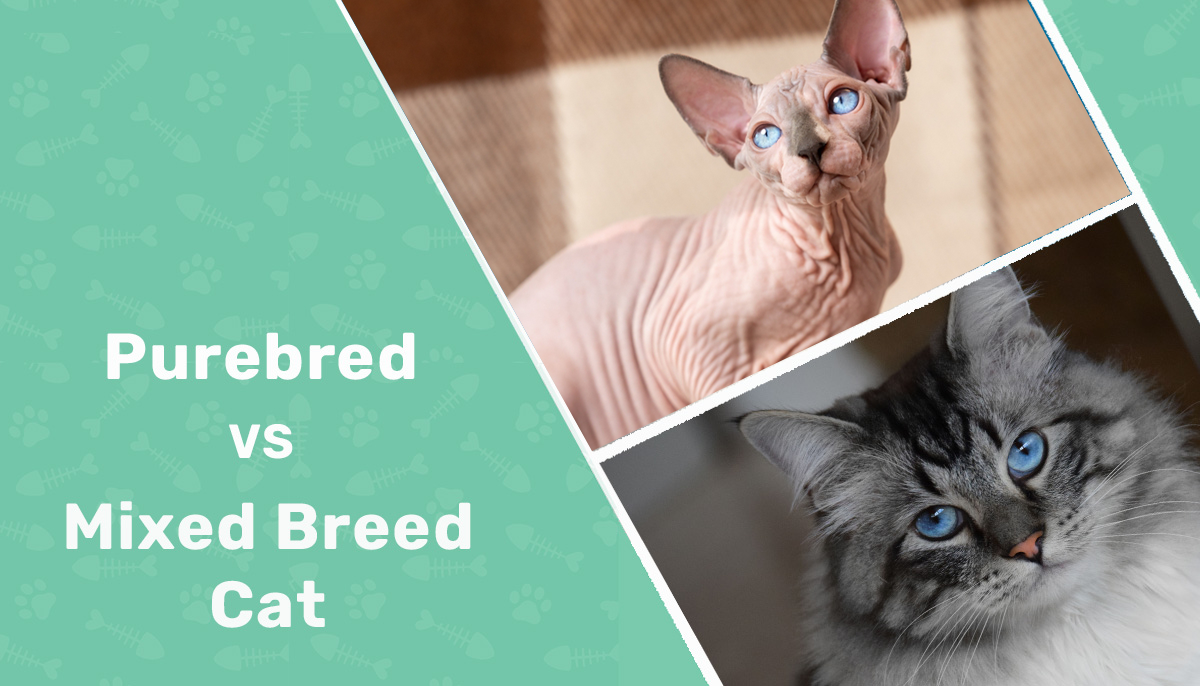
Until the 19th century, there weren’t clearly defined breeds of domestic cats. Some natural cat breeds had started to develop, as the wildcat genome began to change, and domestic cats began breeding with each other. It’s these natural breeds that founded the different breeds of domestic cats that we see today. Natural cat breeds are also known as “landraces” and are adapted to their environment. Examples of these types of breed include the Norwegian Forest Cat, Japanese Bobtail, Russian Blue, and Turkish Van.
The Persian cat breed is one of the oldest specific breeds of cats, with documentation showing cats being imported from Persia to Italy in 1620. It’s not known exactly how this breed came to be longhaired, as there are no examples of this type of coat in their ancestors, the wildcats.

The Relevance of Domestication Knowledge
Understanding the domestication of cats sheds light on their needs as pets today. History helps us appreciate that cats are naturally agile, playful, active, and thrive on a carnivorous diet. As pet owners, we should seek to keep this in mind when taking care of a cat. For example, it’s very normal for a cat to engage in friendly “hunting practices” and their diet should be one that’s biologically appropriate for them. As such, the practice of attempting to have vegan and vegetarian cats is strongly discouraged – in fact, it is illegal in some countries. Likewise, declawing a pet cat is also considered unethical, as it can have long-lasting negative effects on them.
Conclusion
While your domestic cat might still sometimes think that they’re a wildcat, their ancestors have spent thousands of years aligning themselves with us humans, most likely so they can get pampered, cuddled, and, of course, fed! We can’t see that changing any time soon.
See Also:
Featured Image Credit: caligari77, Pixabay

Expert cat care, straight to your inbox
Vet-reviewed advice, behavior tips, and the best of Catster. Free, and you can unsubscribe anytime.
By signing up, you agree to our Terms & Conditions and Privacy & Cookies Policy.
Emma is a freelance writer, specializing in writing about pets, outdoor pursuits, and the environment. Originally from the UK, she has lived in Costa Rica and New Zealand before moving to a smallholding in Spain with her husband, their 4-year-old daughter, and their dogs, cats, horses, and poultry. When she's not writing, Emma can be found taking her dogs for walks in the rolling fields around their home...and usually, at least some of the cats come along, too! Emma is passionate about rescuing animals and providing them with a new life after being abandoned or abused. As well as their own four rescue dogs, she also fosters dogs for re-homing, providing them with love and training while searching for their forever homes.
Join the conversation
Ask a question, share your story, or send private feedback.