How Contagious is Feline Leukemia? Vet-Approved Facts & Explanation


In this article
Feline leukemia virus (FeLV) is a common infectious cause of disease in cats, affecting as much as 3% of the entire cat population in the United States and Canada,1 according to the Cornell Feline Health Center. Feline leukemia virus is present in the bodily fluids of infected cats, most commonly in their saliva, and is spread through close contact with other cats.
FeLV is a contagious virus of cats but in some respects is not considered “highly” contagious. Healthy cats commonly become infected after prolonged exposure to an affected cat and mutual grooming and shared food, water and litter boxes. It can also be spread by bite wounds or from a mother to her kittens through the placenta. Read on to learn more.

What Is FeLV?
Feline leukemia virus belongs to the retrovirus family of viruses. It was first discovered in cats with a form of leukemia (cancer of white blood cells) but it can cause a variety of conditions in addition to leukemia. The number of cats infected varies depending on location, environment and the lifestyle of the cats. The overall prevalence has decreased significantly in the last 25 years thanks to the development of a vaccine and better testing procedures.
FeLV invades the cells in a cat’s immune system and their blood-forming tissues. This invasion causes cell death or mutations in the cell’s genetic coding, which can cause the cells to become cancerous. The most common cancer associated with the virus is lymphoma (also known as lymphosarcoma) and leukemia. Tumors such as these develop in as many as 30% of cats with progressive FeLV infections.2
Developing cancer is just one of many outcomes of the FeLV infection. Because the virus affects a cat’s immune system, infected cats cannot defend themselves against other infections that wouldn’t cause issues in otherwise healthy cats. They can then develop a wide range of clinical signs and experience a progressive deterioration in their overall well-being over time.
Cats with FeLV can also develop anemia, which may become life-threatening, and other issues like intestinal inflammation and nerve and eye diseases.

How Contagious Is FeLV?
FeLV is a contagious virus. However, it can only survive on surfaces for a few hours and is easily killed by disinfectants, soaps and drying. Transmission also typically requires a period of prolonged exposure between infected and susceptible individuals.
FeLV is transmitted via close contact and is most commonly spread via saliva, though it can also be transmitted through milk, urine, feces, and nasal secretions. Direct contact with bodily fluids and mutual grooming will expose uninfected cats to the virus.
Mother cats can also spread the virus to their kittens before they’re born or while they’re nursing. However, most queens with FeLV are infertile. If they do fall pregnant, prenatal death of the kittens is common. It can also be transmitted via bite wounds.
FeLV infection is more common in sick cats, multi-cat households and outdoor cats. Young cats are also more susceptible and with age cats have shown to become more resistant to FeLV, although they can still become infected with persistent or high level exposure to the virus.
What Are the Outcomes of Exposure FeLV?
When a cat is exposed to FeLV there are three possible outcomes in how their body reacts to the virus. This will depend on the age, health and immune status of the cat exposed to the virus.

Can I Adopt a FeLV-Positive Cat?
You absolutely can adopt a FeLV-positive cat, and if you have space in your heart for them, you absolutely should. Because this condition often shortens a cat’s lifespan, the FeLV-positive animals living in shelters often wait indefinitely for their forever homes. There are some things you should know about adopting a pet with this condition, however.
FeLV is contagious, but only to other cats. For this reason, you will need to keep your cat indoors to ensure they won’t spread it to other cats in your neighborhood. Additionally, affected pets can live happily alongside other FeLV-positive cats, though it’s not recommended to bring a cat with the condition into the home with other cats that do not have the virus.
However, because the condition is species-specific, it’s safe to have other animals in the home. It cannot pass to you, your dog, your bird, or any other animal.
The virus is not airborne, so you don’t need to worry about leaving the house with the virus on your clothing or having friends over.
Final Thoughts
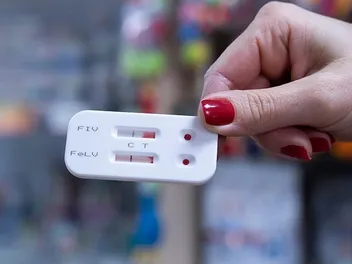
The feline leukemia virus is contagious and transmitted predominantly through body fluids. An unaffected cat would usually need to be in close contact with a FeLV-positive cat for a prolonged period for transmission to take place. However, close contact activities like mating, mutual grooming, and sharing food bowls increase the risk of transmission. The virus can be passed from pregnant cats to their kittens through the placenta. The virus is fragile and unable to survive longer than a couple of hours outside of the affected cat.
There are different stages of FeLV infection and different outcomes and disease manifestations. Vaccination and identifying infected cats are important to prevent transmission.
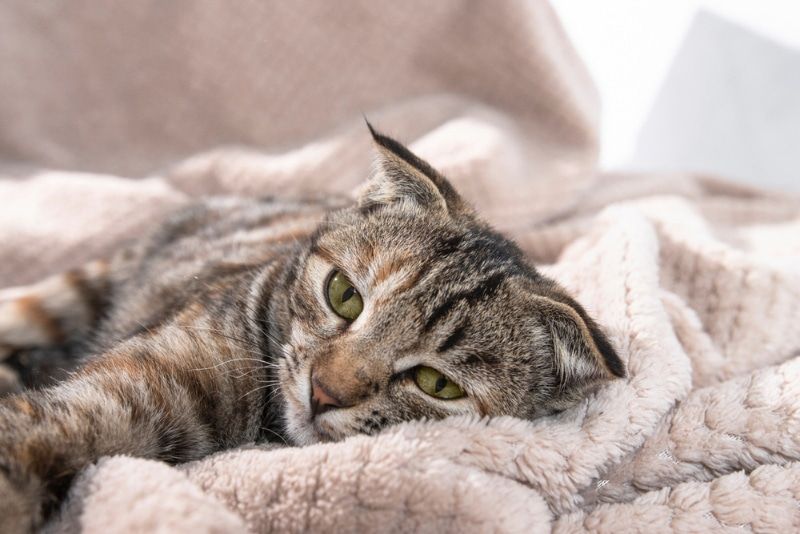
Featured Image Credit: Julia Cherk, Shutterstock
Expert cat care, straight to your inbox
News, insights, and useful advice, delivered to you.

No spam — unsubscribe anytime.
By signing up, you agree to our Terms & Conditions and Privacy & Cookies Policy.
How useful was this post?
Click a star to rate. You can leave written feedback afterwards. (We read all feedback.)
For Chantelle, writing and animals are the two driving forces in her life. Growing up on the Canadian prairies surrounded by pets, she now shares her home with five cats, two guinea pigs, and a bearded dragon. Chantelle, her husband, and their child pride themselves on being dedicated pet parent, even spending a fortune on wall-mounted cat shelves to provide their cats with an indoor jungle gym. When she's not snuggling with her cats or photographing their humorous moments, Chantelle is exploring the Rocky Mountains, rewatching her favorite Netflix series, and reading up on various random subjects.