Why Do Cats Groom Each Other? Vet-Reviewed Licking Behaviors & Reasons


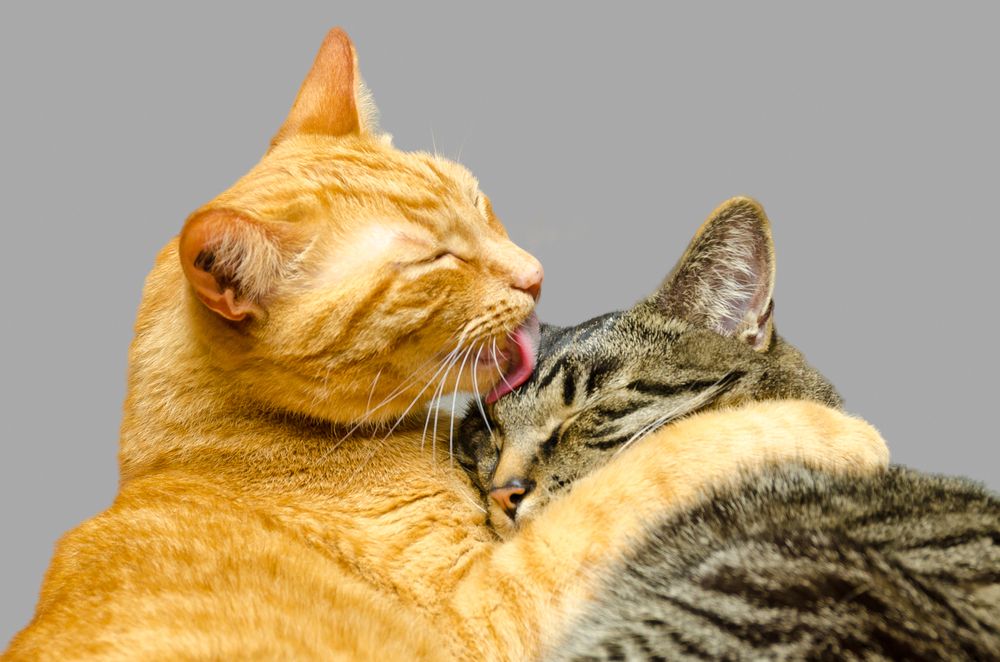
We’ve all seen videos of cats grooming each other, and there are many reasons for this. Often, they may be similar to the reasons why they cuddle with their humans. However, cat-cat relationships are much different than cat-human relationships. After all, we are different from a cat (and often worse at reading our cat’s body language). So, why do cats lick each other?
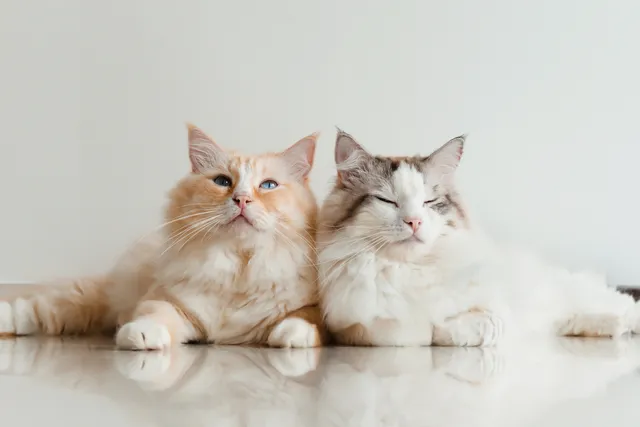
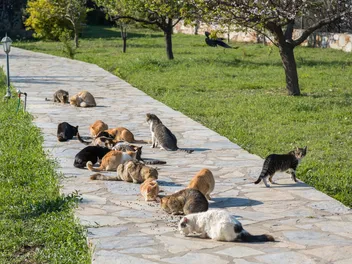
Most cats groom each other as a sign of friendship and social bonding, though it can also be a way of avoiding or redirecting potential aggression. Most cats form bonds with other cats from the same household, or learn to avoid each other, while feral cats may live in a colony based around available food sources. These colonies will generally be groups of females with their kittens.
Let’s take a look at some of the reasons cats may groom each other, scientifically known as allogrooming. As always, it is impossible to know exactly what a cat is thinking—intention is always challenging to discover. However, we can make a few educated guesses.

The 4 Reasons Why Cats May Groom Each Other
1. Social Bonding
Cats recognize each other mostly through their own unique smell. Therefore, cats that live together will be sharing these scents and becoming very familiar with them. They may get confused or withdrawn if there is a significant change to the other cat’s scent, such as when spending time at the vet hospital. In these cases, avoidance or even aggression are not uncommon, until the cat in question grooms themselves and restores their unique smell. Littermates may not be able to recognize each other after being separated early, as they may not smell the same.
When cats establish friendships, smell is important, alongside other means of communication. Cats may not have as strong a sense of smell as dogs do, but it’s still far superior than ours and they do use it for identifying purposes. Therefore, mutual grooming may be a surprisingly important part of a cat’s relationship with another cat. In fact, we may be able to say that cats aren’t actually friends unless they’re mixing their scent in some way, though this doesn’t have to involve grooming.
However, we now also know that allogrooming, particularly of the head and neck area, may be used in some cats as a way to avoid altercation and redirect any potential aggressive behavior. Still, allogrooming mostly occurs between cats that are either related or close to each other, primarily used to enhance their social bonds before everything else.
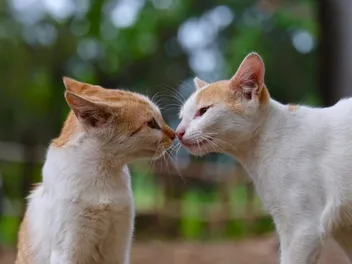
Cats have scent glands on their faces, on the chin, around the mouth and on the forehead, between the pads, around the tail base and the anus. Therefore, if your cat rubs up against another cat, they may be transferring their scent the same way grooming would.

2. Communication
Cats may use grooming and exchange of scent to communicate with other cats. When two cats groom each other, they leave each other's scent on the other cat. Therefore, it may indicate that they are closer than other cats in the colony. Not only does it show that the cats are close, but it communicates their relationship to other cats, too.
Many interactions in humans perform the same dual function. For instance, when a group of people talk, it signals that they’re friends, but it also signals that they aren’t as close with everyone else in the room. When a couple holds hands, it signals that they’re a package and lets everyone else know that the other is taken. Cats may send a similar message when they groom another cat, showing their affection or a social position within the colony.
3. Practical Purpose
Mother cats groom their babies from the moment they are born. This serves the practical function of keeping the babies clean and stimulating their urination and defecation. After 3-4 weeks of age, most kittens will start toileting on their own, rather than need their mother to groom and lick their genital and anal area, in order to stimulate them.
Mother cats may slowly stop grooming their kittens as much as they age and can groom themselves, particularly when it comes to toileting purposes. Still, kittens that stay living with their mother will continue having allogrooming sessions together as a means of continued family bonding.
However, anecdotally some may suggest that there could be a practical benefit for adult cats grooming each other, too. There are some spots that are hard for cats to reach, even with their extreme flexibility. But we cannot be sure that this is true at all and it hasn’t been confirmed by science yet. Cats that live on their own have no issues grooming themselves due to lack of another feline companion.

4. It Feels Good
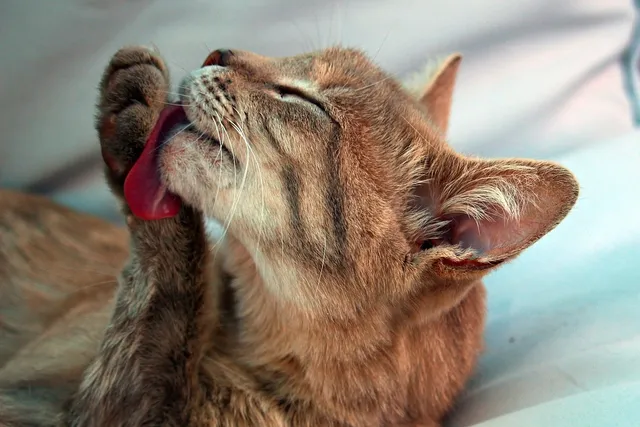
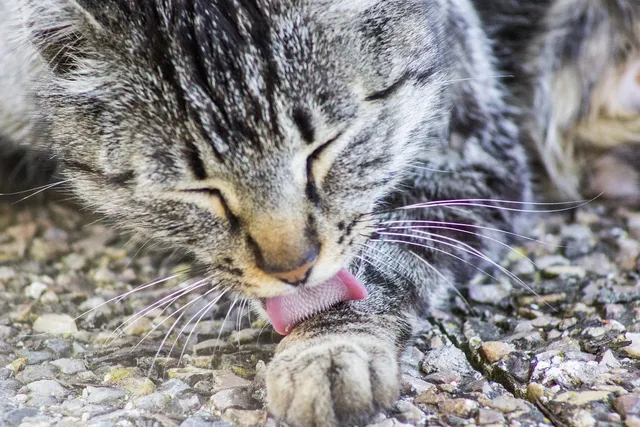
Grooming and licking likely releases neurotransmitters such as endorphins in a cat’s brain. From a scientific perspective, this likely means that grooming makes them feel good. Many cats may groom themselves excessively as a way to combat stress and anxiety. This can lead to skin sores, and besides stress, excessive grooming can also be caused by external parasites, neurological disorders, skin infection, or allergies. These conditions always need veterinary attention, in order to diagnose the underlying cause. If left untreated, it can lead to the feline developing sores.
For all these reasons, we can assume that cats do like to groom themselves and each other. After all, all animals are much more likely to do something if it also feels good.
Should Cats Groom Each Other?
Cats don’t have to groom each other to be friendly toward each other. Cats can show their friendship and affection in other ways. Because cats are largely solitary animals, allowing another cat in their space shows some level of tolerance that may develop into acceptance and even affection with time. This is more easily achieved with cats that have been adequately socialized from an early age. Cats can also mix scents by rubbing up against objects that the other cat came in contact with, as well as rubbing directly against the cat.
Of course, cats that live in the same house will inevitably share scents, especially if they spend a lot of time together and sleep next to each other, or if they both cuddle with the same people. The cats may inadvertently start smelling more like each other, but will keep their unique scents. They don’t have to perform any direct grooming for this to happen.
Some cats are simply more affectionate than others. It’s very normal for some cats to rarely or even never groom each other, while others may groom each other all the time. It all depends on their personality, the strength of their bond, if they are related, or the length of time they have been living together and their preferences. There is no reason to worry—no matter what side of the spectrum your cats fall on.

Why Do Cats Groom Each Other and Then Fight?
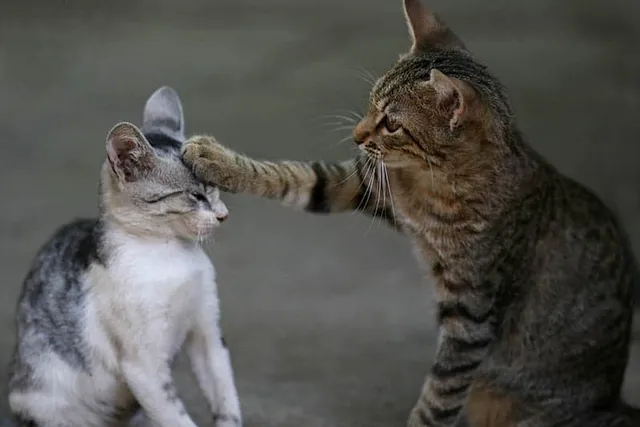
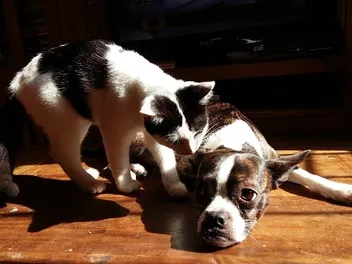
Cat relationships are complicated—a lot like human relationships. Cats may have cuddly moments, become overstimulated, and then withdraw when they have had enough. Some may not react appropriately, may warn the other cat using their body language, or even get into an altercation. Sometimes, one of the cats is only tolerating the other. One might really like grooming, while the other doesn’t. This can lead to the latter cat becoming intolerant quickly, leading to fights. Fighting may be how the feline gets the other one to back off.
Fighting can be reduced by ensuring each cat has their own resources, such as a litter box, and plenty of physical exercise and environmental enrichment, as cats don’t like sharing or competing. Using pheromone diffusers may also help. Consult with a vet if your cats are not getting along.
The important consideration is the life quality of each feline. As long as they are both able to enjoy the home and fulfill their needs, you don’t need to worry too much about the occasional swat—it’s just part of how cats communicate. Anything more frequent than that will require attention and mediation.

Conclusion
Cats groom each other for all sorts of different reasons. At the base of it, cats likely partake in shared grooming because it feels good and enhances their social bond. Licking is believed to release endorphins, which likely make cats feel happy (just like it does people). Of course, there are many other functions that mutual grooming has, too. It’s used as a communication tool and it may help to avoid any aggressive behavior between cats. Mother cats will groom their kittens in order to stimulate their toilet needs and to keep them clean. We hope you enjoyed our article and that it has given you an insight into why your cats may be grooming each other.
Featured Image Credit: karamysh, Shutterstock
Expert cat care, straight to your inbox
News, insights, and useful advice, delivered to you.

No spam — unsubscribe anytime.
By signing up, you agree to our Terms & Conditions and Privacy & Cookies Policy.
How useful was this post?
Click a star to rate. You can leave written feedback afterwards. (We read all feedback.)
Kristin is passionate about helping pet parents create a fulfilling life with their pets by informing them on the latest scientific research and helping them choose the best products for their pets. She currently resides in Tennessee with four dogs, three cats, two fish, and a lizard, though she has dreams of owning chickens one-day!