How to Prepare Your Cat for a New Baby: 7 Vet-Approved Tips


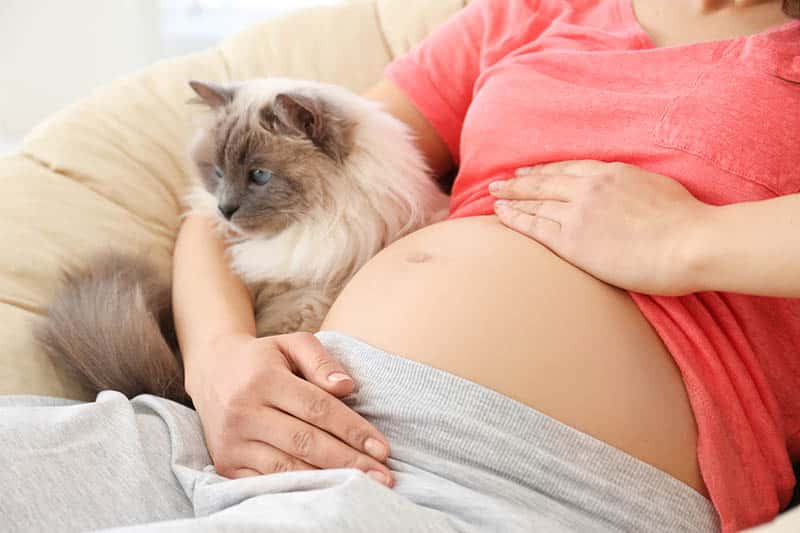
Cats are not fond of change, which makes it important to help prepare your cat for it. Bringing home a new baby is exciting, but all the sudden changes could be stressful for cats. There will be all sorts of new sounds, smells, and routine changes that your cat will need to adjust to. Preparing your cat for a new baby in the home allows them to get used to the expected changes so they don’t feel too overwhelmed when the baby arrives.
This article will cover some ways to prepare your cat for a new baby.

The 7 Tips to Prepare Your Cat for a New Baby
1. Get Them Used to New Smells and Objects
Changes to a cat’s environment, including new furniture like cots and baby changing tables, along with all the other baby-related paraphernalia and smells, can cause cats a lot of stress and anxiety. Gradually introducing items and smells before the baby arrives and giving your cat time to investigate them allows them to become familiar with them.
They will likely start sniffing the different items and rub their heads along items. This is your cat's way of distributing their scent along unfamiliar objects to gather information and to mark it with their scent. Once they have done it, the items with their scent will be more familiar.
Although you may want to let your cat explore the nursery once it is set up, don’t hesitate to begin establishing boundaries. For example, if it will be out of bounds when the baby arrives, start shutting the door now.
Give your cat safe places to be in the home out of a baby's reach that they can retreat to if they feel overwhelmed when the baby arrives. High up spaces like cat trees can help them feel safe. Calming cat pheromone diffusers (such as Feliway), which are synthetic versions of feline facial pheromones, can help cats deal better with changes and help them feel more secure.

2. Try to Maintain Your Usual Routine
Cats enjoy routine as it likely makes them feel safe and comfortable. Cats and new babies do not share the same routines, so changes are to be expected. It is a good idea to try and maintain your cat's usual routine but allow them to adjust to slight changes in it before the baby arrives.
Keep feeding them at their usual times and giving them the usual amount of affection and playtime.
3. Pay Attention to Them
A new baby is guaranteed to keep you busy, so, understandably, you might not be able to spend the same amount of time with your cat as before. However, you should still try to give them attention so that they do not feel left out. Try spending a few moments of your day interacting with your feline, whether it is through toys or simply cuddling on the couch.

4. Play Sounds of Crying Babies
Hearing babies crying for the first time can be stressful for your cat if they are unfamiliar with it. Desensitizing your cat to the crying noises is a good idea to prevent stressing them out.
You can start by playing recordings from videos or sound effects of crying babies at a low volume. Place the recordings in areas your cat can expect the crying from, such as the nursery and lounge. You can gradually increase the volume over the next few days till it reaches the typical volume of crying babies.
5. Avoid Punishing Your Cat Unnecessarily Around the Baby
Making your cat fearful and stressed over a new baby is going to do more harm than good. You do not want to make a new baby seem like a scary or forbidden family member to your cat. Although it is good to set boundaries for the new babies' safety, it should not be done through unnecessary punishments. For example, avoid yelling at your cat for displaying a natural interest in sniffing the new baby and nursery.

6. Use Praises and Treats as Rewards
Allowing your cat to associate a new baby with something positive is a great way to help them feel less fearful when it finally arrives. This is where treats and plenty of praise can be useful for your feline. Give your cat a treat and gentle words of encouragement when they explore new baby related items and abide by any boundaries you established.
7. Let Your Cat Meet the New Baby
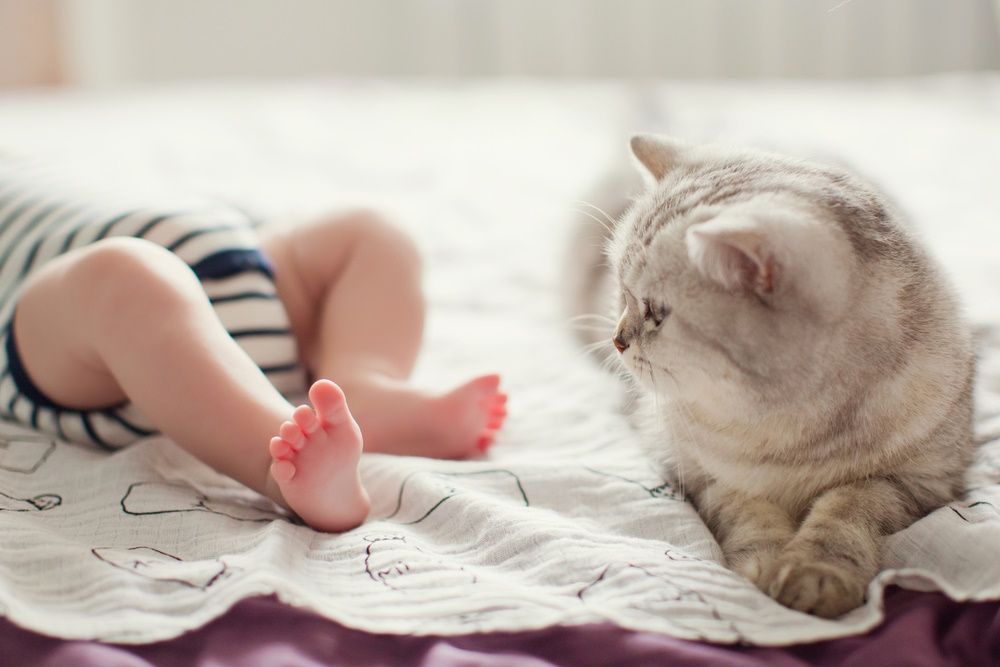
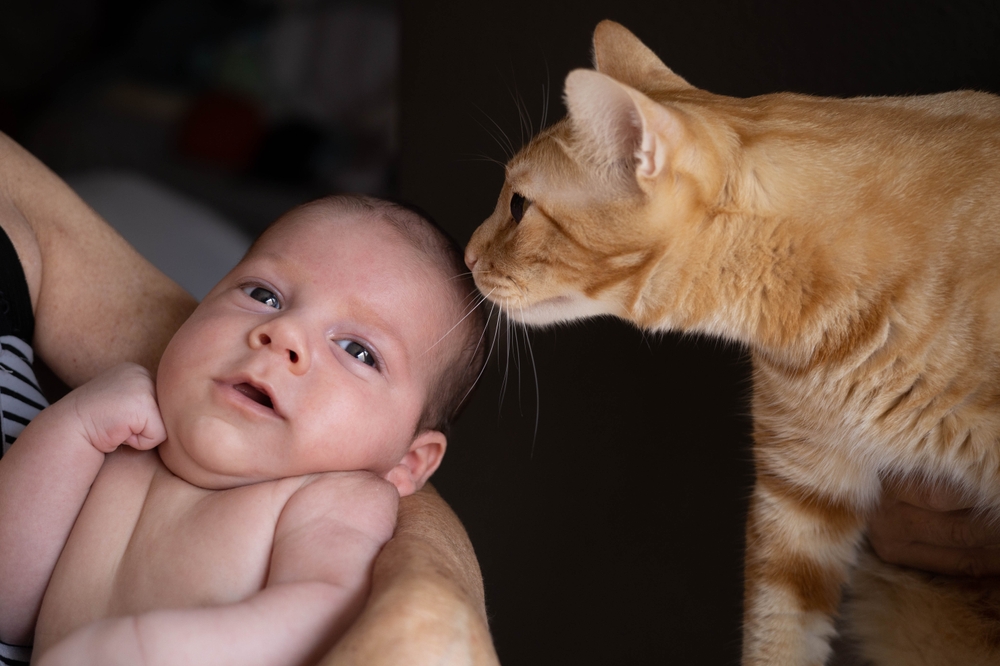
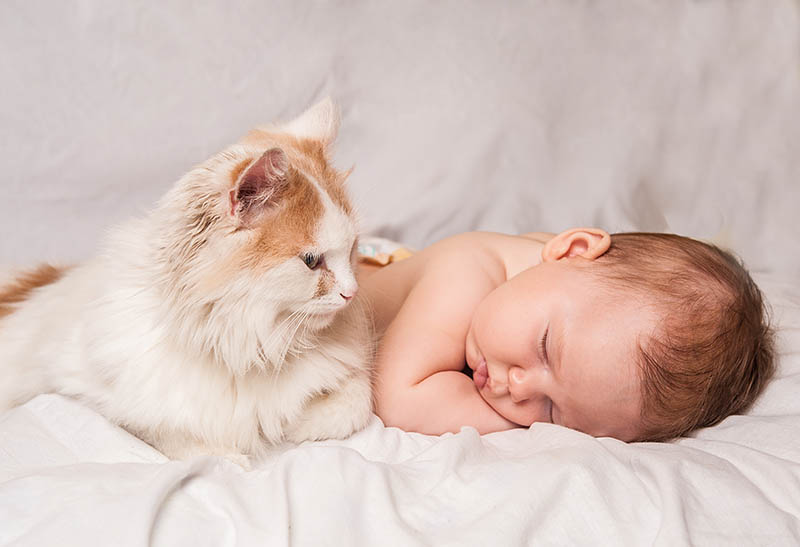
Once the new baby has settled in, you could allow your cat to meet the baby from afar. Of course, this should only be done under your supervision and ideally when the baby is calm or sleeping. They will probably start sniffing the air to gather the new babies' smells and try to get closer to investigate. You generally want your cat to be a few feet away from the baby at first for safety and hygiene reasons.
Remember that even the friendliest cat may accidentally hurt a baby through a scratch or bite, so always follow the proper precautions during their interactions.

Conclusion
A new baby in the home can be stressful for all involved, but it can be an especially stressful and confusing time for your cat. Giving your cat a chance to prepare for the upcoming changes expected from a new baby is recommended.
Some of the best ways to prepare your cat for a new baby is to get them familiar with the new sounds and smells of babies and baby related objects in the home. Remember to maintain a similar routine to what your cat is used to and continue to give them attention every day.
Sources
Featured Image Credit: Africa Studio, Shutterstock

Expert cat care, straight to your inbox
Vet-reviewed advice, behavior tips, and the best of Catster. Free, and you can unsubscribe anytime.
By signing up, you agree to our Terms & Conditions and Privacy & Cookies Policy.
Sarah Psaradelis is an avid young writer with dual passions for literature and animals. She enjoys sharing knowledge of animal care and helping others. Sarah has over 8 years of writing experience and is currently studying veterinary science. She resides in South Africa where she takes care of fish, aquarium snails, dogs, and rodents. Sarah is a passionate vegan activist and animal rescuer pursuing her path to make the world a better place for humans and animals alike.
Join the conversation
Ask a question, share your story, or send private feedback.