Purebred vs Mixed Breed Cats: Pros, Cons & Which To Choose? (Vet-Verified Comparison Guide)


In this article
Are you in the process of bringing a new kitten into your home? If so, you know that there are countless questions that need to be answered before you can bring your new furry friend home. For instance, what kind of cat do you want? Do you want a specific breed, or are you more interested in adding a mixed breed to your family?
In this article, we’ll discuss the differences between purebred and mixed-breed cats. We’ll also look at the pros and cons so that by the end, you can decide which is best for you.


Overview of Purebred Cats
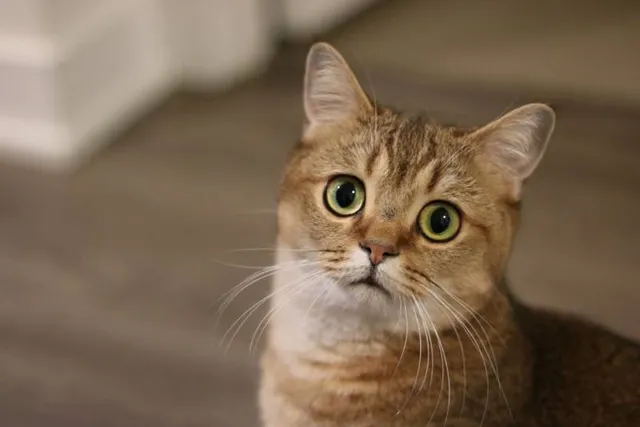
Although 45 purebred cat breeds are officially recognized by the Cat Fanciers’ Association (CFA), purebred cats aren’t as commonly thought of when searching for a family cat. However, just like mixed-breed cats, purebred cats are excellent pets.
The main difference between purebred cats and mixed-breed cats is their predictability. Purebreds are more predictable regarding personality, appearance, and health, which we’ll discuss below.

Personality and Appearance
One of the advantages of owning a purebred cat is that you can be fairly confident in how they'll turn out. Purebred cats are selectively bred from other purebreds, resulting in a standard temperament and appearance within the breed. Since it's often possible to look at the family history of a purebred kitten, it’s also possible to ascertain these traits from their pedigree.
If you know what you’re looking for, you can search for a purebred cat that best suits your situation. For example, if you want a low-shedding cat, plenty of short-coated or hairless purebreds shed minimally or not at all. Similarly, if you want a cuddly lap cat, you can search for a purebred breed known for being exceptionally affectionate.

Health
Something to consider with purebred cats is that they often tend to have more health issues than the average mixed-breed cat. Purebred cats often inherit genetic conditions that the breed is predisposed to develop. While your purebred cat may live their whole life without experiencing hereditary conditions, it is always a possibility. And compared to mixed breeds, it is generally more likely. However, this risk can be minimized to an extent by running genetic tests on the parents prior to breeding them. Naturally, this task falls on the breeders.
Nonetheless, some cats inherit traits that are considered controversial by the cat community in general. For example, Scottish Folds are best known for their folded ears. However, they are born with a condition known as osteochondrodysplasia (which gives their ears their trademark appearance).
Pros
- Personality traits can be anticipated
- Predictable coat type, fur length, and general appearance
Cons
- Prone to hereditary conditions
- Some breeds are considered controversial by virtue of their genetics
Overview of Mixed Breed Cats
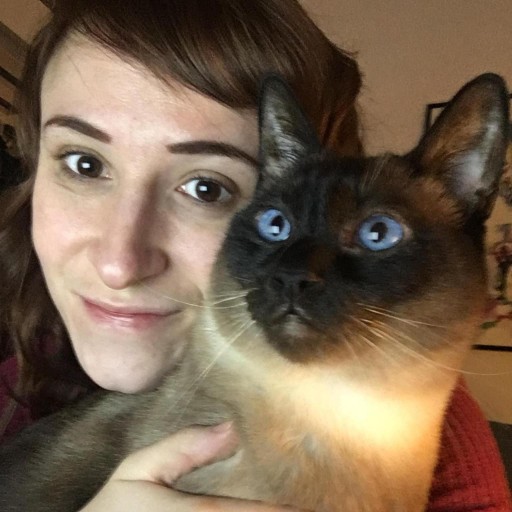
The definition of a mixed-breed cat can be stretched depending on who you talk to. Some cats are thrown into the large category of mixed breeds, such as hybrids with two purebred cats as parents or domestic cats with unknown heritage.
Since there is such a large variety of cats under the umbrella term “mixed breed,” there are endless possibilities regarding a mixed breed’s personality, appearance, and more. Their uniqueness is part of the reason so many people cherish mixed-breed cats as family pets.

Personality and Appearance
Some pet owners may view unpredictability as a fun bonus, but others may see it as a potentially worrying downside. Regardless, it is important to note that mixed-breed cats tend to be less predictable than purebreds in terms of temperament and appearance.
If you are looking for a cat with specific qualities, you’ll need to be prepared for a mixed breed to develop in ways you hadn’t anticipated. As mixed-breed cats grow, their size, temperament, and other characteristics may change.

Health
A benefit to owning a mixed-breed is that they are less likely to develop inherited congenital diseases. Although this doesn’t make a mixed breed cat exempt from all health conditions, it improves their chances of avoiding genetic issues.
Mixed-breed cats may also be less likely to develop behavioral issues. However, there have been instances when mixed-breed kittens are born with congenital hereditary traits passed down from somewhere in their lineage.
Pros
- Less prone to hereditary conditions
- Generally easy to find
Cons
- Unpredictable in terms of personality and appearance
Purebred Cats vs Mixed Breed Cats: Which Is Right for You?
Neither purebred cats nor mixed-breed cats are superior to the other. Deciding which is right for you depends on your personal preferences and lifestyle needs. Some considerations to remember when choosing between purebreds and mixed breeds are the price, care needs, and the breed's rarity.
Difference in Price
If price is a big factor in your decision-making, keep in mind that purebred cats are more expensive than mixed-breed cats. You can find a mixed-breed cat at your local animal shelter, whereas most purebred cats are available from breeders, which can be expensive. However, in rare circumstances, you might be able to find a purebred cat at a shelter as well.
Specific Care Needs
No two cats are the same, but purebred cats often come with additional care requirements. If you bring a purebred cat into your home, you will need to be prepared to provide them with the specific care they need. You’ll want to research dietary requirements, exercise needs, training abilities, grooming care, and more to ensure that you can provide for your cat’s needs.
Common or Uncommon?
Mixed-breed cats are incredibly common and not hard to find. Purebred cats aren’t always a challenge to bring home, but some can be difficult to find, depending on the breed’s rarity. In addition, purebred cats may also be more difficult to verify as authentically purebred. Unethical breeders may sometimes try to pass a mixed-breed kitten as a purebred cat. It’s important to note that not all kittens of the same litter are of the same breed. A queen (female cat) can mate with multiple tomcats (males) during her heat cycle, and within a litter, different kittens may be fathered by different tomcats!
Conclusion
Purebreds and mixed breeds can make excellent family pets. While they may have differences in personality, appearance, and health, how you raise and train them will influence the bulk of their behavior and character. As long as you treat your cat well and provide them with a stable upbringing, you can have a remarkable companion regardless of their heritage.
Sources
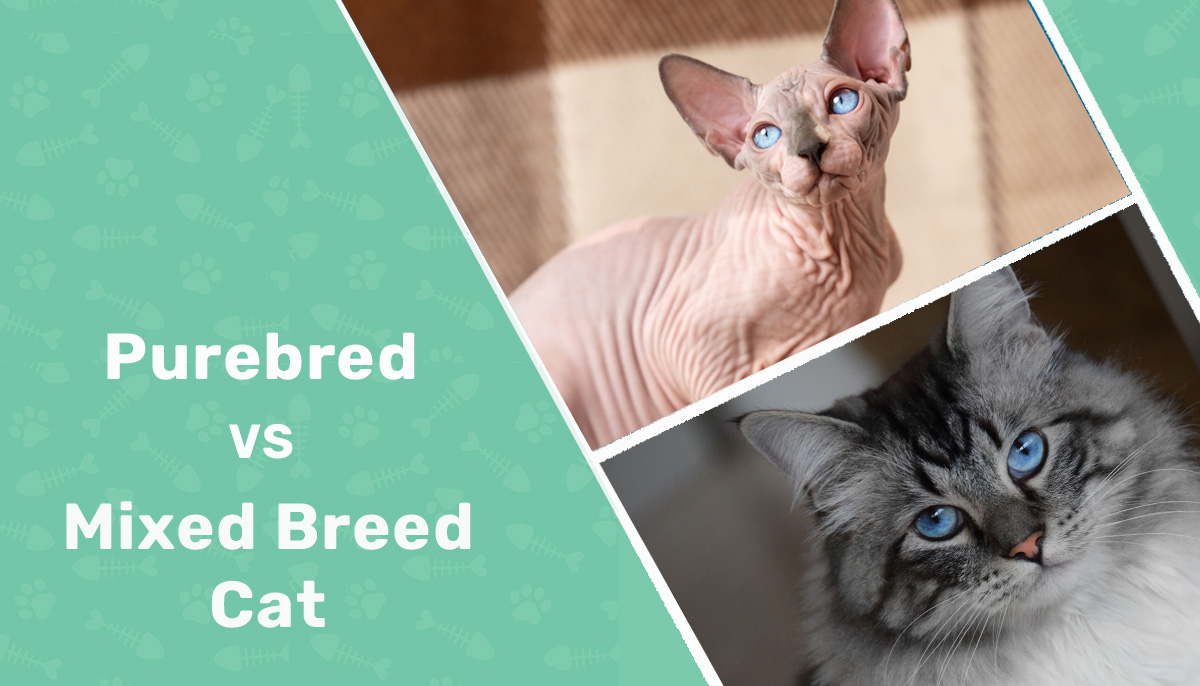
Featured Image Credit: (L) Alexander Piragis, Shutterstock | (R) Kristens Designs, Shutterstock

Expert cat care, straight to your inbox
Vet-reviewed advice, behavior tips, and the best of Catster. Free, and you can unsubscribe anytime.
By signing up, you agree to our Terms & Conditions and Privacy & Cookies Policy.
Cats are Jordyn’s passion. Whenever she has the opportunity she loves to learn about animals and share her knowledge with everyone. She is devoted to her sassy tabby cat named Jack and works hard to buy him his favorite treats and toys. Discovering new ways to better care for her cat is always on her to-do list, and she is eager to help pet parents everywhere. In Jordyn's spare time, she loves to write, read, and take long walks. She has a creative spirit, which often helps her to come up with funny cat names.
Join the conversation
Ask a question, share your story, or send private feedback.