At What Age Should You Neuter or Spay Your Cat? Vet-Approved Facts & FAQ


In this article
Over the years, the recommended age for spaying or neutering cats has changed slightly. There are still varying opinions, but most veterinarians agree that the best time to do it is before a cat’s first heat. The standard age is around 5-6 months, though more and more vets are advocating for early spay/neuter, which can occur in kittens as young as 8 weeks old.
Keep reading to find out more about early spay/neuter and the benefits of neutering or spaying your cat.

What Happens When a Cat Is Spayed or Neutered?
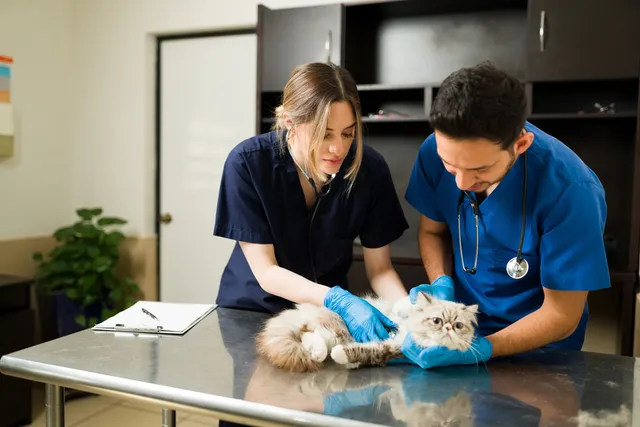
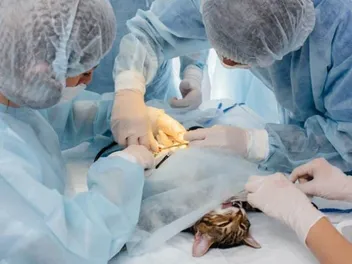
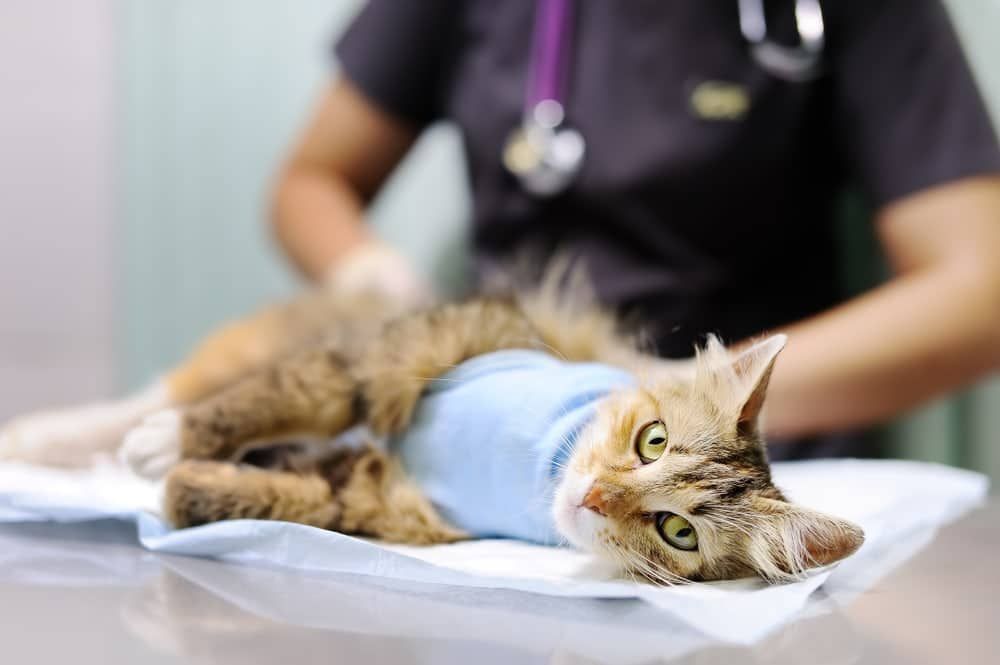
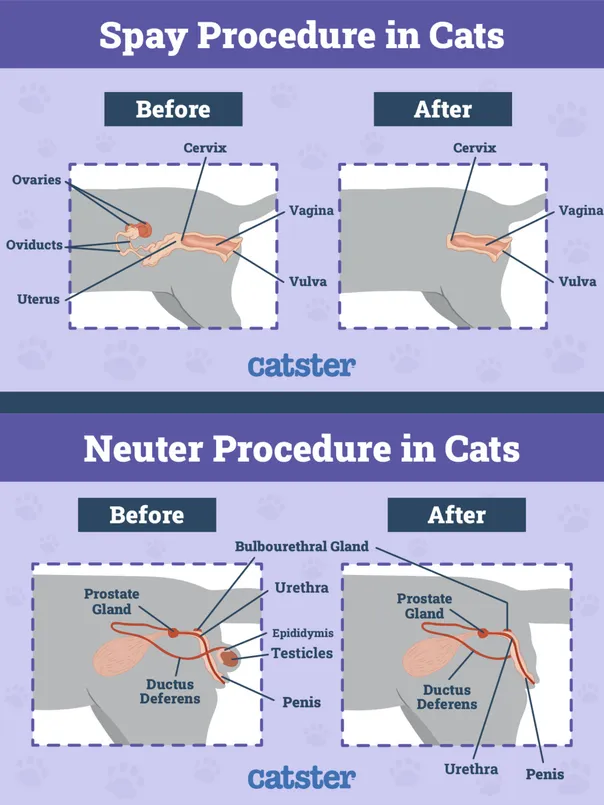
When a cat is spayed or neutered, their reproductive organs are removed so that they cannot reproduce. In females, the uterus, ovaries, and fallopian tubes are removed; in males, the testes are removed. The surgery is performed with your cat fully asleep and under anesthesia. Cat neuter surgeries are very quick, so they may be given a face mask to assist with breathing, while female cats being spayed are normally intubated. The surgery lasts only about 2 minutes for males and can last around 20 minutes for females. Cats tend to recover quickly from the surgery and will typically wake up after 10 to 20 minutes.
“Castration” is generally a term used for desexing male cats, while “spaying” is used for females. Neutering is more often used when talking about male animals, but it may also refer to both males and females.
What Are the Benefits of Neutering or Spaying My Cat?
The primary reason to spay or neuter an animal is to prevent overpopulation. Each year, millions of cats and dogs enter animal shelters in the U.S., and around 15% of those animals are euthanized, or more precisely, 530,000 cats.1 Shelters struggle to manage and find homes for the sheer number of cats and dogs they receive. By spaying or neutering your cat, you can prevent unwanted animals and contribute to ending this very sad cycle of euthanasia.
Another benefit of neutering or spaying your cat is that doing so can eliminate potential health problems down the road. Spaying female cats before their first heat cycle has been shown to dramatically lower their chances of developing mammary neoplasia. Spaying or neutering also reduces unwanted behavior, such as urine spraying, vocalizing, roaming in search for a mate, and fighting. Through the latter, cats often contract contagious feline viral diseases, such as feline leukemia and feline immunodeficiency virus, which lead to chronic and often fatal illness.
Roaming exposes the cats to risk of road traffic accidents and often serious injuries, or sometimes even death. Neutering also eliminates the risk of disease of the testes, uterus, or ovaries. Studies have shown that spayed or neutered cats have a longer life expectancy than intact cats, although there are many different factors that likely contribute to this.
If you have any concerns or curiosities about getting your cat spayed or neutered, we recommend consulting a veterinarian.
What Is Early Spay/Neuter?
Early spaying or neutering refers to the relatively early time frame of spaying or neutering your pets. The benefit of spaying or neutering your cat at such an early age is that you can eliminate any problem behaviors before they occur. Cats reach sexual maturity at around 6 months of age, so waiting until 5 or 6 months may be too late to prevent behavioral problems.

Is Early Spay/Neuter Safe?
Though some may express concern over spaying or neutering a cat at such an early age, veterinarians overwhelmingly report that early spays and neuters are just as safe if not safer than surgeries that take place around 6 months of age. Having the surgery done early can also prevent unwanted pregnancies, which can happen when cats are as young as 4 months of age. Surgeries for younger cats are easier to perform and shorter because the cats are smaller. Younger cats are also capable of recovering more quickly than older cats.
Other Concerns
One argument against early neutering is that there are claims it leads to urinary tract disease in male cats. However, there is no evidence to suggest that the occurrence of lower urinary tract disease is correlated with early neutering.
Another concern is that your cat will gain weight after the surgery. It is true that spayed females and neutered males have a tendency to gain weight after surgery, although weight gain can be prevented with exercise and an appropriate diet. If your cat is spayed or neutered as a kitten, weight gain may be appropriate as part of your cat’s normal growth. You should know that males that are neutered before sexual maturity are likely to have slightly different or less pronounced head shapes than intact cats or cats that were neutered after 6 months of age, as well as a different or less smelly urine odor.

Conclusion
There are many benefits to spaying or neutering your cat. Spaying or neutering your cat early on can prevent unwanted pregnancies that lead to overpopulation and high shelter intake. It can also prevent health problems and unwanted sexual behaviors, particularly in males.
Most veterinarians agree that it is important to spay female cats before their first heat, and it is considered safe if performed earlier than 5 or 6 months of age. Even if you have an older cat that is still intact, having them spayed or neutered could be beneficial, especially if your pet is displaying unwanted behaviors. If your cat is not yet spayed or neutered, talk to a vet about the best time to spay or neuter your animal.
See also:
Featured Image Credit: Maria Sbytova, Shutterstock
Expert cat care, straight to your inbox
News, insights, and useful advice, delivered to you.

No spam — unsubscribe anytime.
By signing up, you agree to our Terms & Conditions and Privacy & Cookies Policy.
How useful was this post?
Click a star to rate. You can leave written feedback afterwards. (We read all feedback.)
Christian started writing for a local newspaper as a teenager, and he's been involved in the publishing industry for most of his adult life. Combining his love of writing with a passion for animals, he is currently the Director of Editorial at Pangolia and the Editor-in-Chief at Catster.
Christian lives in the Philippines with his wife, son, and four rescue cats: Trixie, Chloe, Sparky, and Chopper.