How to Clean Cat Toys Safely: 5 Vet-Approved Steps That Work


In this article
Having to clean your cat’s toys might seem quite obvious now that you think about it, but you’d also be forgiven for not having ever done it before. We routinely clean beds, bowls, and the animals themselves, but somehow, toys seem to get overlooked. Considering that they’re sodden with saliva, they make an excellent breeding ground for germs, which could cause problems for you and your cat.
Knowing how to clean their toys correctly—so they are sanitized without being destroyed in the process—will depend on the type of toy. Of course, there will be times when throwing the toy away is the best option, but before that point, you want to prolong its life as much as possible. We go through exactly how to do that here.

How to Clean Cat Toys Safely
1. Fabric Toys

Take care with fabric toys, and always check the manufacturer’s label to see if you can wash the toy in the washing machine. If you’re unsure, err on the side of caution, and avoid the washing machine. Fabric toys also can't withstand frequent washing because they can cause colors to fade, stitching to loosen, and stuffing to lose its shape.
If the toy is machine washable, go for a hot wash, and it’s a good idea to put the toy in with other things like towels, just so they’re not rattling about your washing machine on their own. Or you could even pop them in a pillowcase to keep them safe and together. If you have to hand wash, use hot, soapy water.
Try to avoid scented soaps and detergents because these can be off-putting for your cat. We recommend well-diluted pure castile unscented soap or simply an unscented, dye-free dish soap for this mission. You can also use 50% white vinegar and water dilution instead of fabric conditioner on the second phase of the wash. This will disinfect them before rinsing well.
Also, try to avoid the tumble dryer, as this can cause the toys to lose their shape. You can hang the toys to dry instead.
Our Favorite Enzyme Cleaner
The Hepper Advanced Bio-Enzyme Pet Stain & Odor Eliminator Spray is our favorite all-purpose enzyme cleaner. It kills harmful bacteria and permanently removes even the worst kitty stains and smells, leaving your home fresh and clean! Click here to learn more about this amazing product and get yourself a bottle.
| Rating | Image | Product | Details | |
|---|---|---|---|---|
Best Enzyme Spray
 |

|
Hepper Advanced Bio-Enzyme Pet Stain & Odor Eliminator Spray |
|
Check Price |
At Catster, we’ve admired Hepper for many years and decided to take a controlling ownership interest so that we could benefit from the outstanding products of this cool cat company!
2. Plastic Toys & Puzzle Games

While most plastic toys and puzzles aren't designed to be washed in a dishwasher, it’s worth checking to see if it’s dishwasher safe, because this will save you some time. However, you’ll find that most soft plastics warp in the dishwasher, while the lighter toys can be thrown about, which risks the toy and the dishwasher. Of course, make sure you have the right soap.
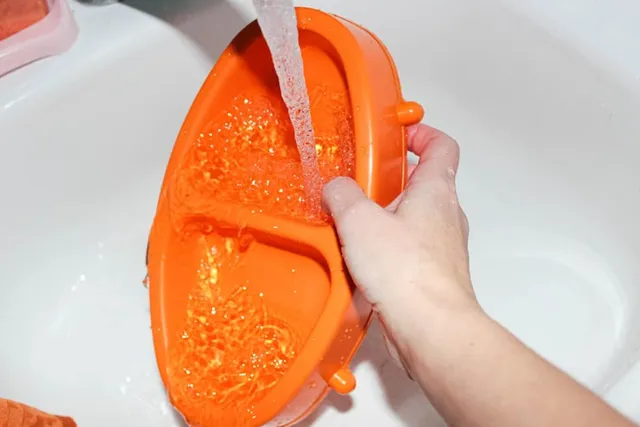
If your toys aren't dishwasher safe, wash them by hand in hot water with scent-free, dye-free dish detergent. Avoid using a scrubber, which can create tiny scratches that can then harbor bacteria and decrease the life of the toy. Plus, it can also make your cat sick. Instead, use a sponge or a dishcloth.
3. Catnip Toys

Generally, catnip toys are made from fabric, and they’re slightly different from your average toy because your cat is obviously going to have chewed it the most. The best idea is to only spot-clean them with a damp cloth. Use only scent and dye-free laundry soap if needed, and avoid soaking them. If you can remove and refill the catnip inside, then go ahead and give them a proper wash before drying and refilling them.
4. Scratching Posts

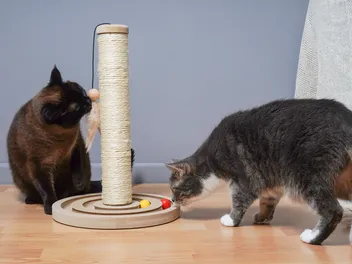
While it isn't technically a toy, the scratching post is something that tends to get overlooked, too, and might be somewhere your cat enjoys playing with their toys. If the scratching post is dirty, the toys will be too.
- Using short, heavy strokes, use a stiff brush to loosen any dirt or cat hair.
- Vacuum the post, and if there are still hairs left on it, try using a fabric softener. A lint roller or damp washcloth would also work. Once you’ve done this, vacuum again.
- In the most extreme cases, if you haven't cleaned it for a long time, a pet-safe enzymatic cleaner might be useful.
5. Fur & Feather Toys

Hand wash toys made of fur (whether real or fake) and feathers because both will be too delicate for a washing machine. Use hot, soapy water, and make sure you rinse them thoroughly before hanging them to dry—out of your cat’s reach!

How Often Should You Clean Your Cat’s Toys?
Unfortunately, there is not one easy answer to this question because it depends on the material of the toy. It is a good idea to keep a close eye on your cat’s toys, especially their favorites, but don't worry, you won't have to clean them every day.
For the catnip and fabric toys, frequent washing can damage them, so wash them when you notice them getting dirty. For sturdier toys, like the ones made of plastic, roughly once a week is a good starting point.
When to Throw Toys Out
All toys have a certain lifespan, and some will be shorter than others, depending on the quality and how much your cat loves the toy in question. Sometimes, no amount of washing is going to save the toy’s life. This is when you have no choice but to throw the toy away, either because it’s not functional anymore or to protect your cat’s health.
Toys made of fabric, feathers, or fur that become damaged and have loose parts like stuffing could become a choking hazard. Damaged toys are also much harder to clean. If you aren't able to repair the toy, the best thing to do is throw it away. For plastic toys or those toys made from harder materials, look out for any small parts that come away that could be swallowed by your cat. If the toy has a lot of scratch marks on it, throw it away because this is harder to keep clean.

Conclusion
It’s an easy one to overlook, but cleaning your cat’s toys is really important. Cleaning your cat’s toys properly will not only lengthen the life of the toy and save you money, but it will also keep your cat safe. Bacteria can hide in scratches and scrapes, so getting into the habit of checking on their toys is a great routine to get into.
Your cat might be a little put out when their favorite toy goes missing for a few hours, but all will be forgiven when they get a fresh, clean toy back!

- ADVANCED ENZYMATIC CLEANER - Penetrates the most stubborn smells and stains at the deepest molecular levels to dissolve any pet mess you encounter and lift it away at the source.
- FOR ANY MESS, ON ANY SURFACE - This pet odor eliminator cleans your carpets, floors, furniture, fabrics, and more. Whether it's urine, feces, vomit, or drool, you can erase all foul spots and smells!
- FRESH, NATURAL ODOR - Our unique formulation doesn't rely on dangerous or unpleasant chemical fragrances to get the job done. We eradicate smells and stains, not just cover them up.
At Catster, we’ve admired Hepper for many years and decided to take a controlling ownership interest so that we could benefit from the outstanding products of this cool cat company!
Related Reads:
Sources
Featured Image Credit: winni-design, Shutterstock
Expert cat care, straight to your inbox
News, insights, and useful advice, delivered to you.

No spam — unsubscribe anytime.
By signing up, you agree to our Terms & Conditions and Privacy & Cookies Policy.
How useful was this post?
Click a star to rate. You can leave written feedback afterwards. (We read all feedback.)
Kerry-Ann lives in Scotland and would love to have a bigger garden so she could have her very own Highland cow. But her dogs probably wouldn’t like that idea very much. She has a La Chon called Harry who was sick with a liver shunt when he was a puppy. It wasn't likely he would make it into adulthood, which was difficult to comprehend, but he beat the odds and is a healthy old man now. She also has a Pug called Maddie who is a big foodie. She’s small, sassy, and every day she finds a new way to wind her brother up.
When she isn’t writing you can find Kerry-Ann going for long walks when it isn't raining, reading, or watching cartoons. She would one day like to be a tourist in her own country and travel through the Highlands with her family.