Get

In Your Inbox

Catster is reader-supported. When you buy via links on our site, we may earn an affiliate commission at no cost to you. Learn more.

7 Shorthair Cat Colors for British, Exotic & Oriental Breeds (Vet-Reviewed Info & Pictures)

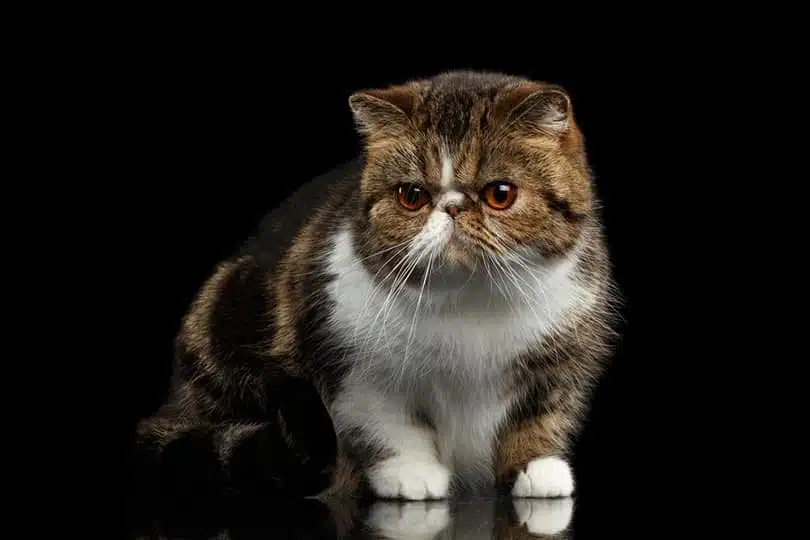
close up of Exotic Shorthair Tabby Cat in black brackground

One of the interesting things about shorthair cat breeds is the diverse range of colors and coat patterns. While the most common shorthair cat breed colors may include black, white, red, cream, brown, fawn, and blue, genetics and selective breeding have also produced gorgeous color patterns.

If you’re interested in learning more about the shorthair cat colors for British, Exotic, and Oriental breeds, we’ve got you covered. Here is a list of the seven most common shorthair cat breed colors and patterns, which isn’t exclusive, as there are numerous other colors and patterns, and it would be impossible to list them all.

divider 2 cats

The 7 Shorthair Cat Colors and Patterns

shorthair cat colors

1. Tabby

Tabby Shorthair Cat
Image Credit: Katzenfee50, Pixabay

Did you know that all cats can be considered tabbies? Well, they are! All domesticated cats carry the tabby gene, but it’s not always visible on their coat.

Tabby patterned cats come in four basic varieties, including:
  • Classic tabbies: Also known as blotched tabbies, these felines have a combination of swirls, blotches, and stripes made up of different colors.
  • Ticked tabbies: These kitties feature banding on either side of their hair shaft with lighter colored fur at the base. This creates an iridescent speckled look. One breed with this specific color pattern is the Abyssinian cat.
  • Mackerel tabbies: These tabbies have continuous vertical lines on both sides of their body, as well as a dark stripe that runs down their backs.
  • Spotted tabbies: As the name suggests, spotted tabbies have different-sized spots on their coats. Bengal cats are considered to be spotted tabbies.

2. Solid

Orange Shorthair Cat
Image Credit: Nynke van Holten, Shutterstock.jpg

Shorthair cats that are just one color are known as solid-colored felines. Sometimes, these kitties have one spot of color that differs from the rest of their coat.


3. Bi-Color

Bi-Color Shorthair Cat
Image Credit: Oleksandr Volchanskyi, Shutterstock

Bi-colored cats have white coats with patches of a different color, including tabby or black, on their bodies, with a varying amount of white. This is due to their white-spotting gene. Bi-colored cats can also be called harlequins (random spots and a colored tail), magpies (random patches), saddle (a colored saddle patch on their back), and capped, while these patterns are not necessarily recognized in all breeds.


4. Pointed

pointed shorthair
Image Credit: guvo59, Pixabay

Breeds such as the Siamese have a color-point pattern gene that gives them light-colored bodies with darker extremity colors, such as their paws, nose, tail, and ears. This type of gene is sensitive to temperatures, resulting in colors being restricted to cooler points of the body. Pointed cat breeds often have a light fawn-colored body with black, chocolate, or even lilac contrast points.


5. Tortoiseshell

Tortoiseshell Shorthair cat
Image Credit: andres felipe Aristizabal, Pixabay

These cats have a unique mixture of black and red coat colors. Torties are mainly female felines.


6. Shading

shorthair cat golden lilac
Image Credit: OksanaSusoeva, Shutterstock

Shaded cat coats are characterized by color at the fur’s tips with a snow-white undercoat. Shaded cats can have fur in smoke, shaded, and chinchilla patterns. These patterns are determined by the amount of shading on the cat’s individual hairs.


7. Tri-Colored

Calico Cat
Image Credit: loicp90, Pixabay

Tri-colored cats have black, white, and red or ginger color combinations. Also commonly referred to as calico, these cats can have diluted colors that present themselves as white, grey, or cream patches.divider 2 cats

What Colors Can Cats Be?

When it comes to cat coat colors, all cats are different colors and patterns because of gene and polygene modification. All cats are essentially black or orange unless they have modified genes and polygenes that change these two basic colors. Because of selective breeding, shorthair cats can virtually be any color known to mammals.

divider 2 cats

Final Thoughts

Whether you pick a solid, bi-colored, tri-colored, or pointed-colored cat, you can rest easy knowing that your kitty’s personality is as unique as their coat pattern. Be sure to brush your cat a couple of times per week to keep their fur sleek and shining.

See Also: 


Featured Image Credit: Seregraff, Shutterstock

Want content like this delivered to you?

Sign Up For Our Newsletter

News, insights, expert advice, and everything cat

* By submitting, you agree to our Terms & Conditions and Privacy & Cookies Policy.


How useful was this post?

Click on a star to rate (you can leave written feedback after clicking submit)

Help us improve Catster for pet parents!

Your feedback really matters.

What did you like about this post? Also how can we improve it?

Join the conversation

Leave a Reply

You’re very welcome to leave a comment or question. Please know that all comments must meet our community guidelines, and your email address will NOT be published. Let’s have a positive and constructive conversation.


Talk With A Vet Online

Peace of mind,
anywhere, anytime

Affordable vet advice

11 Snowshoe Cat Facts: Vet Reviewed Insights on Origin, Appearance & Traits

Snowshoe cats are a striking and relatively new breed that combines some of the best features from two or three different breeds. Snowshoes...

What to Do with a Stray Cat That Won’t Leave? Vet-Approved Tips & Tricks

If you have a stray cat outside your home, you should first assess the animal’s condition. What you should do with a healthy...

My Cat Killed a Bird: What to Do & Prevention Tips (Vet-Verified)

If you have an outdoor cat, chances are there will be a time that they bring you a dead bird. This experience is...

12 Best Cat Toys in 2026 – Reviews & Top Picks

Americans love their cats. It explains the fact that nearly 43 million American households are owned by felines.1 While toys aren’t high on...

More related

Will Mice Leave If They Smell a Cat? Vet-Reviewed Prevention Tips & Advice

Cats and mice are age-old enemies pitted against each other in the media and in life. Although cats seem to be freeloaders around...

Is It Okay to Trim My Cat’s Curly Whiskers? Vet-Reviewed Facts & FAQ

Whiskers play a prominent role in how cats navigate the world. Cats use their whiskers to do various things, including communicate with other...

30 Bewitching Black Cat Quotes & Sayings To Know

People often view black cats in one of two ways—they appreciate their majestic dark charm, or are superstitious, doing whatever they can to...

How To Litter Train An Older Cat: 12 Vet-Approved Steps

If you have an older outdoor cat who needs to start living inside, you may be wondering if it’s possible to train them...

Keep reading

American Shorthair Cat Health Problems: 10 Common Issues

The American Shorthair is a beautiful, affectionate breed of cat that makes a great companion for any family. However, like all breeds of cats, they are susceptible to certain health problems. By knowing what to watch for, you can ensure...

Catster_Health Problems of American Shorthair

Can Cats Eat Nutella? Vet-Reviewed Health Risks & Safe Alternatives

The world loves Nutella, whether it’s served on bread or eaten right out of the jar. It’s soft, creamy, tasty, and wonderfully portioned with 30% chocolate and 70% hazelnut. It’s so popular that there is even a World Nutella Day,...

Can Cats Eat Nutella

Can Cats Eat Truffles? Vet-Reviewed Facts & FAQ

Cats are carnivores, so they don’t need to eat plant foods to stay healthy. However, this doesn’t mean that they cannot eat them. In fact, some cats seek out foods like carrots and grapes because they like the texture or...

Can Cats Eat Truffles

Are Air Plants Toxic to Cats? Vet-Reviewed Houseplants

We love our cats, and we want what’s best for them. So, when it comes to choosing houseplants, we want to make sure that they’re safe for our feline friends. But are air plants toxic to cats? The short answer...

Catster_Are Air Plants Toxic to Cats

How Long Will a Cat With Diabetes Live Without Treatment? Vet-Verified Risks & FAQ

Diabetes is a common and serious disease that affects the health of cats. When left untreated, diabetes can cause life-threatening complications such as diabetic ketoacidosis, neurological disease, and other health problems. Fortunately, most cases of diabetes in cats can be...

owner calming his cat

What Vaccines Does My Cat Need? Our Vet Explains the Vaccine Schedule From Kittens Up

Cat owners recognize that providing nutritious food, fresh, clean water, and a comfortable and safe environment is essential for happy and healthy pets. Making sure your kitten or cat is up to date on their vaccinations is also crucial. Vaccines...

cat-having-a-vaccine

Cats on Roombas: A Strange Relationship Explained (Vet-Verified)

Cats make great companions, are playful, and often engage in strange behaviors, such as riding on a Roomba, which is an automatic indoor vacuum. If your cat does this and you would like to know more about this behavior, why...

orange cat riding a roomba or robotic vacuum

Will Stress Cause a Cat To Lose Their Hair? Vet Approved Facts & FAQ

Several problems, conditions, and situations can cause a cat to lose its hair. One of those conditions is something we humans regularly face, stress. Yes, stress can cause your cat to lose its hair, a condition called psychogenic alopecia. If...

cat losing hair



