How to Provide a Secure Environment for Your Cat: 8 Vet-Reviewed Tips


Cats are curious animals and can easily get into trouble, which means it's our responsibility to keep them safe and secure. In addition to cat-proofing your house to protect against physical hazards, you also need to consider your cat's overall health and how to create an environment in which there are plenty of enrichment opportunities and chances for your cat to express their natural behaviors.
In this guide, we'll cover everything from tips on cat-proofing your home to how to make your cat feel more confident and secure in your home.

The 8 Vet-Reviewed Tips to Provide a Secure Environment for Your Cat
1. Cat-Proof Your Home
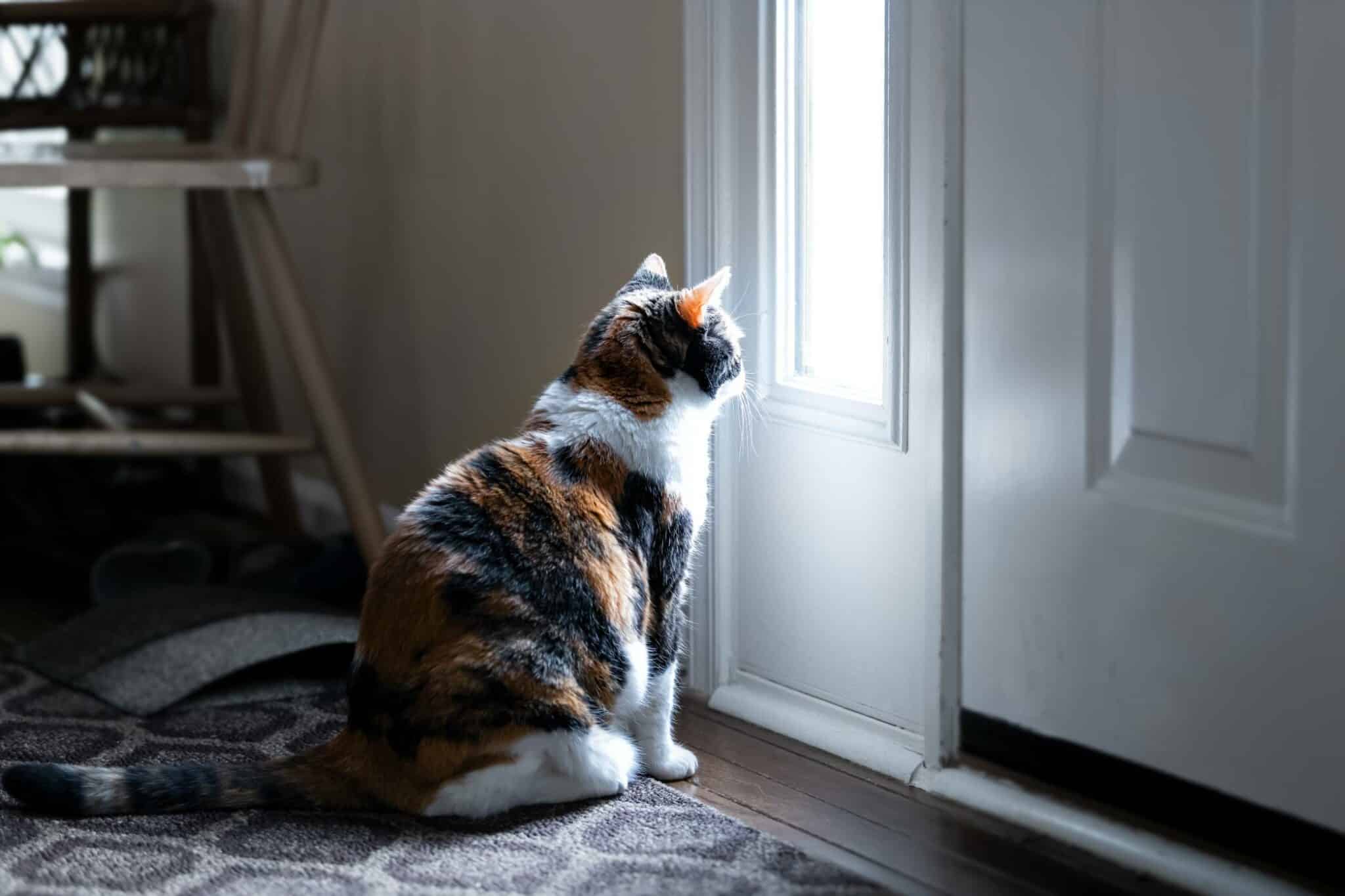
Physical safety is a big factor to take into account when you bring a new feline friend home, so you'll want to start scoping out potential hazards in your home. Once you've identified the risks, think about how you can ensure your cat doesn't end up lost, injured, or worse.
For example, if you tend to leave out cleaning products (like chemical cleaners, bleaches, etc.) or other potentially dangerous chemicals like antifreeze, start locking them away when they're not in use. As a heads-up, here are other potential cat hazards that can be found around the home, but this list is not exclusive:
- Electrical wires (some cats chew on these)
- Wobbly furniture
- Breakable objects
- Toxic plants
- Some human foods
- Alcohol
- Sharp objects
- Medications
- Windows (especially those on the upper floors)
- Insecticides
- Essential oils
- Liquid potpourri
- Paints, solvents, and adhesives
- Washing machines and dryers (some cats may try to nap in these)

2. Get into a Routine
Cats are the ultimate creatures of habit, so routines give them a strong sense of security and reduce their stress. Things that may seem small to us, like moving the litter box to another room, changing the type of litter, or suddenly switching up mealtimes, can easily disrupt the sense of routine and predictability that most cats thrive on.
Sticking to a routine with your cats goes beyond feeding and playing with them at the same time daily (though this is also essential). It also means keeping a sense of calm in the house, avoiding moving things (like litter boxes, cat beds, or food bowls) around too much, ensuring the litter box is always clean, and setting and consistently sticking to boundaries (like your cat not being allowed in certain areas).
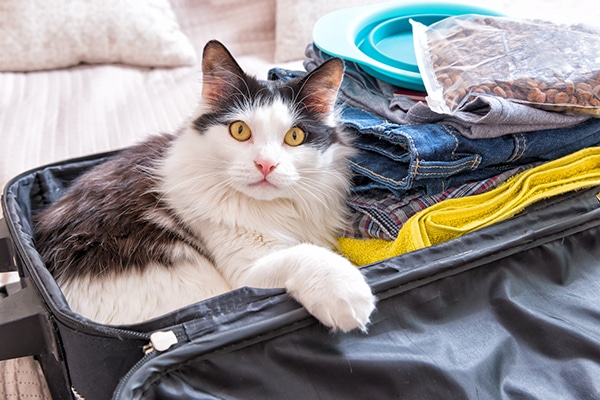
If you have no choice but to change your cat's routine in some way, try to do it gradually rather than suddenly. For example, if you need to change to feeding at an earlier time, start feeding them slightly earlier each day until you get to the ideal time.
3. Give Kitty Space
Even cats that love spending time with their humans need to retreat to their own space from time to time. This is especially important when you have guests or workers coming around and expect the house to be more chaotic than usual.
You can provide your cat with their own space by ensuring they always have access to their favorite quiet area in your home, whether that be a bedroom, bathroom, or spare room. Make the area comfortable by putting their bed inside it. When guests come around, don't force your cat to come and socialize—let them do it at their own pace if they show interest.
4. Use Interactive Toys
Giving your cat enough opportunities in the day to release pent-up energy with interactive play is perfect for reducing their stress levels and helping them feel content. Schedule a few play sessions every day (at around the same times) with toys like chaser wands, throw toys (some cats love to play fetch), and puzzle feeders.

5. Set Up Climbing & Hiding Spots
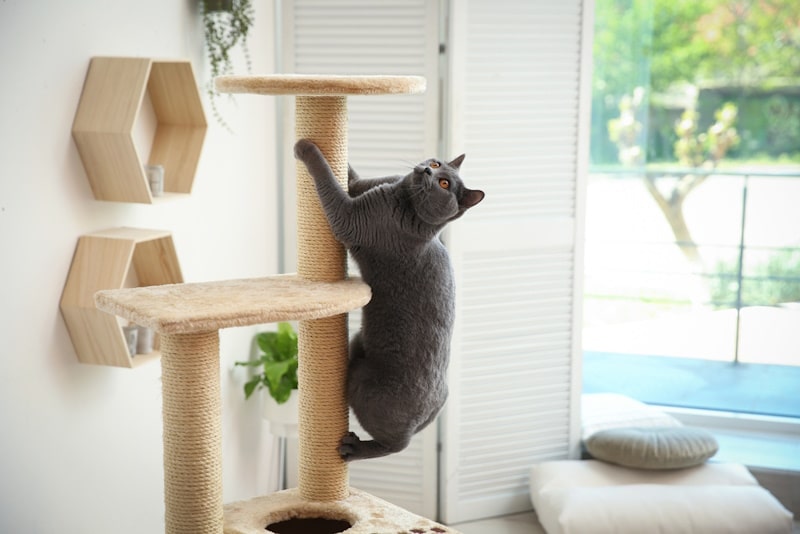
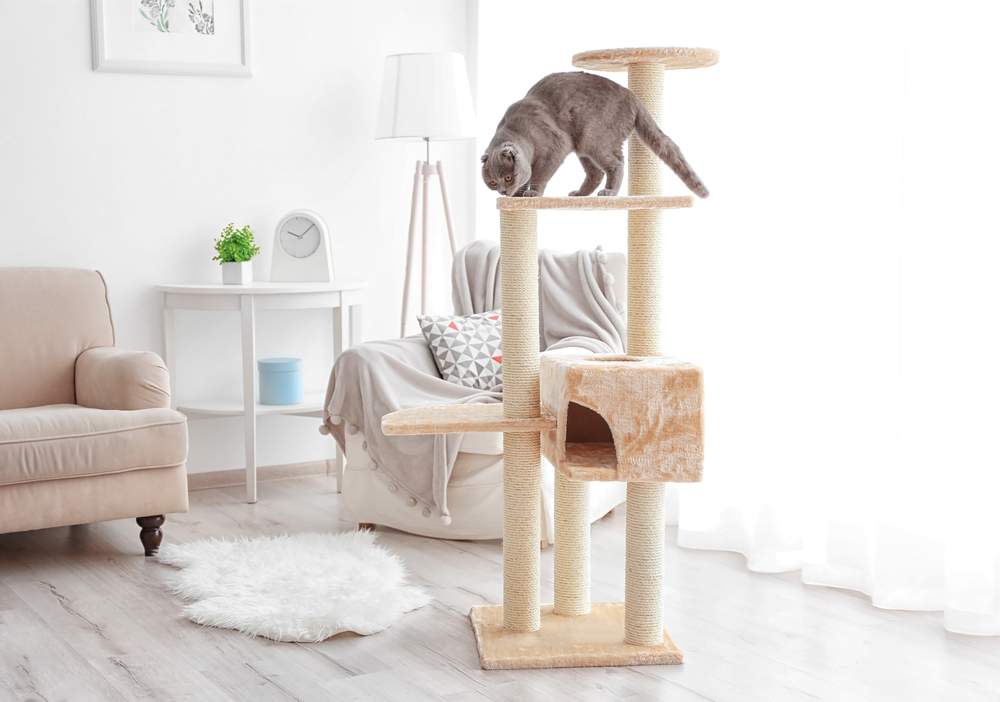
Cats need places—like a cat bed with a roof, cardboard boxes, or cat condos—to hide so as not to feel vulnerable, and climbing spots are also important due to a cat's natural inclination to be up high.
Having access to high places helps a cat feel secure in that they have a better view of their environment. In the wild, this vantage point helps cats scope out prey and watch for potential predators. Though domestic cats no longer have these worries, those self-preservation instincts are still hardwired, so having plenty of climbing zones helps them feel more secure.
6. Gradually Introduce New Objects
It's never a good idea to go to town on your cat with objects they're not used to, like nail clippers or brushes. Cats are notorious for their suspicion of all things new, so you need to introduce new objects slowly so as not to overwhelm them.
Let your cat sniff and rub against new objects in their own time before you try to use them. When you do use them, do so at first in small doses. For example, if your cat has been sniffing around a brush for a while and isn't showing signs of fear, try giving a small area on their back a few strokes with the brush. Build up to brushing different areas of the body gradually.
7. Make Sure Litter Boxes Are Accessible
There are various kinds of litter boxes, and some cats are better suited to certain types rather than others. For example, an older cat or a cat with mobility issues may have trouble accessing a litter box with high sides. In some cases, it comes down to preference: Some cats love enclosed litter boxes with doors, whereas others prefer uncovered litter boxes.
Being unable to access the litter box or even not liking the style of a particular litter box (high sides, enclosed, open, etc.) can be very stressful for cats and can lead to them going on the floor instead.

8. Respect Your Cat
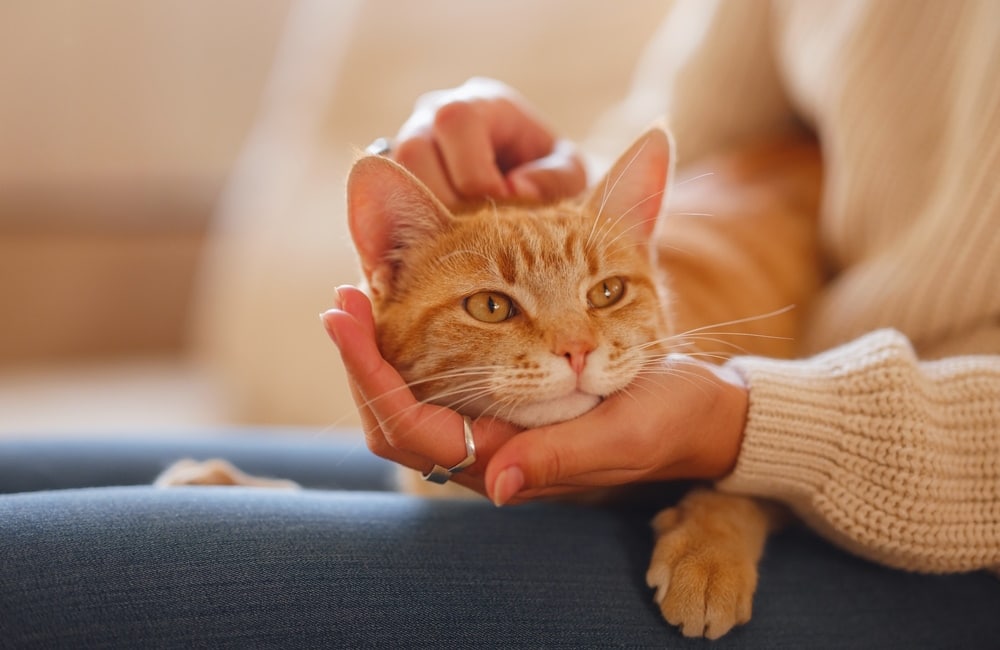
One of the best ways to make your cat feel secure is to respect their preferences. Not every cat is going to be a snuggle bug, and not every cat is going to want lots of attention. If your cat's body language is telling you they're not in the mood for petting or cuddling, don't force it. Let your cat come to you when they want attention, and this respect will help build their trust in you.
If you have young children at home, show them how to read a cat's body language and interact with them gently and respectfully under constant supervision. This helps keep everyone safe and teaches children important animal interaction skills.

Does My Cat Trust Me?
It can take time to build up a cat's trust, but when you do, you'll know it. Since cats all have unique personalities, they tend to show their love and trust in you in a variety of ways. Some cats are all up in your face (quite literally) about how they feel, whereas others are more discreet. Whatever your cat's style, here are some of the many ways cats show that they trust you and feel secure in your presence:
- Purring around you
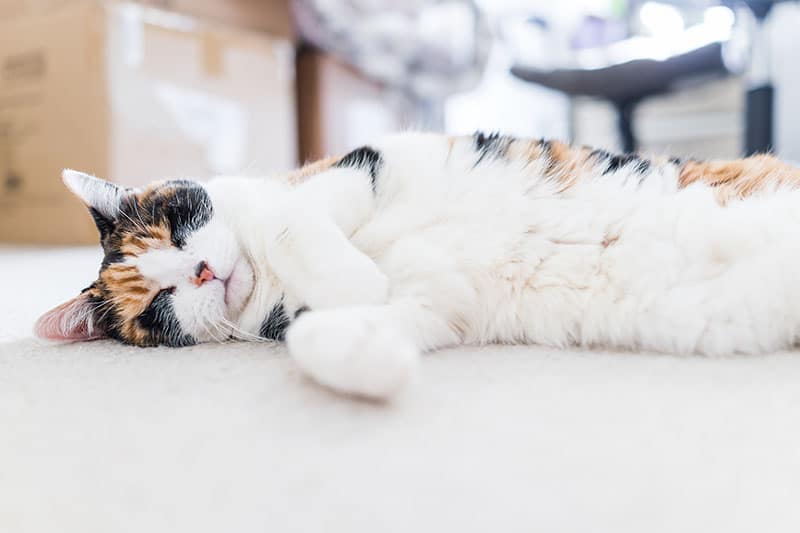
- Showing their belly
- Being close to you (even if they're not sitting directly on you)
- Slow blinking
- Kneading on you
- Headbutting you
- Greeting you when you get home
- Short meows (like chatting)
- Sleeping with you
- Following you around
- Bringing you their toys
- Tail held upright when greeting you
Conclusion
To recap, creating a safe and cat-friendly (hiding spots, climbing spots, etc.) environment, sticking to a routine, and respecting your cat's petting and cuddling preferences are key to helping them feel secure in your home. If you tune in to your cat's needs, you're sure to win their trust and build that special bond.
Sources
Featured Image Credit: evrymmnt, Shutterstock

Expert cat care, straight to your inbox
Vet-reviewed advice, behavior tips, and the best of Catster. Free, and you can unsubscribe anytime.
By signing up, you agree to our Terms & Conditions and Privacy & Cookies Policy.
Kit Copson is a freelance writer and lifelong animal lover with a strong interest in animal welfare. She has parented various furry beings over the years and is currently a proud cat mom of two—one very chilled (unless hungry) Siamese and a skittish but adorable Domestic Shorthair—and dog mom of one—an adopted Bichon Poodle cross. When not writing about or spending time with animals, Kit can be found doodling in her sketchpad, reading, or more often than not, drinking tea.
Join the conversation
Ask a question, share your story, or send private feedback.