Get

In Your Inbox

Catster is reader-supported. When you buy via links on our site, we may earn an affiliate commission at no cost to you. Learn more.

My Cat Has a Limp Tail, What’s Wrong? 5 Vet-Reviewed Possible Issues

Share

cat tip tail

Cats are expressive creatures, especially through their body language. Felines give many clues about their feelings and communicate widely using various parts and positions of their bodies. Their tails, for example, are used to display their mood. An upright tail is often one of a happy and confident cat. They also use their tails to rub against you when you arrive home after an absence or to communicate a need or want with you. On the other hand, if they are feeling threatened, the hair on the tail will fluff out and stand on end.

So, if your cat’s tail is limp, does this mean something is wrong? Potentially, but not always.

divider 3 paws

Is a Limp Tail Serious?

Physically being unable or unwilling to use or lift their tail needs investigation by a veterinarian as soon as you notice it to begin treatment. Below are five common explanations or scenarios for a floppy tail, some of which are more serious than others. But in any event, all require treatment and are a cause for concern.

kurilian bobtail cat sitting on the bathtub
Image By: Asasirov, Shutterstock

The 5 Likely Reasons Your Cat Has a Limp in His Tail

1. Trauma

“Trauma” is a broad umbrella term covering many things, but trauma to the tail is one of the most common explanations for your cat not using this part of their spine.

Examples of trauma include:
  • It is possible for cats to injure their tail by accidentally wafting past hot stoves, saucepans with hot food in them, boiling water, or spitting fat. Open fireplaces and bonfires are other risks, as are fireworks.
  • The tail is trapped or slammed in a door or window. It is not unusual, and usually it is accidental, but a cat’s tail can become trapped in a building, garage, house or car door, and any type of window.
  • The tail being run overby a child’s toy, a vehicle, or even stepped on by an adult.
  • Grazes and cuts occur for a plethora of reasons. Some of the above will cause minor to major wounds, for example. Wounds are uncomfortable and may cause pain and interfere with movement.
  • This may be due to an injury or wound, as described above, or referred pain, meaning an issue is ongoing elsewhere in the body but the pain is referred to the tail area.
  • Avulsion injuries.An example of this would be a young child pulling or yanking the cat’s tail or another animal grabbing at it. Cats can also self-inflict this injury by constantly trying to pull their tail out from something (or a situation), like under a wheel or between branches if they are caught in a tree.
  • Full anal glands.While not direct trauma, it is indirect, as the uncomfortableness of full or impacted anal glands is distressing. It will cause your kitty to exhibit limp tail behavior until their glands are emptied by a veterinarian.

Have a look at your cat’s tail and examine it for any wounds, markings, or odd positioning of bones and tissues. Apply first aid only if you are comfortable and knowledgeable in doing so, and then take your feline friend to the vet for assessment and treatment.

If you are unsure if a vet visit is necessary, you can talk to a vet online for guidance on the next steps.


2. Fracture

Some of the reasons cited under trauma may indeed fracture (break) the tail. The tail is a continuation of the spine and forms part of the cat’s backbone. Many muscles and tendons are in this area too that can be damaged. An injury to the tail part of the spine, or the spine higher up, can cause your cat not to use their tail and for it to become limp. The veterinarian will need to perform X-rays and further tests to assess the damage, begin the correct line of treatment, and find out if the use of the tail will return.

vet doctor examining cat in x-ray room
Image By: PRESSLAB, Shutterstock

3. Dislocation

Dislocation of the vertebrae joints in the tail can happen in road traffic accidents as well as in yanking and pulling injuries. The force doesn’t break or crack the bone but separates one or more of the joints instead, causing pain, swelling, or lack of use.


4. Nerve Damage

Nerve damage created from fractures, dislocation, or avulsion injuries can all result in one or a few of the nerves being affected. Alternatively, nerve-related issues may occur due to other underlying health problems, causing the tail to be limp with a loss of sensation. Many nerves exist in the spinal area, and it is a complicated subject to investigate. The nerve damage may be temporary, meaning the use of the tail will return, or it may be permanent.

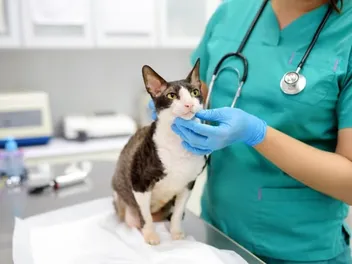
a siamese cat getting examined by a vet at the clinic
Image Credit: Sergey Nivens, Shutterstock

5. Abscess

These are exceptionally common in the feline community that spend time outside. They usually occur during fighting or in a standoff when one cat tries to run away from an aggressive cat or a bullying cat. The aggressor bites the tail or tail base of the runner, and due to the bacteria cats have in their mouths, an abscess can form.

This happens because the bacteria are left in the skin of the unfortunate party when the aggressor sinks their teeth into their skin. An abscess forms in response and will require treatment including antibiotics. A swollen, softish, painful area can usually be seen with puncture marks of the teeth. It may also be hot and oozing pus.

divider 3 paws

Conclusion

Tail injuries are very common in cats, and they will need to be looked at by a veterinarian in almost all cases. The severity of the injury and its effects, as you can appreciate, is vast, and the treatment and outlook will depend on the originating cause, the degree of damage subsequently caused, and the health status of your cat in general. Some cats will only require rest and medication, while others may require amputation, so always check in with a vet to be on the safe side!


Featured Image Credit: YULIYA Shustik, Shutterstock

Want content like this delivered to you?

Sign Up For Our Newsletter

News, insights, expert advice, and everything cat

* By submitting, you agree to our Terms & Conditions and Privacy & Cookies Policy.


How useful was this post?

Click on a star to rate (you can leave written feedback after clicking submit)

Help us improve Catster for pet parents!

Your feedback really matters.

What did you like about this post? Also how can we improve it?

Join the conversation

Leave a Reply

You’re very welcome to leave a comment or question. Please know that all comments must meet our community guidelines, and your email address will NOT be published. Let’s have a positive and constructive conversation.


Catster's Digital Magazine is Back!

Vet-approved health & behavior advice

Real cat stories & community features

Chatting About the Importance of Spaying/Neutering, Cat Retail Shopping Ban & Red-Level Storms | Chatty Cattys, Episode 30

In this episode of Catster’s Chatty Cattys podcast, Nicole and Dr. Karyn are celebrating a major legal win for pets before diving into...

Is Your Cat Happy? Here’s How You Can Tell

Cats have a reputation for being indifferent, even inscrutable. But despite their seemingly ambivalent appearance, cats experience many emotions, including happiness, and they...

Human Brains Age Like Cats – New Study Debunks the 7-Year Rule

If you’ve ever caught your senior cat staring blankly at a wall, wandering the halls at 3 am, calling out for no clear...

Chatting with Devin About Here! Have a Kitten, Fostering, & Why Two Are Better Than One | Chatty Cattys, Episode 29

In this episode of Catster’s Chatty Cattys podcast, Nicole & Dr. Karyn sit down with Devin, the founder and one-woman show behind “Here...

More related

Ragdoll Cat Breed: Info, Pictures, Temperament & More

Ragdoll cats are most known for their tendency to “flop” when picked up (hence their name). They’re also rather large cats with exceptionally...

Is Silica Cat Litter Safe for Cats? Vet-Approved Pros, Cons & FAQ

There are various types of cat litter out there, and while we’d like to think that everything for sale is perfectly safe for...

Can Cats Eat Kiwi? Vet-Verified Facts & FAQ

Kiwi is a delicious summer fruit to enjoy in a fruit salad, smoothie, or simply on its own; plus, it has a host...

How to Trim Kitten Nails in 4 Simple Steps: Vet-Approved Advice

As a pet parent, you’ve seen your new kitten sharpening their claws on everything from the carpet to the couch more than once....

Keep reading

IAMS vs Purina Cat Food: Our 2026 In-Depth Comparison

Picking the perfect food for your feline seems like a pretty easy task. At least until you walk into the local pet store and see how many options there are. Even a walk down the pet aisle at the nearest...

IAMS VS Purina Cat Food

Can Cats Eat Okra? Vet Reviewed Nutrition Facts & Alternatives

If you love okra and would like to share some with your cat, you should know that cats can only eat okra in small amounts. Just remember that your cat is a carnivore that needs to get most of their...

Can Cats Eat Okra

What Is a Normal Heart Rate for a Cat? Vet-Approved Facts & Health Tips

Cats have smaller bodies than we do, so it’s only natural that they’d have faster heart rates. The normal cat resting heart rate is between 160–220 beats per minute (bpm). Recent physical activity will influence a cat’s heart rate, so...

veterinarians examining a grey cat

Why Do Cats Fight? 8 Vet-Verified Reasons & How to Stop the Fighting

If you live in a multi-cat household, you may be familiar with spats among your feline friends. Referred to as inter-cat aggression, cat fights are stressful to pet parents and potentially harmful to the cats. In this article, we explore...

two cats fighting

Can Cats Eat Hummus? Vet-Reviewed Nutrition and Safety Facts

Hummus is a popular Middle Eastern food enjoyed by many Americans. You can enjoy hummus as a dip, dish, or spread, and if you enjoy eating it in your home, you probably wonder if your cat would like it as...

Can Cats Eat Hummus

Why Don’t My Cats Cuddle With Each Other? 10 Vet-Approved Reasons

There are few things cuter than the sight of two cats snuggling together. When they start grooming each other, your heart just melts. Unfortunately, not all cats will cuddle with each other. It can be disheartening when your cats do...

together two cats with different fur colors

How Does a Mother Cat Discipline Her Kittens? Vet-Reviewed Cat Behavior

Disciplining and correcting kittens is part of a mother cat’s job. She has to teach her kittens how to behave appropriately and interact with their littermates. This is important for them to learn while they’re young so they grow up...

kittens in the grass with their mother

10 Ways to Train Your Kitten: Vet-Approved Tips

Cats might like us to think that they’re untrainable, but the truth is that most cats enjoy short training sessions! The best time for them to learn is when they are still young, so beginning when your pet is a...

Tabby cat on white background

Love Cats? So Do We! Join the Catster Community

Stay informed with expert pet care insights delivered straight to your inbox! Discover professional guidance on animal behavior, feeding tips, trusted product picks, and much more.


Sign up for the Catster Email Newsletter

Stay informed with expert pet care insights delivered straight to your inbox! Discover professional guidance on animal behavior, feeding tips, trusted product picks, and much more.