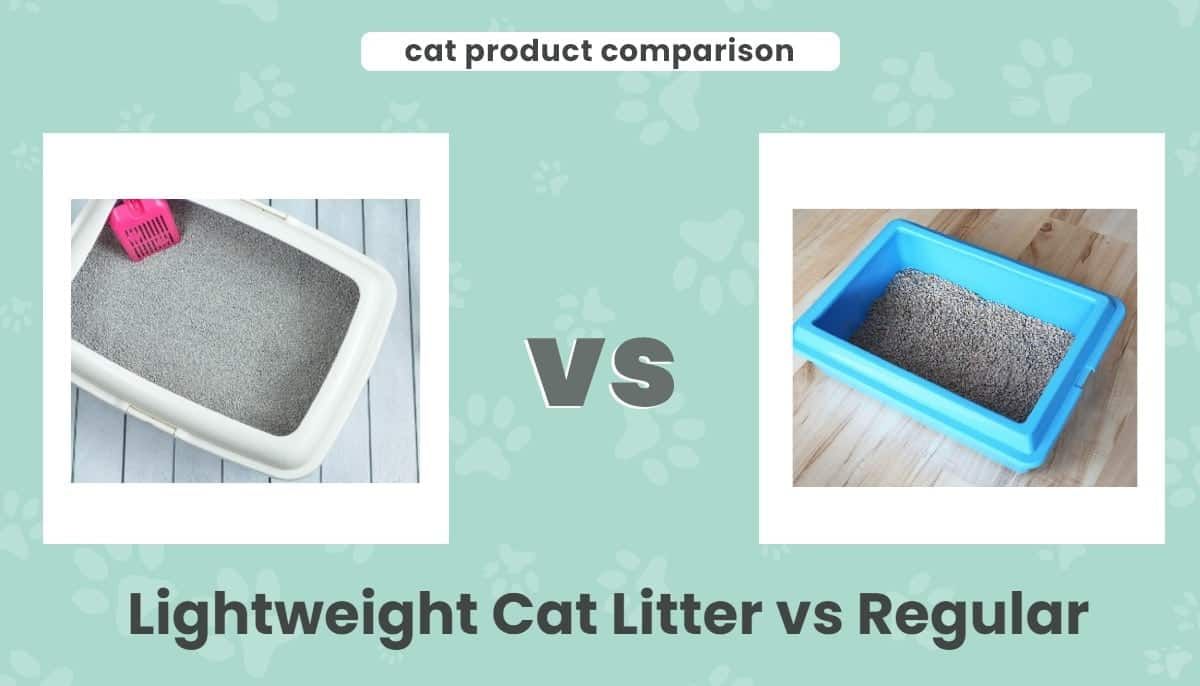
Lightweight Cat Litter vs Regular: Our 2026 Comparison
In this article
The days when you had very little choice in the type of cat litter you purchased for your feline pal are long gone. There are many options in today’s modern world, including regular cat litter or a lightweight type.
Cat litter is usually super heavy and hard to carry into the house. That’s where lightweight cat litter started popping up as an alternative to the heavy regular clay litter. As a pet parent, you might have considered purchasing lightweight cat litter for your feline companion. However, you’re unsure of how it works. Is it safe for your pet? What’s the difference between the two litters? We’ll answer these questions and more in this article.

Overview of Lightweight Cat Litter
We’ll discuss the pros and cons and exactly what lightweight cat litter is.

What Is Lightweight Cat Litter?
Lightweight cat litter is clay-based, but it’s mixed with substances like perlite, making the litter lightweight as well. The addition of the lightweight substances makes the litter 50% lighter. Although the litter is lighter, you still get the same amount; you just don’t have to carry around a heavy 30-pound bag.
How Does Lightweight Cat Litter Work?
It traps, absorbs, and clumps but does seem to have a fast moisture absorption rate, as opposed to the slower absorption rate seen with regular litters. The lightweight cat litter is sometimes mixed with deodorizers, such as baking soda, to help cover any smells your cat leaves behind. Most lightweight cat litters come in scented or unscented.
The lightweight litter works the same way that regular clumping litter does; it’s just lighter, easier to carry, and some say easier to scoop because of the moisture absorption.
Does Lightweight Cat Litter Work?
Any reviews we read of lightweight litter seem to be positive. Users reported that it’s easy to carry and scoop and that some cats like the litter better because it has a softer texture, much like the sand cats use when they’re outside.
However, as with any product, there are a few cons to using the litter. Many pet parents reported it sticking to their cat’s paws and being easy to track through the house. It’s quite a bit more expensive than regular litter and is also dustier. Some vets have also suggested that it should not be used for younger kittens.

Is Lightweight Cat Litter Safe?
One of the biggest questions about lightweight cat litter is whether it’s safe for your cats to use. Since the lightweight cat litter ingredients aren’t readily available, some pet parents are wary of trying it. However, Companies producing the litter do extensive testing and say there are no toxic components in it that could hurt a cat.
However, since lightweight cat litter is considered to be dustier than regular litter, it might not be suitable for cats that suffer from allergies or asthma. As previously stated, some vets don’t recommend using lightweight litter if you have a kitten, saying it’s better to switch after they are bigger and older.
Pros
- Easier to carry
- Easier to scoop
- Super-fast moisture absorption
- Comes in scented and unscented
- Some cats prefer it due to its softer texture
Cons
- Easier to track through the house
- Dustier than some regular litters
- Might not be suitable for younger kittens
- Expensive
Overview of Regular Cat Litter
Now that you know the pros and cons of lightweight cat litter, we’ll compare the brand to regular cat litter and see how it stands up.

What Is Regular Cat Litter?
Most pet owners know that regular cat litter is made of clay. It’s clay mixed with compounds such as charcoal and baking soda to neutralize odors your pets leave behind. The clay is absorbent and easy to scoop out of the litter box in most cases.
How Does Regular Cat Litter Work?
Regular litter works by allowing the urine to drain to the bottom of the litter box so that the clay absorbs the wetness and the odors. If you scoop your litter daily, you shouldn’t worry too much about the odors building up. However, it doesn’t work forever, and it’s only a couple of days before you must empty the litter box and put completely fresh litter in.
Does Regular Cat Litter Work?
Yes, regular cat litter does work. However, it’s heavy and may be hard for some cat parents to carry into the house and even harder to lift and pour into the litter box. The disposal can also be difficult, as the already heavy litter becomes saturated with urine and feces and becomes even heavier.
On the other hand, it is the most popular litter since it’s reliable, cost-efficient, and still easy to use. You can get regular litter in scented or unscented, and it’s available everywhere.

Is Regular Cat Litter Safe?
Yes, regular cat litter is safe, though it can also be dusty. It’s not considered safe for smaller animals, such as gerbils or rabbits, because they can develop respiratory problems.
Pros
- Cost-efficient
- Easy to use
- Reliable
- Easy to find everywhere
- Available in scented or unscented
- Popular with cats and cat parents
Cons
- Boxes and bags can be heavy
- Harder to lift and pour
- Disposal can be difficult
- Isn’t suitable for smaller animals
What’s the Best Cat Litter for You?
When it comes to whether lightweight cat litter or regular cat litter is the best choice for you and your feline pal, it depends on a few factors. If you’re incapable of carrying 30-to-40-pound bags of cat litter, then the best option is lightweight cat litter. However, if you can handle the weight, regular litter is less expensive and works just as well.

Does Lightweight Litter Track More Than Regular Litter?
Many pet parents wonder if lightweight litters track more than regular litters. While the lightweight type has finer, tinier particles that stick to the cat’s paws easier and might be easier to fling around, regular litter can also stick to your cat’s paws.
Conclusion
Lightweight and regular litter have their share of pros and cons, but both work well. It’s best not to use lightweight cat litter for kittens, and you can’t use regular cat litter for smaller pets such as rabbits and rodents. It all comes down to what you feel is best for you and your pet when choosing between the two types of litter.
Sources
Featured Image Credit: Svetlana Rey, Shutterstock (L), Grzegorz Petrykowski, Shutterstock (R)
Expert cat care, straight to your inbox
News, insights, and useful advice, delivered to you.

No spam — unsubscribe anytime.
By signing up, you agree to our Terms & Conditions and Privacy & Cookies Policy.
How useful was this post?
Click a star to rate. You can leave written feedback afterwards. (We read all feedback.)

Patricia is a pet writer and lifelong animal lover. She has two cats (Binx and Link) and one dog (Mystery). Binx was found as a kitten under her house and has been part of the family ever since! Patricia is also a published author under the pen name Skylar McKinzie. When she isn’t writing, Patricia enjoys volunteering at her local animal rescue.