Get

In Your Inbox

Catster is reader-supported. When you buy via links on our site, we may earn an affiliate commission at no cost to you. Learn more.

Is Citronella Safe for Cats? Vet-Approved Facts & FAQ

Share

Catster_Is Citronella Safe for Cats

Citronella is an excellent insect repellent, and its fresh citrus scent can be pleasant to have around our houses too. But many substances that we use on a daily basis can have the potential to harm our feline friends. Is citronella on that list?

All citronella products should be treated with caution around cats, as many of them are dangerous for our feline friends.

divider single cat paw oct 2024

Is the Citronella Plant Safe for Cats

The citronella plant comes in two varieties: Cymbopogon nardus and Cymbopogon winterianus. These perennial grasses are native to Asia and have been used for hundreds of years as an insect repellent.

They can also be used for:
  • Reducing fevers
  • Muscle relaxant
  • Anti-bacterial
  • Anti-inflammatory
  • Anti-fungal
  • Relieving migraines

Citronella plants themselves won’t repel insects; it’s only once the oils are extracted that they will be effective.

Citronella plants should be safe to keep in the garden around your cats, but we’d recommend planting them in areas that your cat doesn’t frequently use.

Sometimes, a variety of geranium is sold as a “citronella geranium,” but these are not a true citronella. They just share a similar citrus scent.

Citronella geraniums, scientific name Pelargonium cv. Citrosa, are toxic to cats, so care should be taken if you do have these in your garden.

Citronella Candles & Torches

Candles and garden torches containing citronella oil are popular for warding off insects on those long summer nights when we love to eat outside. Should you be worried about using these around your cat?

If you’re using your candle outdoors, in an area where your cat doesn’t usually spend time, then they should be safe enough. In any case, your cat may decide to stay away if they dislike the citrus smell.

Burning citronella candles indoors isn’t recommended if you have cats, as the fumes will concentrate within a smaller area.

Garden torches can also be safe if used with caution. These can contain higher concentrations of citronella than the candles, so try to keep them away from your cat when and where possible. If your cat walks through the fumes, it could cause breathing difficulties.

If the fluid from a torch spills, make sure your cat doesn’t breathe in or ingest the fumes. They can cause gastrointestinal upset if ingested. If your cat gets some on their skin, it can cause irritation or even chemical burns.

candles, candlelight, mood
Image Credit: LN_Photoart, Pixabay

Citronella Essential Oil

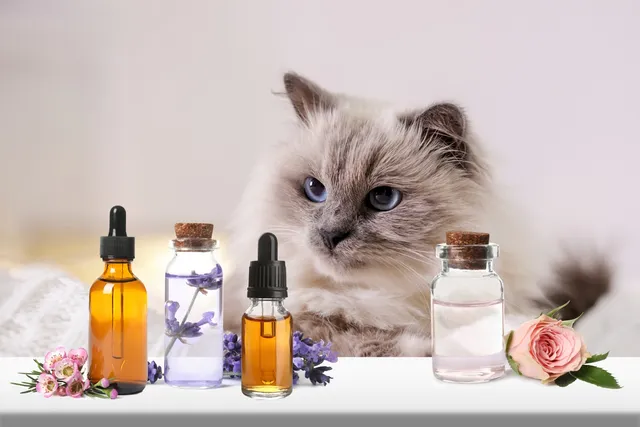
All essential oils, including citronella, are toxic to cats. They’re rapidly absorbed by the cat’s skin or orally. The problem then is that cats cannot metabolize and break down the essential oils.

The signs of essential oil poisoning in cats can differ depending on the oil but can include:

  • Vomiting
  • Drooling
  • Tremors
  • Ataxia (wobbling)
  • Respiratory distress
  • Low heart rate
  • Low body temperature
  • Liver failure

We wouldn’t recommend using essential oil diffusers with any type of oil around cats.

divider single cat paw oct 2024

Safer Alternatives

If you’re looking for an insect-repellent plant for your garden that’s safer than citronella, then the following are all good options:

  • Catnip (particularly popular with cats, of course!)
  • Basil
  • Peppermint
  • Lemon balm
  • Rosemary

Cat Repellent

Citronella is sometimes recommended as an effective cat repellent. While it’s true that cats don’t like the smell, intentionally using a substance with known toxicity to cats is, in our opinion, reckless and irresponsible.

citronella-leaves
Image Credit: leoleobobeo, Pixabay

divider cat faces oct 2024

Wrapping It Up

While the citronella plant itself is pretty safe to keep in the garden, any products made with the extracted oils should be treated with extreme caution around your cat.

Citronella essential oil is toxic to cats and can cause a nasty and potentially deadly reaction if your cat is exposed to it in large concentrations.

Burning the occasional citronella candle in a well-ventilated area like your garden will likely be safe enough. But using citronella essential oil in a diffuser around your home is definitely not recommended.

Our cats are sensitive creatures and can have reactions to products that we might think of as being safe. If your cat ever exhibits any signs like the ones we listed above, don’t hesitate to call your vet.

See also:


Featured Image Credit: rawf8, Shutterstock

Want content like this delivered to you?

Sign Up For Our Newsletter

News, insights, expert advice, and everything cat

* By submitting, you agree to our Terms & Conditions and Privacy & Cookies Policy.


How useful was this post?

Click on a star to rate (you can leave written feedback after clicking submit)

Help us improve Catster for pet parents!

Your feedback really matters.

What did you like about this post? Also how can we improve it?

Join the conversation

Leave a Reply

You’re very welcome to leave a comment or question. Please know that all comments must meet our community guidelines, and your email address will NOT be published. Let’s have a positive and constructive conversation.


Catster's Digital Magazine is Back!

Vet-approved health & behavior advice

Real cat stories & community features

When a Cat Becomes a Water Fountain – Why Cats Vomit After Drinking

Seeing a cat drink water and then promptly bring it back up can be confusing. Sometimes the explanation is fairly simple, particularly if...

Chatting About Sleeping Positions, Loafing & Cats in Tubes | Chatty Cattys, Episode 33

In this episode of Catster’s Chatty Cattys podcast, Dr. Karyn and Nicole dive deep into the fascinating world of feline sleep behaviors. From...

The Bite Stuff: The Truth Behind a Cat’s Sudden Nip

A cat bite that seems to come out of nowhere is one of the more confusing things a cat owner deals with. Everything...

Your Cat’s Purr Proves They’re One of a Kind

There are few sounds more comforting to a cat parent than the familiar rumble of a purring cat. You probably know your own...

More related

My Cat Is Licking Their Belly Raw, What’s Wrong? Vet-Reviewed Possible Causes

Cats normally spend a great deal of time each day grooming themselves, and it’s a perfectly normal behavior. However, sometimes the grooming can...

15 Free DIY Cat Christmas Ornaments You Can Create at Home (With Pictures)

Cats and Christmas have a lot in common. They are both loved by millions of people around the world, they are both associated...

Guar Gum in Cat Food: Our Vet Explains the Uses, Safety & Verdict

If you’ve ever stopped to read the ingredients list on your cat’s food – which you absolutely should – you may have spotted...

10 Best Cat Harnesses in Canada in 2026 – Reviews & Top Picks

An important aspect of equipping your cat for adventures in the great outdoors is finding a well-fitting harness. Most cat owners prefer harnesses...

Keep reading

Why Is My Cat Pulling Their Hair Out? 7 Vet-Reviewed Reasons

Cats can spend up to 50% of their day grooming themselves. They do it primarily to keep themselves clean, but grooming also helps regulate their body temperature and spreads oils through their coat, to name a few reasons. Cats also...

woman holding a pile of cat hair

Oriental Shorthair Cat Health Problems: 12 Vet-Reviewed Issues

The Oriental Shorthair cat is known for its unique appearance. They have a triangular head, almond-shaped eyes, large and erect ears, elegant coats, and long, tubular bodies. As for temperament, these cats are loving, intelligent, and curious. They make terrific...

Catster_Health Problems of Oriental Shorthair

Do Cats Need Their Paw Fur Trimmed? Vet-Reviewed Tips, Facts & FAQs

Although cats typically do a very good job of grooming themselves, some do require a little help with trimming fur, and all cats need help with other care and maintenance requirements. One area that causes some debate between owners is...

close up paws of orange cat

My Cat Ate a Lily: Is It Dangerous? Vet Reviewed Signs & Treatments

Lilies are beautiful and fragrant flowers, seen in plenty of vases, bouquets, gardens, and displays around the world. Behind their beauty and grandeur, however, is a deadly toxin. Lilies are toxic to cats and must be avoided. This currently still...

My Cat Ate a Lily

Can Cats Eat French Fries? Vet-Verified Nutritional Facts & Health Concerns

Does your cat love sneaking the occasional French fry from your plate when you’ve finished a meal? Perhaps you’ve seen a street cat gobbling up leftovers and wondered if it’s safe for them to do so. Most of us with...

Can Cats Eat French Fries

Can Cats Eat Stevia? Vet-Reviewed Facts & FAQ

These days, you can find many different types of zero-calorie sweeteners and sugar substitutes. Each type has different compositions, so some may be safe for your cat to eat while others can be toxic. Stevia is a plant-based sweetener that...

Can Cats Eat Stevia

Addiction Cat Food Review of 2026: Recalls, Pros & Cons

Review Summary Addiction Cat Food was founded in 2002 by a professional nutritionist to make foods using novel proteins from sources like kangaroo, brushtail, and wild game. Although the modern range of Addiction Cat Food has expanded to include more...

Addiction Cat Food Review

How Long Do Tuxedo Cats Live? Average Lifespan & Vet-Approved Care Tips

Tuxedo cats have a unique coat coloration that makes them appear like they’re wearing formal wear. If you are the proud owner of one of these gorgeous piebald cats, you likely have many questions about their longevity. How long do...

tuxedo cat with yellow eyes

Love Cats? So Do We! Join the Catster Community

Stay informed with expert pet care insights delivered straight to your inbox! Discover professional guidance on animal behavior, feeding tips, trusted product picks, and much more.


Sign up for the Catster Email Newsletter

Stay informed with expert pet care insights delivered straight to your inbox! Discover professional guidance on animal behavior, feeding tips, trusted product picks, and much more.