How to Pick Furniture That Cats Won’t Scratch: The Best Materials & Fabrics to Choose
If you own a cat or two, you may want to take their claws into account when choosing furniture. Scratching is an instinctual behavior for cats and is completely necessary for their well-being. However, that doesn’t mean that you need to sacrifice your furniture for the cause. But it does mean that your cat should have access to a scratching post.
There are tons of ways to protect your furniture from your feline. You can make their scratching post extra-enticing. Or, you can put double-sided tape or cat-repulsing sprays on your furniture. You can also take extra care to choose furniture that your cat won’t like to scratch on anyway.
That said, this is often easier said than done. Cats have different preferences. What one person claims is “cat-proof” may not withstand your cat.

What Fabrics Will Cats Not Scratch: Top 3 Suggestions
There are several fabrics that may be suitable for homes with cats. Of course, you should never bet on the fact that your cat won’t like a particular material. Plan on teaching your cat not to scratch on the furniture, on top of purchasing something that doesn’t feel great on their claws.
1. Microfiber
Often, microfiber fabrics are the best option when you own cats. The very soft, sleek texture is the opposite of what cats like to scratch. Many cats may never go after a microfiber couch. However, that doesn’t mean that all cats will avoid scratching on microfiber.
Cats scratch for many different reasons. One of the most common reasons is to wear down their claws, which is important for their comfort. For this to happen, cats obviously need something rough. Microfiber is the opposite of this, so cats usually won’t use it to wear down their claws.
However, this isn’t the only reason cats scratch. They may also scratch to mark their territory, as they have scent glands between their toes. Many cats also scratch playfully. You may see them zoom through the room and then scratch on the couch. These cats may not care that the microfiber won’t wear down their claws. That’s not why they’re scratching.
Therefore, while microfiber is safer than other fabrics, your cat may still decide that it’s a nice place to mark their territory or play around. You’ll need to consider other ways to keep your cat away from your furniture as well.

2. Tight Weave Fabrics
The tighter a fabric is woven, the harder time a cat will have scratching it. Canvas, denim, and similar materials can all be off-putting for a cat, especially if they aren’t very patient. These materials often tend to withstand scratching better, too.
However, cats can still absolutely scratch these materials, and they will show over time. Denim can quickly end up with several loose threads, which may make the furniture even more appealing for your cat. These materials often last longer than others, but they cannot withstand an endless torrent of claws.
3. Nylon
Nylon (and similar synthetic materials) are very smooth and budget-friendly. Because of their smooth nature, many cats do not like them. There just isn’t enough texture for them to get their claws into. Therefore, they can be a good option for homes with lots of cats.
However, it may be harder to find furniture made from this material. You may have fewer stylistic choices, or you may not be able to find anything you like at all. Furthermore, many people feel like nylon “looks” cheap (which is probably because it often is cheap).

Do Cat’s Scratch Leather?
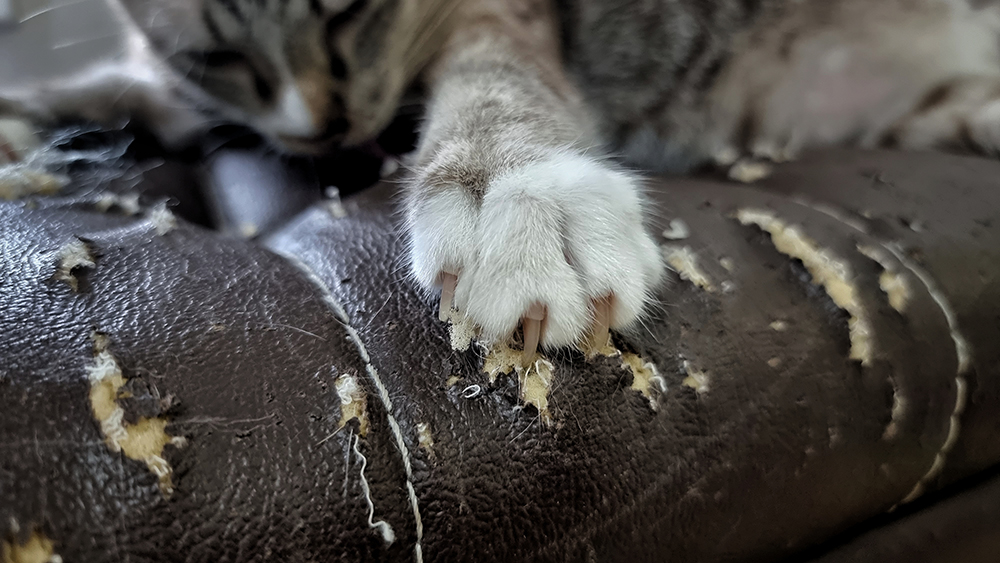
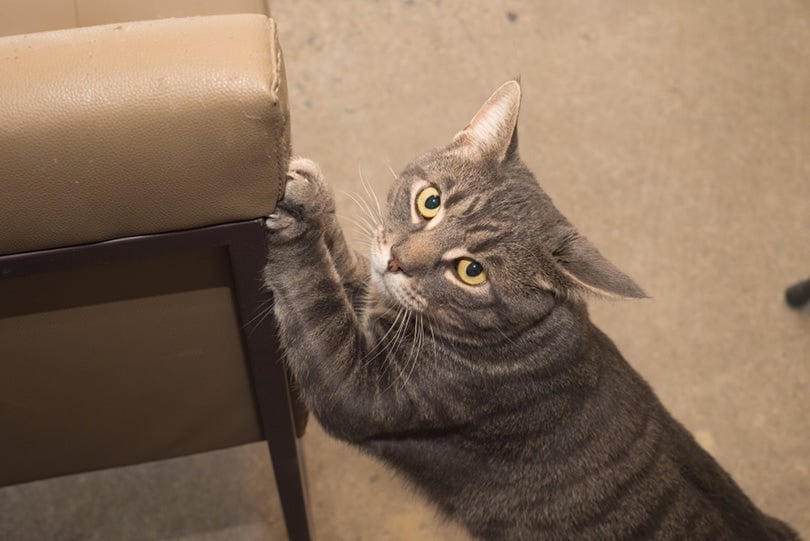
Leather is often billed as a cat-safe material. However, like microfiber, it isn’t necessarily 100% safe from all cats. The type of leather also matters. Smooth leather may not be very attractive to cats when they want to wear down their claws. However, rougher worn leather absolutely will be.
All kinds of leather can be the target of playtime, though. Once leather is hit with cat claws, it’ll never be the same. Scratching will quickly make even the smoothest leather rough, making the furniture even more attractive to your feline.
Repairing leather is also tons of work. It often requires hiring professionals, and even then, the furniture may never look the same. Therefore, leather is one of the materials we recommend avoiding if you have cats. The expense of leather just isn’t worth the risk for most cat owners.
Other Furniture Materials to Avoid
On top of leather, there are several other materials we recommend avoiding. Tweed is often billed as an easy-to-care-for fabric, but cats absolutely love to scratch it. The rough surface fits what cats typically like perfectly, so it’s a poor choice for most cat-friendly homes. The loops also tend to get pulled out by your cat’s claws, making the wear show up sooner than it might otherwise.
Chenille also looks pretty, but it is an easy fabric for your cat’s claws to scratch. It’s very easy for cats to destroy, and the texture will get rougher as your cat uses it (leading to even more use). Once the loops come out, you cannot repair them easily, either.
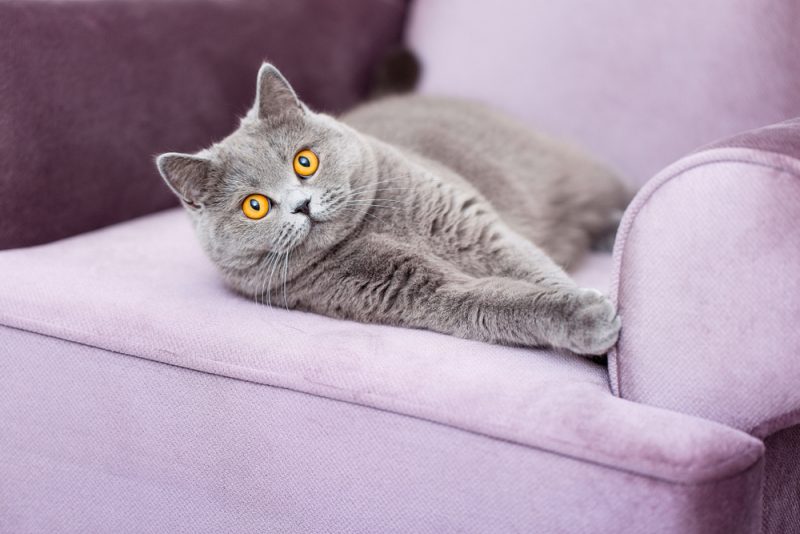
Velvet sofas are also not a good choice. Firstly, velvet tends to be harder to take care of, anyway. It doesn’t stand up to cat scratches well at all. Cats may not like to use velvet as much as faux leather or tweed, but even a small amount of use can have a huge impact on this fabric.
You can get a similar effect to velvet with microfiber, which is a good option for cats.
Conclusion
The best furniture materials for cats are microfiber, tight weave fabrics, and nylon.
Of course, cats can still damage many of these materials, even if they aren’t as satisfying as other options out there. However, they do tend to stand up to cat scratching better than other materials, and they’re cheap enough to replace if necessary.
Real leather is sometimes billed as a good option. However, cats can absolutely still find purchase in leather, even if it takes them a while. You should also avoid tweed, velvet, and similar materials. These are too easily destroyed by your feline, and they often provide tons of purchase for their claws (which is exactly what a cat’s looking for in a fabric).
Sources
Featured Image Credit: klevers, Shutterstock

Expert cat care, straight to your inbox
Vet-reviewed advice, behavior tips, and the best of Catster. Free, and you can unsubscribe anytime.
By signing up, you agree to our Terms & Conditions and Privacy & Cookies Policy.

Kristin is passionate about helping pet parents create a fulfilling life with their pets by informing them on the latest scientific research and helping them choose the best products for their pets. She currently resides in Tennessee with four dogs, three cats, two fish, and a lizard, though she has dreams of owning chickens one-day!
Join the conversation
Ask a question, share your story, or send private feedback.