We Chat With Photographer Robert Bahou on "Animal Soul"
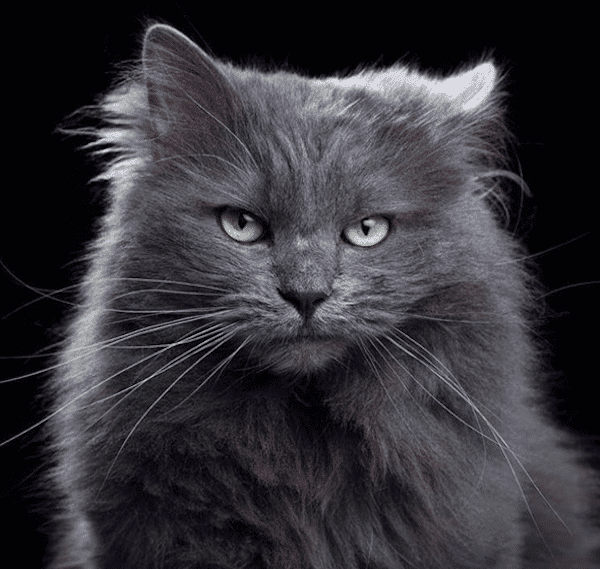
What do you see when you look at a photo of your cat?
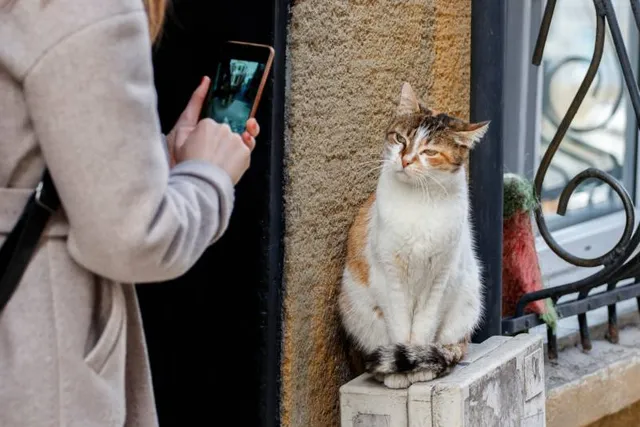
If you're like me, you probably see coming to life your cat's personality (and the fanciful backstory you've burdened it with). But if someone else takes a quick look at your cat pics on your phone, they probably see, well, just another cat.
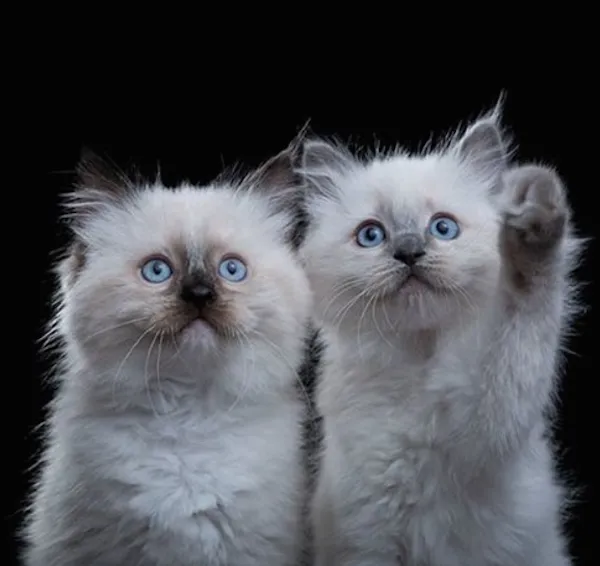
That's the issue photographer Robert Bahou tackles with his new coffee table book, Animal Soul. Through a series of striking portraits of cats (and dogs), he wants to change and challenge the way we view who these animals really are.
There was even a Kickstarter campaign for Animal Soul in 2016. I spoke to Robert about the roots of the project, his pro tips for getting cats to obey the camera lens, and how you go about photographing a black cat on a black background.
Catster: What attracted you to photographing animals?
Robert Bahou: I was always surrounded by animals in my house growing up. We'd always have animals coming in from the outside, and we would take them in before rehoming them. But photographing them specifically came from this profound fascination that I've always had with animals. When we look at them, we don't pay too much attention to who they are -- well, we might do that with our own animals, but it's difficult to transmit that message.
I felt that with a relatively simple guiding methodology for this project -- the idea of photographing them with nothing else so they're just themselves -- I could capture something that we often don't look at.
Also, I love animals, and I'd much rather work with cats and dogs than people.
Was there one particular animal who inspired the book?
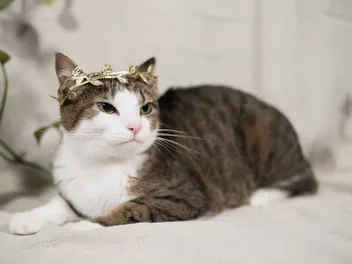
I suppose the entire project was inspired by one of the first photographs I made for this of Scuba, this dissatisfied tabby cat. He belongs to a good friend of mine, and I've known the cat for a long time, so I thought, "Let's give it a shot." He's a very expressive animal, and I thought I could make some good photos. It took me about 25 minutes to set it all up and get everything in position, and the first photo I snapped was that one.
Once I looked at that, it captivated me so much I thought I could find something similar in other animals. The ball just kept rolling, and eventually I had enough photos for a book.
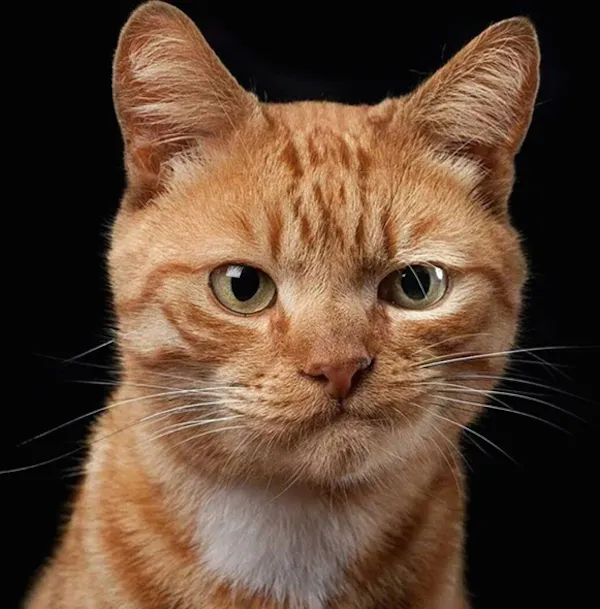
Does that photo of Scuba represent his personality?
Absolutely. I got him in the studio about a year later, but he was very uncomfortable and he had just eaten, so we did not see that dissatisfied expression anymore -- he was more docile and friendlier looking.
He was clearly annoyed at me the first time, especially when we made him sit in the chair. At some point, though, he understood and looked dead at the camera for like 15 seconds, we did it, and he just walked off like, "All right, I'm done."
Do you have any tips for getting a cat to look at the camera?
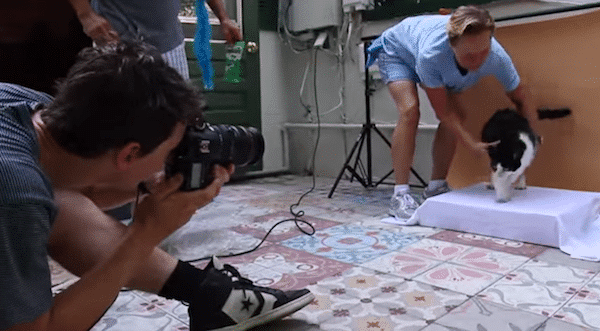
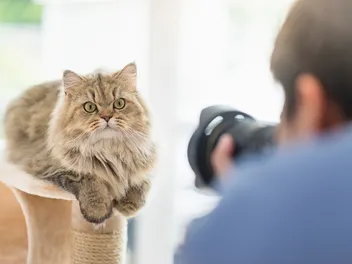
I have a number of them! It really depends on the cats. Lots of cats are curious, as we all know, so often times I try to make use of that moment when they first meet you. I'll have everything already set up, and I introduce a stool into the room because cats like high places instinctually, so they'll get up to this high place, and then I'm the new subject in the room. I always make sure to photograph them in their own homes to avoid more distraction for them, so generally I pique their own interest.
That being said, a quick sharp noise can go a long way with cats to get them looking at you. Often it's also the clicking of the camera that does it -- the flash does not distract them too much. I also have this little fishing rod that has a small feather on it, and that often helps me tremendously when I dangle that in front of the cat. They turn their body to me, and I slowly lift it, in an arc, up to the lens, and they follow it until they're looking at the lens.
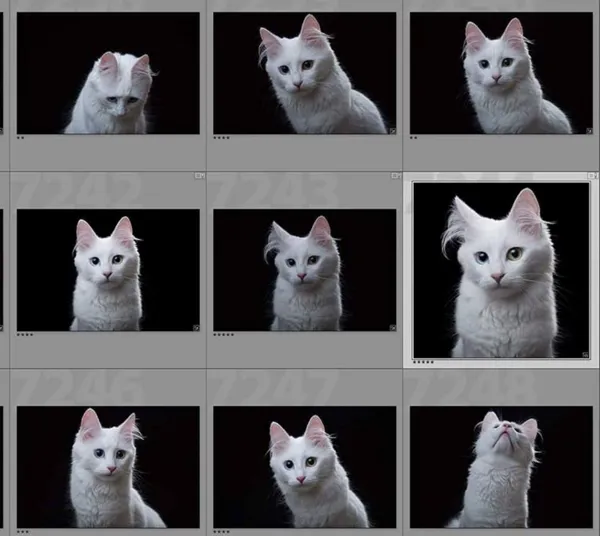
Did you have any cats who tried to nap through their photoshoots?
Absolutely! I use a wicker stool, so for them, they sit in it a little bit, they scratch it, then they just fall asleep. You need to try and keep them alert but, you know, they're cats, so the napping happens often. I find that if I pet them gently in their neck area and then raise my hand really slowly, their neck follows the petting motion and they get back to a sitting position.
Who was the strangest looking cat you've come across?
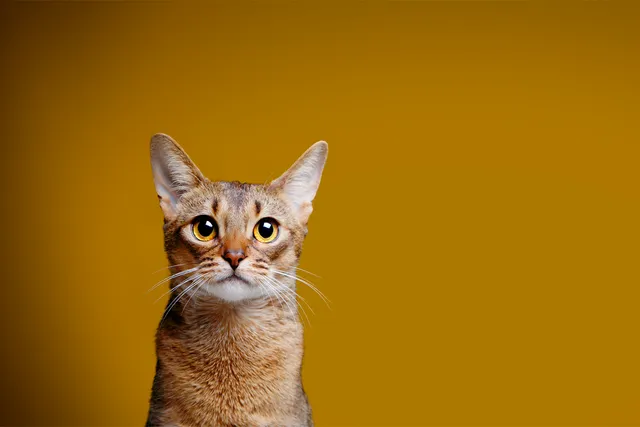
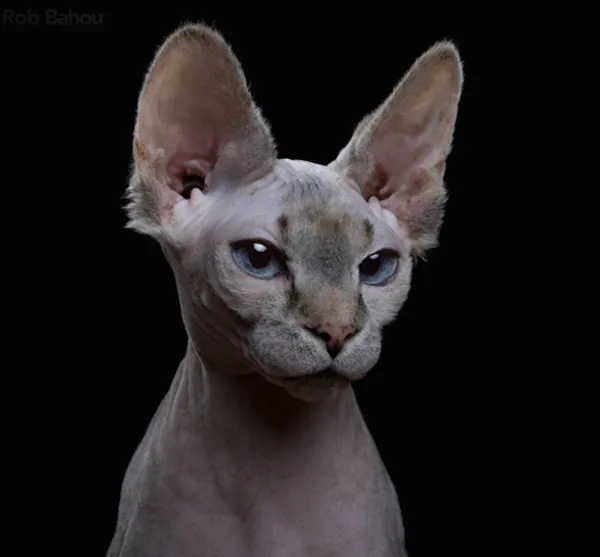
It all depends on your definition of strange, but I think the one that has been considered the most peculiar is this Oriental Shorthair with massive ears and a long face. It's a very symmetrical image.
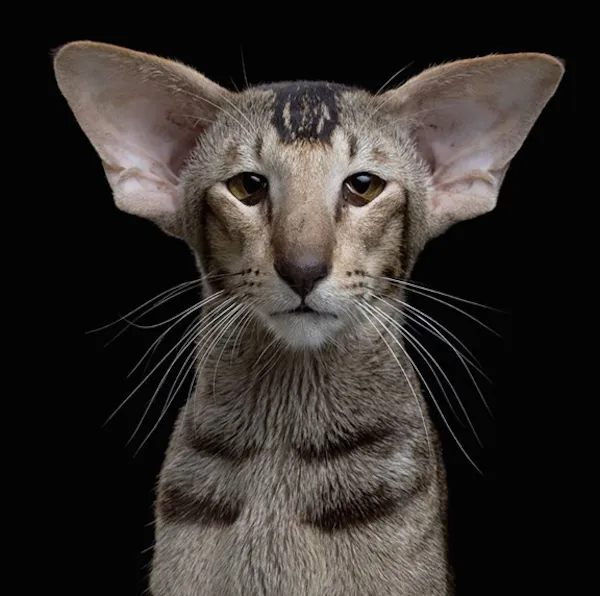
What was the shoot with her like?
I had a very short encounter with her, to be honest. There were about eight of these Oriental Shorthair cats, and they were very afraid of me. I took only a few photos and thought I had nothing, but that shot was in there. I didn't get to know them too well -- I sat there for three or four hours waiting for them to take the bait, and at one point it seemed like a hopeless case.
Why did you shoot all the portraits against a black backdrop?
Black, for me, really means empty, and with white I'm too conscious of it, and it's something many other people do. White would also quickly give it a commercial look, but black is empty and sober. A big challenge when photographing animals is to take a black animal and photograph it against a black background. That's how it started, with a black cat against a black background, and I thought I might as well be consistent.
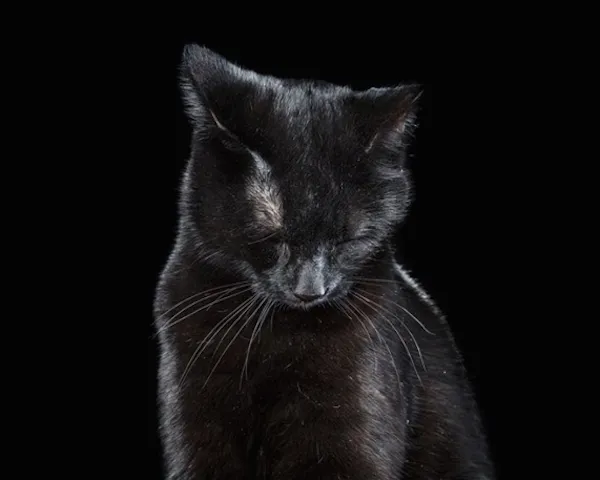
So how do you photograph a black cat on a black background?
Always have a light behind the subject, for a start. Nothing is truly black in nature -- it's always a really dark shade of blue or purple or gray -- so when you shine a light down the back it will put a glowing rim around the edge and separate the subject from the background.
What emotion or reaction do you want to provoke in people who see the book?
I want people to look at animals in a way that they don't normally do. I want to show the animals they're so familiar with in a way they haven't seen them before. By looking at my own photos, I often end up seeing them in a different way.
As an example, children generally make a story when they see something -- like this guy is really hungry or she's a princess who lives in a castle -- and they let their imaginations run wild. There was a school in the U.K. that did a project
used some of the photos of cats as mug shots, and
had to come up with stories about what crimes they'd committed! That's a new way of looking at things.
Head over to Robert's website for more information on Animal Soul.
About the author: Phillip Mlynar writes about cats, music, food, and sometimes a mix of all three. He considers himself the world’s foremost expert on rappers’ cats.

Expert cat care, straight to your inbox
Vet-reviewed advice, behavior tips, and the best of Catster. Free, and you can unsubscribe anytime.
By signing up, you agree to our Terms & Conditions and Privacy & Cookies Policy.

Catster is a cat magazine and cat website where cat lovers come together and get expert advice about cat behavior, cat health and cat news.
Join the conversation
Ask a question, share your story, or send private feedback.