My Cat Is a Scaredy Cat: 5 Tips to Make Them Feel More Secure

In this article
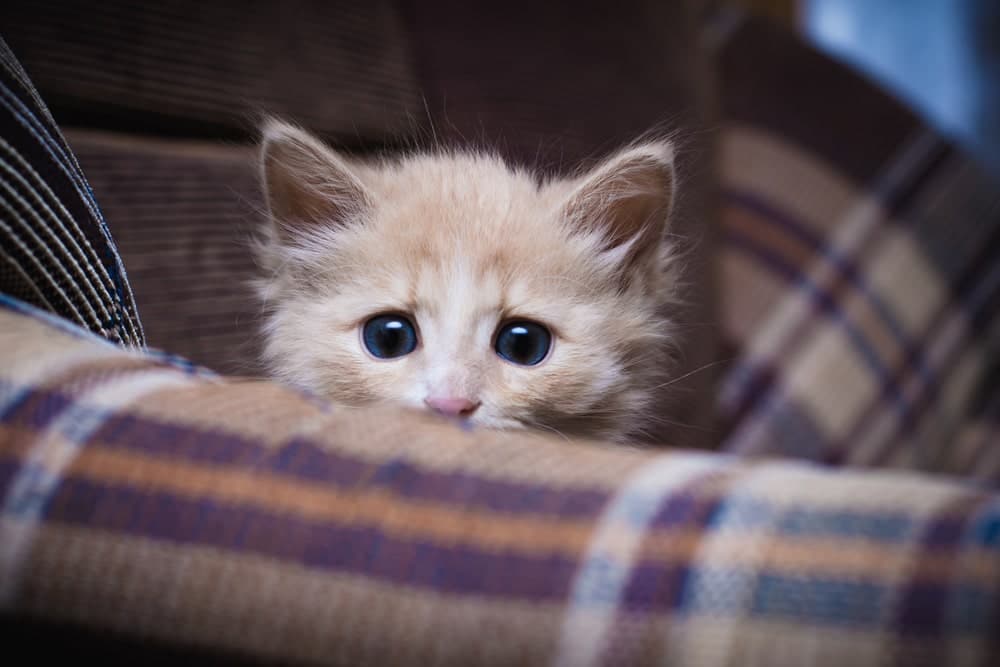
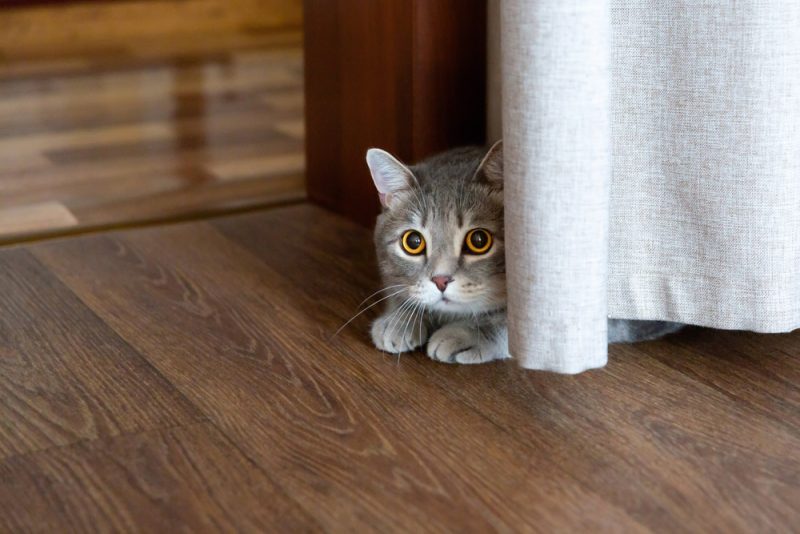
Cats can be apprehensive for all sorts of reasons. If you share your home with a scaredy-cat, finding a neutral ground and saving space for them could be pretty complicated. Certain environmental factors will stimulate different cats. Some might be very sensitive to specific triggers, while other cats might get spooked by anything and everything.
So, in this article, we're going to explain how to make your scaredy cat feel more secure and other issues relating to fear in cats so you can conquer these feelings in your cat once and for all. After all, you can create a wonderful experience for your cat at home, it just takes some time, patience, and extra love.

The 5 Tips for Making a Scared Cat Feel More Secure
1. Pinpoint Triggers
Pinpointing the trigger of what scares your cat is the first step of learning how to navigate around it. Cats can have many different stimuli that scare them, including loud noises, larger pets, and even other cats in the home.
It is hard to tell exactly what will bother each cat based on generalities. But at home, take a peek around. Do they get anxious when a certain person or pet enters the room? Are they frightened by a slamming door, a clank of pans, the sound of the vacuum, or the starting of the washer?
Learning what triggers their startle response is the first step to fixing it.

2. Bond with Your Cat
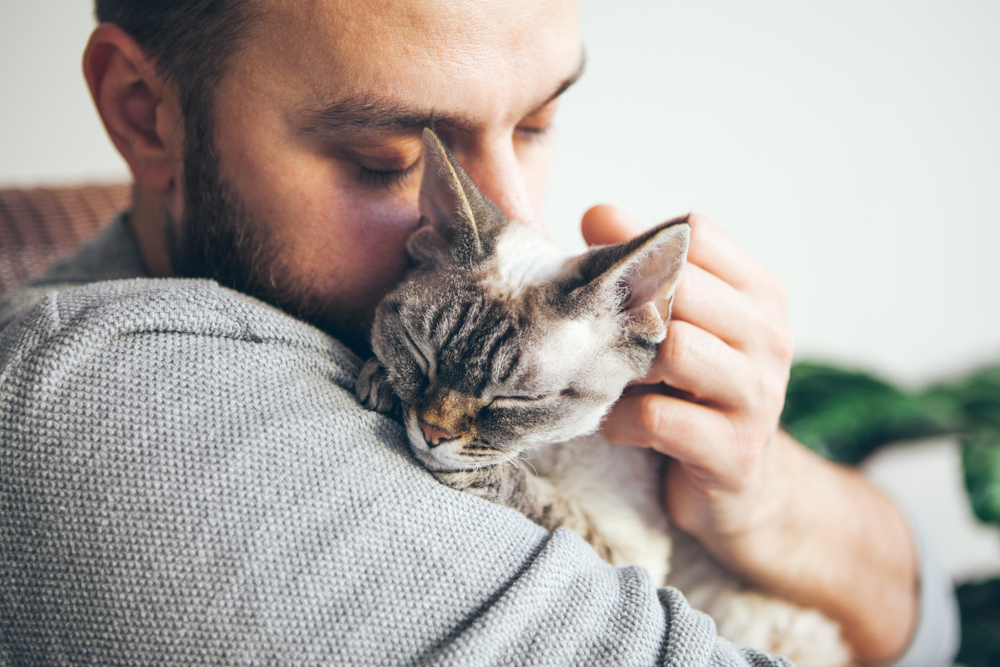
It’s a no-brainer to understand that your cat should be most bonded and comfortable with you. If you have recently brought this cat home, they might be adjusting and not quite acclimating as well as you would hope.
Never underestimate the power of showing your cat patience, love, and appreciation. Spend time in your day talking sweetly to them, playing with them, and interacting with them in whatever way feels appropriate for that individual cat.
The more you get on their level and accommodate their likes and dislikes, the quicker you can gain that trust and rapport. Once your cat has verified that you and they are in a safe space, a lot of that fear might take a backseat.
Even cats in previous abusive situations can become very loving and open with their new owners, even if they don't share that sentiment with strangers or other animals.
3. Give Them Safe Spaces
Creating safe spaces in the home for a scared cat can provide solace and peace of mind. If you have a hyper dog, for example, and your cat is absolutely petrified of them, having the dog able to free room anywhere around the house can really terrorize the cat.
After all, they can chase after them, dive under pieces of furniture, and instigate any type of play they want whenever they feel like it. However, if you keep gates up in the home or find other creative ways to restrict the dog’s space, you can allow your cat to go into rooms and other spaces where the dog is not.
The same could be said for children or even other people in the home that your cat doesn’t really care for. Your cat should know that they are able to go into the safe spaces and be unbothered when they just want some time to themselves.

4. Offer Many Hideouts
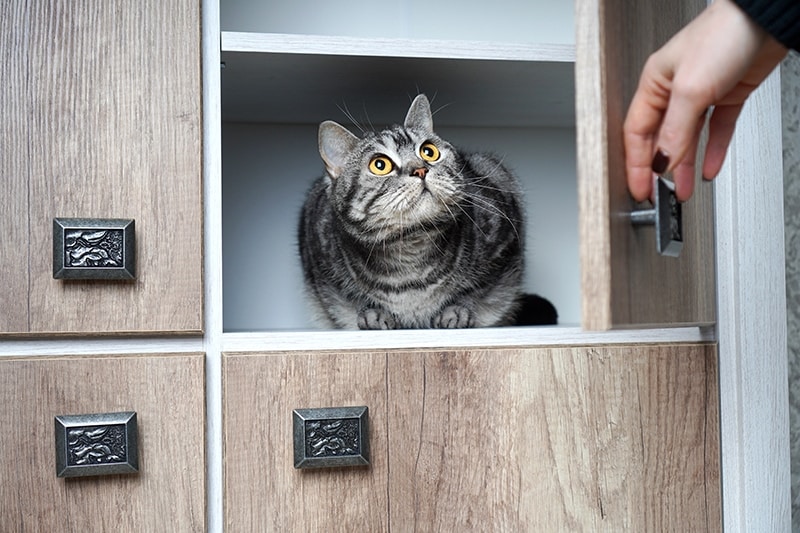
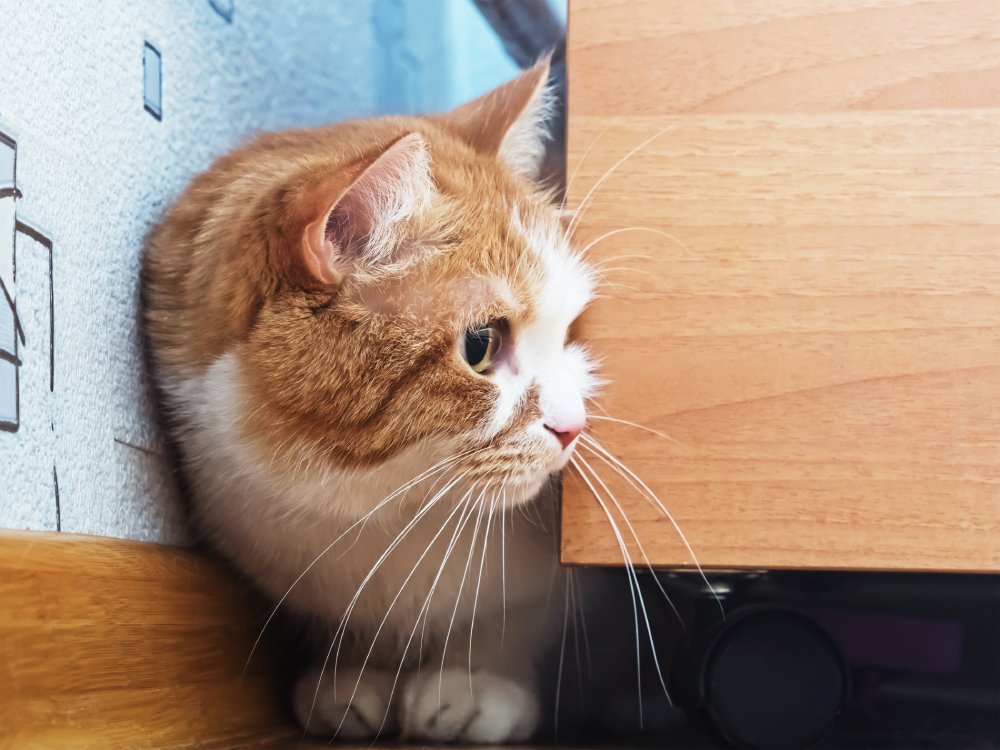
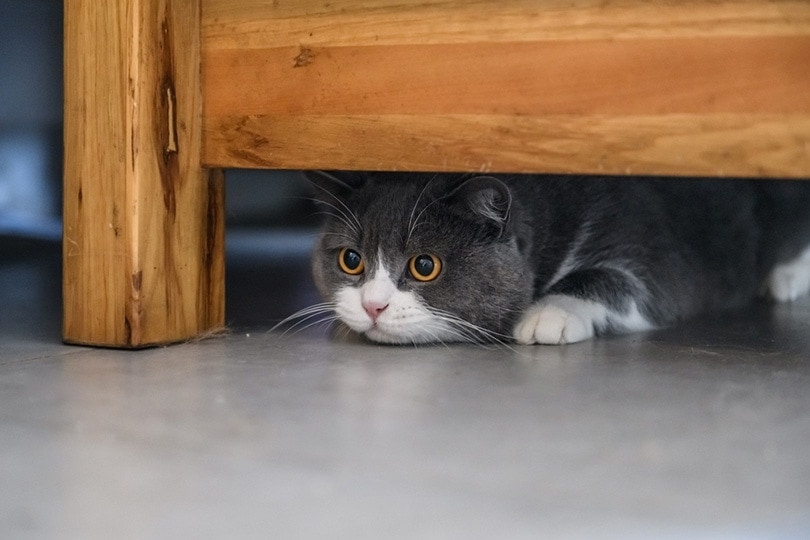
If you have a cat that is particularly scared, having hideouts is an excellent way to give your cat a layer of extra protection. Not only because cats love cozying up in small spaces, but it can alleviate a lot of anxiety for them, too.
Offer cat caves, enclosed cat houses, make them a cozy spot under your bed, you name it. As long as it’s out of sight and tucked away, your cat can use it as a place of refuge when they’re feeling a little overwhelmed.
If you have a climber, you can also create bridges, walls, climbs, and hammocks that are suspended in the air so they can have some aerial territory as well.
5. Discuss Calming Supplements with Your Vet
If your cat’s anxiety seems abnormally bad, and you are genuinely concerned for their well-being, you can also speak with your vet about appropriate calming supplements. Often, your vet will just recommend a simple over-the-counter calming supplement that you can buy on pet websites like Chewy.
If your cat’s anxiety is very severe, your vet might recommend having a prescription medication to damper those extra emotions. Ultimately, the method will depend on the severity of the problem and what your vet finds when they assess your particular cat.

General Anxiety in Cats
You might think that if your cat is very skittish and scared, that it is automatically related to personality characteristics. This might be especially true if you found them as a kitten, or got them from a breeder.
While anxiety can certainly be simply part of the cat’s personality, it doesn't have to be untreated. And, when it comes to shelter cats, they have been through more than what you might think. If your adopted buddy is acting this way, it’s likely for a reason, and they may simply need some individualized attention. Some cats, however, may need more in depth assistance. Speak with your vet if you think this applies to your cat.

Understanding Rehomed Cats
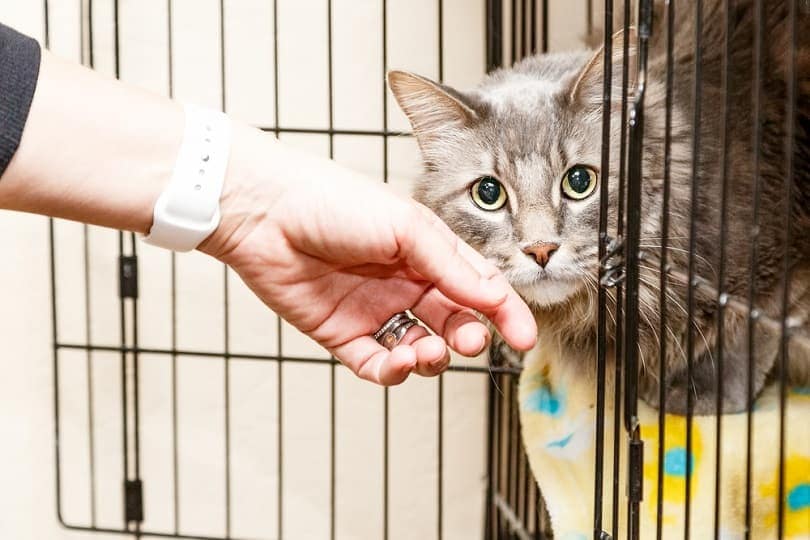
All cats have different temperaments. When it comes to cats that have been abandoned, neglected, abused, or lived in a shelter most of their life, it can really impact the relationships they are able to develop with people.
When you get a full-grown cat that might have been through some pretty tragic things, it is imperative to understand that patience will be required. These animals have had all trust broken and could've even endured abuse in a past situation. It is hard to tell how any animal responds to this kind of past, so it is imperative to get on their level and make sure you’re doing everything possible to give them the best second chance you can.
Often in a shelter situation, many cats come without a full backstory. Many of these cats have been abused, neglected, abandoned, or pawned off to other people, and there is no true way to understand the impact their previous environment had on them.
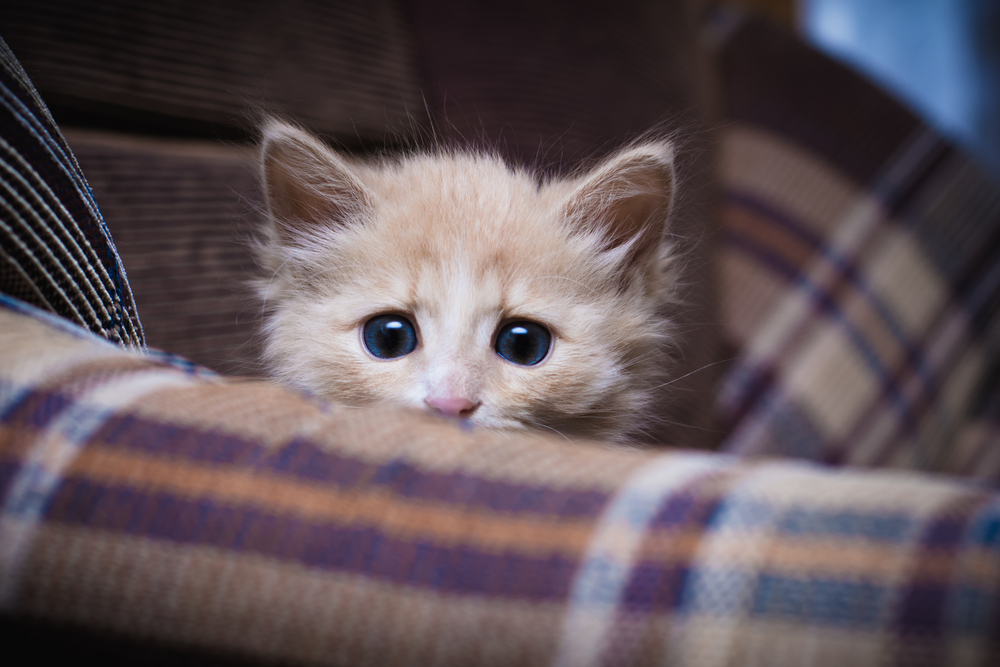
This leaves shelter employees and potential owners at a disadvantage, but it doesn't have to be a dealbreaker. Often, shy pets are the ones that need us most. With enough compassion and understanding, we can often bring them out of their shells and make them feel much more secure in their environment.
It can take a long time, even years in some cases. But never give up hope that your feline will become calmer, cooler, and more collected with proper care and attention.
Conclusion
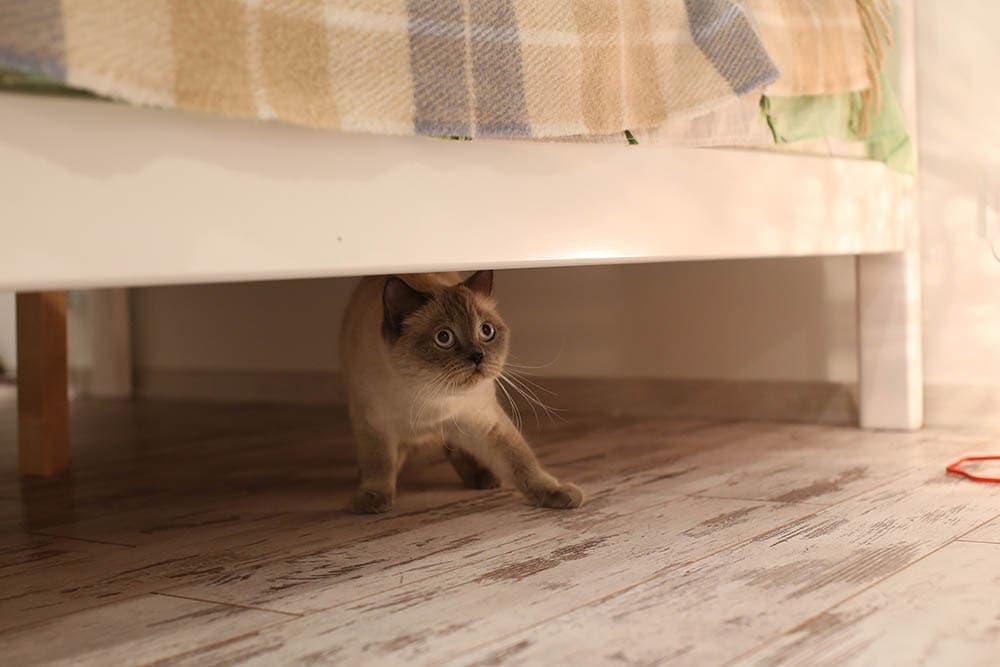
It can be a little complicated to tip-toe around a scaredy cat, but you can manage. If they still dart under a bed or fly to the safest refuge, just know that simply having patience, love, and understanding for them will work wonders. If you have concerns, always opt for a vet assessment to see what the best plan of action should be.
Sources
Featured Image Credit: Zossia, Shutterstock

Expert cat care, straight to your inbox
Vet-reviewed advice, behavior tips, and the best of Catster. Free, and you can unsubscribe anytime.
By signing up, you agree to our Terms & Conditions and Privacy & Cookies Policy.
As a freelance dog writer and passionate pet enthusiast, Ashley Bates is pursuing studies in animal therapy. A mother to four human children and 23 animal companions, Ashley is dedicated to volunteering at shelters, advocating for animal rights, and rescuing animals in need. Her goal is to spread awareness, provide education, and offer entertainment about pets to reduce homelessness. Ashley's specialties include dogs and cats.
Join the conversation
Ask a question, share your story, or send private feedback.