Get

In Your Inbox

Catster is reader-supported. When you buy via links on our site, we may earn an affiliate commission at no cost to you. Learn more.

Can Cats Have Pepto Bismol? Vet-Approved Safety Tips & FAQ Explained

Share

Can Cats Have Pepto Bismol

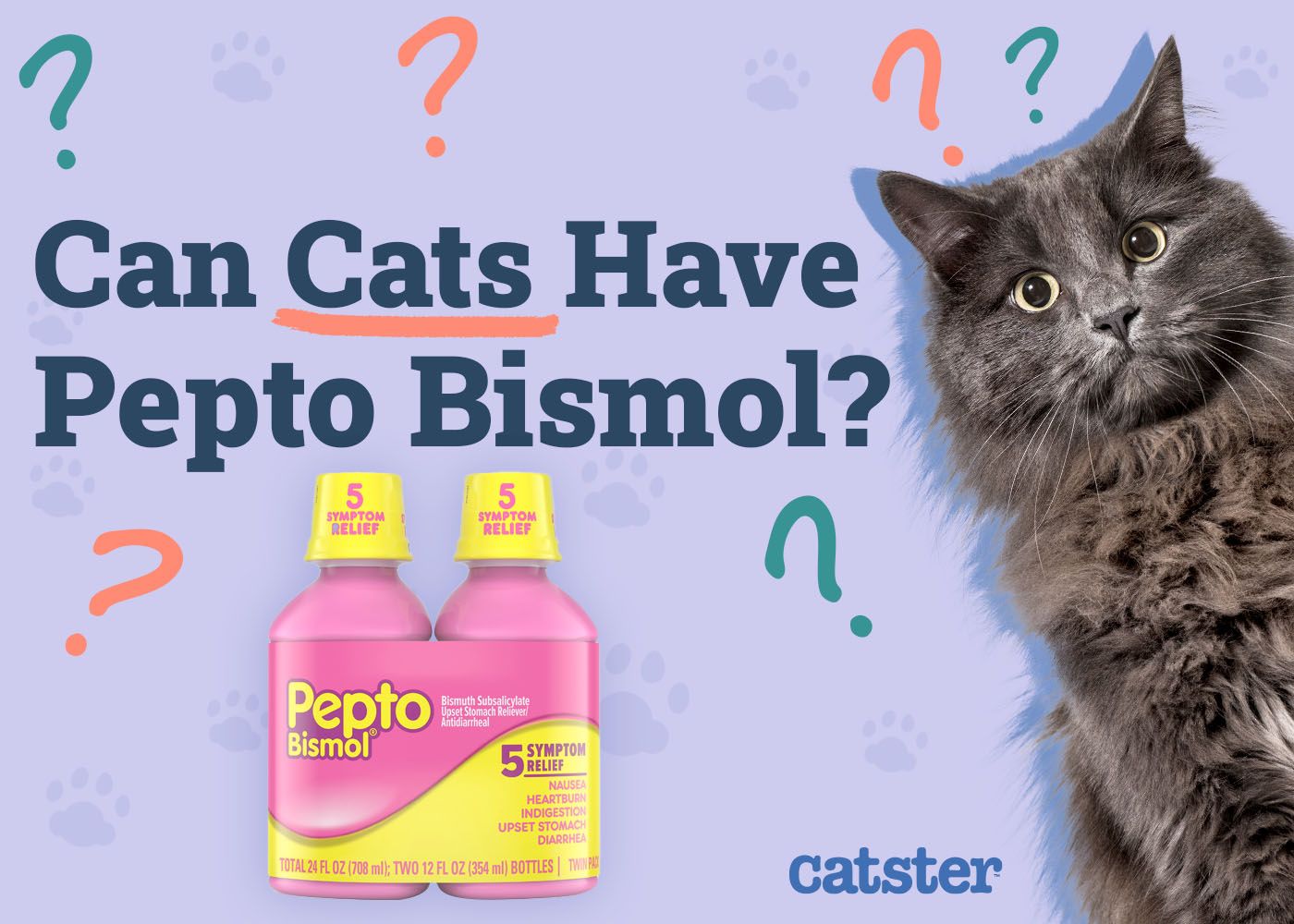
Pepto Bismol is a medication used to treat an array of digestive symptoms in humans—as the jingle goes, “when you’ve got nausea, heartburn, indigestion, upset stomach, diarrhea…” Pepto Bismol seems like a wonder drug for these unpleasant issues, and cat owners may wonder if they can give their cat Pepto Bismol for similar problems. Is Pepto Bismol safe for cats? The answer is a resounding no. Pepto Bismol is unsafe for cats, and the ingredients are downright toxic.

In the post, we’ll discuss the dangers of Pepto Bismol for cats and why it must be avoided at all costs. We’ll also discuss what you can do instead should your cat show signs of digestive issues.

divider 3 paws

What Exactly Is Pepto Bismol and How Does it Work?

Pepto Bismol is one of a few brand names for a medication called bismuth subsalicylate, which can also be found in similar over-the-counter medications, such as Kaopectate, Kola-Pectin, Kapectolin, and Diotame, for minor digestive issues in humans. It’s made of several compounds and effectively relieves human heartburn, acid reflux, nausea, indigestion, and diarrhea.

These drugs work by potentially inhibiting bacterial growth, as well as reducing inflammation and decreasing fluid loss into the bowel. This medication is pink in color and comes in tablet form or liquid.

Why Can’t Cats Have Pepto Bismol?

So, can you give a cat Pepto Bismol? Pepto Bismol may be a good way to get relief from digestive issues in humans, but it’s toxic to cats. But how? Pepto Bismol contains salicylates, which are similar to aspirin and in cats can cause liver failure, anemia, and ulcers. The danger lies within the salicylates Pepto Bismol contains. Cats cannot metabolize salicylates in the same way humans can, or dogs, for that matter. The result is a build-up of toxins because a cat’s body cannot eliminate the drug quickly enough, which can lead to aspirin poisoning.

If you are concerned or have questions about your cat’s health, there are services that allow to you speak to a vet from the comfort of your own home.

If you need to speak with a vet but can't get to one, head over to PangoVet. It's an online service where you can talk to a vet online and get the advice you need for your pet — all at an affordable price!

PangoVet_Mention-in-Content for PangoVet2 save money

divider 3 paws

What Are the Signs of Aspirin Poisoning in Cats?

Aspirin poisoning in cats is serious and requires immediate medical treatment. However, it may take time for signs to appear, depending on how much of the medication was ingested. If you suspect your cat ingested this medication, contact a vet or the pet poison helpline ASAP.

The most common side effect in cats include ulceration and irritation of the gastrointestinal lining, which can lead to blood loss.

Other side effects may involve the following:
  • Weakness
  • Depression
  • Lip licking (associated with nausea)
  • Pale gums
  • Dark, tarry stools
  • Decreased appetite
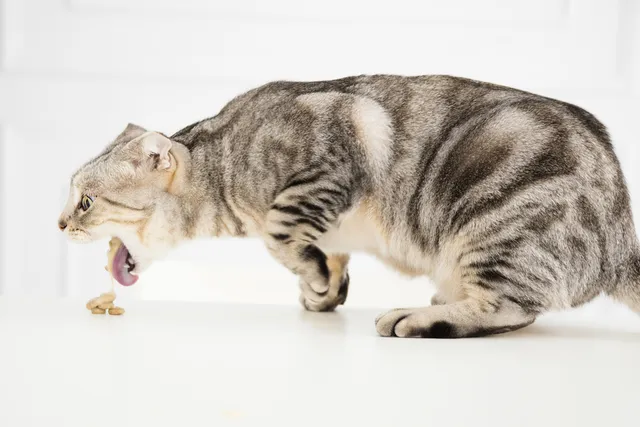
  • Vomiting
  • Diarrhea
  • Abdominal pain
  • Fever
  • Wobbly gait
  • Increased respiratory rate

What to Do if Your Cat Has Digestive Issues

If you were ever tempted to grab a bottle of Pepto Bismol or some other OTC medication for your cat’s upset tummy, we cannot advise doing this. The first step should be contacting a veterinarian immediately to advise on what’s going on with your cat.

The vet may ask you to bring your cat in for an examination or tell you safe options to try at home over the phone. However, it’s crucial to rule out serious possibilities that could be causing the signs, such as pancreatitis, kidney issues, or even cancer, which is why it is more plausible and likely that the vet will ask you to bring your cat in for an exam.

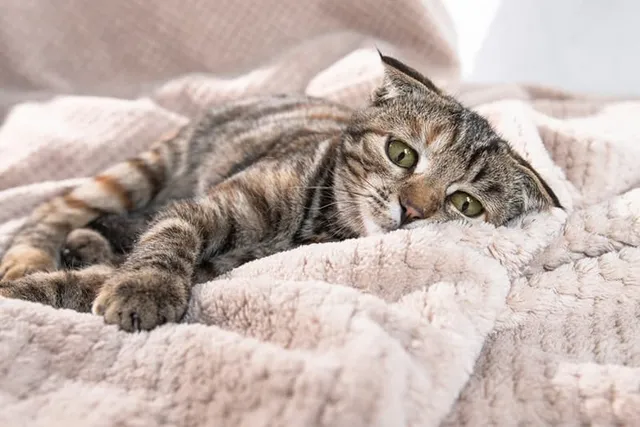
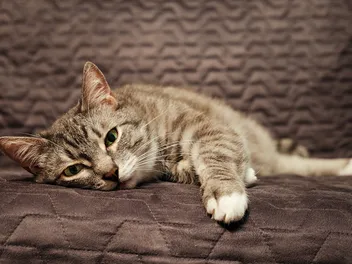
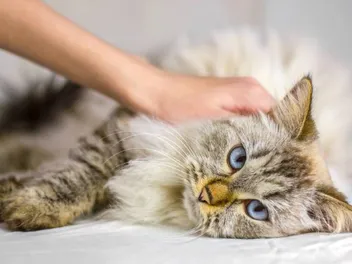
sick cat lying on blanket
Image credit: one photo, Shutterstock

divider 3 paws

Conclusion

If your cat is experiencing gastrointestinal issues, a number of factors could be the cause, with some factors being more serious than others. That’s why it’s best to contact a vet right away should your cat become ill. The issue could be as simple as a food allergy or parasite, or it could be something more serious, like kidney/liver failure or cancer.

A vet can perform specific tests to find the root of the problem for appropriate treatment. We advise never to give your cat any OTC medication without a veterinarian’s approval, which also goes for Pepto Bismol.


Featured Image Credit: siam.pukkato, Shutterstock

Want content like this delivered to you?

Sign Up For Our Newsletter

News, insights, expert advice, and everything cat

* By submitting, you agree to our Terms & Conditions and Privacy & Cookies Policy.


How useful was this post?

Click on a star to rate (you can leave written feedback after clicking submit)

Help us improve Catster for pet parents!

Your feedback really matters.

What did you like about this post? Also how can we improve it?

Join the conversation

Leave a Reply

You’re very welcome to leave a comment or question. Please know that all comments must meet our community guidelines, and your email address will NOT be published. Let’s have a positive and constructive conversation.


Talk With A Vet Online

Peace of mind,
anywhere, anytime

Affordable vet advice

Ask Dr. Paola – Help! My Momma Cat Is Very Thin! (May 18, 2026)

Welcome to our “Ask Dr. Paola” series, where every Monday we bring expert advice straight from Dr. Paola Cuevas (MVZ) to help our...

The Cat Biting Mistakes Most Owners Make (And What Works Instead)

Cat bites sent more than 400,000 people to emergency rooms in the US each year.1 Not scratches. Bites. And the reason they’re so...

Do Cats Cause Schizophrenia? Scientists Find a Link – Here’s What It Means

Being a fierce advocate (and occasional recipient of) mental health support and awareness, the term ‘crazy’ is not one I like to fling...

One in 100 Cats Gets Diabetes – Here’s How to Catch It Early

One in every 100 cats develops diabetes.1 That’s not a rare, unlucky condition reserved for cats with obvious health problems. It’s common enough...

More related

Why Is My Cat’s Jaw Swollen After Dental Work? Common Causes & Recovery Tips (Vet-Verified)

Given that dental disease and its subsequent problems are very common in cats, a staggering 50 to 90% of cats over 4 years...

Do Scottish Fold Cats Shed a Lot? Vet Approved Facts & Grooming Tips

Every cat breed has its own special quirks and characteristics. The Scottish Fold is no different. Its eye-catching appearance and playful personality make...

Could Vegan Cats Help Feed 70 Million People? Exploring the Veganuary Debate

Have you heard of Veganuary? Each January, millions of people worldwide embrace vegan diets as part of the Veganuary campaign. In 2024, approximately...

Can You Put a Cat on a Leash? Is It Cruel? Vet Approved Facts, Pros & Cons

Our feline friends love to explore, and some inside kitties yearn to explore the great outdoors. However, it’s not always wise to open...

Keep reading

How to Tell If a Cat Has UTI (Urinary Tract Infection)? Vet-Reviewed Signs

Urinary tract infections (UTIs) are common in cats. They mainly occur when bacteria enter the urinary tract and go up to the bladder1. Once the bacteria reproduce and multiply, your cat can get a UTI. UTIs can disrupt a cat’s...

cat sitting with pee on couch

Why Is My Cat So Demanding? 6 Vet-Verified Ways to Deal with a Demanding Cat

One of the most endearing things about cats is their unique and diverse personalities. While some cats are quiet and unassuming, others are much more outgoing. However, when extraversion spills over into being excessively demanding of attention, it can leave...

Calico cat standing up begging for treat asking for food scratching leg looking up

Can A Cat And A Newborn Interact Safely? How to Prepare & Safety Risks

If you have a cat and are expecting a baby, you might wonder whether it’s safe for your pet and your newborn to spend time together. While brief, gentle interactions can be safe, they should always be closely supervised. It’s...

Brown cat kissing a Caucasian newborn baby

Can Cats Eat Granola Bars? Vet-Reviewed Health Facts & FAQ

Granola bars are a popular snack for kids and hikers alike. If your cat is a beggar, you might wonder if it’s okay to share as you munch. Unfortunately, cats shouldn’t eat granola bars because they aren’t healthy for them,...

Can Cats Eat Granola Bars

Can You Put a Flea Collar on a Pregnant Cat? Vet-Reviewed Precautions & Risks

Cat flea collars use a form of insecticide to repel, deter, or kill fleas. They can be used in conjunction with spot-on treatments or independently, though owners do need to be aware of the potential risks associated with flea collars....

Collar for animals protecting against fleas

Can Cats Eat Croissants? Vet-Approved Facts & FAQ

Croissants are delicious baked goods that nearly everyone can appreciate. But even though we humans might enjoy them when we are channeling our inner Parisian at Sunday morning brunch, felines are a different story. Although croissants are non-toxic to cats,...

Can Cats Eat Croissants

Can Cats Eat Gravy? Nutritional Facts & FAQ

Like humans, cats enjoy a good meal. And while many people might think that all cats only eat dry food, that is not the case. Many cats love gravy, and several wet foods are made with gravy; some even have...

Can Cats Eat Gravy

Are Pepper Plants Poisonous to Cats? Vet-Reviewed Houseplants Examined

If you’re a cat owner, you may be wondering if pepper plants are poisonous to cats. It’s always best to make sure any plant around your home is safe for your cat, especially if your feline likes to roam in...

Catster_Are Pepper Plants Poisonous to Cats

Love Cats? So Do We! Join the Catster Community

Stay informed with expert pet care insights delivered straight to your inbox! Discover professional guidance on animal behavior, feeding tips, trusted product picks, and much more.


Sign up for the Catster Email Newsletter

Stay informed with expert pet care insights delivered straight to your inbox! Discover professional guidance on animal behavior, feeding tips, trusted product picks, and much more.