19 Vet-Verified Benefits of Having a Cat in Your Life



You probably don’t have to tell any of the 42 million American households with at least one cat that there are benefits to having one.1 To them, it’s self-evident. Their feline companions bring joy, company, and unconditional love into their lives.
Our relationship with cats goes back about 12,000 years.2 Interestingly, scientists aren’t sure why cats became our pets. Humans didn’t do much for them other than provide the grain that attracted rodents. Some suggest felines chose to live alongside us instead of us reaching out to them. Nevertheless, our cats have provided many apparent and not-so-obvious benefits.

The 19 Benefits of Having a Cat in Your Life
1. Stress Relief
Few things are more calming than curling up with a sleeping kitty. Their quiet purring is almost like white noise with its soothing sound. Many pet owners find welcome stress relief in cuddling with their cats. Many cats are easygoing, making it easy to feed off of their calm demeanor. It’s probably one of the best benefits of having a cat in your life. When you need to relax, your kitty is there to help.

2. Good Listeners
This benefit applies to cats and dogs. Both animals are excellent and non-judgmental listeners. They’ll listen to your litany of complaints about work, and they won’t snicker if your singing is off-key. That makes kitties great companions for people who live alone. You’d be surprised at what a presence they have. You surely won’t be so lonely anymore with a cat in your home.
3. Easy-to-Care-For Companions
One of the best things about owning a cat is the fact that they are generally easy to care for and well-suited to indoor lifestyles. You don’t have to take them outside to do their business; you can go out with your co-workers without worrying about having to rush to get home, and they keep themselves relatively clean thanks to long self-grooming sessions. None of this means that felines prefer to be alone, because they absolutely don’t. However, you have the freedom to be slightly more lax with your schedule, which you wouldn’t have with a dog.

4. Pest Control
Pests attracted wild felines to places where humans developed agriculture because it was easy pickings for them. Cats are still very much in touch with their wild side. That includes hunting for rodents and other pests. Many people find the occasional mouse in their home during the winter, so you won’t have any major problems with a cat on patrol.
5. Relatively Long-Lived Pets
Cats are relatively long-lived. Their sleeping habits and the safety of indoor living are what make it possible for our feline companions. Many cats live 12–15 or more years. Pet owners understand the tremendous grief of losing an animal companion. While none of us get out of here alive, some may find comfort in having a pet that can provide many years of joy.

6. Independent Lifestyle
Dogs are like toddlers in many ways. While some can entertain themselves, others need constant attention to keep them out of mischief. Cats are a different story. After all, they sleep roughly 16–18 hours daily. They’ll probably adjust their schedule to meet yours, and they’ll happily spend time looking out the window at birds and other wildlife, making their independence a gift.
7. Quiet Animals
Dogs can be loud despite how lovable they are. A pup barking near your ear can put the sound in the harmful category at around 110 dB. That’s about the same level as a leaf blower. Cats are nowhere near as noisy. That makes kitties a suitable choice for apartment dwellers since it’s unlikely your pet will disturb your neighbors. Purring and meowing surely won’t bother anyone.
8. Entertaining Companion
There’s a good reason why people share cat videos. They’re so darn entertaining! Kittens and adults are sure to make you smile and laugh. Felines are naturally curious. Some take it to the next level and make anything a toy. We marvel at their energy and ability to make the most mundane things fun. They are an excellent reminder to enjoy the little things in life!

9. Teaching Children Responsibility
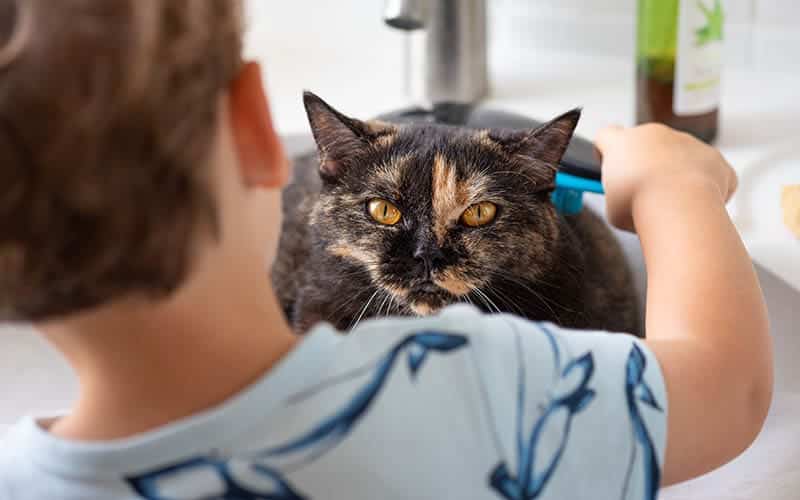
Inviting a cat into your home offers a great way to teach children the responsibility and commitment of owning a pet. Your child can help with feeding your kitty, all while turning it into a math lesson about measuring out their food. You should also teach them to be gentle with your pet and have respect for animals. However, we recommend supervising playtime with the little ones and ensuring they know to give the cat their space.
10. Improved Mental Health
Pet ownership can offer profound mental health benefits. It can help alleviate depression and stress. The overall effect is an improved sense of well-being. The benefits exist with both dogs and cats. These findings are truly valuable, especially given the consequences of lockdowns and social isolation during the 2020 pandemic.

11. Better Sleep Quality
Many pets sleep with their owners. After all, a bed is warmer and more comfortable than lying on the floor. A survey by CPAP.com found that 66% of respondents were satisfied with their sleep when accompanied by their pets. Nearly one-third would prefer sharing their bed with their pets versus their partner. Your kitty probably doesn’t snore too loudly, after all, and they are also less likely to hog the blankets.
12. A More Affordable Pet
Owning a cat or a dog comes with real financial responsibilities, and long-term costs can add up significantly. While both cats and dogs require food, preventive veterinary care, and supplies, dogs often cost more overall because of larger food intake, more frequent grooming and vet care, and breed-specific needs.
The typical annual care for a cat generally falls in the range of about $760–$3,495 per year, including food, litter, vet care, insurance, and supplies. Over a typical lifespan (often 15–16 years), this can add up to roughly $30,000+ in lifetime expenses. 
Annual costs for a dog are usually higher, with estimates of about $1,390–$5,295 per year. Depending on the dog’s size, health needs, and lifespan, lifetime costs can also total around $30,000–$35,000 or more. 
13. Intelligence Boost
One of the greatest debates since humans started owning pets rests with the difference between dog and cat owners. People naturally gravitate toward animals that are similar to them. That makes these findings even more compelling. One study found that cat owners scored higher on intelligence tests than dog owners. We’ll leave it to you to figure out the basis for these results.

14. Litter Box
Most dog owners know that cleaning up after their pets is part of their responsibility to society and other pets. After all, a pup infected with internal parasites can pass eggs in their feces without showing outward signs of a problem. Cat caregivers have an easier and perhaps less unpleasant take on this task. A litter box definitely makes the job less distasteful than using waste bags, and you won’t have to wander around your yard for hours trying to find any messes they left behind.
15. Help for Children with Autism
You’re undoubtedly familiar with the benefits of therapy animals. One small study found that cats can help children with autism and their parents manage their condition better, particularly with their social skills. Having a cat in the home nurtured a strong relationship between family members and the pet. These parents are indeed grateful for the emotional support the animals provide.

16. Reduced Cardiovascular Disease Risk
Heart disease is the leading cause of death, taking over 702,000 lives annually. One study examined the effects of owning a cat on this condition. The researchers found that pet ownership significantly reduced the risk of heart attacks, strokes, and other cardiovascular diseases among individuals who owned cats. Undoubtedly, stress reduction plays a role. It can reduce risk factors like high blood pressure.

17. Lower Allergy Risk
Roughly 50 million Americans deal with the bane of allergies. It can have profound effects on your quality of life. While hypoallergenic pets don’t exist, one avenue of research has explored the impact of early exposure on their prevalence. A baby’s first year of life is the critical period. One study found that exposure to dogs and cats during this time reduced the incidence in older children.
18. Grief Therapy
Many people consider their pets family members. It’s not a stretch to find that cats and dogs can provide emotional support during traumatic events, such as the loss of a loved one. Dealing with circumstances later in life is especially stressful. Research has shown that our animal companions may help us cope during these difficult times, complementing many of the benefits we’ve listed.
19. Companionship
Humans are social animals. Social isolation and loneliness are risk factors for early mortality. The scenario is common yet sobering. Many seniors find themselves alone after their spouse, and maybe many of their friends have passed. A cat offers a comforting way to relieve loneliness with a low-maintenance pet that can help fill this void in your life with unconditional love.

Conclusion
We call them “animal companions” for a good reason. While we may not be able to communicate verbally with our kitties, we still share a bond. We connect on a non-verbal level that is fulfilling for many people. Cats offer many benefits for those who open their homes and lives to these curious and loving pets.
Dogs often get the reputation for being our best friends, yet research has shown that felines can become just as attached to their caregivers. In return, our kitties give us their unconditional love. They entertain us and cuddle with us on chilly nights, and they calm our stress and anxiety. Cats are our companions through grief and help sweep away loneliness and stress. The day felines entered our lives thousands of years ago was fortunate for both of us.
Sources
Featured Image Credit: evrymmnt, Shutterstock

Expert cat care, straight to your inbox
Vet-reviewed advice, behavior tips, and the best of Catster. Free, and you can unsubscribe anytime.
By signing up, you agree to our Terms & Conditions and Privacy & Cookies Policy.
Chris has been a science-focused pet writer since 2009, specializing in health and the environment. She lives with her husband Norm and three amazing cats in the land of 10,000 lakes. When she's not writing about cats, Chris also enjoys boating and sampling wine. She has her WSET 1 and 2 certifications and is currently pursuing her Certified Wine Specialist Award (CSW).
Join the conversation
Ask a question, share your story, or send private feedback.