Are House Cats Nocturnal? Vet-Verified Facts & Info


In this article
If your cat has been keeping you awake with their night-time antics, you might be wondering if cats are truly a nocturnal species. Another reason to wonder is the sheer amount of time that most cats spend snoozing during the day!
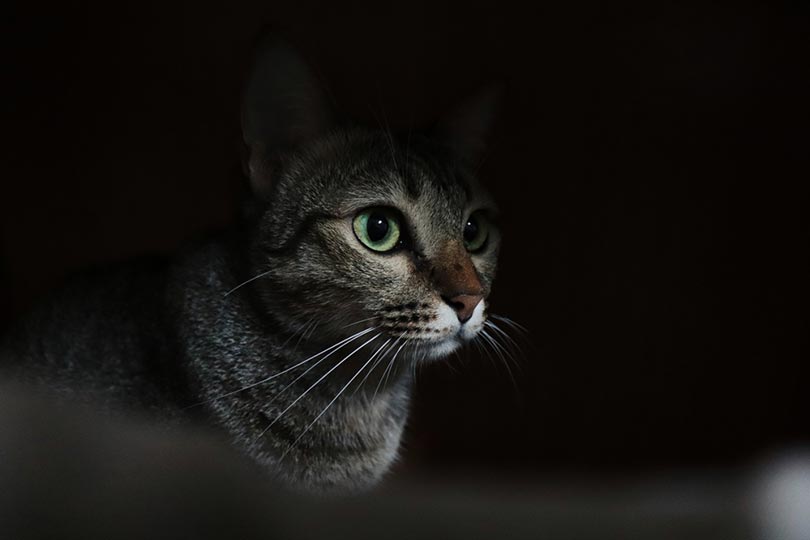
The short answer is that cats are often more active at night, but a more accurate definition for most cats is that they’re crepuscular. That means they’re most active at dawn and dusk. As is the case for many behaviors we see in our feline friends, it’s not a black-and-white situation.
Some cats alter their behavior to better fit in with the schedules of their human friends. They may spend more time being active during the day and then sleep more at night. Let’s find out more about exactly why our feline friends love to play in the evenings and into the night.

Nocturnal, Crepuscular, or Diurnal?
Before we dive into the details about your cat’s behavior, let’s take a quick look at the terminology. There are three terms that can be used to describe the times of day that an animal is most active.
- Nocturnal: Most active at night
- Diurnal: Most active during the day
- Crepuscular: Most active at dawn and dusk
Most wild cats display behavior that’s more accurately described as crepuscular rather than nocturnal. For those animals, their most active periods coincide with sunrise and sunset. However, they usually hunt at night, too. We’ll explain this in more detail shortly.
Pet cats are considered intrinsically crepuscular. However, exceptions can exist on an individual level. This is similar to how we as humans are considered diurnal, but those working an evening or overnight shift obviously wouldn’t sleep at night.
Likewise, a pet cat may, at times, adjust their “schedule,” too. For instance, if they figure out that you feed them during the afternoon, they will definitely perk up in anticipation of their afternoon meal.
Why Are House Cats More Active at Night, Dawn, & Dusk?
As sweet and cuddly as our cats sometimes seem, there’s no denying they’re descended from wild animals. It’s thought that the African Wildcat, or Felis lybica, was the first domesticated feline species. All breeds can trace their ancestry back to those original cats. House cats still retain their hunting instincts from their wild ancestors, and this, in turn, also influences the times of day that they’re most active.
Part of the reason why cats are more active at night is because some of their prey (such as rodents) are often more active at night. Others (such as birds) have a disadvantage at night; they don’t see as well as they can during the day and may not realize a cat’s approach.
Therefore, it makes sense that many cats’ natural rhythms coincide with when their prey is likely to be most active. Even if your cat doesn’t need to hunt their food, those ingrained habits haven’t gone anywhere.
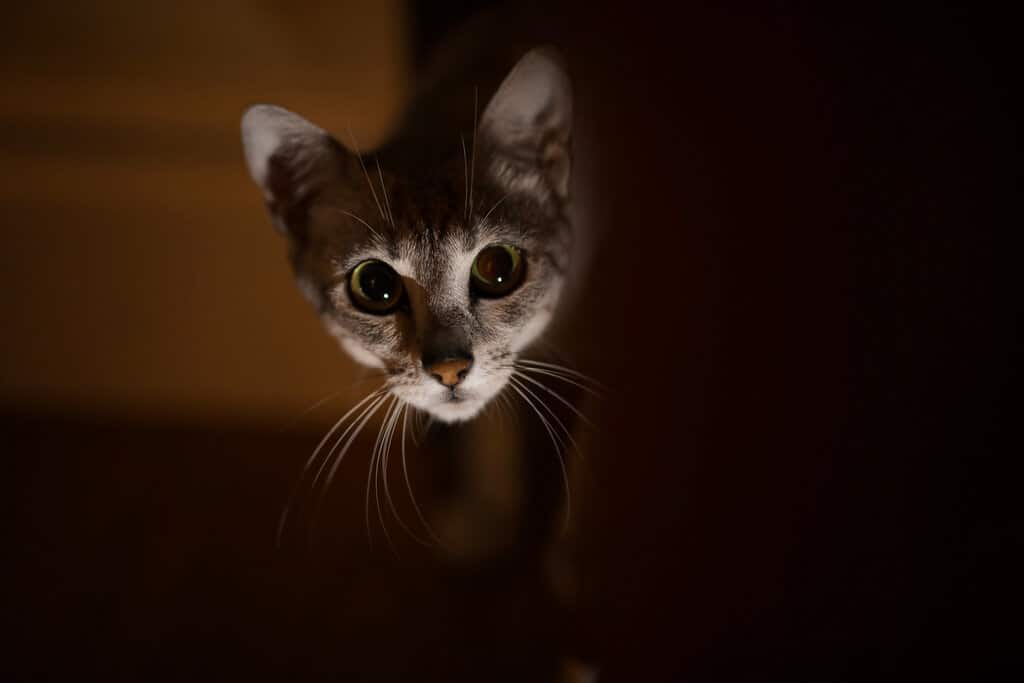
A cat’s anatomy is far better adapted to night-time activities, too. Consider how well adapted a cat’s eyes are to seeing in low-light conditions than human eyes. They have better low-vision movement when compared to us.

Do Cats Sleep at Night?
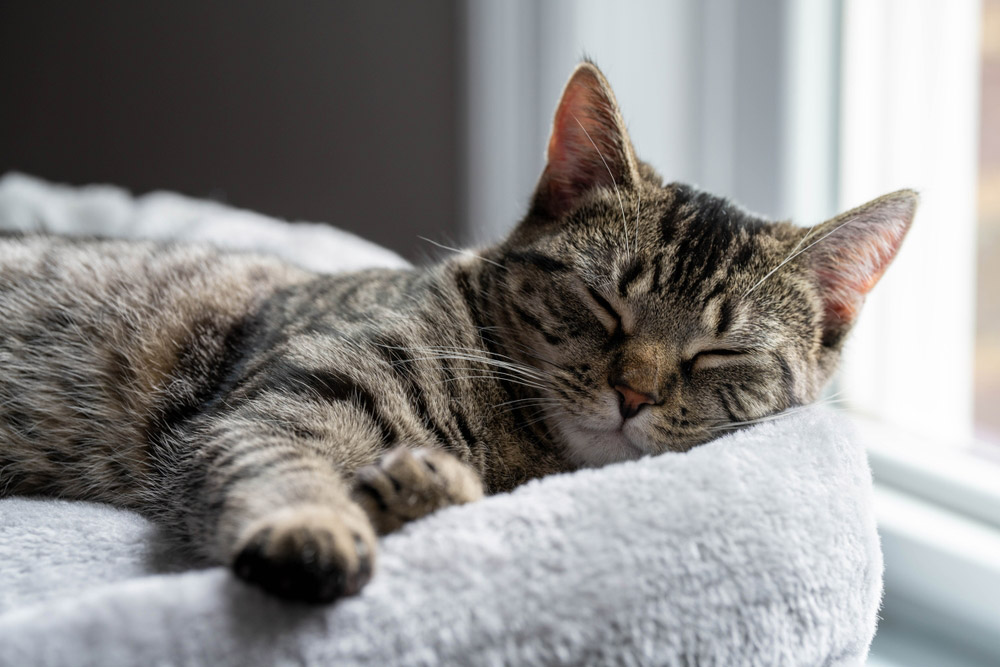
Yes, a cat may sleep at night. You might have noticed that your cat sleeps frequently during the day, so you’d be forgiven for thinking it means they’re active at night. But that’s not necessarily the case. Some cats do sleep at night if they want to.
There’s no hard and fast rule about whether a cat should or shouldn’t sleep at night. Cats sleep often, and as pets, they often adjust their schedules to what suits them best. A cat may sleep for a short while at night. However, most cats do not sleep all through the night like us. Most pet owners are aware of their cats seemingly deciding that naptime is over in the middle of the night and may even try to wake them up.
Tips for Managing Your Cat’s Behavior
A Note From Our Veterinarian
If your cat’s night-time activities keep you awake, the good news is that there are a few ways to ensure you can get a good night’s sleep.
Cats waking their owners up for food in the middle of the night isn’t unheard of. Unfortunately, giving into your cat’s request even once can reinforce the idea in their minds that incessantly meowing and pestering you will result in a meal. As such, it’s best to ignore your cat as best as possible.
However, it is important to ensure that your cat is properly fed and not actually hungry. With that in mind, it’s often advisable to offer your cat their last meal of the day close to your bedtime. This ensures that your cat will not be hungry as you sleep. Pet cats should always have access to fresh, clean drinking water.
Keep in mind that a kitten you’re fostering (especially one younger than 6 weeks of age) will need to be periodically fed throughout the night as well. An exceptionally young kitten, under 2 weeks of age, will likely need feeding every 2–4 hours.
An automated feeder may make your life somewhat easier for an adult cat used to being fed in the middle of the night. However, such feeders don’t hold wet, canned, or fresh food. They’re often only designed for dry foods (kibble), which might not be accepted by your cat on a whim.
For cats that accept kibble, an automated feeder might be something worth considering, but it’s not always a fool-proof solution. Cats have remarkable timing (as any owner trying to sleep in during the weekend can attest to); a cat can quickly narrow down the exact moment they need to rush to the feeder down to the minute. Before and after this event, they can disrupt your sleep with their shenanigans.
A very obvious solution is to prevent your cat from accessing your bedroom at all. However, this is easier said than done, especially if your cat has previously been able to access your room whenever they please.
Leaving out an interactive toy might also help keep some cats busy as you sleep. Your cat’s litter box, toys, scratching post, tree, etc., should ideally not be in your bedroom since they can contribute to a decline in your quality of sleep whenever your cat wants to use them in the middle of the night.
Conclusion
Intrinsically, cats are considered crepuscular. However, pet cats don’t have to time their activities to that of their prey and, therefore, often have the luxury of adapting their schedule to one that best suits their needs. Your cat may sleep at particular times throughout the night, but that also means that may choose that your bedtime is their playtime.
This can be somewhat frustrating as a pet owner, but there are some tips and tricks you can use to ensure that your cat doesn’t bother you while you sleep.
Featured Image Credit: Anastasiia Chystokoliana, Shutterstock

Expert cat care, straight to your inbox
Vet-reviewed advice, behavior tips, and the best of Catster. Free, and you can unsubscribe anytime.
By signing up, you agree to our Terms & Conditions and Privacy & Cookies Policy.
Emma is a freelance writer, specializing in writing about pets, outdoor pursuits, and the environment. Originally from the UK, she has lived in Costa Rica and New Zealand before moving to a smallholding in Spain with her husband, their 4-year-old daughter, and their dogs, cats, horses, and poultry. When she's not writing, Emma can be found taking her dogs for walks in the rolling fields around their home...and usually, at least some of the cats come along, too! Emma is passionate about rescuing animals and providing them with a new life after being abandoned or abused. As well as their own four rescue dogs, she also fosters dogs for re-homing, providing them with love and training while searching for their forever homes.
Join the conversation
Ask a question, share your story, or send private feedback.