Get

In Your Inbox

Catster is reader-supported. When you buy via links on our site, we may earn an affiliate commission at no cost to you. Learn more.

Will My Kitten Be Short or Longhaired? Genetics & Physical Traits Explained
Share

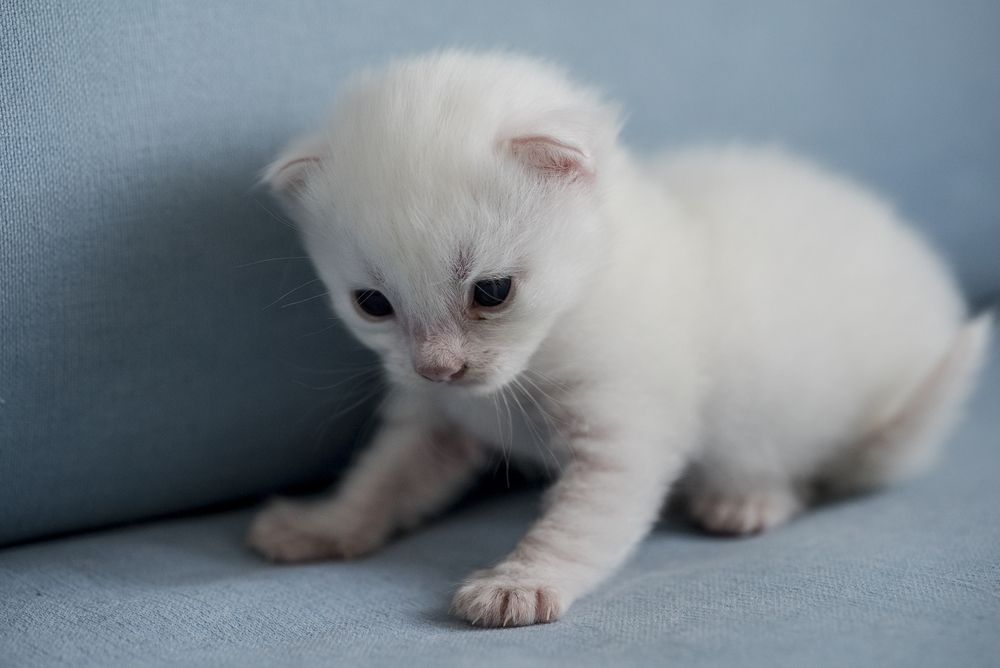
Turkish Angora kitten on the couch

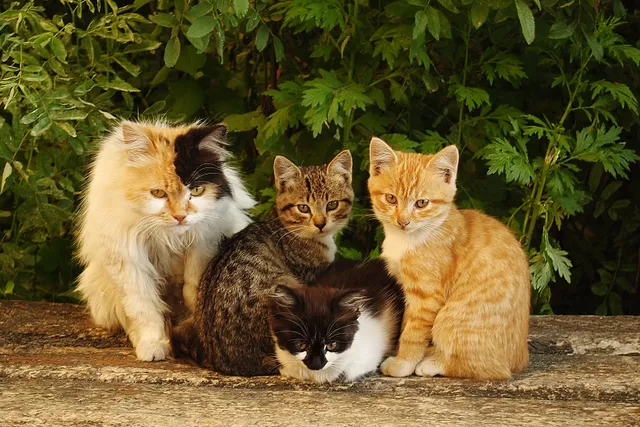
If you bring home a kitten from a rescue shelter, it can be challenging to determine the kitten’s exact lineage, and you may be wondering whether they will be long-haired or short-haired. Often, the shelter may know the mother, but the father may be a mystery. In that case, even if the mother is long-haired, there is no guarantee that her kittens will be the same, as the father’s genetics play a part, too.

To make matters more confusing, most kittens have soft and fluffy coats when they are young, regardless of their breed. You will typically have to wait about 8 weeks before differences begin to show. So, how can you tell if your kitten will be short or long-haired? There are a few ways to determine with relative accuracy which coat your kitten will have. Read on to find out how!

divider single cat paw oct 2024

Genetics

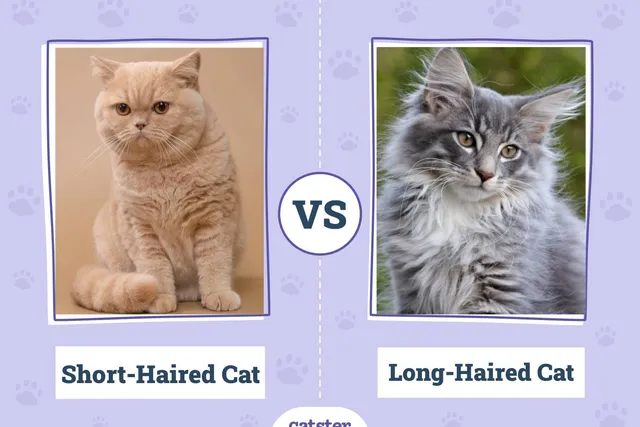
The simplest method of determining whether your cat will have a long or short coat is by their genetics.1 If the kitten’s mother is long-haired, chances are high that some of her kittens will be long-haired, even when fathered by a short-haired male. Some may have medium-length coats, and others a short-haired coat, but the mother’s genetics will cause long or medium-length hair in most of the kittens, especially if she is a purebred, long-haired cat like a Persian.

If the mother is a mixed breed, there are likely to be more variations, and it can be far more challenging to predict, especially if the father is not known. Try to get information about both parent breeds, as it will likely give you a good indication of what to expect.

Four genetic mutations produce long-haired cats, three of which are relatively breed-specific, while the fourth can be found in all long-haired breeds and mixed breeds. If you wanted to, you could take the kitten to be tested by a vet to check whether any of these genes are present.

three Ragdoll kittens on blue background
Photo Credit: Linn Currie, Shutterstock

divider single cat paw oct 2024

Physical Traits

Kittens will usually start exhibiting tell-tale traits at around 8 weeks old that will indicate the likelihood of their coat being long or short. If your cat is going to have long hair, you should notice the tail beginning to get fluffy, and they’ll start showing signs of ear tufts and tufts of fur around their paws. These may be slight initially, but such traits are absent in short-haired cats, so with these signs, you can be sure you’ll have a long-haired or at least a medium-haired adult cat.

Another physical trait to look for is the appearance of markings. Long-haired cats commonly have smokey, swirling, or tortoiseshell patterns in their fur, though that is not always true. If your cat has these patterns and traits, they will likely have long hair. Kittens with smooth and shiny hair, as opposed to fluffy, thick hair, will most likely be short-haired.

It’s best to wait until a kitten is around 10–12 weeks before adopting them. That way, they will display the signs of whether they’ll be long or short-haired.

Domestic kittens
Photo Credit: congerdesign, Pexels

divider single cat paw oct 2024

Final Thoughts

Even long-haired kittens look the same up to around 8 weeks so it can be difficult to tell if it will be a long-haired or short-haired cat without knowing the parents. However, after that point, they begin to show signs that will make it easier to predict—namely, a fluffy tail, ear tufts, and hair between the toes. Finding as much information as possible about the parent breeds will also help you predict their coat more accurately.


Featured Image Credit: Khalilah Mohd Nor, Shutterstock

Want content like this delivered to you?

Sign Up For Our Newsletter

News, insights, expert advice, and everything cat

* By submitting, you agree to our Terms & Conditions and Privacy & Cookies Policy.


How useful was this post?

Click on a star to rate (you can leave written feedback after clicking submit)

Help us improve Catster for pet parents!

Your feedback really matters.

What did you like about this post? Also how can we improve it?

Join the conversation

2 Responses

  1. I’D love to see pictures of the different stages that eventually lead to a long-haired kitty. My kitty is 13 weeks but I’m not convinced it will be long-haired even though that’s what the shelter said.

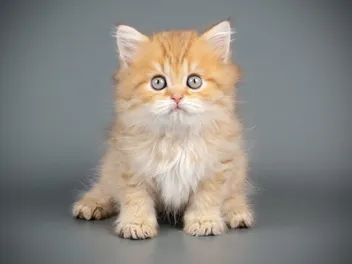
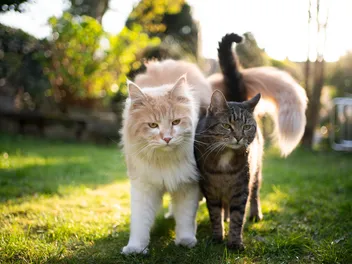
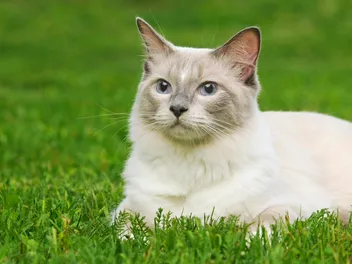
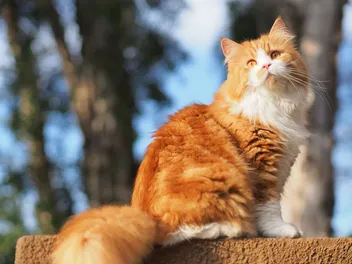
    1. Carrie, it is completely normal to be skeptical at 13 weeks, as kittens at this age often enter a sleek, slightly awkward "preteen" growth phase where they temporarily lose their baby fluff before their true adult coat starts coming in around 5 to 6 months old. As you can see in the progression below, a long-haired cat often transitions from a very puffy baby to a surprisingly sleek teenager, only developing that signature, magnificent lion-like mane and full fluffy tail between 1 and 2 years of age. The absolute best way to tell right now if your shelter kitty will eventually be long-haired is to look for tiny tufts of long hair sprouting between her toes, noticeable "ear furnishings" (the fluff growing out of the inside of her ears), and a tail that looks more like a bottle brush compared to a sleek short-haired tail.

Leave a Reply

You’re very welcome to leave a comment or question. Please know that all comments must meet our community guidelines, and your email address will NOT be published. Let’s have a positive and constructive conversation.


Catster's Digital Magazine is Back!

Vet-approved health & behavior advice

Real cat stories & community features

Weird Cat Behaviors That Actually Make Perfect Sense

We have been sharing our lives with cats for thousands of years, yet we still find ourselves genuinely stumped by what they get...

The Dream of Talking to Cats Just Got Closer to Becoming a Reality

If you’ve ever wished your cat could simply tell you what they wanted, you’re not alone. From the meow that wakes you before...

Kizzy: The Feline Princess With a Purpose

We were first introduced to Miss Kizzy after she won a licky-treat challenge hosted by Professor Fluffovich, our resident feline research specialist. While...

Chatting With Sally About Mission Meow & Helping Cat Rescue Organizations Collaborate | Chatty Cattys, Episode 24

In this episode of Catster’s podcast, Chatty Cattys, Nicole and Dr. Karyn sit down with Sally Williams, the founder of Mission Meow, for...

More related

Senior Cat Wellness Checks & Care (Vet Reviewed)

Whether you adopt a kitten, a young cat, or a feline already in their senior years, eventually you’ll need to care for them...

Anemia in Cats: Signs, Causes & Prevention (Vet Answer)

Anemia is an insidious disease that can affect your cat. Unfortunately, veterinarians often diagnose anemia when it has progressed to being a significant...

Cat Shampoo Alternatives That Are Already in Your House

If your cat has ever gotten into something disgusting and you’ve found yourself without cat shampoo, we’re here to help. Before you panic...

Are All White Cats With Blue Eyes Deaf? Vet-Reviewed Facts & FAQ

At some point, you’ve likely heard someone say that all white cats are deaf—particularly those with blue eyes. But is this factual? Not...

Keep reading

Will My Male Cat Be More Affectionate After Neutering? Vet-Reviewed Facts & FAQ

An unneutered male cat can be… a handful, to say the least. Otherwise known as tomcats, there are a multitude of reasons to have them neutered. To answer the question, yes—a male cat will most likely be more affectionate and...

cat playing with its owner

5 Types of Superfoods for Cats: Vet-Approved Foods to Benefit Their Health

There are various superfoods for cats that are available to help improve their diet and replenish their body with much-needed vitamins and minerals. Many of these superfoods are easy to access and can be found at most grocery or health...

top view of a cream maine coon cat eating dry and wet pet food from feeding dish

How Does a Cat Purr? The Evolution & Meaning Behind a Purr (Vet Reviewed)

Cats are known for their adorable vocalizations, and their purring is usually a sign of contentment and happiness. But have you ever wondered how your cat makes that calming vibration? Cats purr by vibrating their laryngeal muscles through several mechanisms....

cat purring

Can Cats Control Their Tails? Vet-Verified Positions & Movement Explained

Cats use their tails to communicate to the world through body language. You can tell a lot about a cat’s disposition by what their tail is doing. With that being said, cats have full control of their tails. The tail...

tail of a cat on vintage background

7 Safe Exercises for Cats With Arthritis: Vet-Approved Advice

Cats with arthritis need special care to overcome the pain and stay active. If your feline friend has been diagnosed with arthritis, they will become slower and won’t enjoy their playing time as much as before. While the condition primarily...

cat folding his paw while sleeping

How to Safely Surrender a Cat: 4 Responsible Steps & FAQ

Surrendering your cat can be a difficult and emotional experience. It’s important to consider all the potential implications of surrendering your pet before making this decision. This article outlines everything you need to know about how to safely and responsibly...

cat on woman owners lap

Can Hard Water Cause Urinary Crystals in Cats? Vet Approved Facts & Advice

Keeping your pet safe and in good health is an essential part of taking care of a cat. Unfortunately, there are times when your pet might become ill regardless of your best efforts. The chance of your cat dealing with...

cat drinks water

How to Tell If a Stray Cat Is Pregnant? 10 Vet-Approved Signs

There are many challenges to taking in a stray cat. First, you need to make sure that they’re healthy and uninjured. Second, you should locate their owners in case they are simply lost rather than abandoned. Unfortunately, many stray cats...

pregnanat ginger cat outdoor

Love Cats? So Do We! Join the Catster Community

Stay informed with expert pet care insights delivered straight to your inbox! Discover professional guidance on animal behavior, feeding tips, trusted product picks, and much more.


Sign up for the Catster Email Newsletter

Stay informed with expert pet care insights delivered straight to your inbox! Discover professional guidance on animal behavior, feeding tips, trusted product picks, and much more.